
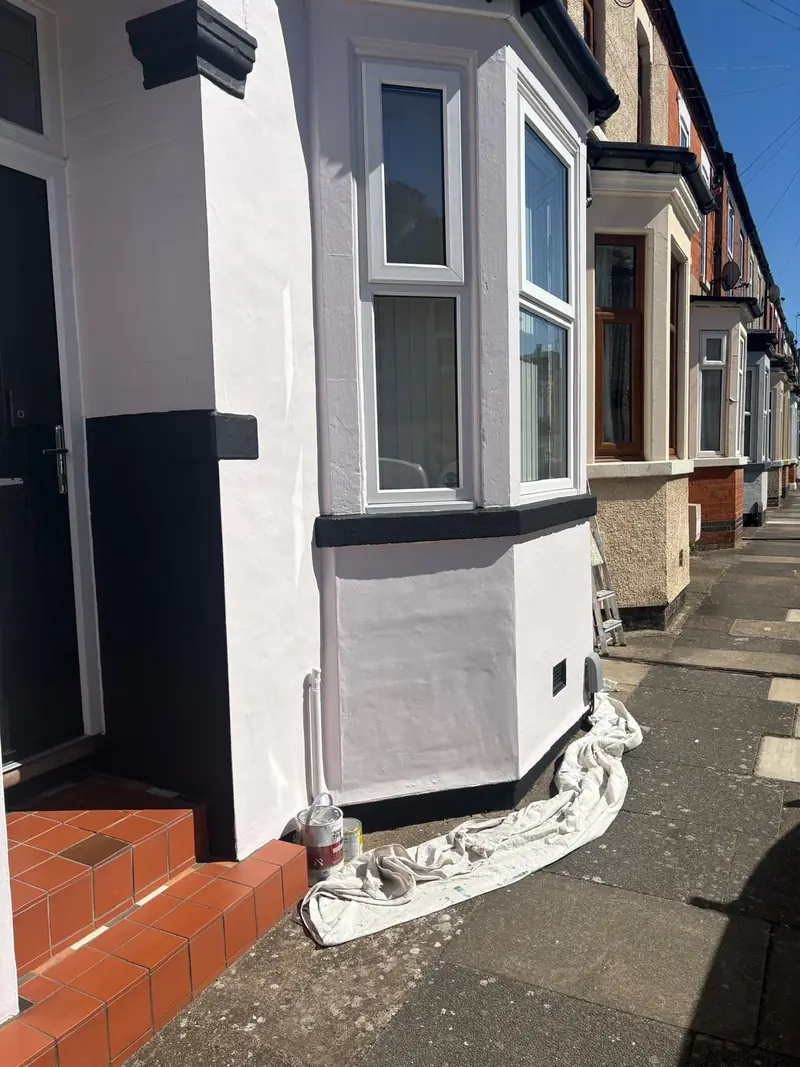
We paint the outside of houses in Chapel Brampton and Church Brampton, NN6, about 4 miles north-west of Northampton town centre. Most historic fronts here are bare ironstone that the conservation appraisal says should stay unpainted, so the exterior work is joinery, porches, ironwork and the timber cladding of Cedar Hythe, timed around the trees and the weather on the valley slope.
The same cottage, two sets of rules
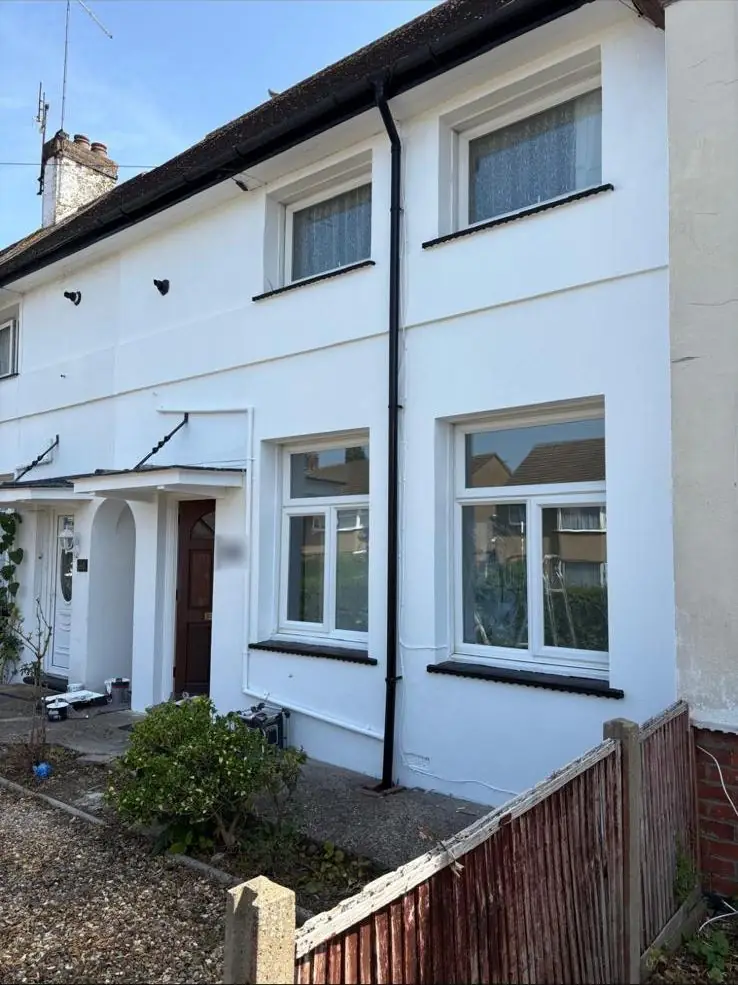
In 1848 the Spencer estate built two matching groups of ten stone cottages with shared wash houses, one on Welford Road in Chapel Brampton and one in Church Brampton. The listing descriptions attribute both to E. Blore, and both are Grade II. From the outside they look like the same building. The controls on painting them are not quite the same, because Chapel Brampton has had a conservation area since 1978, with an appraisal and management plan adopted in February 2020, and Church Brampton has none on the council’s list.
| Where the house is | What applies | What it means for outside painting |
|---|---|---|
| Listed building in either village (23 entries across the parish) | Listed building consent for any change to its character | Repaint joinery and ironwork in the existing colours; ask the council before any change of colour or finish |
| Unlisted house inside the Chapel Brampton Conservation Area (old core, Welford Road, Back Lane, Pitsford Road, Cedar Hythe) | The 2020 appraisal’s guidance; no Article 4 Direction has been made | Bare ironstone stays unpainted, window frames white or based on the originals, Cedar Hythe cladding white paint or brown stain |
| Unlisted house in Church Brampton, or in the closes west of the conservation area | No area controls on repainting | A free choice of colour, though the stone still needs breathable treatment if it is ever coated |
The appraisal did propose Article 4 Directions for doors and windows on named buildings, including the Spencer Arms, Halfway Thorn, Brownstones and several Welford Road houses. When we checked the council’s list on 16 November 2026, none had been made for either village.
| Type | Share |
|---|---|
| Detached | 62% |
| Semi-detached | 27.6% |
| Terraced | 9.5% |
| Flat or maisonette | 0% |
Source: Census 2021 (ONS), accommodation type (TS044) tables via Nomis.
What on a Brampton house actually gets painted?
Because the appraisal says bare ironstone frontages should not be painted or rendered, and that masonry paint is often not acceptable on buildings older than 1919, the list on an old house is mostly timber and metal:
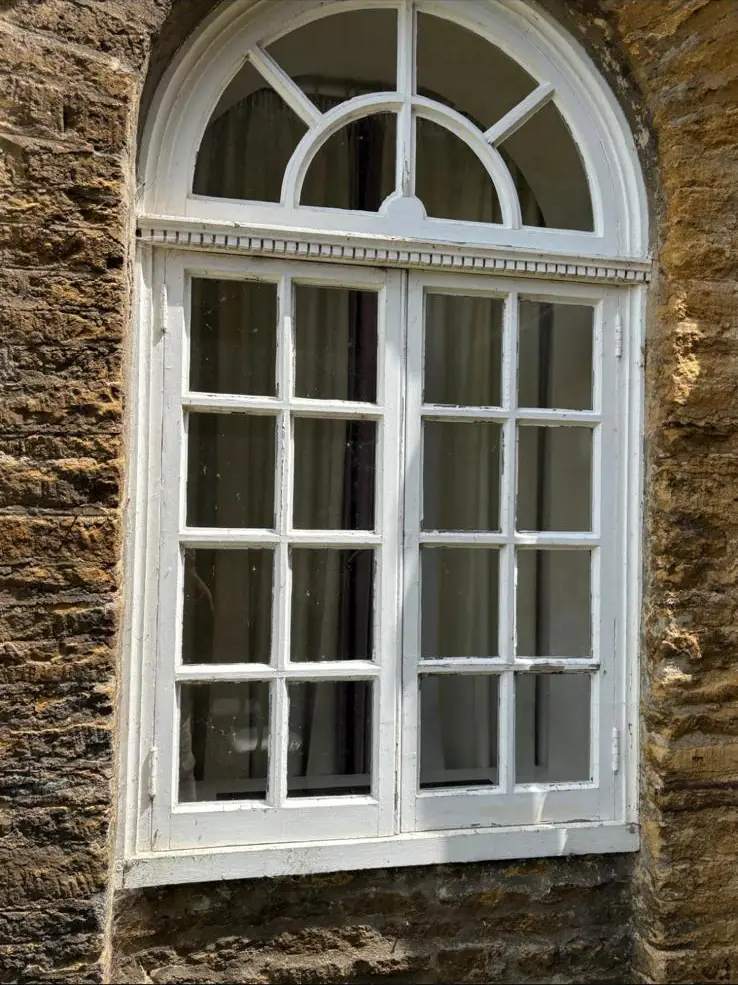
- Windows: timber casements and mullions on the older cottages, and the cast-iron diamond-pane casements on the estate rows and Almscourt, which take far longer than their size suggests.
- Doors and porches: plank and ribbed Tudor-style doors, the gabled porches on the estate cottages, and their frames and lintels.
- Bargeboards and eaves where there are any. Many stone houses have coped gables with kneelers and no boards at all.
- Cedar Hythe: the horizontal timber cladding over porches, garages and windows, which is the main painted exterior surface on the estate and has to stay white paint or brown stain.
- Railings and gates, including the railings outside 6-10 Welford Road, which the appraisal treats as part of the listed cottages.
Walls do get painted on later houses that were built rendered or have been painted before. That is covered on our Bramptons render and masonry page, and the boards at roof level on the fascia and bargeboard page.
Slope, height and trees
Chapel Brampton sits on a gentle slope facing east down to the Brampton arm of the Nene. Terrain data puts the station end of Pitsford Road at about 90 metres, the Spencer Arms and Cedar Hythe at 92 to 94, Back Lane at about 102, Church Brampton at about 101 and Brampton Heath on Sandy Lane at about 111. The higher, western side of the parish and the edges looking out over open farmland are more exposed: paint dries fast there on a warm, breezy day, and end walls take the brunt of wind-driven rain in winter.
Trees matter as much as height. The whole of Cedar Hythe is a Tree Preservation Order area, there are more protected trees along Harlestone Road and Back Lane, and anywhere in the conservation area the council needs six weeks’ notice before trees above a set size are pruned. We do not cut branches back to make room for a ladder. Elevations under trees stay damp and go green, so they get a fungicidal wash and are left to dry before any primer goes on. We book outside work for the drier months; our guide to timing exterior painting explains the temperatures and drying times.
| Fact | Detail | Source |
|---|---|---|
| Chapel Brampton Conservation Area | Designated 1978; appraisal and management plan adopted February 2020 | West Northamptonshire Council |
| Church Brampton | No conservation area on the council’s appraisal list | West Northamptonshire Council |
| Article 4 Directions | None made for either village (council list checked 16 November 2026) | West Northamptonshire Council |
| 1848 estate cottages | Grade II groups of ten with wash houses in both villages, attributed to E. Blore | British Listed Buildings |
| Height above sea level | About 90 m at the station to about 111 m at Brampton Heath | api.opentopodata.org |
Ladders on a verge or a footway
Many of the older cottages stand right on the street. On the A5199 through the village that means traffic passing close to the ladder foot, so we use barriers and keep kit tight to the wall. Back Lane has no footway on its west side but has wide verges, and Cedar Hythe has open front lawns with room to set up. The general method we follow outside is on our main exterior painting page, and the parish as a whole is on our Bramptons page. Dean will walk round the outside with you and give a free written quote.
Sources
- download, West Northamptonshire Council
- conservation area appraisals, West Northamptonshire Council
- heritage and non heritage article 4s and local, West Northamptonshire Council
- 101067089, British Listed Buildings
- 101055807 1 2 and 3 church with chapel brampton, British Listed Buildings
- church with chapel brampton daventry northamptonshire, British Listed Buildings
- eudem25m, api.opentopodata.org
Last updated .


