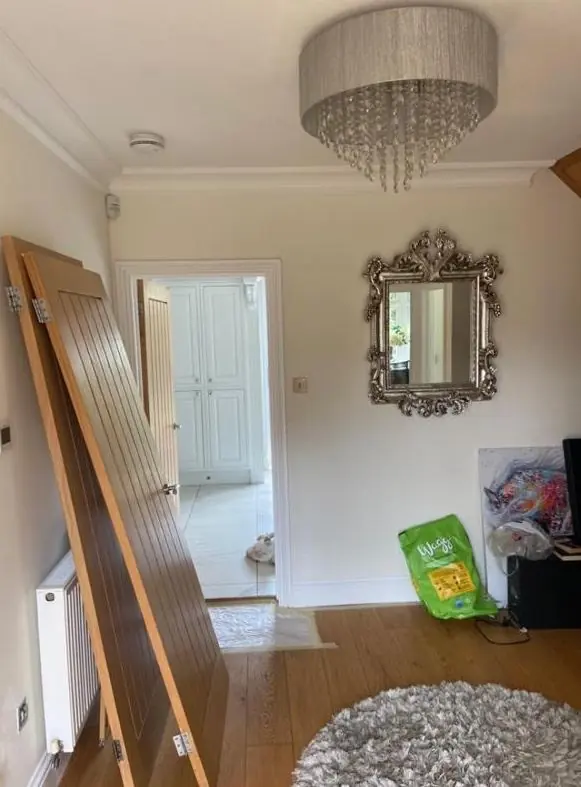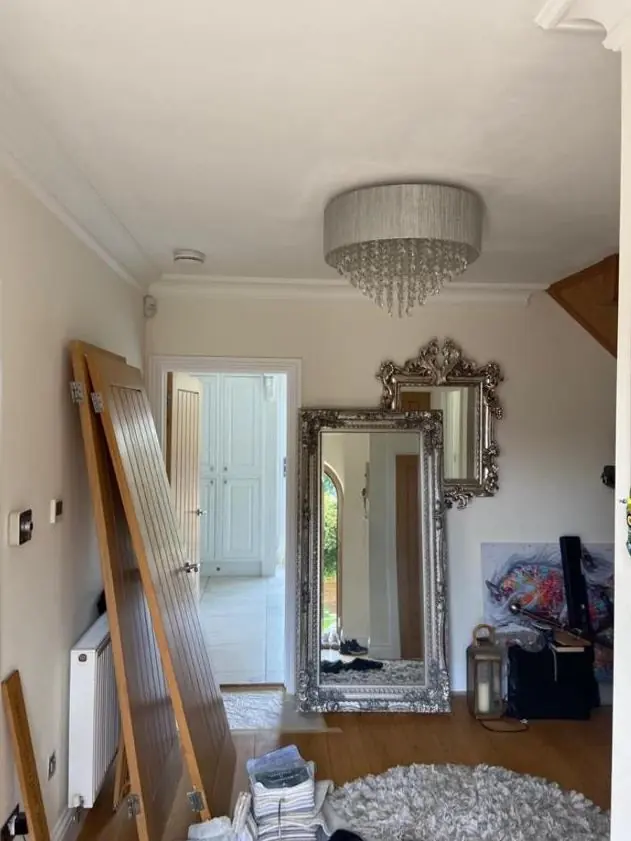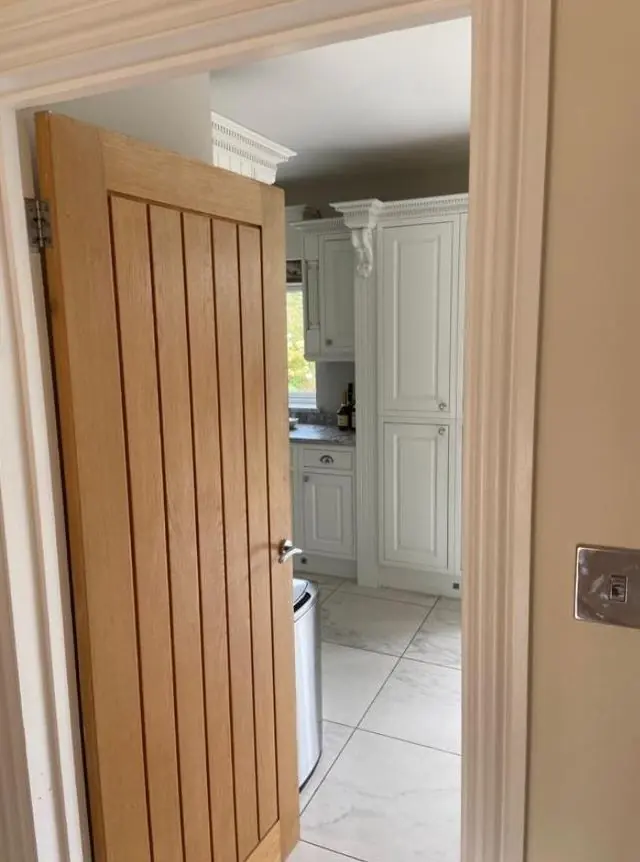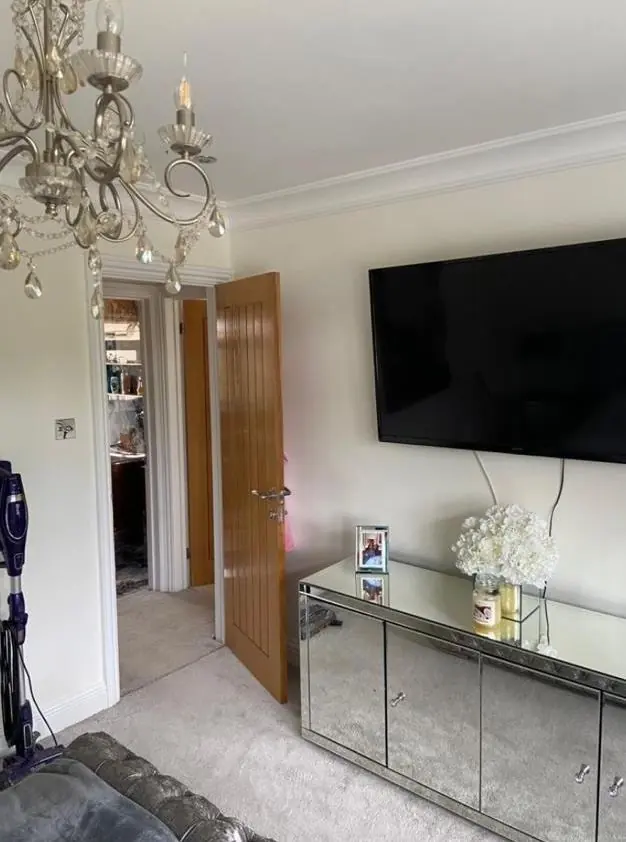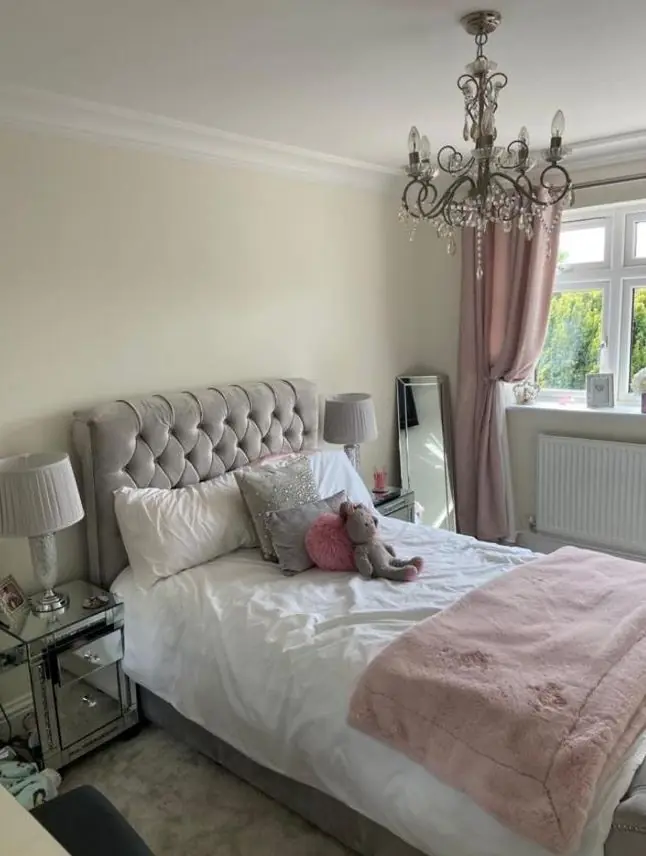
We hang lining paper and wallpaper in Chapel Brampton and Church Brampton, roughly 4 miles from Northampton town centre. In the ironstone cottages that usually means lining crooked, solid walls first. In the larger detached houses and estate conversions it more often means feature papers in halls and dining rooms.
Walls that were never straight to begin with
A cottage built of ironstone rubble in the 1700s was never meant to have a flat, plumb wall. The listed houses in Chapel Brampton, such as 2 Northampton Road with its 1769 datestone, and The Cottage in Church Brampton, dated 1764, were built with rubble walls of a kind whose inside faces typically bow, lean and change thickness from one end of a room to the other. A patterned paper exaggerates all of that. Hang a stripe or a small repeat straight off a plumb line and by the far corner it will be visibly climbing or dropping against the ceiling.
The way round it is a judgement call made room by room. Sometimes we follow the ceiling line and let the pattern drift off vertical, because the ceiling is what the eye reads. Sometimes we choose to centre the pattern on a chimney breast or window and hide the mismatch in the least-seen corner. For heavily out-of-true rooms, a loose, non-directional pattern is far more forgiving than a geometric one, and Dean will say so before you order the rolls.
Lining paper and breathable walls
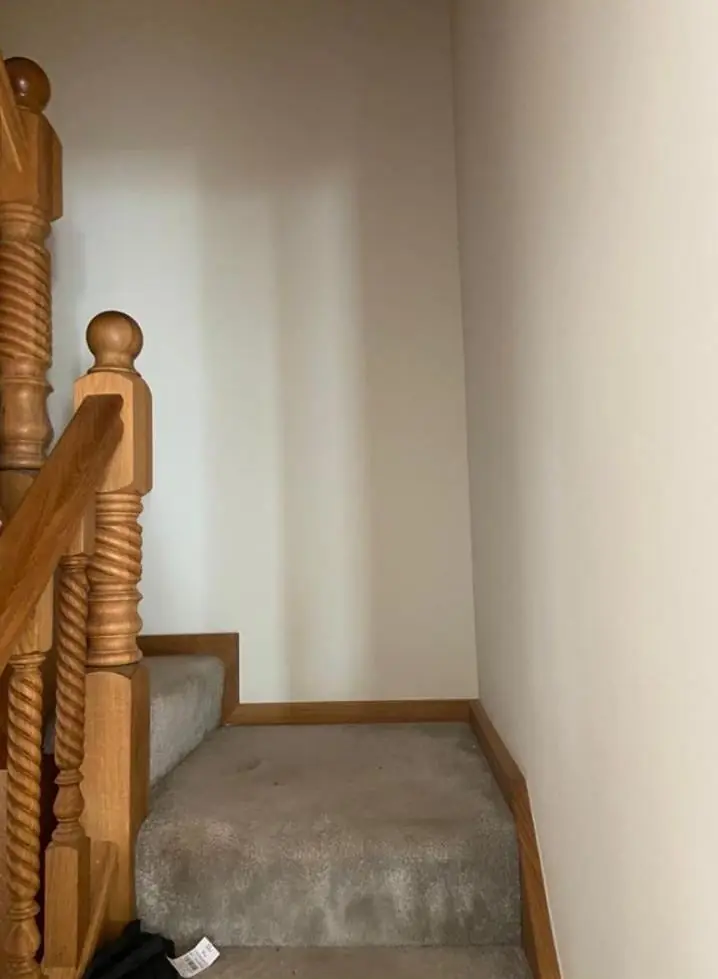
Lining paper does two jobs on these walls. It evens out the small hollows and patched areas of old lime plaster, and it gives the finish paper a consistent surface to grip. On solid stone walls, though, what goes on top matters. A heavy vinyl wallcovering forms a near-impermeable skin, and on a wall that needs to dry outwards into the room it can trap moisture behind it, which shows up as mould spots or paper lifting at the seams. On original lime-plastered walls we steer people towards paper-faced or traditional pulp papers rather than vinyl, and we use a paste suited to the substrate.
Where we find loose or hollow lime plaster under old paper, we’ll stop and show you rather than paper over it. Some walls need a plasterer who works in lime before any decorating goes on.
Feature papers in the halls and dining rooms of larger homes
The parish also has a lot of bigger houses: the detached homes along Golf Lane, the 18th-century houses around the Chapel Brampton crossroads, and converted Spencer estate buildings. These tend to have the rooms where a statement paper earns its place, typically a dining room or an entrance hall. Large-scale murals, grasscloths, silks and hand-printed papers are expensive per roll and have no margin for error, so we:
- check every roll for batch number and shading before cutting;
- plan the drops on paper first so the main motif lands centrally on the focal wall;
- use a paste-the-wall method for non-wovens and follow the maker’s instructions exactly for specialist papers.
In a tall hall or stairwell, we set up a stable platform, because a paper that has to be matched across a long drop can’t be hung safely from a stepladder.
Wash houses, conversions and the 1960s houses
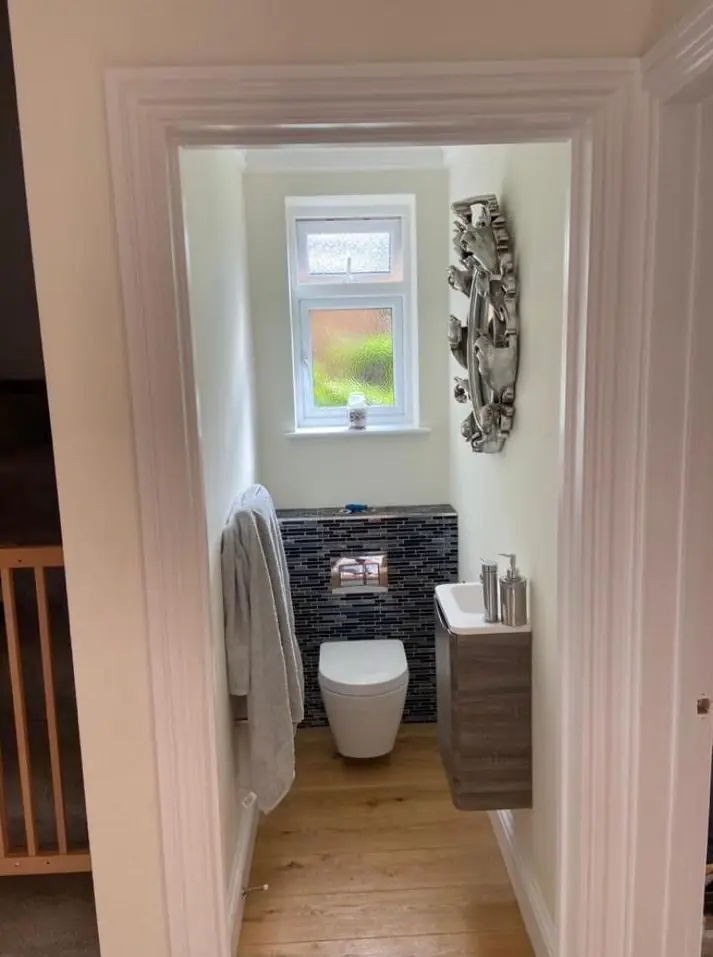
The 1848 Spencer estate terraces in both villages were built with linked single-storey wash houses, and some of these and other former working buildings are now part of the living space. Converted outbuildings often combine old stone with new plasterboard and a fresh skim, so one room can have three different surfaces. New plaster needs to be fully dry and sealed before paper goes on, or the paste will be pulled in unevenly.
At Cedar Hythe the walls are modern and much flatter, so the challenge is different: long, uninterrupted walls between big windows, where any seam that opens catches the light. Accurate butt joints and a good lining underneath matter most there.
For the general step-by-step, from stripping to trimming, see our main wallpaper hanging service. The Bramptons area page covers other decorating in the parish, and the decorating cost guide explains how a quote is put together.
Last updated by Dean, DH Painter & Decorator.