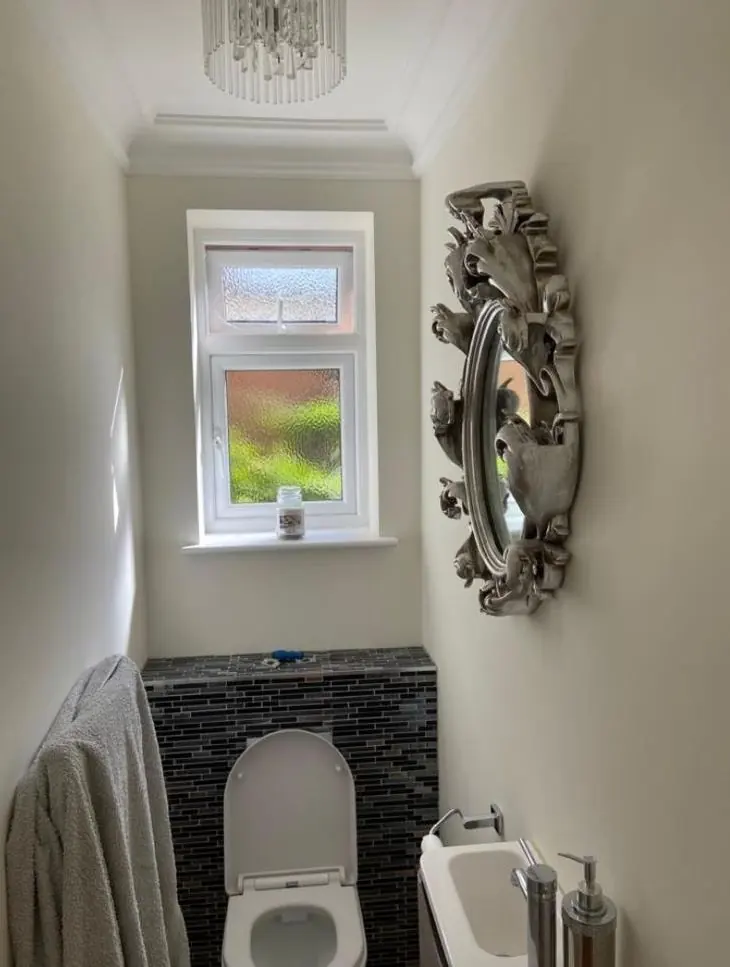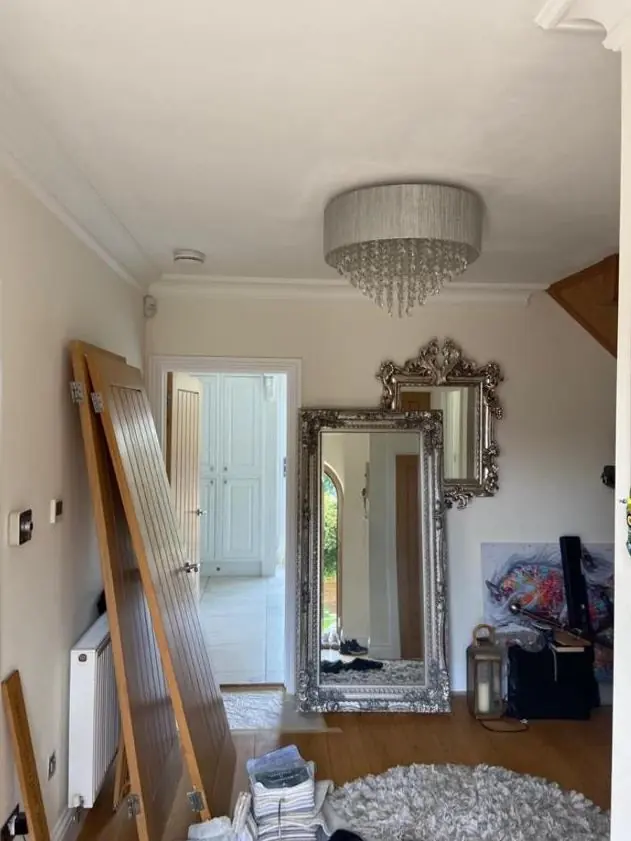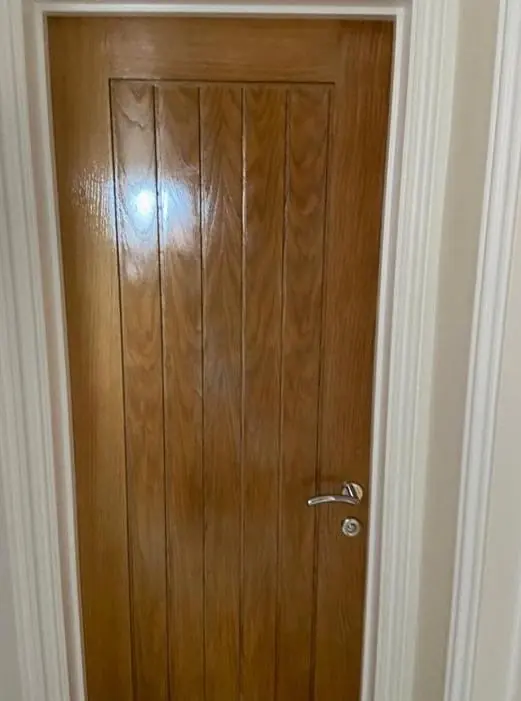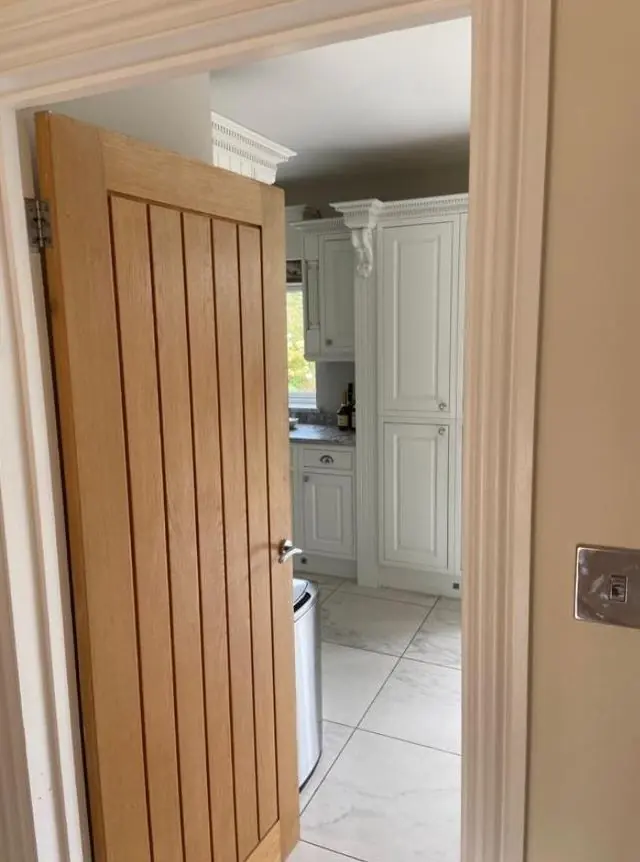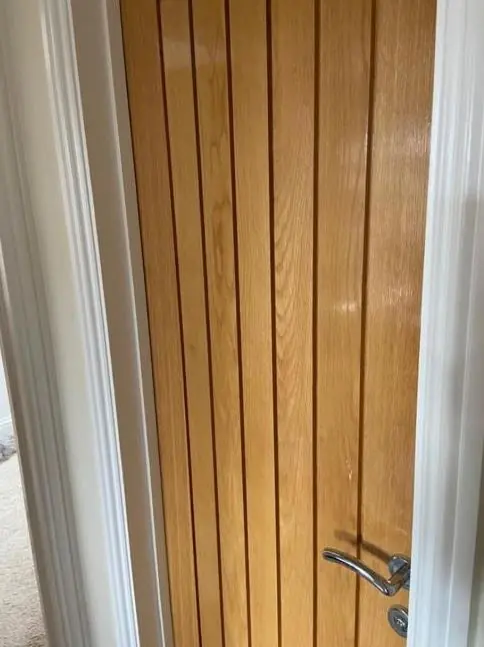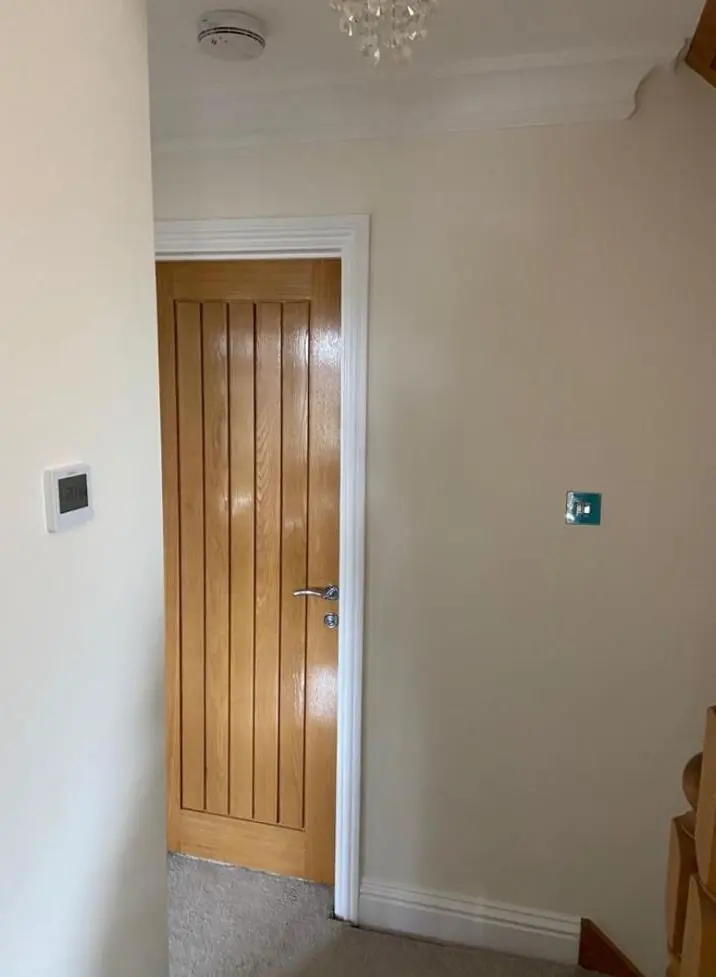
Dean paints internal and external doors, skirtings, architraves, shutters and frames in Chapel Brampton and Church Brampton, which sit either side of the A5199 roughly 4 miles out of Northampton. Much of the joinery here belongs to listed Spencer estate cottages or the Chapel Brampton Conservation Area, so the aim is to keep sound old timber and repaint it in a fitting finish.
Plank doors under four-centred heads
The most recognisable woodwork in the parish is on the Spencer estate cottages. The 1848 groups at 1-10 Welford Road in Chapel Brampton and the matching 1-10 in Church Brampton, both attributed to E. Blore, have four-centred stone doorheads with ribbed or solid plank Tudor-style timber doors and metal furniture. Almscourt, the 1858 almshouse in Church Brampton, follows the same estate language. These doors are made of boards, ledges and ribs rather than panels, so paint collects in the grooves between the boards and along the top of each rib, and that is where it fails first.
Painting a door like this is mostly preparation. The ironmongery comes off or is masked, loose paint is taken out of the joints, bare end grain at the foot of the door is sealed, and the ribs are cut in individually so they keep a crisp line. On exposed elevations that face open country to the north-east, we tend to use an oil-based or microporous joinery system that lets the boards move with the seasons rather than a hard film that cracks along every joint.
What the conservation rules mean for joinery
For windows, the conservation area appraisal limits painted frames to white or a shade evidenced by the originals. The same document proposes Article 4 Directions for the doors and windows of named buildings, including Halfway Thorn, Brownstones, The Old Granary, The Old Posting House, 13-17 Welford Road, 1-4 Northampton Road and Mews Close. We have not seen confirmation that those directions have been made, but the intention is clear: original joinery should be kept.
Repainting is maintenance rather than alteration, which makes careful repair and repainting the natural route for owners who want to keep their doors. On the listed estate cottages, like-for-like colours are the safe choice. If you are thinking about a different colour on a listed building, check with West Northamptonshire Council before we start. We can take samples and record the existing colour at the quote visit so a match is easy.
Shutters, old doors and floors that are not level
Inside, the 18th-century houses bring their own work. Brampton Cottage on Brampton Green, The Cottage of 1764 in Church Brampton and 2 Northampton Road of 1769 show the range: Brampton Cottage keeps panelled shutters, and in houses of this age you can expect old doors and skirtings that follow a floor that has settled over two centuries. Skirtings in houses like these are rarely straight, and the gap between board and wall varies along the run. We fill and caulk to the line of the wall instead of forcing a straight edge, so the new finish looks at home in an old room.
Old joinery of this age usually carries many layers of paint, and the lower ones can contain lead. We test before abrading, and if it is positive we work wet and contain the dust. The general prep sequence is set out on our main door and skirting painting page.
Cedar Hythe and the later closes
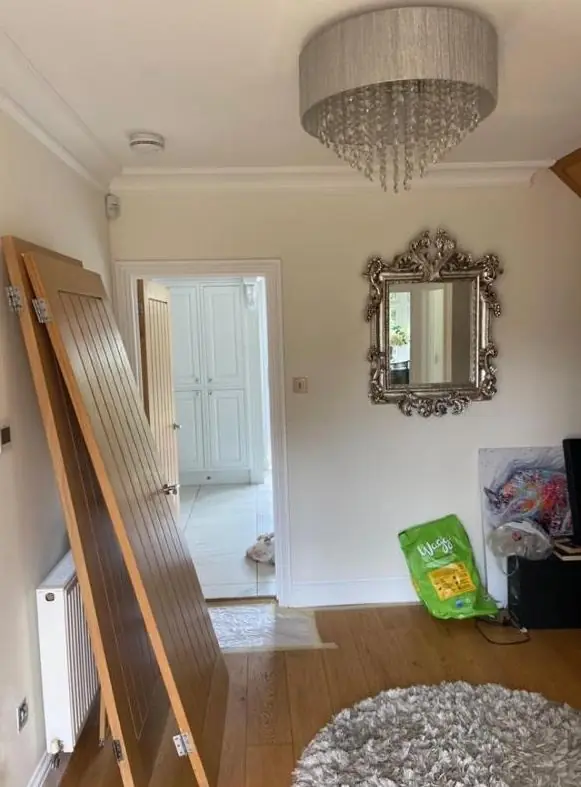
The late-1960s Cedar Hythe houses are a different job. Where the original internal doors survive they are likely to be plain flush doors, and on plain, square joinery the finish shows every brush mark and every dent. A water-based satin or eggshell laid off evenly suits the clean lines of the four house designs. Outside, the estate’s cladding boards keep their white paint or brown stain, and front doors often sit next to metal-framed glazing that needs its own primer.
Houses on Great Close, Little Close and the south side of Harlestone Road were built in the second half of the 20th century, and their skirtings and architraves are usually straightforward softwood. More often the question there is colour: whether to move away from white woodwork, or match it to newer wall colours.
You can see how the different building types in the parish compare on our Bramptons area page. For a sense of how woodwork jobs are priced, read the painter and decorator cost guide.
Last updated by Dean, DH Painter & Decorator.