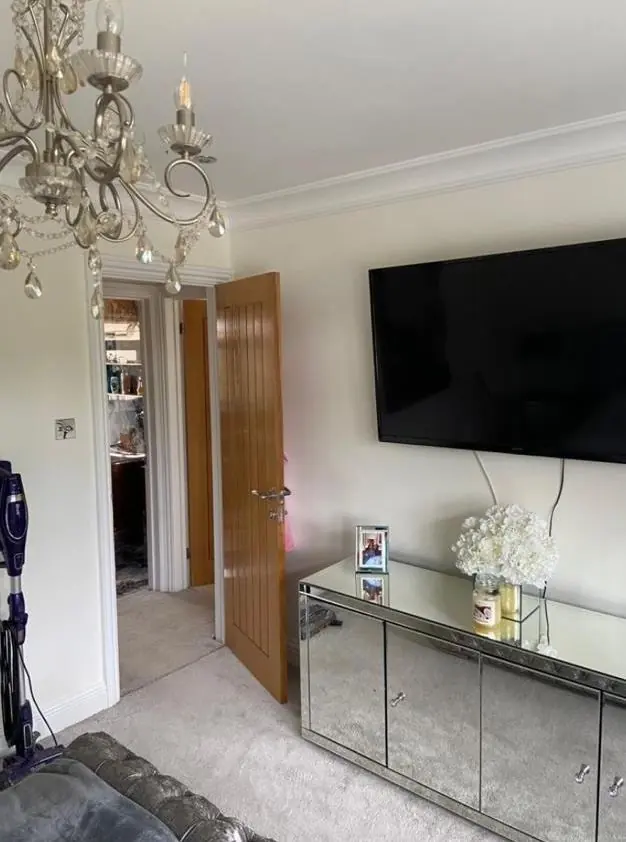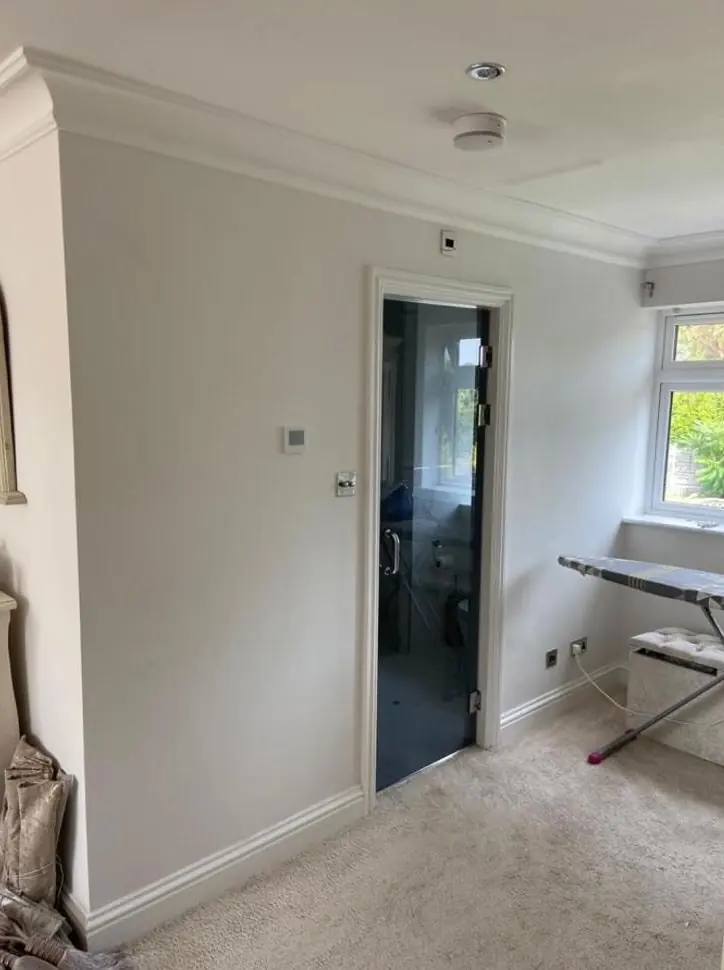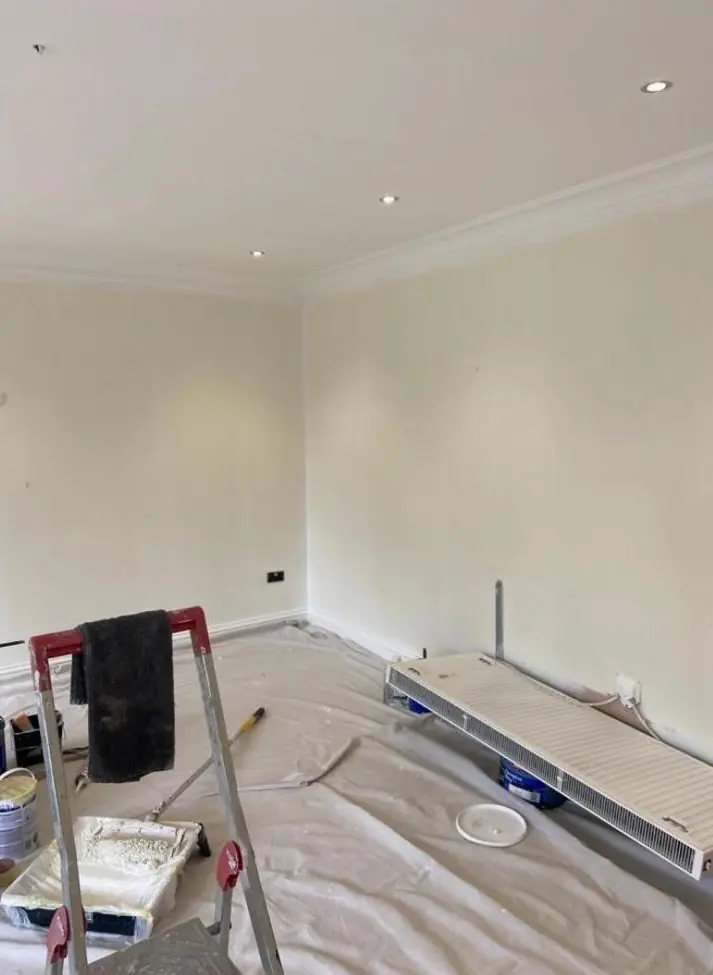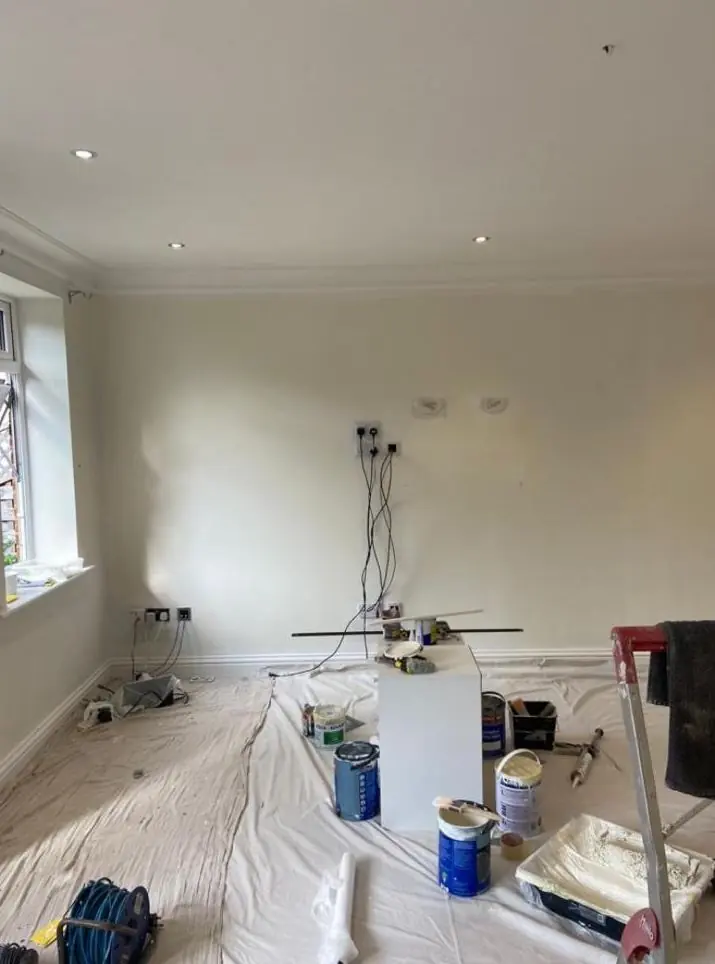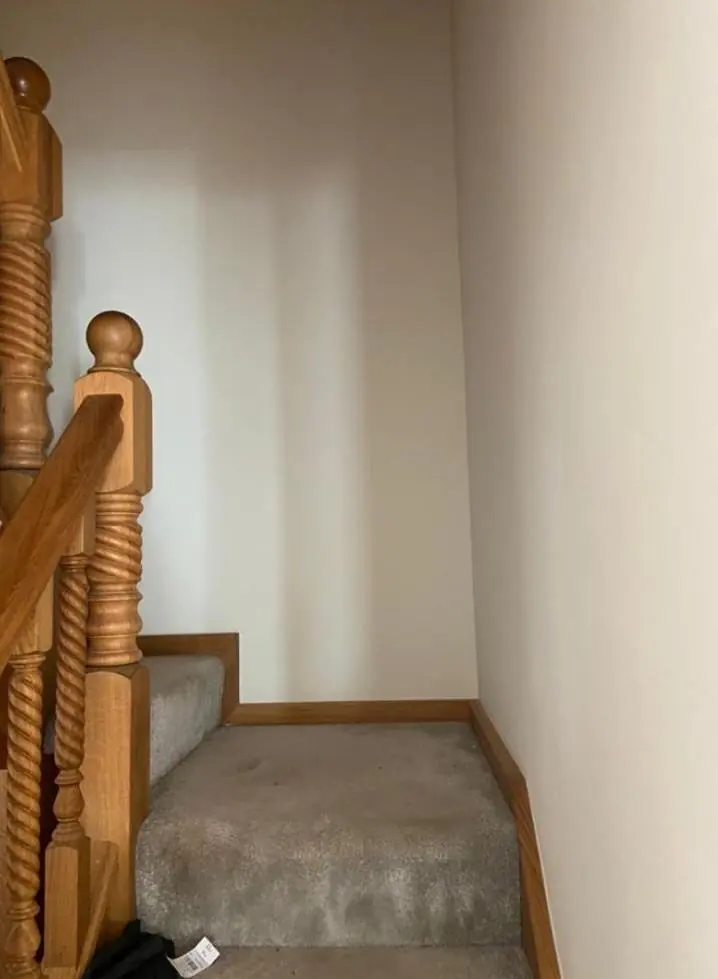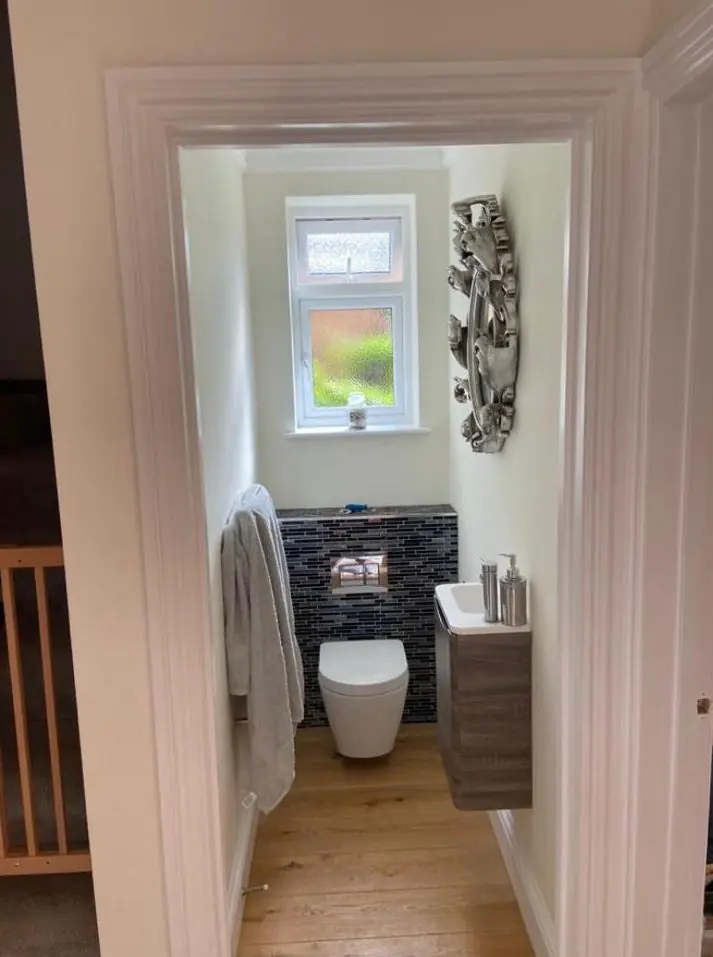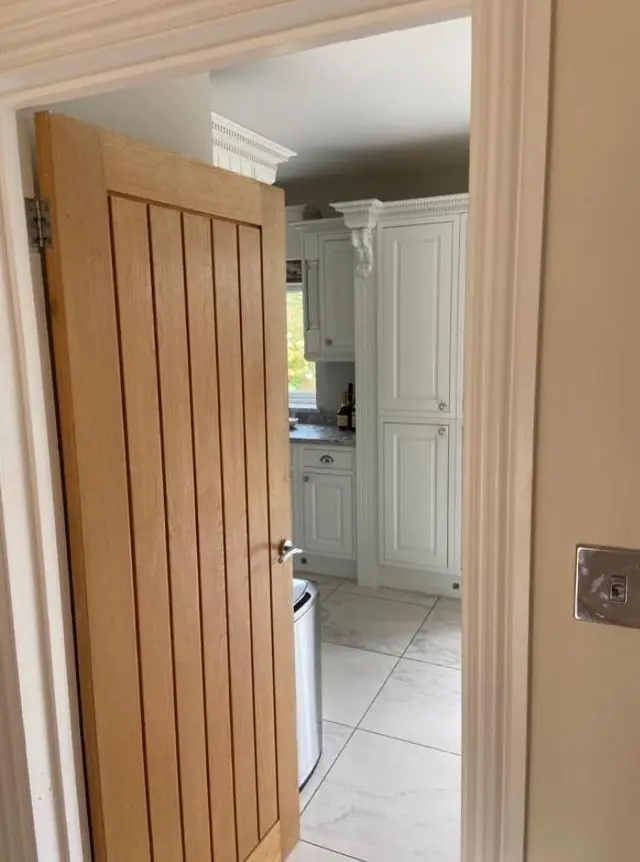
We carry out decorative paint finishes in Chapel Brampton and Church Brampton, the NN6 parish just north-west of Northampton. Outside on historic buildings that mostly means traditional limewash. Inside the larger period and detached houses it means painted panelling, picked-out mouldings and other hand-applied effects.
Limewash: the traditional finish the appraisal points to
Chapel Brampton’s 2020 conservation appraisal discourages masonry paint on buildings older than 1919 and says that, where a finish is needed, lime-based render or limewash should be used instead. That puts limewash at the centre of any decorative work on the older buildings here. It is the reverse of a modern coating: a thin wash of slaked lime, sometimes tinted with earth pigments, that soaks into the surface and lets moisture pass through it.
It is also worth being clear on what limewash is not for. Face ironstone with no history of a coating should be left uncoated, and ironstone pointed in lime mortar should be left unsealed. Limewash belongs on walls and outbuildings that already carry a lime finish, or where there is evidence they once did, and not on face stone that has always been bare. On the listed Spencer estate groups and Almscourt, any change in finish needs the council’s view first.
Applying it well is slow work. Each coat goes on thin to a dampened wall and is kept damp while it carbonates. That means:
- no work in hot sun, drying wind or frost, which rules out much of the year on exposed elevations facing the open valley;
- four or five coats for a durable finish, sometimes more on porous stone;
- a patchy, chalky look for the first days, which settles as it cures.
Shady walls under the protected trees along Back Lane and Harlestone Road slow drying further, so we plan timing around the weather and the elevation rather than the calendar.
Panelling and period detail in the larger houses
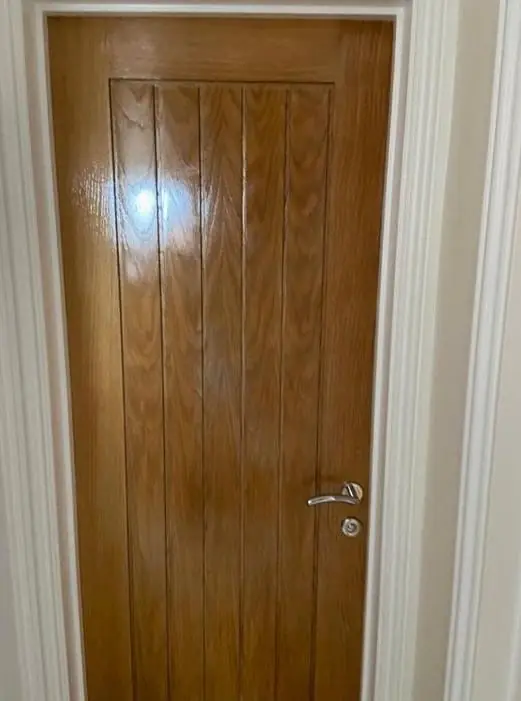
Indoors, the parish has a lot of the houses where decorative work makes sense: 18th-century houses around the crossroads, converted estate buildings, and large detached homes along Golf Lane. The most common requests are painted panelling and picking out period detail.
New MDF or timber panelling in a dining room or study needs its joints, pin holes and mitres filled and sanded until they disappear, and a primer that won’t raise the grain. A two-colour scheme, with panels in one shade and the frame or dado above in another, needs crisp hand-cut lines rather than tape where the wall behind isn’t true. On original features, such as panelled shutters, fielded doors or a fire surround, the aim is restraint. Picking out a moulding in a slightly deeper tone of the wall colour, or a change of sheen from flat to eggshell, often reads better in an old room than a strong contrast.
Effects that suit cottages, and ones that don’t
Small cottage rooms with uneven lime walls and low ceilings can be overwhelmed by a strong effect. A busy faux finish or a sharp geometric mural sits awkwardly on a wall that undulates. What works better there is texture that suits the age: a soft, layered colour-washed look, or a flat, chalky distemper or clay paint that reads as old even when freshly applied. Dean will say plainly if he thinks an effect won’t suit a room.
The open, glass-fronted rooms of the 1960s Cedar Hythe houses suit cleaner treatments, such as a single deep-coloured wall to anchor an open-plan space or a sharply painted two-tone split.
Planning a decorative job
Most decorative finishes are booked alongside a wider repaint, because an effect only looks right over good preparation. The full range of finishes we offer is on the main decorative finishes page, and the Bramptons area page covers everything else we do in the parish.
Last updated by Dean, DH Painter & Decorator.