Dean paints house exteriors in Boughton, NN2, a village about 3.4 miles north of Northampton town centre on the A508 Harborough Road. In the old core most of the job is joinery on unpainted stone cottages under conservation area rules, while the outer roads and Buckton Fields bring brick, render and modern timber.
In the old core, the joinery is the job
The 2018 conservation area appraisal describes Boughton as an estate village built to serve Boughton Hall. Its 17th to 19th century houses on Church Street and Butcher’s Lane are roughly dressed Boughton ‘Pendle’ stone and local ironstone, laid with thick lime-mortar joints under long-straw thatch or slate. Those walls were never meant to be painted, and we leave them bare. That means an exterior job on a cottage here is mostly about timber:
- small-paned casements, some still with leaded lights, as at the Grade II 7 Butcher’s Lane
- plank doors hung on strap hinges, like the one at Merewater, the former Lion pub with its 1634 datestone
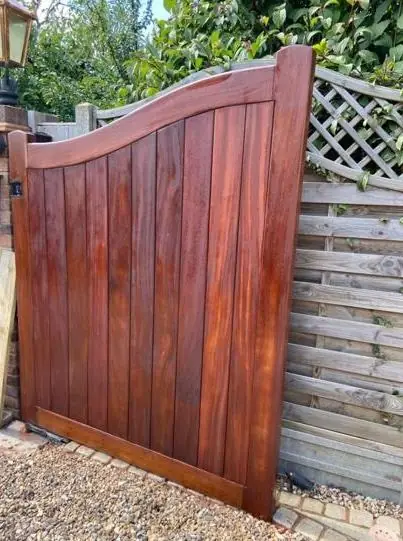
- timber lintels that are painted black or left bare, a choice to settle before any paint is opened
- shutters, porches and bargeboards where a house has them
Glazing bars on these casements are fine, and lead cames tear if they are scraped hard, so preparation is done by hand with flexible joinery paint to follow. Under thatched eaves no heat gun or flame is used at all. Old coatings come off chemically or with a scraper and sanding.
Consent comes before colour on the protected houses
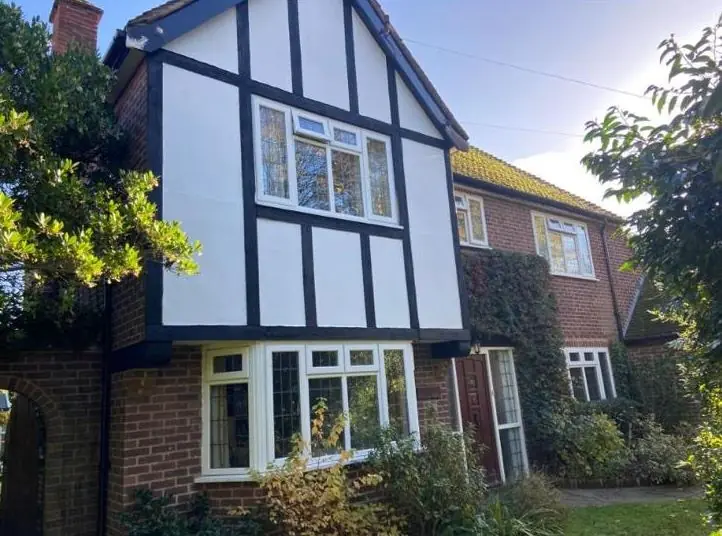
The parish has 26 Grade II listed structures. On those, a new exterior colour or stripping back can need listed building consent. Separately, an Article 4 direction confirmed in February 2020 removed permitted development rights for front elevations on named houses, including No. 18 and No. 42 Church Street, Butchers and Adamfield on Butcher’s Lane, and Nos. 1-6 Swedish Houses on Humfrey Lane. Like-for-like repainting is the safe course on these.
The appraisal also gives the village its own palette. Windows in the core are usually white, sometimes pale yellow or pale green, and a darker ‘Boughton estate green’ survives at Nos. 6 and 8 Butcher’s Lane and No. 2 Swedish Houses. If you want to move away from what is already there, we will ask you to check with West Northamptonshire Council first.
Shade, sap and green growth
Boughton is heavily treed. Cedar, pine, willow, chestnut and hornbeam line the lanes, and Tree Preservation Orders cover belts along Spring Close and south of Humfrey Lane. Shaded fronts stay damp longer and gather algae, sap and leaf litter, so every elevation gets a fungicidal wash and time to dry before primer goes on. Ladders are footed clear of protected trunks and roots, and branches are not cut back to make room. Works to trees over 75 mm in trunk diameter need six weeks’ notice to the council, which is the owner’s call, not ours. Our guide to the exterior painting season covers why the drier months matter more on north-facing, tree-shaded walls like these.
Ladders on lanes with no pavement
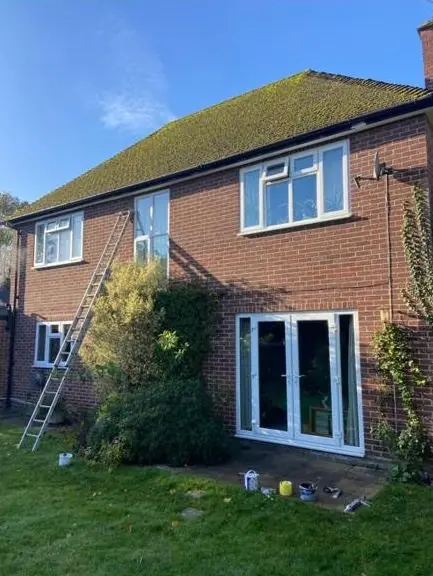
Church Street is narrow, with a continuous building line and front doors opening almost straight onto the road. Butcher’s Lane and Spring Close have no pavements at all. A ladder against a cottage front here stands in the carriageway, so we put out signage, keep the ladder footing tight to the wall, and plan around the school run on Moulton Lane and peak traffic on Church Street and Humfrey Lane. Ground also climbs towards the church, so neighbouring cottages sit at different heights and ladder positions change from house to house.
Outer roads and Buckton Fields
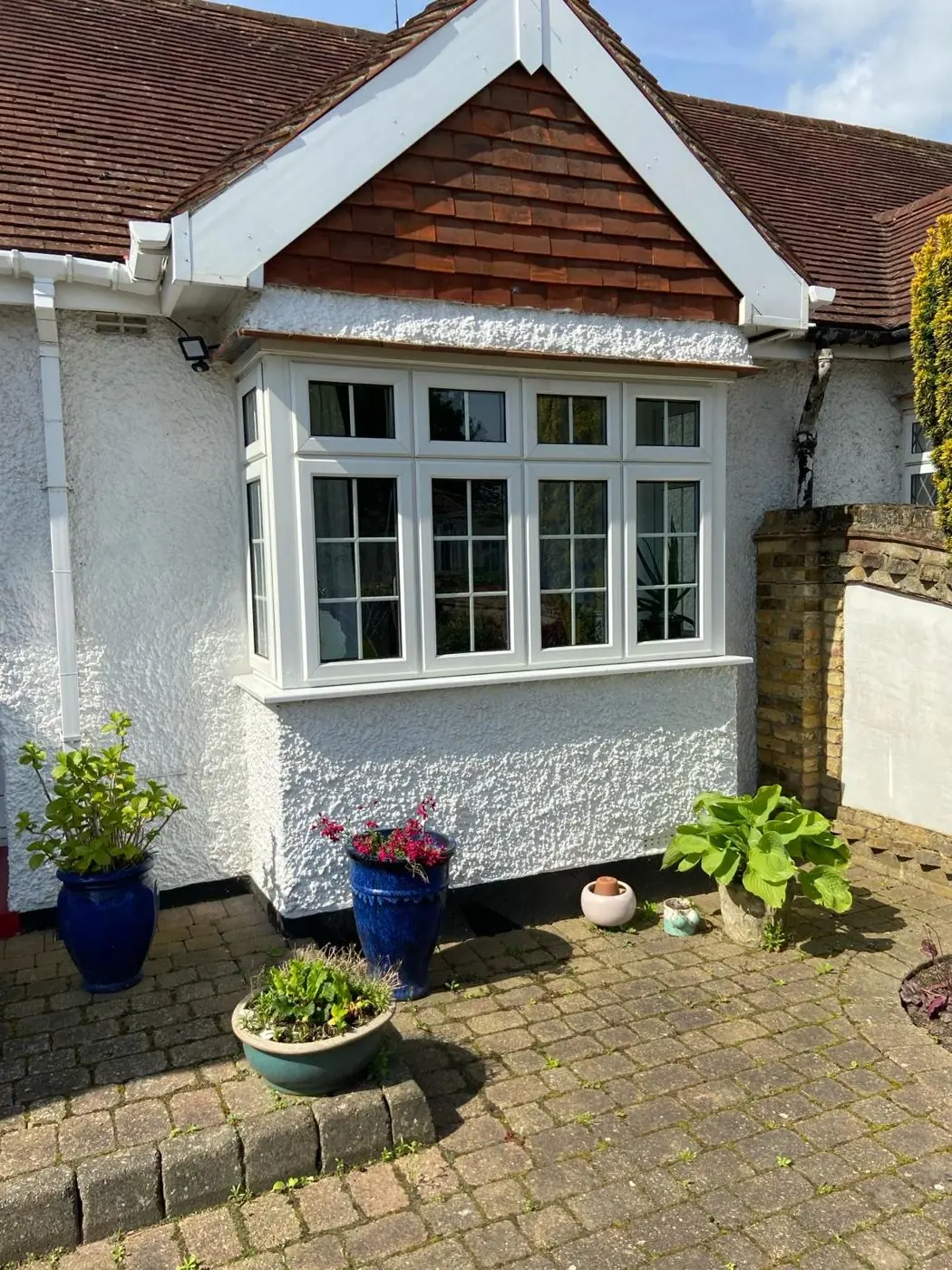
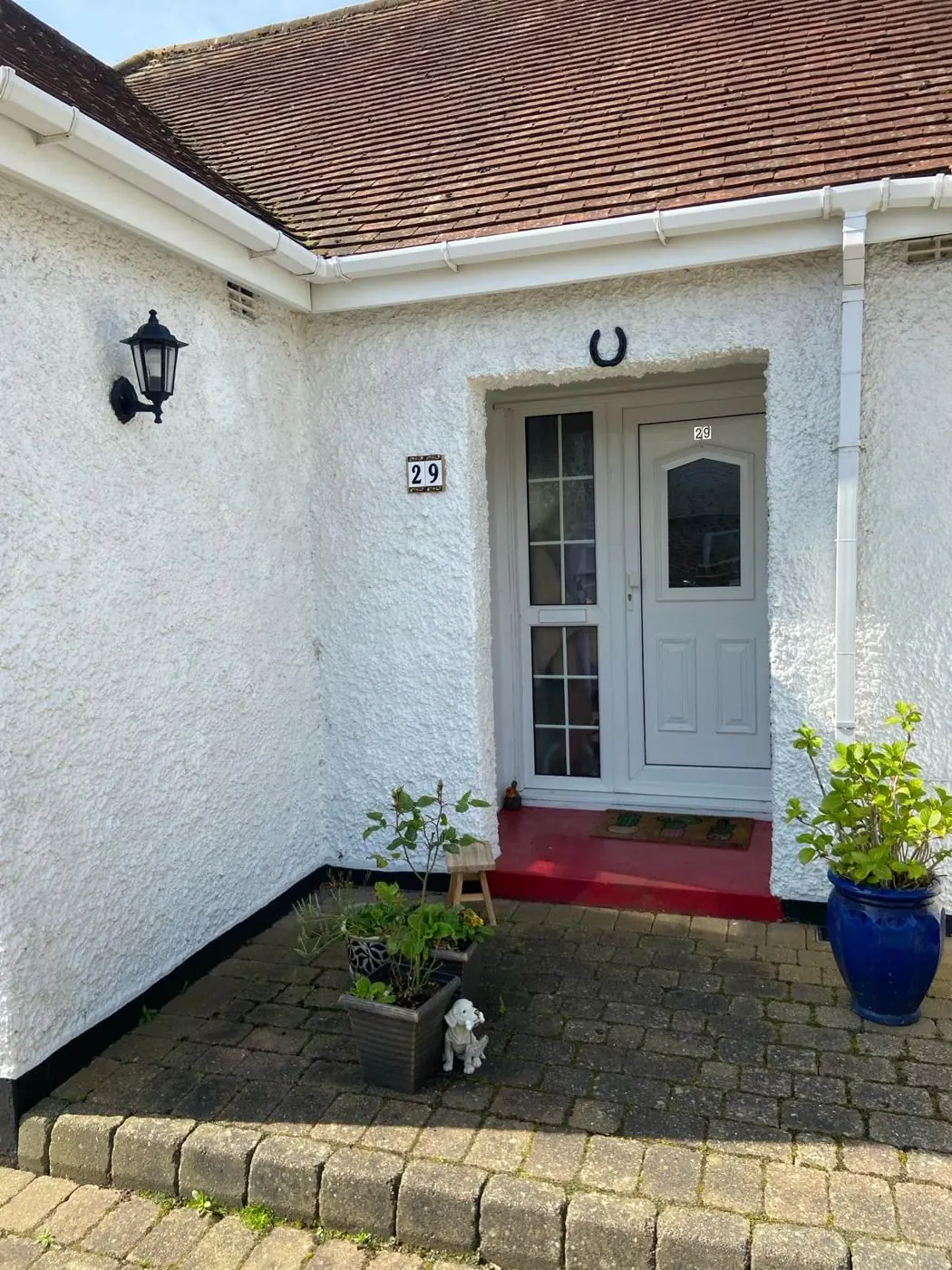
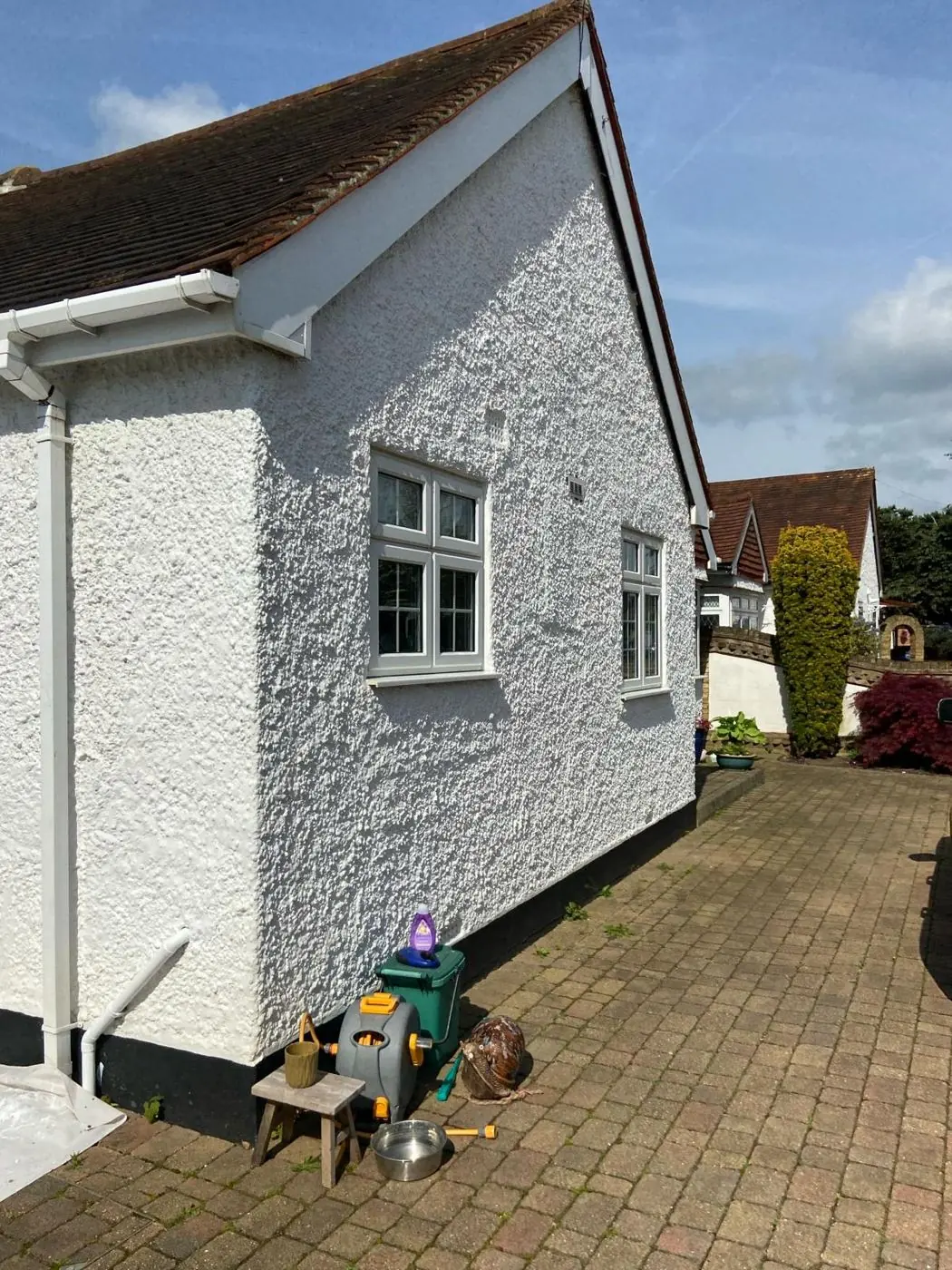
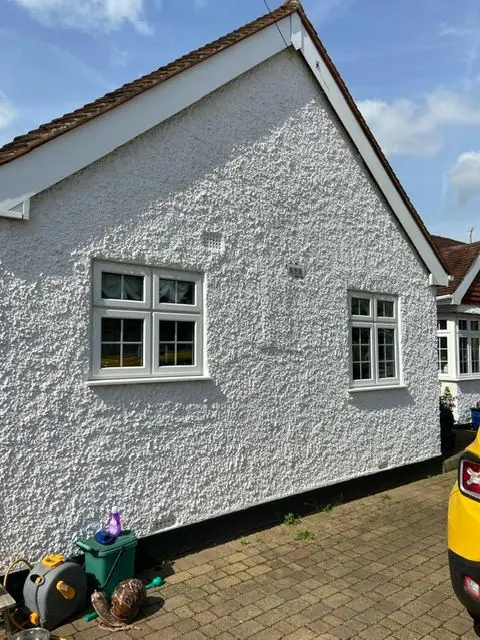
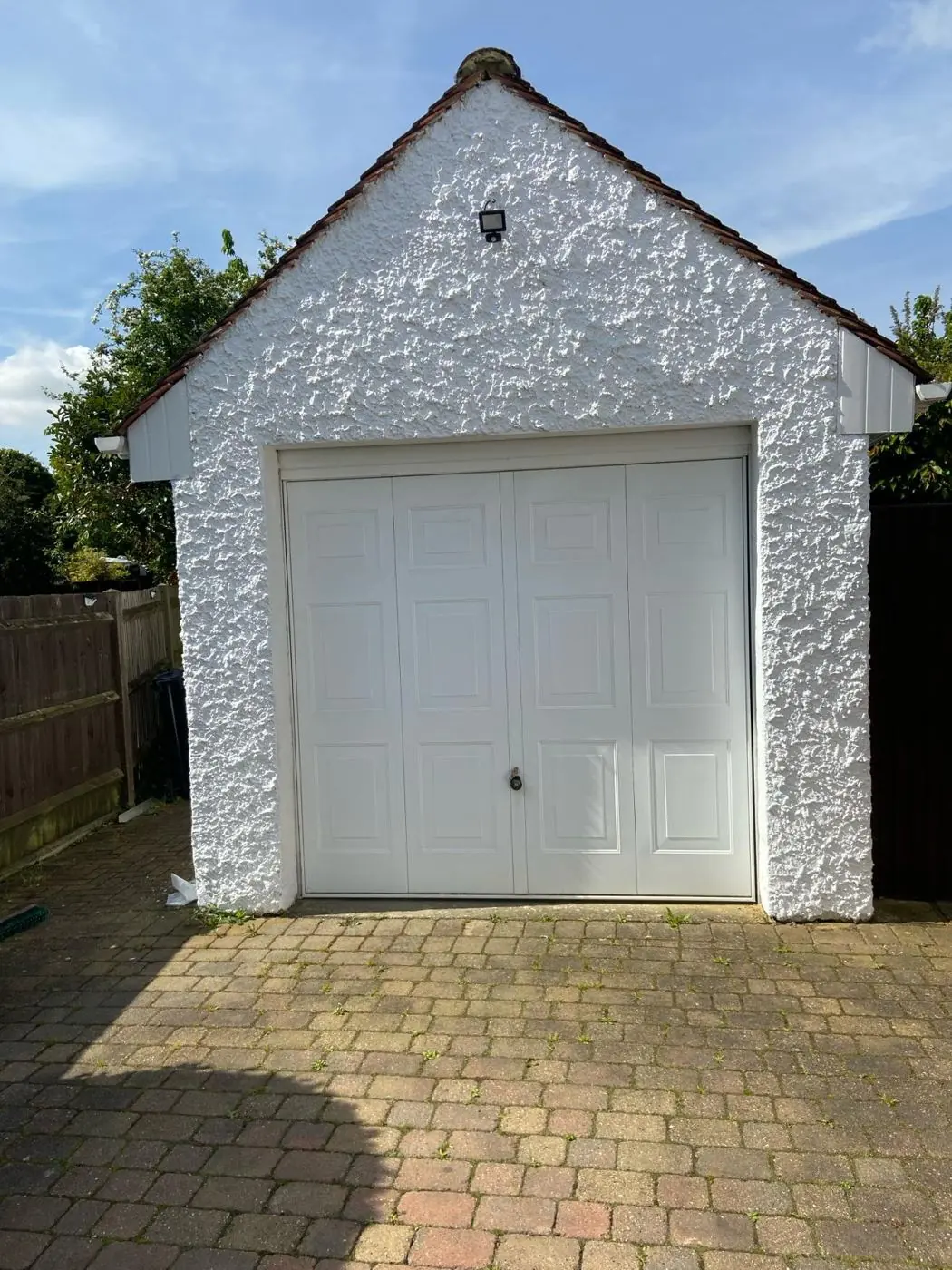
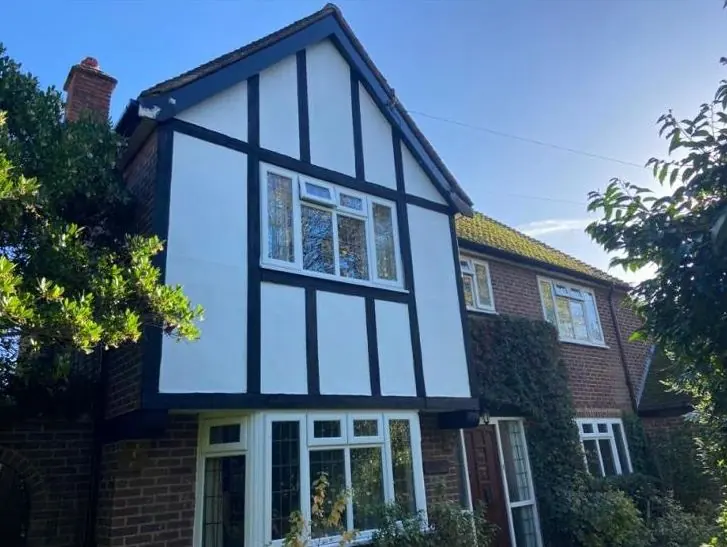
Away from the core the work changes. Early 20th century detached houses on Moulton Lane and northern Butcher’s Lane mix pale stone, buff brick and pebbledash behind deep gardens, and 1960s houses on Howard Lane and Vyse Road are mostly brick with some render. At Buckton Fields, built since 2015 south-west of the parish, homes have newer joinery that usually needs its first full repaint rather than a strip. For our general method and products, see the main exterior painting service, and for the village as a whole, the Boughton area page.
Last updated by Dean, DH Painter & Decorator.