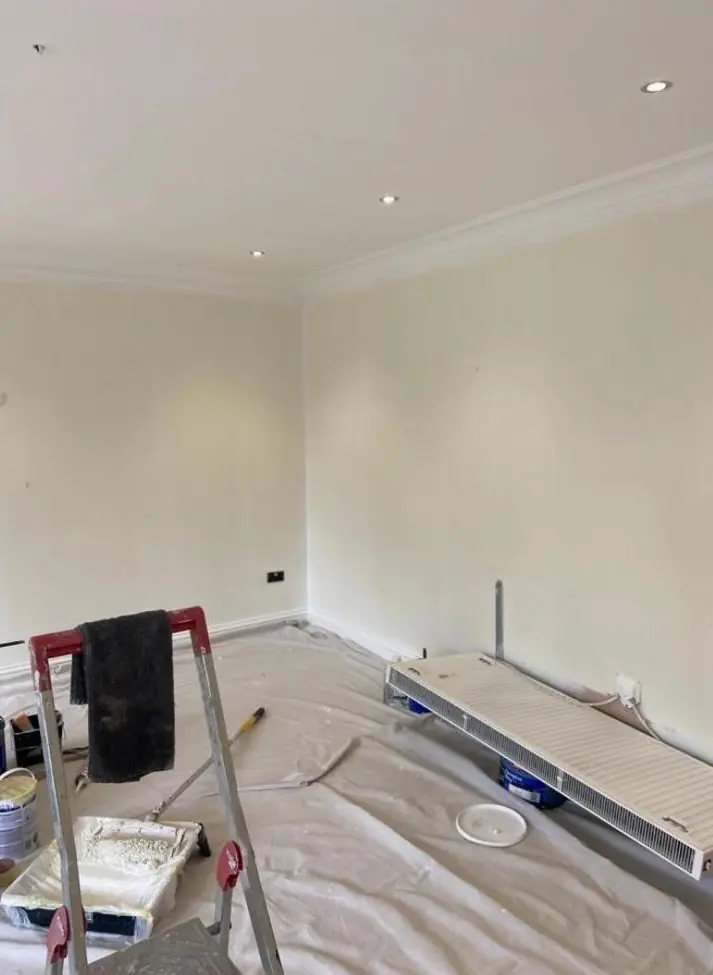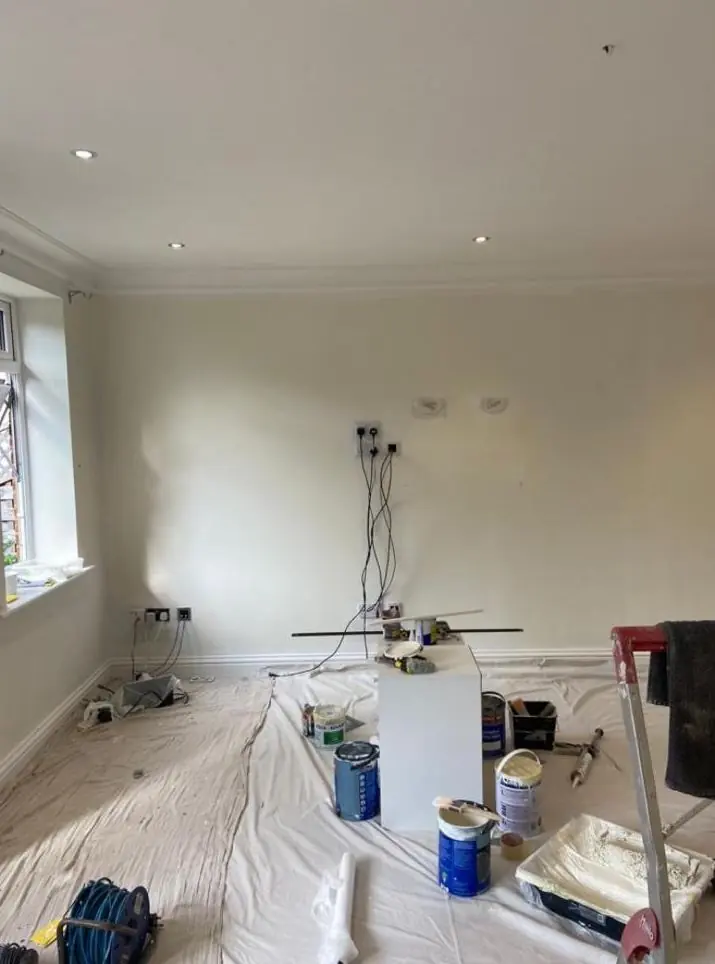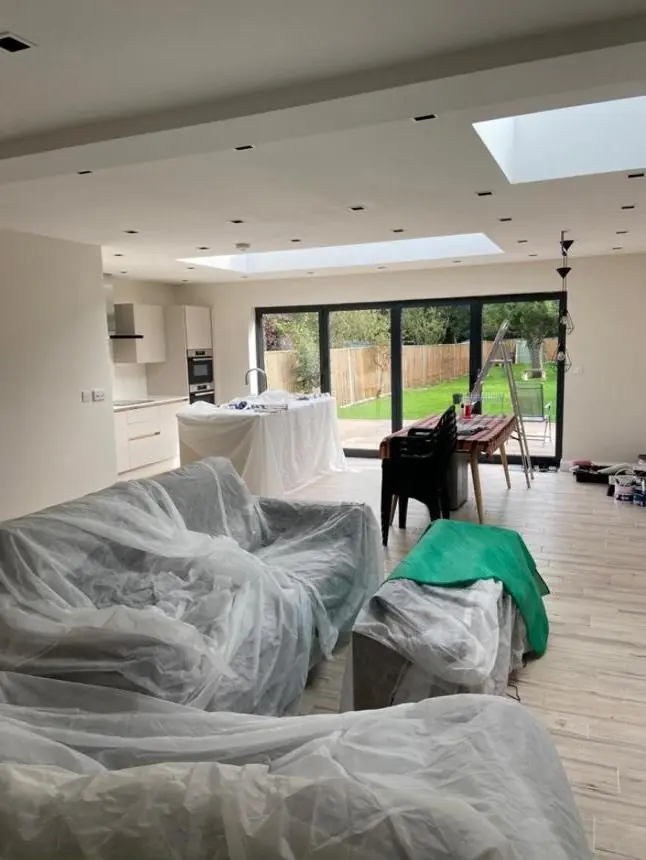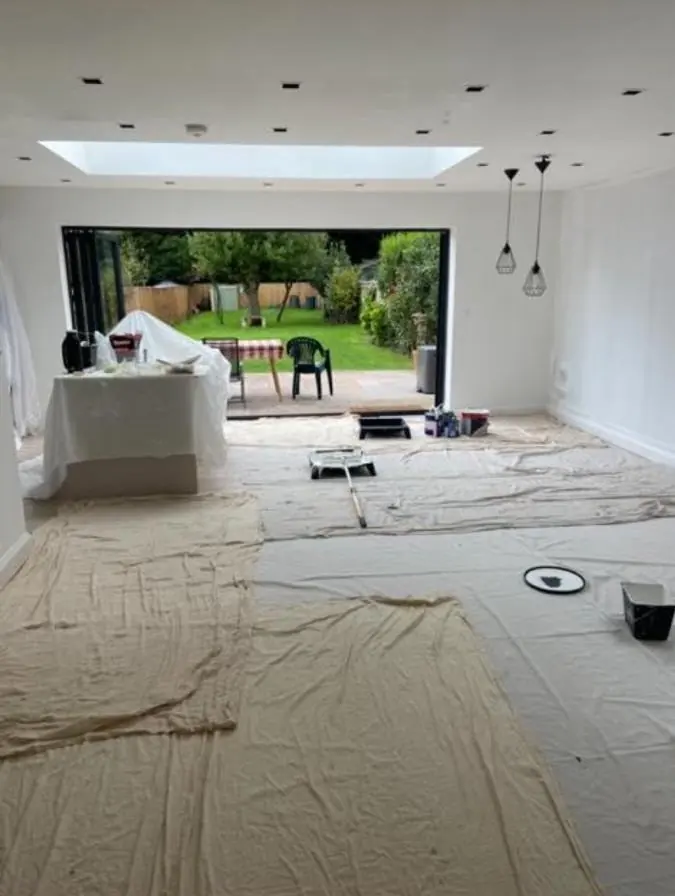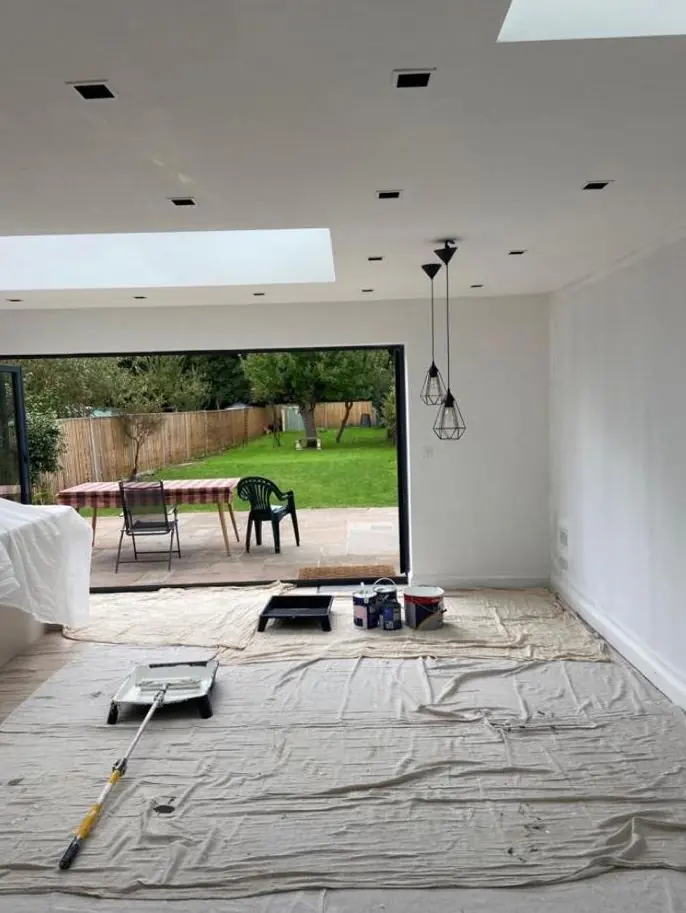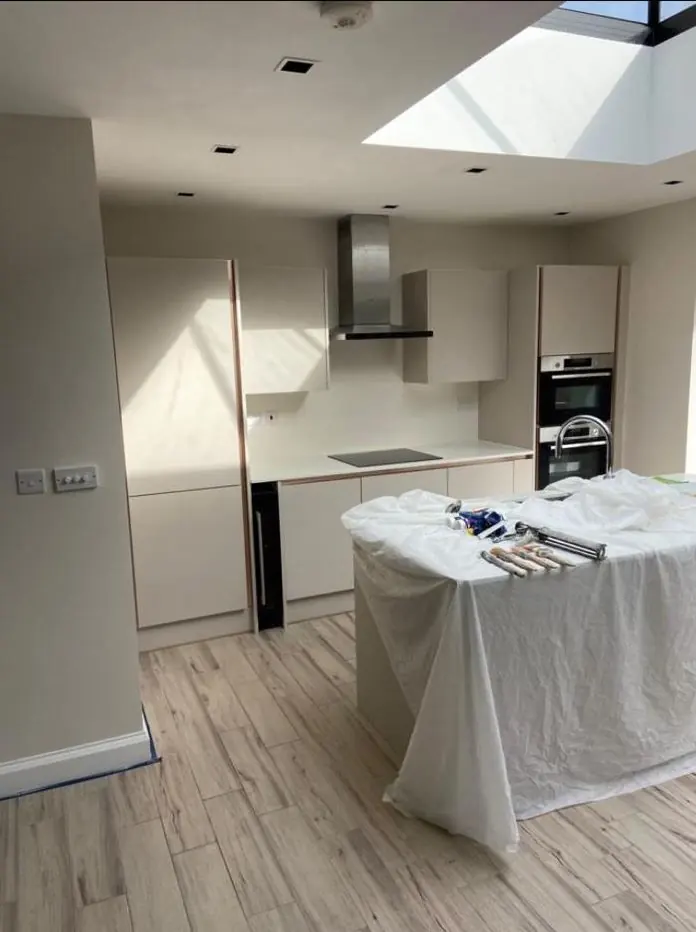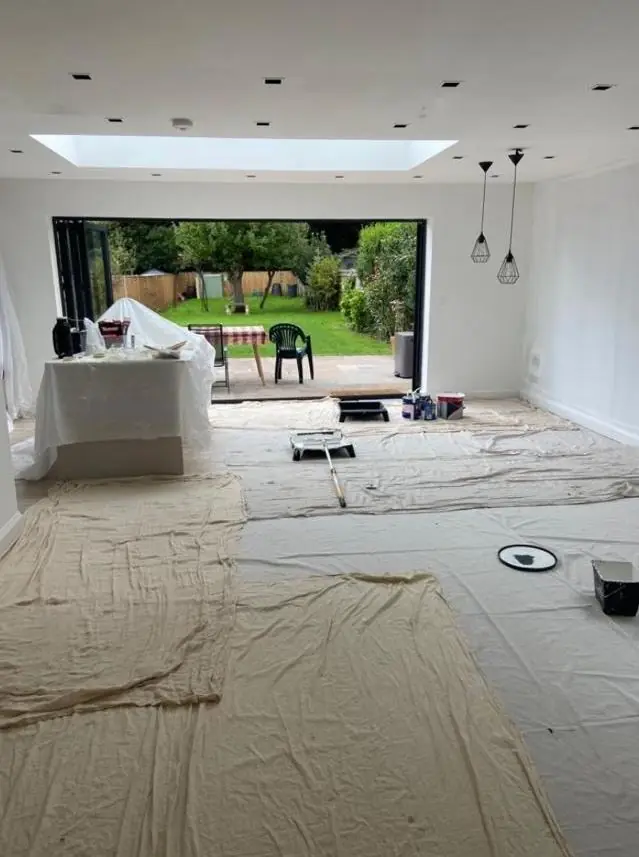
We decorate new plaster in Chapel Brampton and Church Brampton, the twin NN6 villages a few miles north-west of Northampton. Work here ranges from modern extensions and re-skimmed rooms to conversions of old farm buildings, where new gypsum often meets historic lime plaster on ironstone walls and each needs a different first coat.
Where new plaster comes from in this parish
The housing in the two villages has been extended and converted over a long period. The parish has former agricultural buildings, The Old Granary and the old wash houses of the Spencer estate terraces, and some of these have been extended or converted for living space. Brampton Hill Farmhouse has listed granary, stable and cart shed buildings. Alongside those there are modern additions to the later houses in Great Close and Little Close, and to the large detached houses beside the golf course.
That gives three quite different starting points for a decorator: plain new gypsum skim in an extension, a mix of new and old plaster in a conversion, and repairs to lime plaster on solid stone. Painting all three the same way is the most common reason for flaking a year later.
Gypsum or lime: find out before the first coat
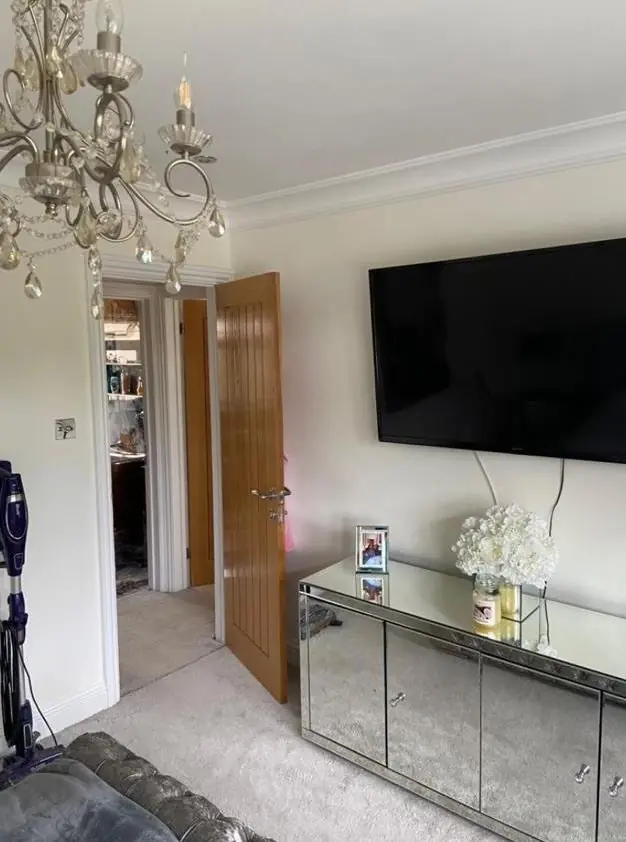
Modern skim is gypsum. Once it has dried to an even pale pink it takes a mist coat of thinned contract matt, then two full coats. Our guide to mist coats on new plaster explains the reason for each step.
Lime plaster behaves differently. The 18th- and 19th-century ironstone cottages here have solid walls with no cavity, and lime lets that wall breathe. If a plasterer has repaired a wall in lime, or a conversion keeps the original lime finish, it should not be sealed under vinyl emulsion. A breathable mineral, clay or limewash-type paint lets moisture move out of the stone. Lime also takes longer to carbonate than gypsum takes to dry, so the wait before painting is longer. We ask the builder or plasterer what was used, and if no one knows we check the surface.
Conversions where old walls meet new
- Junctions. Where new plasterboard meets an old stone wall there is movement between the two. We fill and run a flexible decorator’s caulk along the line before painting rather than leaving a hard filler that cracks.
- Uneven walls. Old stone walls in a converted barn or wash house are not flat, and a sheen finish shows every undulation. A good matt keeps the character without highlighting it.
- Salts and damp. Ironstone walls that have stood unheated as outbuildings can carry salts that bloom through new paint. We look for white deposits and damp patches and tell you if the wall needs more drying time before decorating.
- Listed curtilage. The wash houses between the Welford Road cottages sit within listed buildings, so work on them is a matter for listed building consent. That is for the owner and builder to arrange. We decorate to the agreed specification.
Extensions on the newer houses
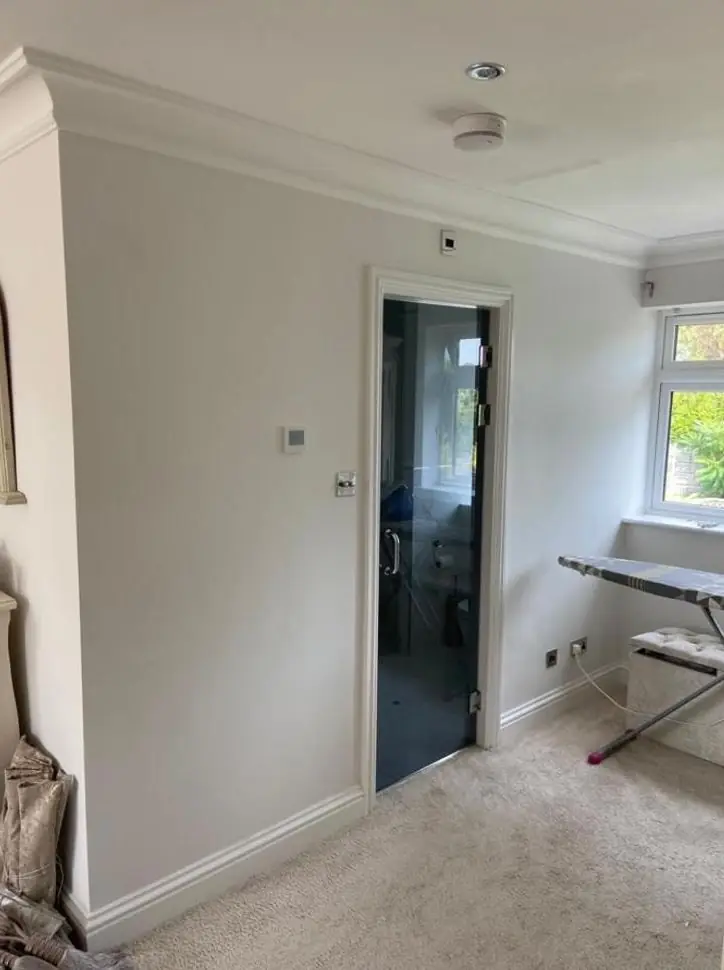
Extensions to the 20th-century houses and to the large homes near Golf Lane are mostly the familiar pattern: dry-lined or skimmed walls, a new ceiling, perhaps a roof lantern, and new skirtings and door linings. The timing is usually the real issue. We come in after the plasterer and before the kitchen fitter or flooring, so the walls are coated before units go against them. At Cedar Hythe every tree is protected and trees overhang many houses, so an extension there can be in shade for much of the day. Plaster in a cool, shaded room dries more slowly, and we allow for it rather than painting too soon.
The full process for extensions, from snagging to final coats, is on our main new plaster and extension decorating page, and there is more about the village on our Bramptons area page.
Last updated by Dean, DH Painter & Decorator.