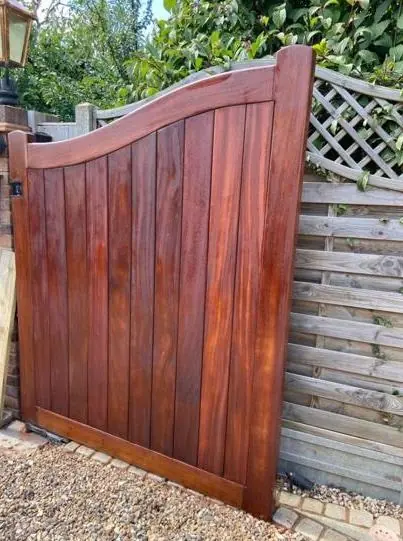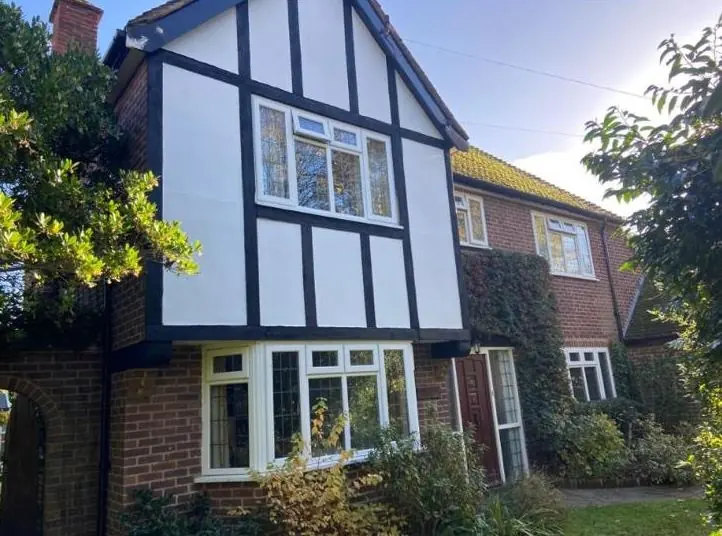
DH Painter & Decorator paints house exteriors in Pitsford, the hilltop village 4.7 miles north of Northampton town centre in NN6. Dean handles conservation-area joinery on Pendle stone houses as well as masonry, fascias and woodwork on the post-war estates. Quotes are free.
Stone that stays bare, joinery that gets painted
In most villages an exterior job means walls first. Pitsford’s historic core works the other way round. The 17th to early 19th century farmhouses, barns and cottages along the eastern end of High Street, Manor Road, Moulton Road, Church Lane and Grange Lane are built from regularly coursed Pendle rubblestone pointed in lime mortar, and that stone is meant to stay unpainted. The conservation area appraisal notes that rendered or painted finishes are not common on historic properties here. On these houses the painted part of the exterior is the joinery: small-paned timber casements, panelled and planked doors, bargeboards and the timber lintels over windows on former farm buildings.
Those surfaces carry specific expectations. The village design guidance describes historic casements as generally white or cream, and asks for replacements in white, light or building-appropriate colours. Lintels on agricultural buildings were traditionally picked out in white or black. Four- and six-panel Georgian and Victorian doors, and plank doors hung on Gothic iron hinges, need hand sanding into the mouldings, with the ironwork masked or taken off rather than painted over. Each glazing bar on a small-paned casement is cut in by hand, so allow more time per window than on a modern house.
Named houses, window rules and repair over replacement
The 2019 appraisal put forward Article 4 controls on window alterations for a list of named houses, Rochberrie and The Firs among them, and on door alterations for a few, such as Pitsford House West. West Northamptonshire Council consulted on these in 2021. Whatever their final status, the direction of travel is clear: repair and repaint original timber rather than replace it. That suits a careful repaint. Soft spots are cut out and resin-filled, joints are sealed, and bare timber is primed before undercoat and top coat. If you are thinking about a colour change on a listed or named house, check with the council before we start. Listed buildings in the village include White Horse Cottage, The Bakery and Virginia Cottage on High Street and Elm Cottage on Manor Road.
Access on Manor Road, Church Lane and Grange Lane
Pitsford’s lanes were laid out by the 17th century and they show it. Manor Road is very narrow in places and climbs a short hill, with telegraph poles and overhead wires along it. Church Lane is enclosed by high stone retaining walls. Parts of Manor Road, Grange Lane and Moulton Road have no pavement, and many cottage doorways open almost straight onto the highway. Ladders and towers therefore have to fit in very little space, and some fronts can only be reached with a neighbour’s agreement or a short-term arrangement for the road edge. Dean plans this at the survey so the access is settled before the start date. On Moulton Road, work near the primary school’s zebra crossing is timed around school arrivals and departures.
Shade, springs and a hilltop: timing the job
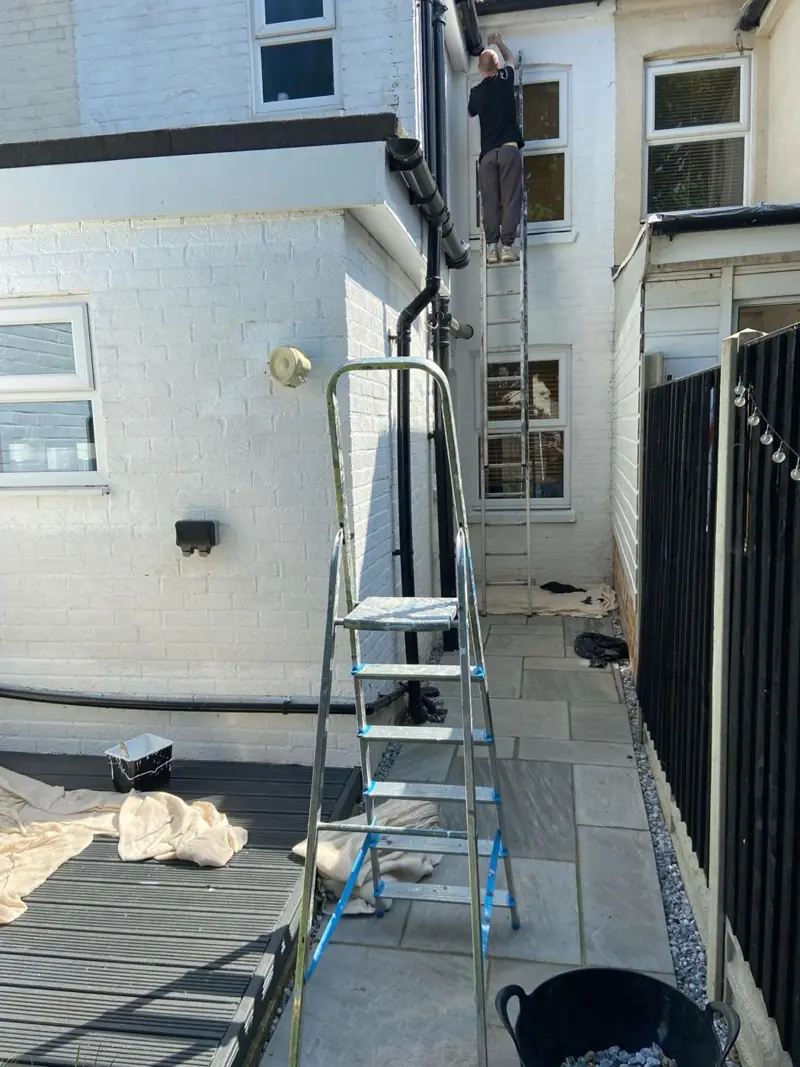
The village sits on high ground between Pitsford Water and the Sedge Brook valley, with the surrounding valleys about 30m lower. West-facing elevations take the weather straight off open farmland, so we schedule exterior work for settled spells (our guide on when to paint outside in the UK explains why). At the same time, around fifty Tree Preservation Orders, mature cedars and hedges grown over walls keep many north-facing doors and frames damp and green. Those surfaces get a fungicidal wash and time to dry out before any primer goes on. Thatched cottages such as Paddock Cottage and Nos 20 and 21 Manor Road get no heat stripping at all near the eaves.
Outside the historic core: Drummond Close, Broadlands and Glebe Lane
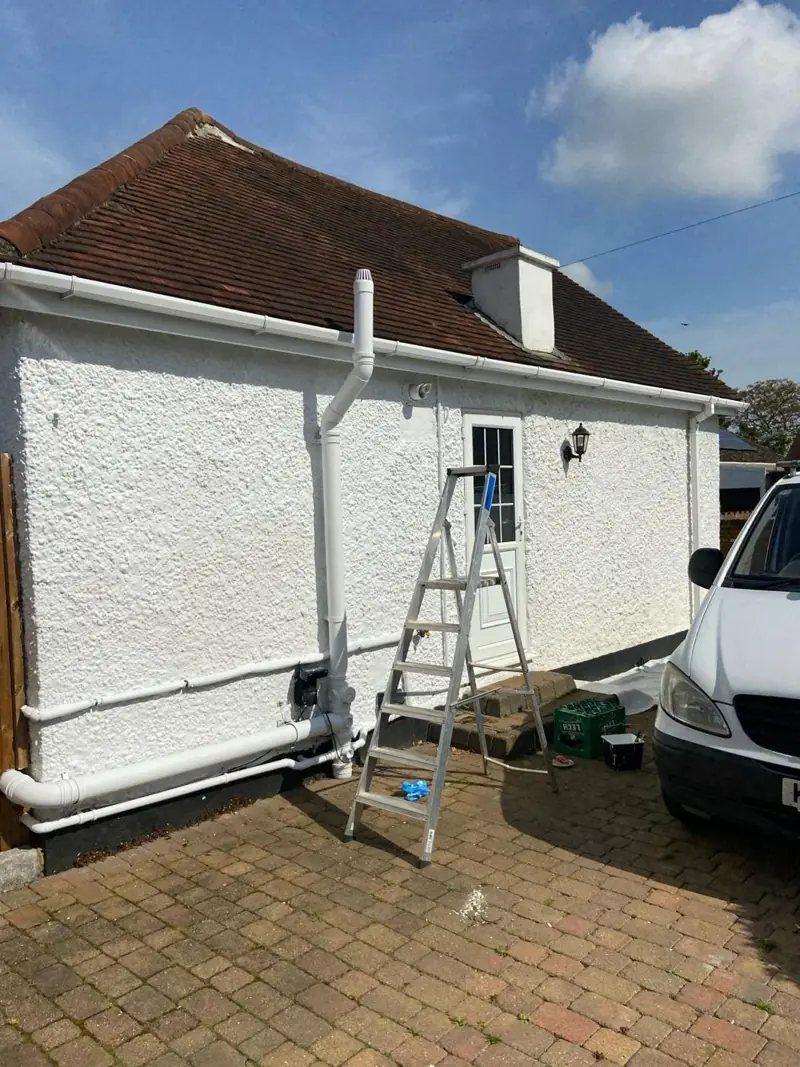
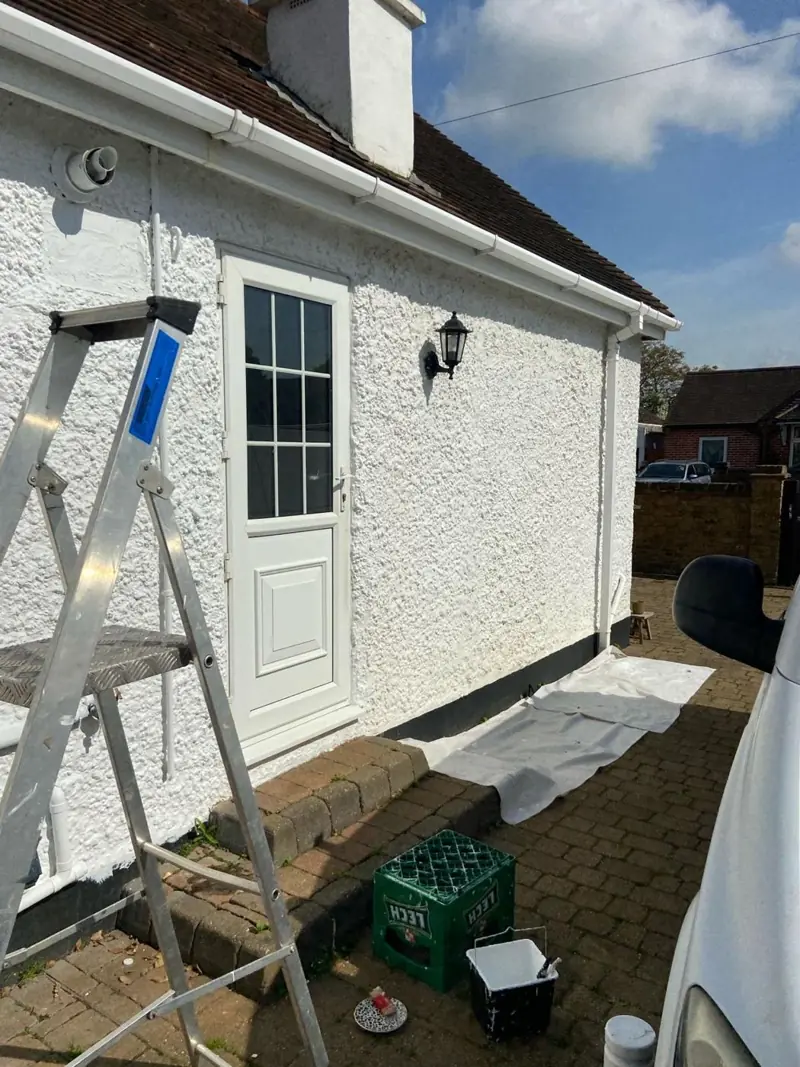
The mid- and late-20th century houses on Drummond Close, Broadlands and Glebe Lane, and the buff brick on Grange Lane, sit outside the heritage constraints. Here a full exterior repaint is the usual job, with masonry paint on render, gloss or satin on timber fascias and staining on fences. The inter-war former council houses on the north side of High Street have pebbledash that takes paint well once it has been stabilised. The general process for all of this is set out on our main exterior painting service page, and you can see how the village’s other property types are handled on the Pitsford area page.
Last updated by Dean, DH Painter & Decorator.