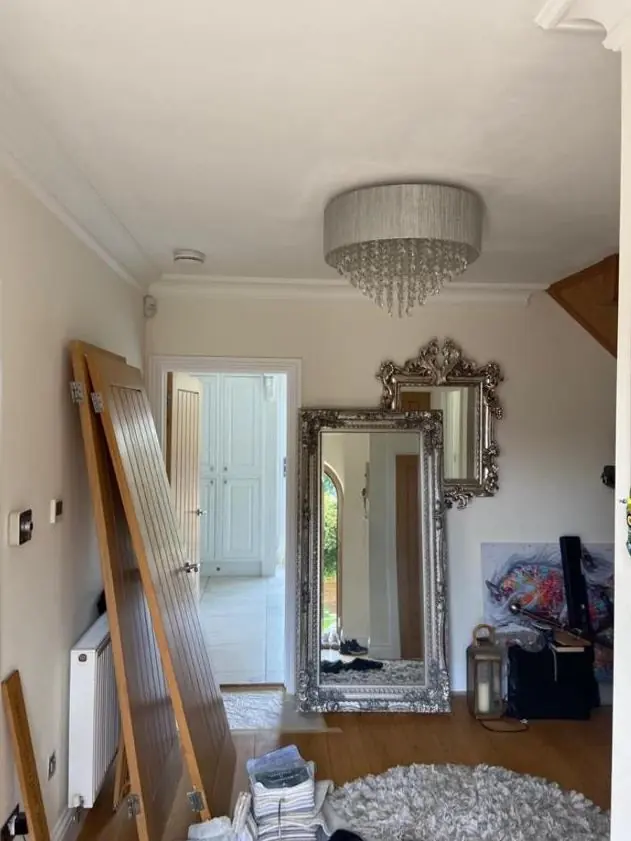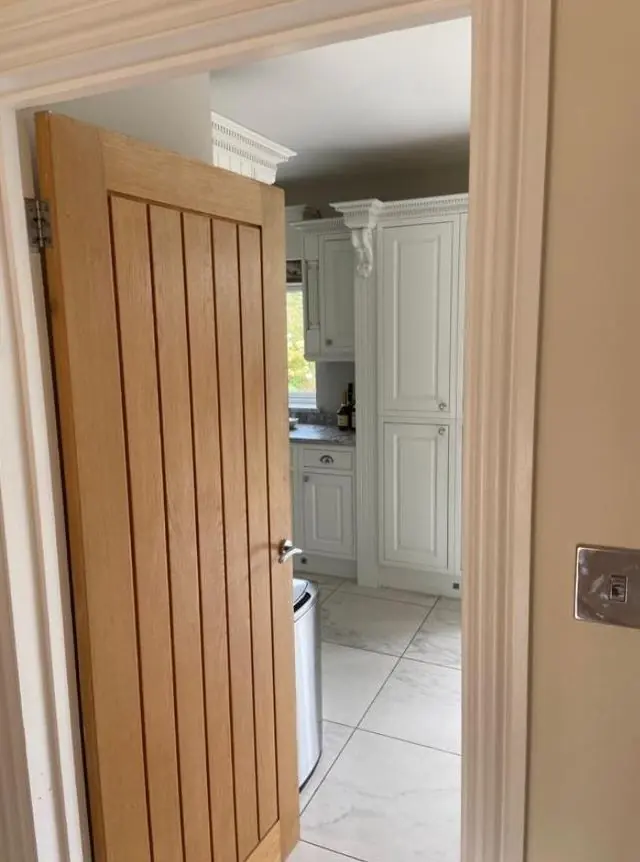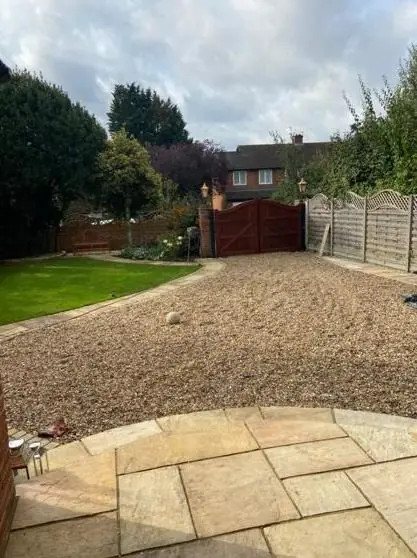
DH Painter & Decorator covers Chapel Brampton and Church Brampton from our Northampton base, about 4 miles north-west of the town centre along the A5199. Dean, with over 30 years in the trade, paints and decorates the parish's ironstone cottages, listed estate terraces, 1960s Cedar Hythe houses and large detached homes, with conservation rules in mind.
Two villages, one parish
The Bramptons is the local name for Chapel Brampton and Church Brampton, which have formed the single civil parish of Church with Chapel Brampton since April 2009. Both appear in Domesday as one village, Brantone. Chapel Brampton is the larger, grouped around the crossroads where the A5199 Northampton Road and Welford Road meet Harlestone Road and Pitsford Road. Church Brampton is smaller and centres on the Grade II* Church of St Botolph. The parish is in the NN6 postcode district, part of West Northamptonshire, and sits about 4 miles north-west of Northampton town centre.
A lot of the property was built by the Spencer family of Althorp, who acquired the manor of Chapel Brampton in 1825. That shows in the materials and details: local ironstone, plain tile roofs, Tudor-style plank doors and cast-iron lattice windows repeated across both villages. Around that historic core sit the 1960s Cedar Hythe estate, later 20th-century housing at Great Close and Little Close, two golf courses and two conference venues.
Property types across the parish
| Property type | Where | What it means for decorating |
|---|---|---|
| Vernacular ironstone cottages and farmhouses, 16th to early 19th century | Around the crossroads, Welford Road, Harlestone Road, Back Lane, Northampton Road | Solid walls and lime plaster: breathable paints inside, joinery-led exterior work |
| Spencer estate terraces (1848) with wash houses, and Almscourt (1858) | 1-10 Welford Road, the matching group in Church Brampton | Grade II listed: like-for-like colours, slow work on lattice casements and plank doors |
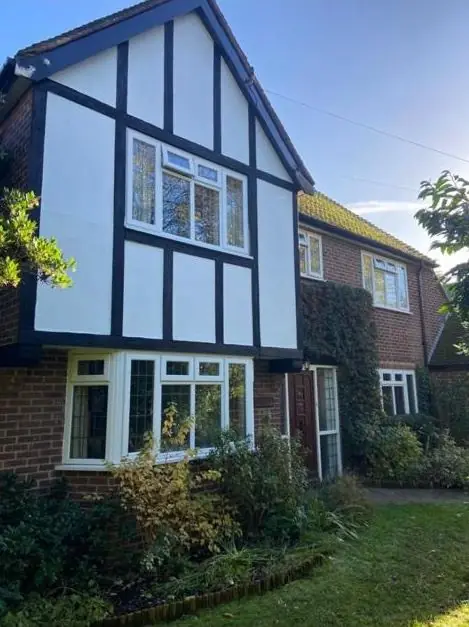
| Late-1960s architect-designed houses | Cedar Hythe | White or brown-stained timber cladding, metal windows and porches, mature protected trees |
| Later 20th-century estate housing and infill | Great Close, Little Close, south side of Harlestone Road | Conventional modern decorating, some ironstone infill |
| Large detached houses | Golf Lane, Church Brampton | Whole-house redecoration, wallpaper, decorative finishes, protection of fittings |
Working within the Chapel Brampton conservation area
Chapel Brampton Conservation Area was designated in 1978, and its appraisal and management plan were adopted in February 2020. It covers the historic core and the Cedar Hythe estate. Several of its recommendations bear directly on painting:
- Masonry paint is often not acceptable on pre-1919 buildings. Lime-based render or limewash is preferred where a finish is needed, and bare ironstone frontages should not be painted or rendered.
- Pointing should be in lime mortar, and lime-pointed ironstone shouldn’t be sealed or overpainted.
- Painted window frames should be white or a colour based on the originals.
- Cedar Hythe’s timber cladding should stay white paint or brown stain, and its metal windows should be kept.
The appraisal also proposes Article 4 Directions covering doors and windows on properties including the Spencer Arms, Halfway Thorn, Brownstones, The Old Posting House and houses on Welford Road and Northampton Road, plus the decorative bargeboards at 1-8 Halfway Thorn. We found no confirmation that these directions have been made. Repainting is not normally an alteration, but replacing joinery is restricted, so repair and repaint is the usual route. Church Brampton has no conservation area on the council list we checked, but its estate cottages, almshouse and church are individually listed. If you’re unsure about any change of colour or finish, ask West Northamptonshire Council before work starts.
Outside: joinery, ironwork and cladding rather than walls
Because the stone is meant to stay bare, most exterior painting on the older houses is joinery, porches and metalwork. The Spencer estate cottages have ribbed or plank Tudor-style doors under four-centred heads, gabled porches, and casements with cast-iron diamond-pane glazing. Those casements need rust treatment, metal primer and careful cutting in around dozens of small panes, so they take far longer than their size suggests. The Halfway Thorn brick cottages (1-8) have decorative bargeboards with terracotta ridge tiles and finials, exposed and fiddly to prepare. Our exterior painting page explains our general approach to preparation and coatings.
Cedar Hythe is the other big exterior job here. Its horizontal timber cladding needs recoating like for like, its aluminium windows and glazed sliding porches need degreasing and an etch or metal primer, and its mono-pitch roofs have timber fascias under overhanging trees. The whole estate is a Tree Preservation Order area, so trees can’t be cut back for access without consent. Fallen leaves, damp shade and green growth mean a fungicidal wash and dry-weather timing are part of every job.
Inside: lime walls, low ceilings and big glazing
Inside the cottages, the solid ironstone walls carry lime plaster that needs breathable clay, mineral or distemper finishes rather than vinyl emulsion. Rooms are small, ceilings low and walls out of true, which affects everything from cutting in to how a wallpaper pattern behaves. The interior painting page covers our method, and wallpaper on uneven stone walls is a job in its own right. At Cedar Hythe the problem flips: open, bright rooms with large windows show every flaw in a wall, so preparation counts for more. The large detached houses towards the golf courses tend to want full redecoration, feature papers in halls and dining rooms, and painted panelling.
Where former wash houses and farm buildings have been converted, or extensions added, new plaster needs a proper mist coat, and new work often meets old lime plaster in the same room. Our guide to painting new plaster explains why that first coat matters.
Commercial work and access
There are no shops in the parish. Commercial painting means hospitality and leisure buildings: the Spencer Arms on Northampton Road, a former coaching inn, the Sedgebrook Hall and Brampton Grange conference venues, and the clubhouses of the Northamptonshire County and Brampton Heath golf courses. Work there is planned around trading and events.
The A5199 through Chapel Brampton is a wider former turnpike with steady through traffic, and the other village roads are narrower. Older cottages often front straight onto the road, which puts ladders and towers on the pavement or verge; on Back Lane the west side has wide verges but no footway. In the listed terraces, attached neighbours and shared outbuildings sit within the listed curtilage, so we agree access with you before starting. Cedar Hythe is easier, with wide verges and open front lawns.
Dean visits to look at the house and gives you a written quote. For how decorating is priced, see the cost guide.
Last updated by Dean, DH Painter & Decorator.