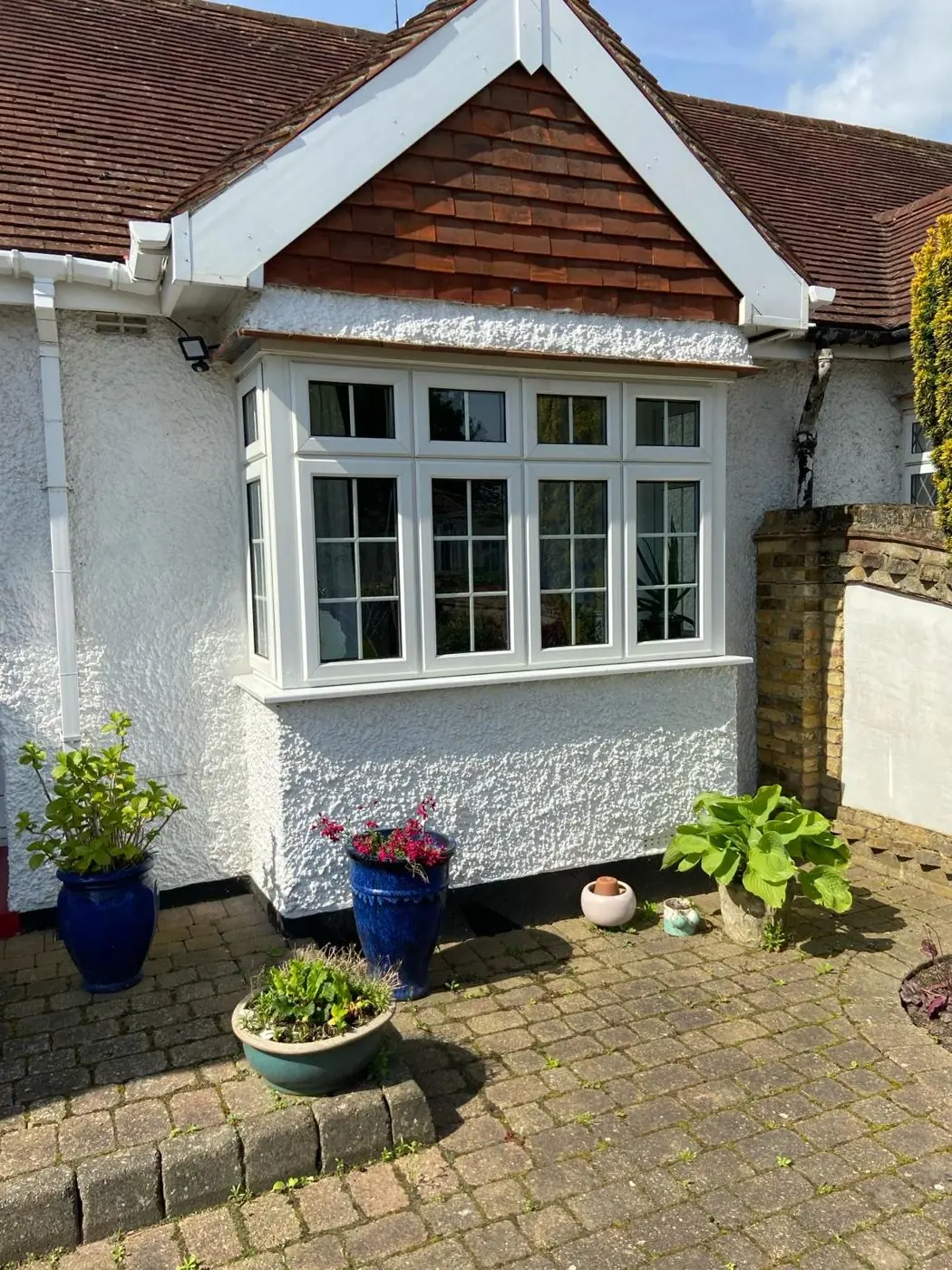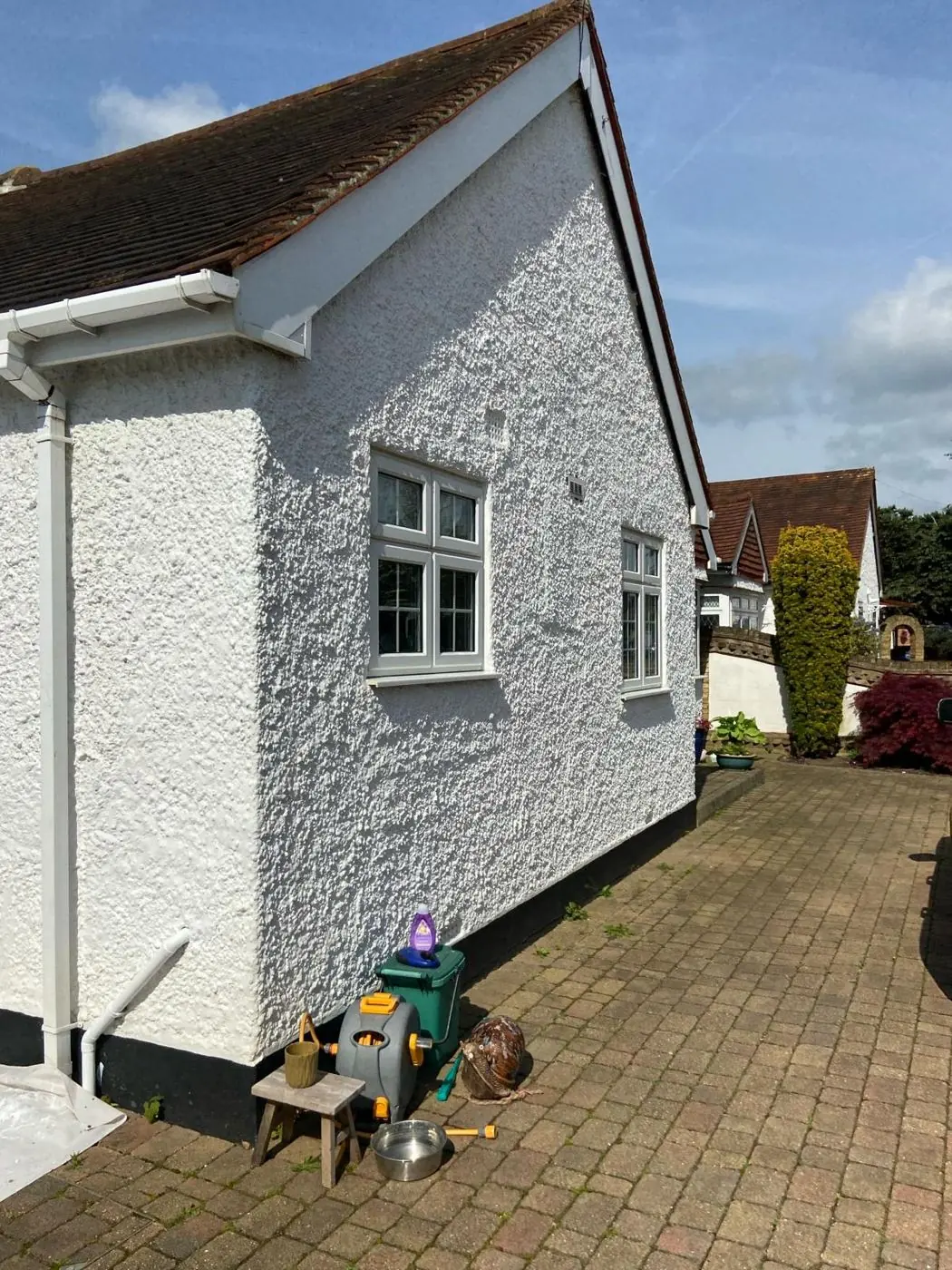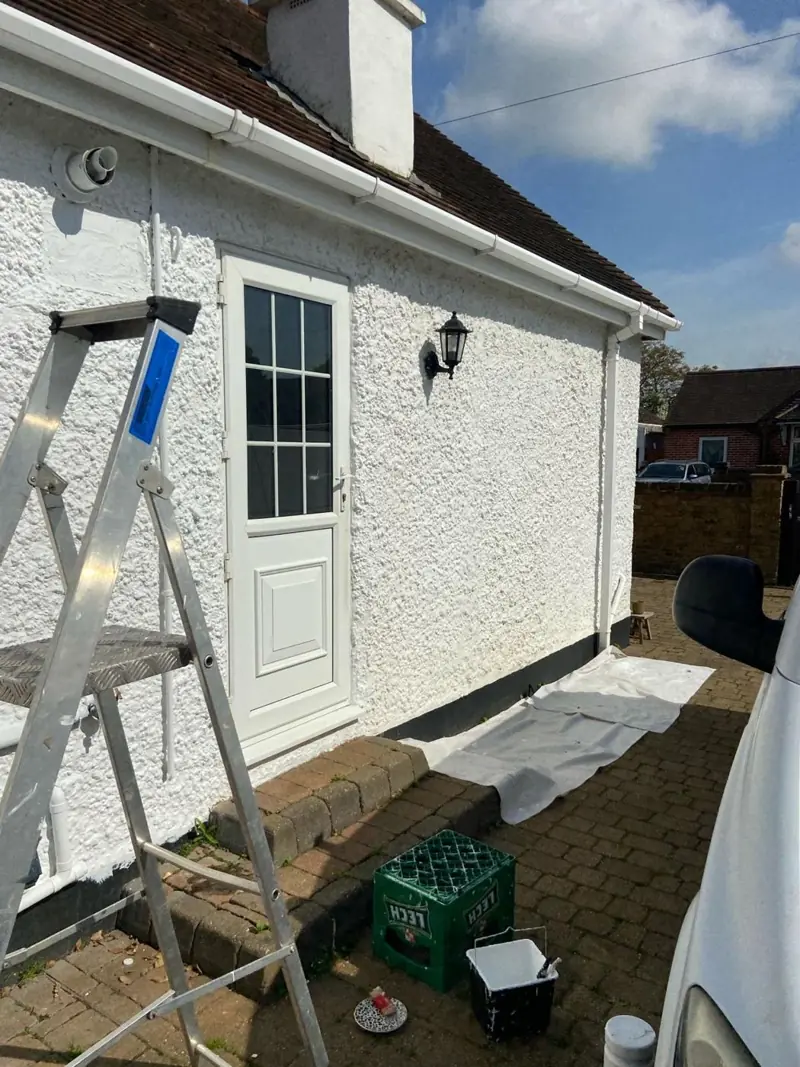
Masonry painting in The Bramptons is a smaller job than in most places, because the conservation area appraisal discourages painting or rendering historic ironstone. Dean covers Chapel and Church Brampton from Northampton, about 4 miles away, and advises on limewash for older walls and masonry paint for modern ones.
A village where most walls should stay unpainted
We would rather tell you this at the start than after a visit. In Chapel Brampton, the conservation area appraisal adopted in 2020 says three things that matter here: masonry paint is often unacceptable on pre-1919 buildings, new render should be avoided, and so should painting bare ironstone fronts. The village is built largely of local ironstone, from the 16th to 19th-century cottages around the crossroads to the Spencer estate terraces of 1848. If your house is one of those, the honest advice may be to leave the stone as it is and spend the budget on the joinery.
The reason is moisture. Northampton Sand ironstone is porous, and the walls were laid in lime mortar so that damp could escape through the joints and the face of the stone. An acrylic masonry paint forms a skin that slows that drying. Water then builds up behind it, the paint blisters, and in frost the face of the stone can spall away. On a listed cottage that is damage to the listed fabric itself.
When limewash is the right finish
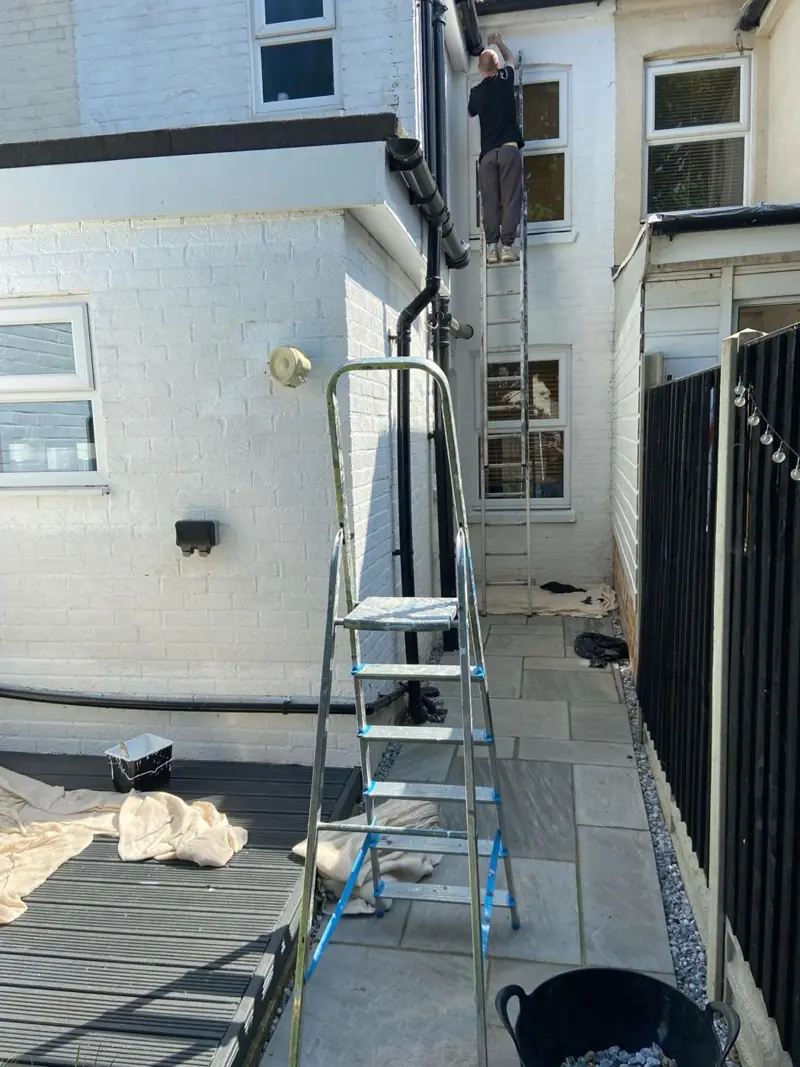
Some older walls in the parish may already carry limewash or a lime render, or have been painted in the past. Where a finish is justified, the appraisal points to limewash or lime-based products rather than modern paint. Limewash is slaked lime thinned with water, sometimes tinted with earth pigments, brushed on in several thin coats over a damp wall. It soaks into the surface rather than sitting on it, and lets the wall breathe.
- We check for old cement patches and modern paint first, because limewash will not bond to either.
- The wall is dampened before each coat and protected from sun, wind and frost while it cures.
- Coats are kept thin. Thick limewash crazes and flakes.
- It is renewed every few years, so a soft, slightly uneven look is normal.
On a listed building, or before limewashing a wall that is bare now, the owner should speak to West Northamptonshire Council first. We work to whatever they agree.
Modern rendered houses outside the historic core
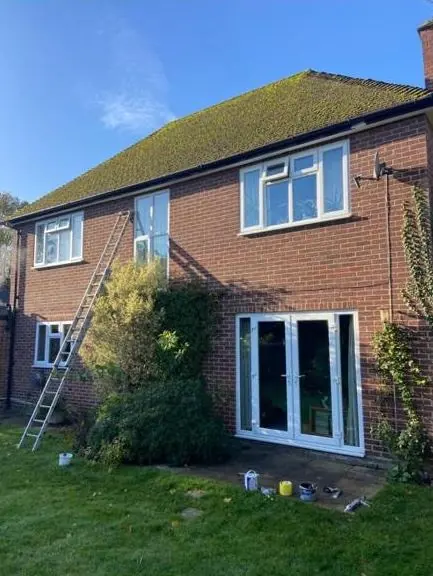
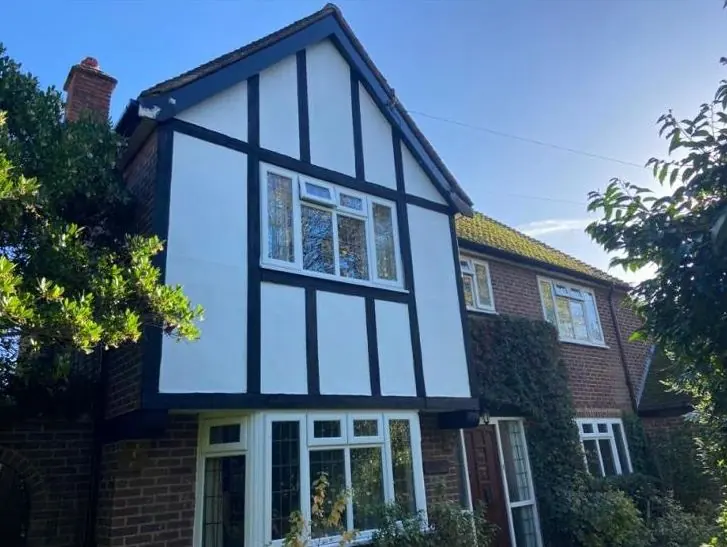
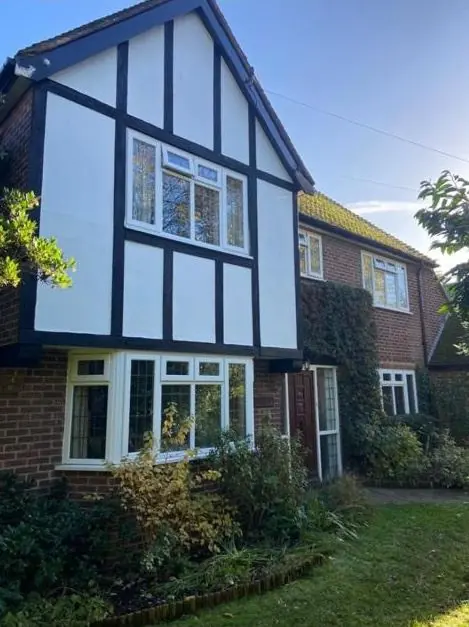
The parish also has housing from the second half of the 20th century, at Great Close, Little Close and along the south side of Harlestone Road, and large 20th-century detached houses near the golf course on Golf Lane. Where a later house has a sand and cement render, conventional breathable masonry paint is a normal choice, and the work follows the usual sequence of a fungicidal wash, crack repair, stabiliser on chalky areas and two finish coats. That sequence is set out on our render and masonry painting page, and the differences between render types are in our guide to painting render and roughcast.
Cedar Hythe is in the conservation area but is built of buff brick with timber cladding, not render. We would not suggest painting the brick there.
Lime pointing and the ironstone boundary walls
The streets are lined with low ironstone walls under rounded coping, and the long Brampton House estate wall runs beside Pitsford Road and Welford Road. These walls are left bare. The appraisal asks for lime mortar in pointing, and lime-pointed ironstone should not be sealed or overpainted. If a gate, post or timber panel in one of these walls needs painting, we mask the stone and paint only the timber or metal. Repointing is mason’s work, not painter’s, and we can tell you when we see joints that need it.
Shade and damp from mature trees, including the Tree Preservation Order areas along Harlestone Road and Back Lane, mean north-facing stone may carry algae. A gentle biocide wash is fine. Pressure washing soft ironstone is not. More about the parish is on our Bramptons area page.
Last updated by Dean, DH Painter & Decorator.