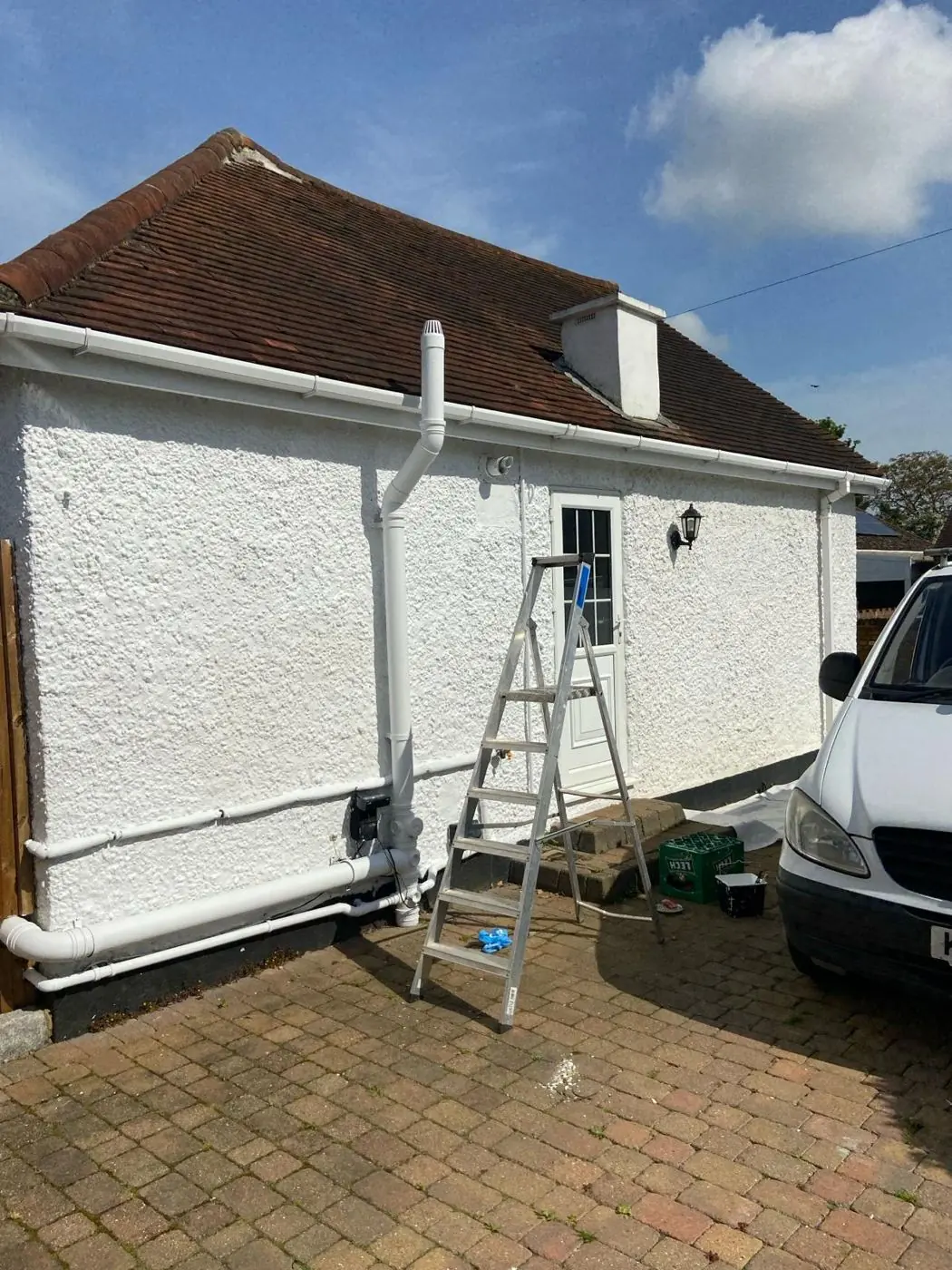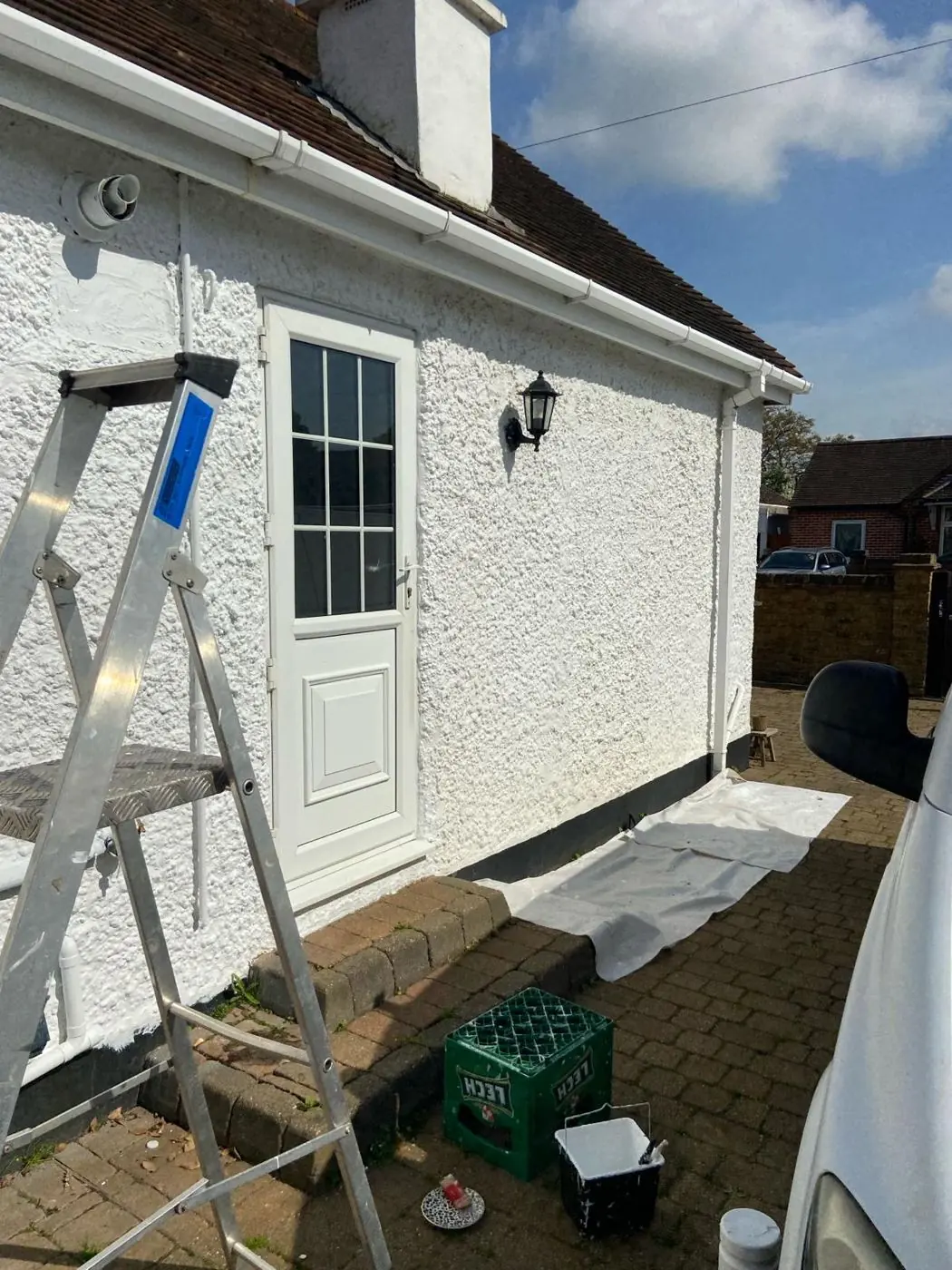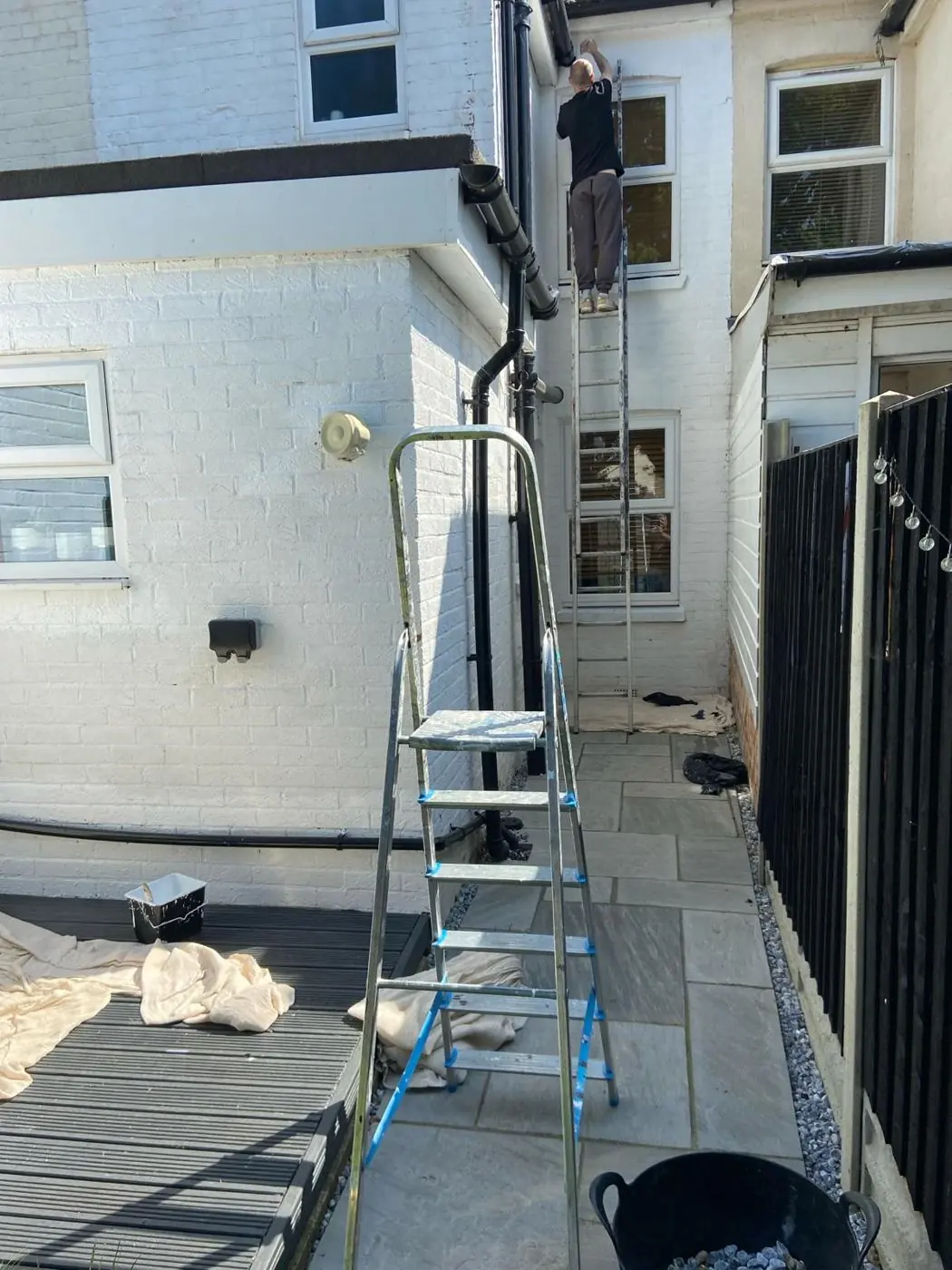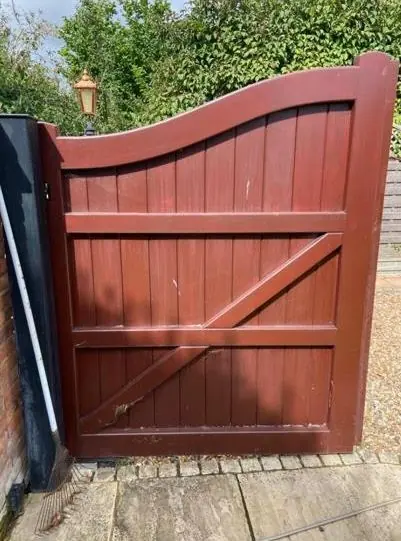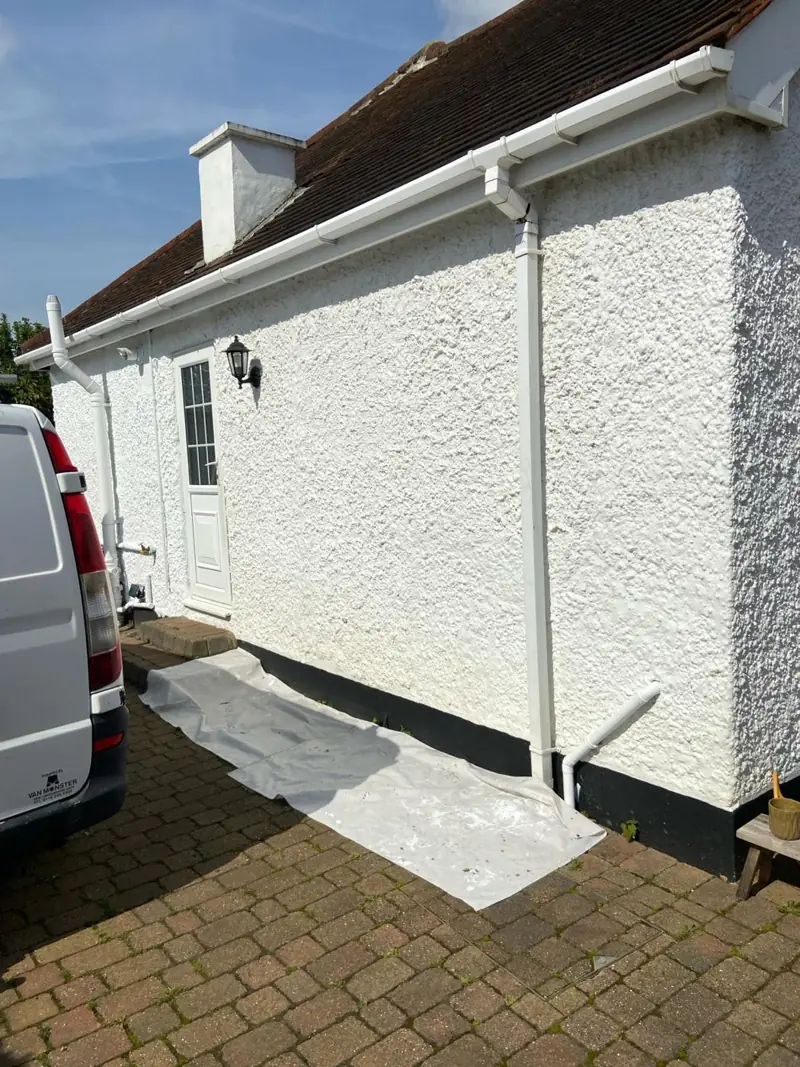
DH Painter & Decorator paints the outside of houses in Westone, NN3, about 2.6 miles north-east of Northampton town centre. Dean handles masonry, joinery, bay roofs and garages on the area's interwar and post-war semis, its larger 1920s detached homes and the later houses on Conifer Rise.
What an outside repaint covers on a Westone house
Westone lies on the north side of the Wellingborough Road (A4500), facing the old stone village of Weston Favell across the traffic. Its homes are mostly mature family houses. The majority are bay-fronted semis from the interwar and post-war decades, on roads such as Ashley Way, Oaklands Drive and Firtree Walk, usually with a garage to one side and a long garden behind. Larger 1920s detached houses stand on Westone Avenue, and Conifer Rise adds later semis, flats and terraces. On a typical property here, one exterior job takes in several different surfaces: the masonry of the front bay, timber or uPVC window joinery, the small bay roof and its boards, a garage door, and often a rear extension built decades after the original house.
We cover Westone from our Northampton base, about 2.6 miles away. The products we use and the order we work in are set out on the main exterior painting page. Here we look at what changes when the house is in Westone.
Why bay fronts take longer than flat walls
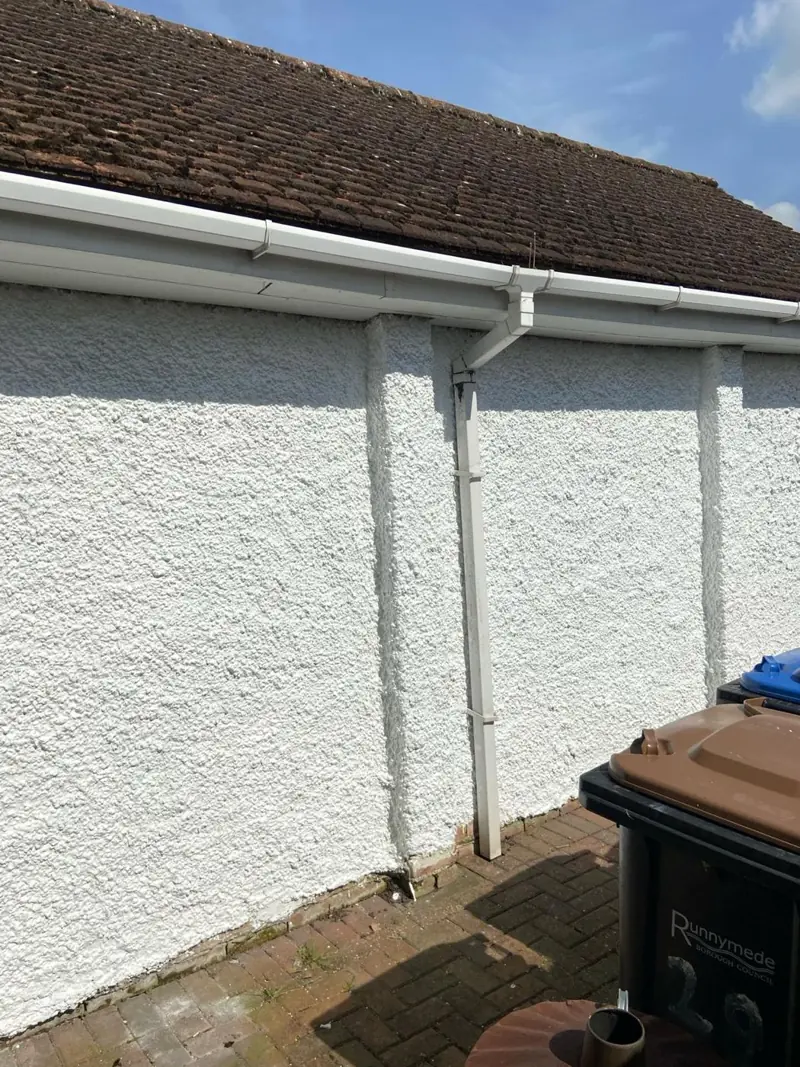
You can cut in and roll a plain front elevation fairly quickly. A bay is slower. It has three or more faces, a sill line, a small roof with its own boards, and window frames set at angles, so every edge is cut in by hand and every coat has to be carried round corners. A two-storey bay roughly doubles the joinery. When Dean prices a Westone semi he measures the bay separately from the flat walls, because that is where most of the hours go. Water tends to sit on the bottom rails and sills of older timber bay frames and soften them, so soft spots are cut out and filled, or pointed out to you for a joiner, before any coating starts.
Front elevations beside the Wellingborough Road
Houses and flats facing the A4500 sit beside constant traffic, and their front walls and frames carry a greasy film of road grime. Paint does not grip that film well. These elevations get a thorough wash-down, then time to dry out, before scraping and filling begin. Expect the street side to need recoating sooner than the garden side. Parking on the main road is harder and ladder footing needs more care than on a quiet close, so we decide where the van will go and how ladders will be footed and guarded before work starts.
Mature trees, damp corners and the garden side
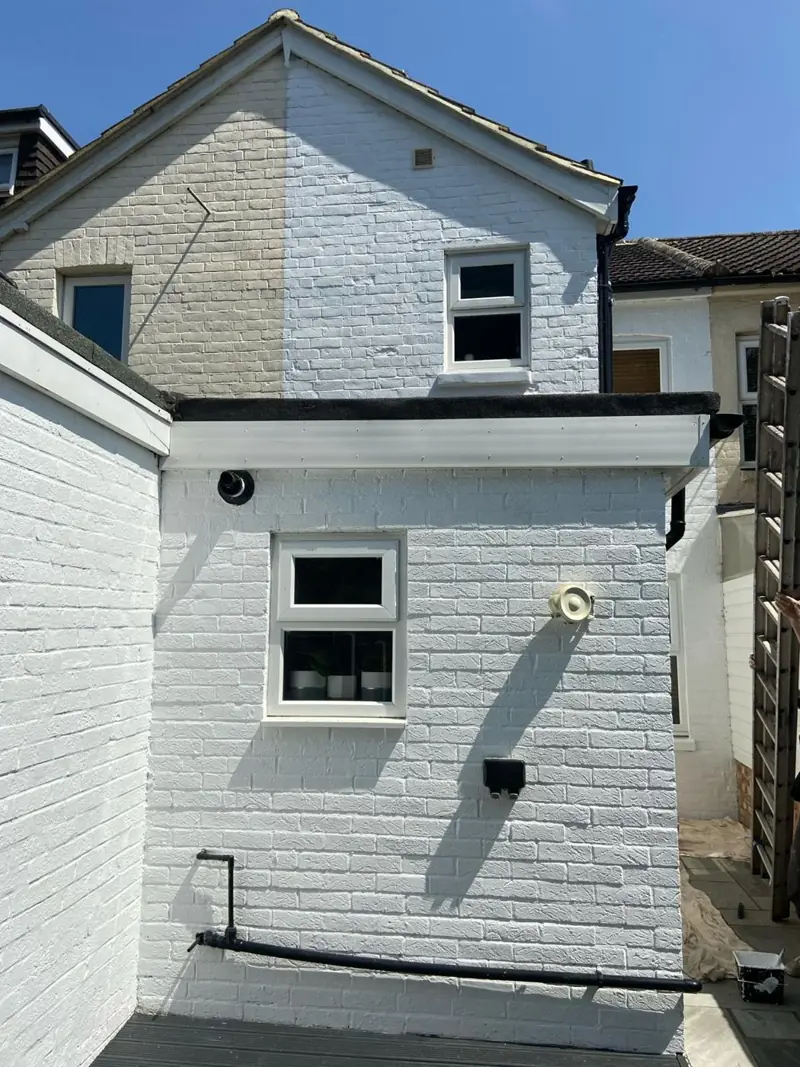
The Northamptonshire Historic Environment Record notes a possible 20th-century designed landscape at Westone, in the area around the former Westone Manor, and the district still has big gardens and mature trees. That shade helps the garden but works against the paint. North-facing and overhung walls stay damp for longer, and green growth gathers on masonry, sills and low boards. We treat those areas with a fungicidal wash, give it time to work, then brush them down before priming. Because shaded walls are slow to dry in the morning, we paint them later in the day than the sunnier sides. Our guide on timing outdoor painting in the UK explains why the season matters as much as the forecast.
Getting round the property
- Most semis have a drive and a garage, so the van parks off the road and an access tower can stand on firm ground at the gable.
- The rear is normally reached through the side passage, so before starting we agree with you where materials and dust sheets will be kept.
- Low or flat extension roofs may need boarding or a different ladder position to protect the covering.
Westone itself has no conservation area. If you also own one of the stone cottages across the road in the Weston Favell Conservation Area, that needs a different approach with breathable, mineral-compatible finishes. For more on the district, see our Westone area page.
Last updated by Dean, DH Painter & Decorator.