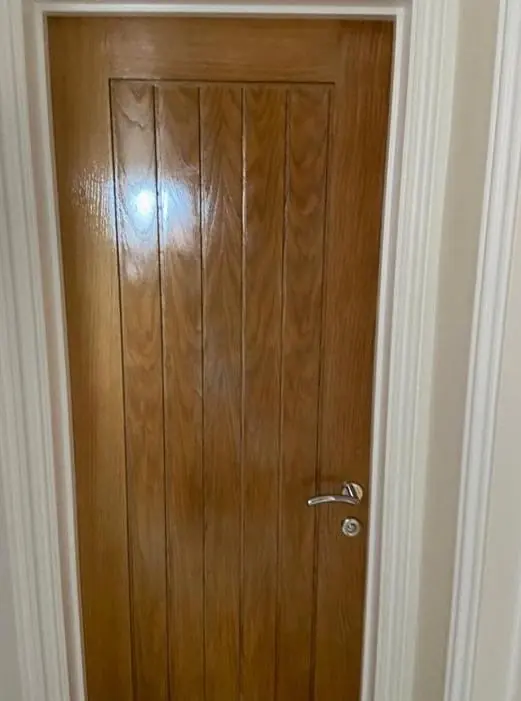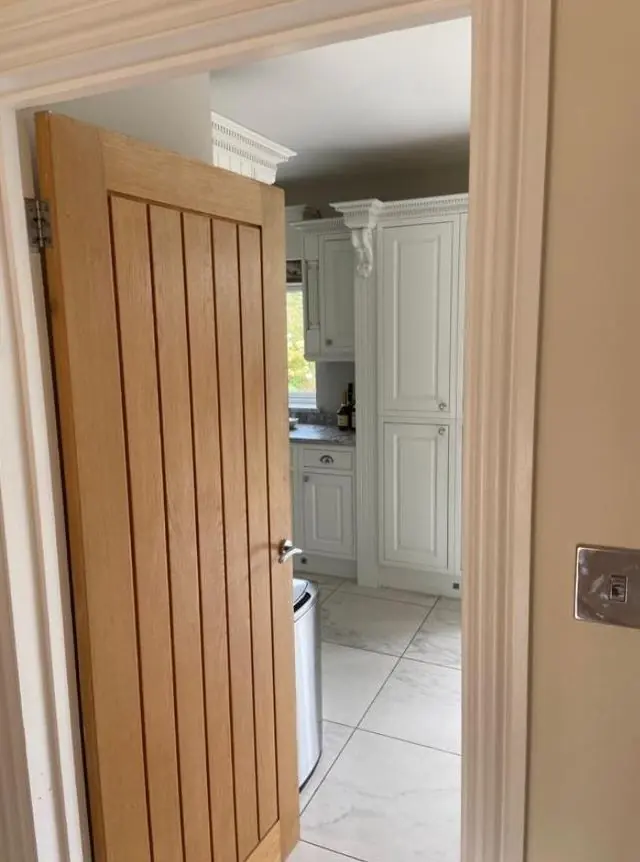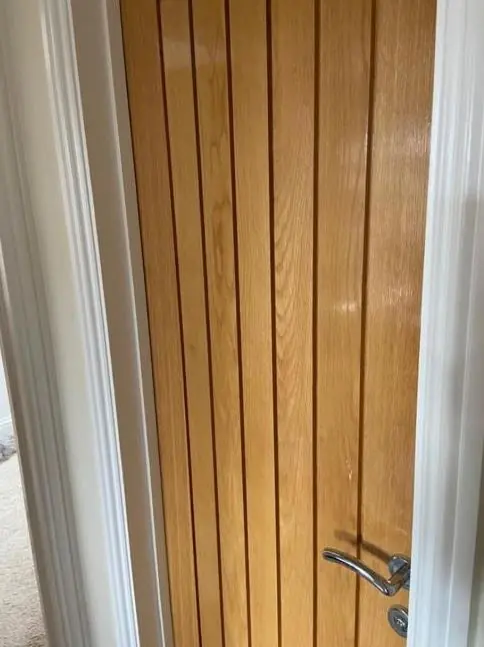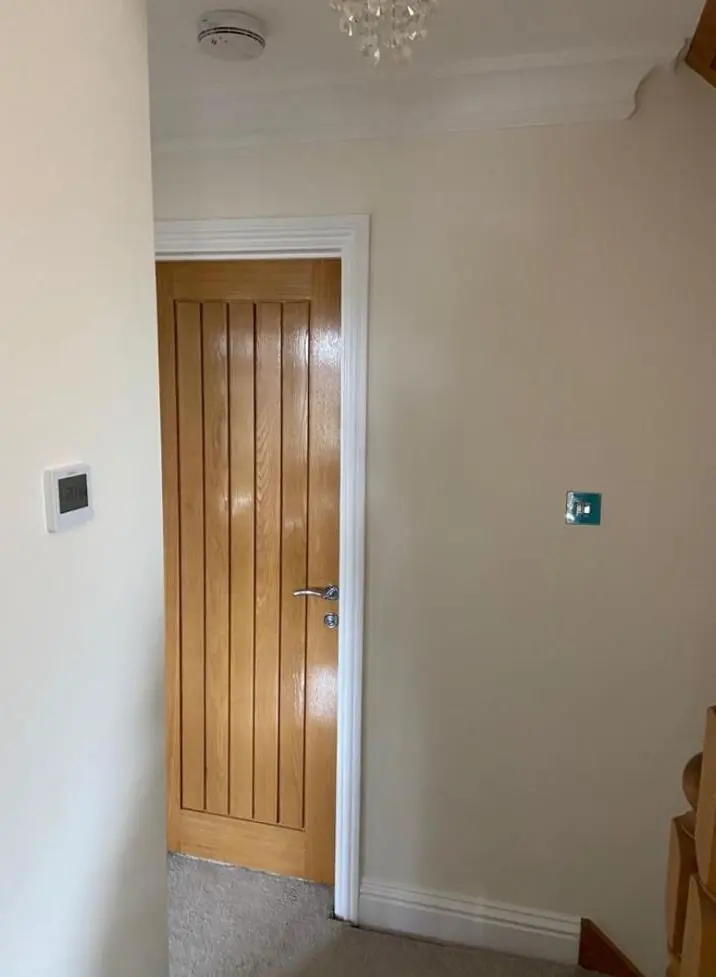
Dean paints doors, skirtings, architraves and other interior joinery in Westone, the NN3 district on the north side of the Wellingborough Road, about 2.6 miles north-east of Northampton town centre. Older detached houses and extended semis make up much of the district, so original woodwork often sits alongside newer boards from later building work.
How much joinery a Westone house carries
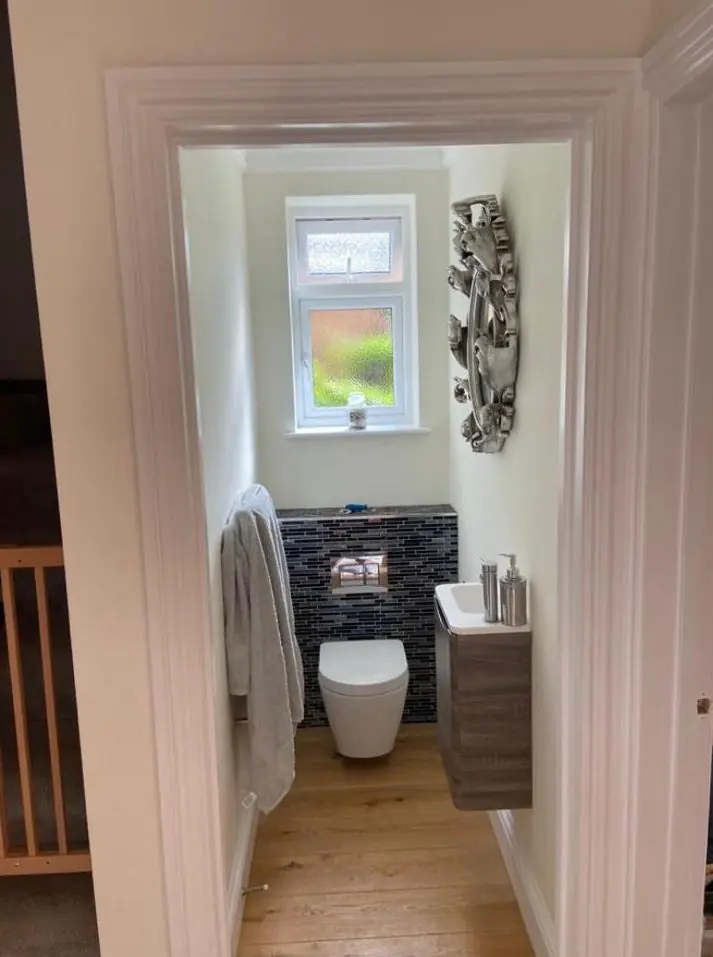
Westone grew in stages. The 1925 character house on Westone Avenue marketed as Westone Lodge, the bay-fronted semis along Ashley Way, Oaklands Drive and Firtree Walk, and the later infill on Conifer Rise all date from different decades, and each brought its own kind of woodwork. The older detached houses have higher ceilings and longer stair runs, so a single hall can hold a dozen door faces, a tall run of skirting and a full set of architraves before you reach the bedrooms. A semi from the 1930s to the 1960s usually has less joinery per room, but bay windows add boards, linings and sometimes a panelled section under the sill.
That variation is why we price woodwork by looking at it rather than by room count. Two Westone houses with the same number of bedrooms can need very different amounts of time on doors and skirtings.
Painting over versus taking it back to timber
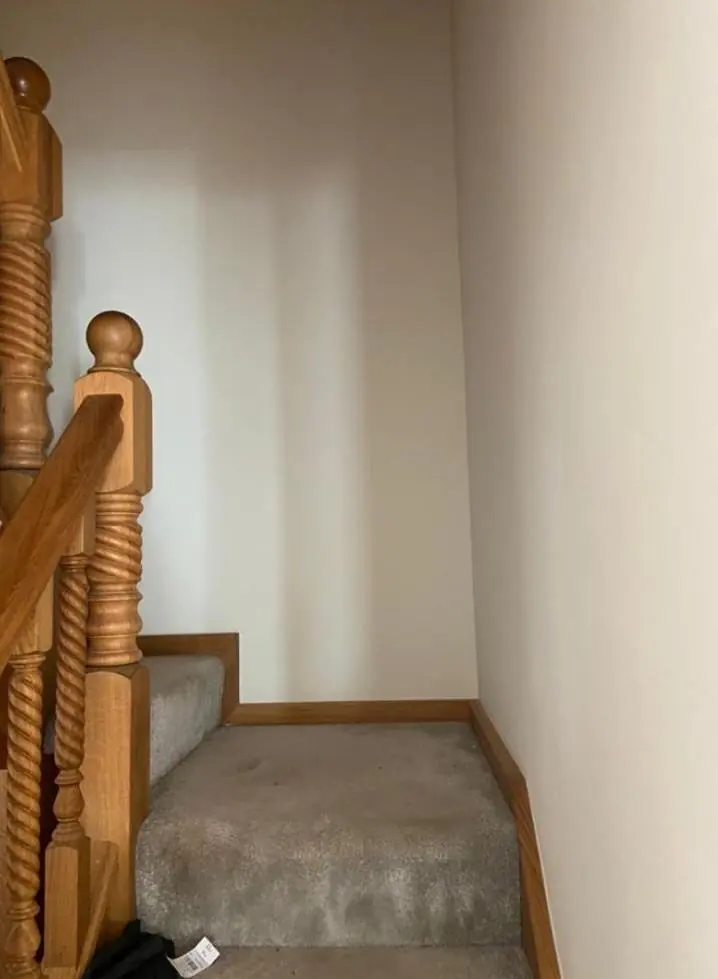
Several Westone houses have come onto the market described as needing general modernisation. On the woodwork, that usually shows up as decades of gloss stacked on original panel doors and moulded skirtings. Thick, yellowed layers fill the beads, doors bind on their frames and the edges chip back to older colours underneath. You can paint over it, but the new coat inherits every fault below.
Our approach in houses like these:
- Test older layers for lead before any sanding, since paint applied before the 1960s often contains it.
- Strip doors and skirting runs where the build-up has blurred the mouldings, using methods that keep dust and fumes down.
- Ease and rehang doors that have been painted shut against their stops.
- Fill splits and old fixings with a two-part filler where the timber has moved, then prime bare wood and seal knots.
Where the existing paint is sound, keying, filling and two finish coats are enough. The step-by-step preparation for that is on our main door and skirting painting page.
Old boards beside new ones
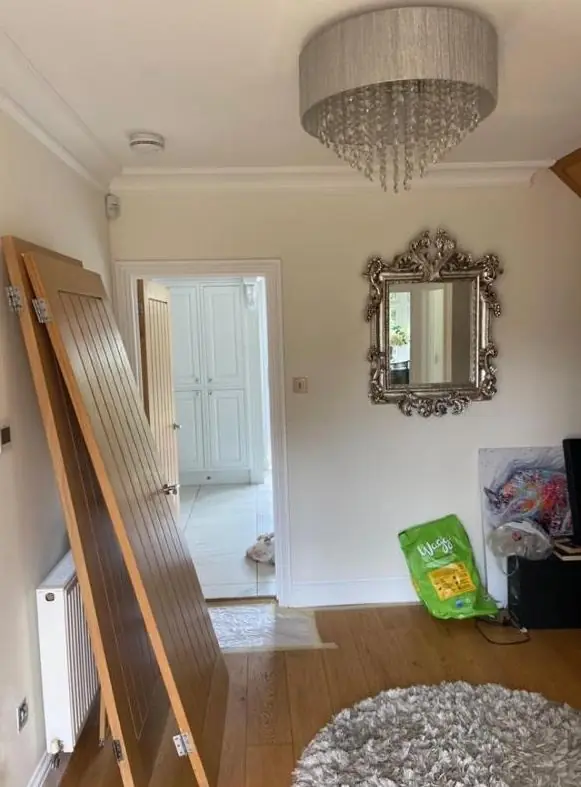
A lot of Westone semis have been extended at the back or into the loft. The original rooms keep their deeper softwood skirtings while the extension gets modern MDF boards with a simpler profile and a factory primer. Painted in the same white, the two can still look different: softwood under many coats has a softer, slightly uneven sheen, while fresh MDF takes the paint flat and sharp.
We deal with that by choosing one finish for the whole ground floor, usually a water-based satin or eggshell, and preparing the older boards so they take it evenly. New MDF edges are sealed before painting, because cut ends soak up primer and swell if left bare. Where an open-plan kitchen-diner joins an older hall, we stop at a natural break such as a door stop or the corner of a return, so there is no visible join halfway along a wall.
Practical points for a Westone booking
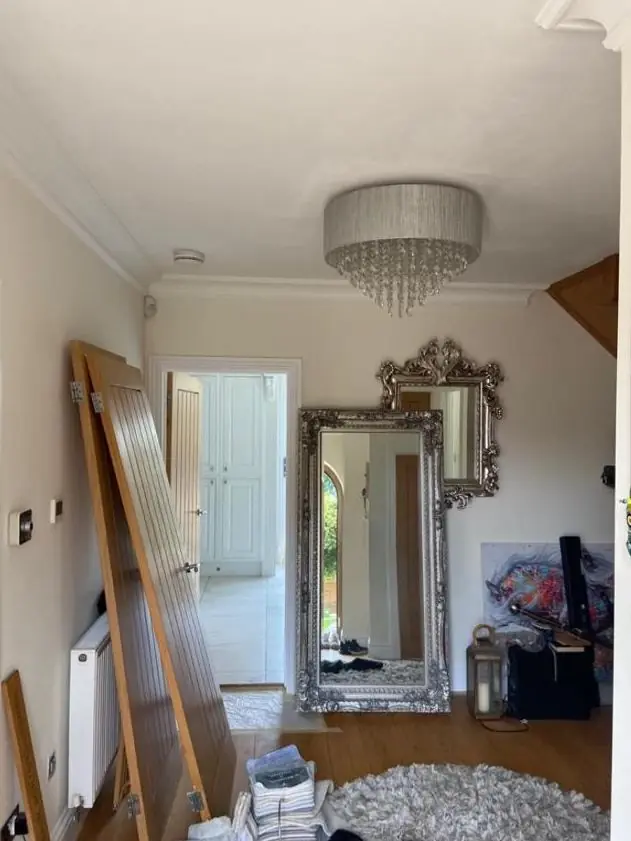
Many semis on these roads have a drive or garage, so we can park close and set up a cutting area for doors that need to come off their hinges. Doors taken down are laid flat to paint, which gives a cleaner finish on panel mouldings than painting them hung. We keep at least one route through the house usable each day, and we tell you in advance which doors will be off and for how long.
If your woodwork is part of a bigger redecoration, read our Westone area page for the other work we cover locally, and the cost guide for what drives the price of joinery work.
Last updated by Dean, DH Painter & Decorator.