DH Painter & Decorator covers Westone from our Northampton base, about 2.6 miles north-east of the town centre on the north side of the Wellingborough Road. Dean, with over 30 years in the trade, paints and decorates the district's bay-fronted semis, extended family homes, 1920s detached houses and flats.
Where Westone is
Westone is a mature residential district in the NN3 postcode area, lying on the north side of the Wellingborough Road (A4500) directly opposite the old stone village of Weston Favell. A local estate agent puts it simply: the main road splits Weston Favell, with the old village on one side and Westone on the other. The district takes in roads such as Westone Avenue, Ashley Way, Firtree Walk, Oaklands Drive, Conifer Rise and Booth Lane South, with Weston Favell Shopping Centre, opened in 1974, close by, though it is a separate district centre rather than part of Westone.
The name is older than any house here. Westone is the 11th-century spelling of Weston Favell’s own name, and the parish covered nearly 2,000 acres. The parish population had risen to 1,094 by 1931 as Northampton spread outwards, and the bulk of Westone’s housing dates from the interwar and post-war decades either side of that figure.
The houses, and what each kind asks of a decorator
Westone’s housing falls into a few clear groups, and each one shapes the decorating differently.
| Era | Typical property | Where | What it means for painting |
|---|---|---|---|
| 1914 | Manor house, now a hotel | Westone Manor, Ashley Way | Period mouldings, fireplace and bay windows to cut in by hand |
| 1920s | Detached character houses | Westone Avenue | Higher ceilings, long stair runs, lots of original joinery |
| 1930s to 1960s | Bay-fronted semis with garages, many extended | Ashley Way, Oaklands Drive, Firtree Walk | Bays inside and out, new plaster next to old walls |
| 1950s to early 1980s | Mixed semis, flats and terraces | Conifer Rise | Very different jobs on one road |
| Not recorded | Flats on the main road | Westonia Court, Wellingborough Road | Quick turnarounds, main-road parking |
The oldest building of note is Westone Manor, built in 1914 as the home of the shoe manufacturer William Sears. It is now the Westone Manor Hotel and still has its original fireplace, bay windows and plaster mouldings. The Northamptonshire Historic Environment Record also lists a possible 20th-century designed landscape at Westone, picked out from the 1950 Ordnance Survey map. That record carries no protection, but it fits with the mature trees and big gardens still found around the former manor grounds.
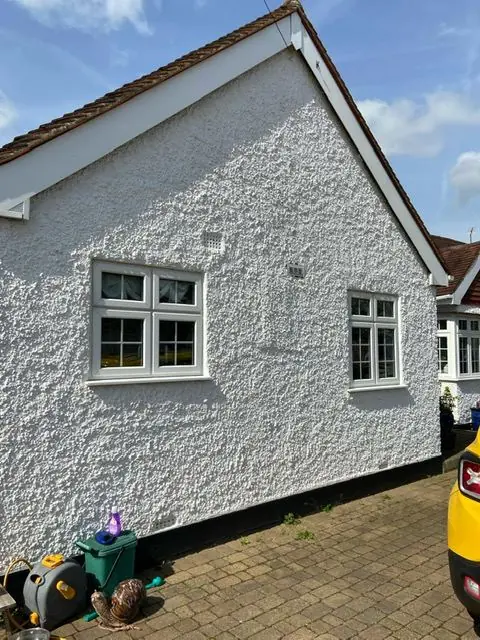
The bulk of Westone is made up of bay-fronted semis from the interwar and post-war years, sold with garages, drives and long rear gardens. A great many have been extended. Inside, that typically means a bay-fronted front room, a knocked-through lounge and a newer kitchen-diner at the back. The fresh plaster in an extension needs a mist coat before colour, and it has to be matched to walls that have decades of paint on them. Our new plaster and extension painting page covers that in detail.
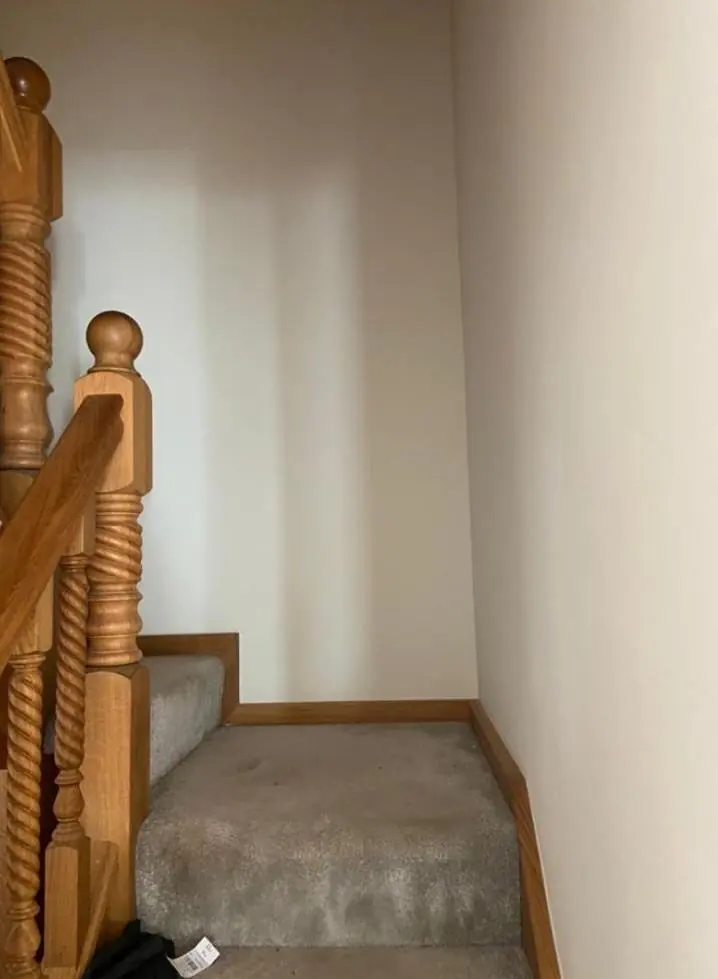
At the top end are the 1925-era detached houses on Westone Avenue. Larger rooms, higher ceilings and longer stairs mean more wall area, harder access in stairwells and much more brushwork on skirtings, architraves and panelled doors. Many houses coming up for sale across the district are described as needing modernisation, which in practice means a full redecoration: old paper stripped, walls made good and woodwork prepared from scratch. That work is described on our interior painting page.
Outside: trees, the main road and good access
Exterior work in Westone is shaped by three things. The first is the trees. Mature trees and large gardens around the old Westone grounds keep fences, fascias and north-facing walls damp and shaded, so they gather algae and green staining. Every one of those surfaces needs cleaning and a biocidal wash before it is coated, or the new finish will lift.
The second is the A4500. Front elevations facing the Wellingborough Road pick up a steady film of traffic grime, so washing down comes before any exterior painting, and finishes on that side may need recoating sooner than on the quieter roads behind. Parking and ladder footing on a main A road also need planning in advance.
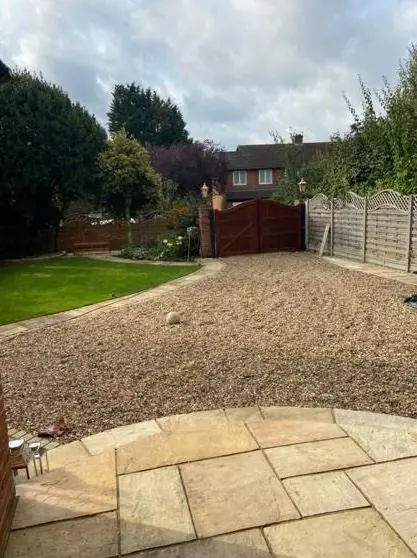
The third works in your favour. Many semis have a drive and a garage, which gives room for the van and for an access tower at a gable end, so fascias, soffits and bay roofs are straightforward to reach. Rear elevations are usually reached through side access. Long back gardens also mean long runs of fencing and several gates per house to clean and treat. Our exterior painting and fence and gate staining pages explain how we handle each.
Bay fronts, from the outside
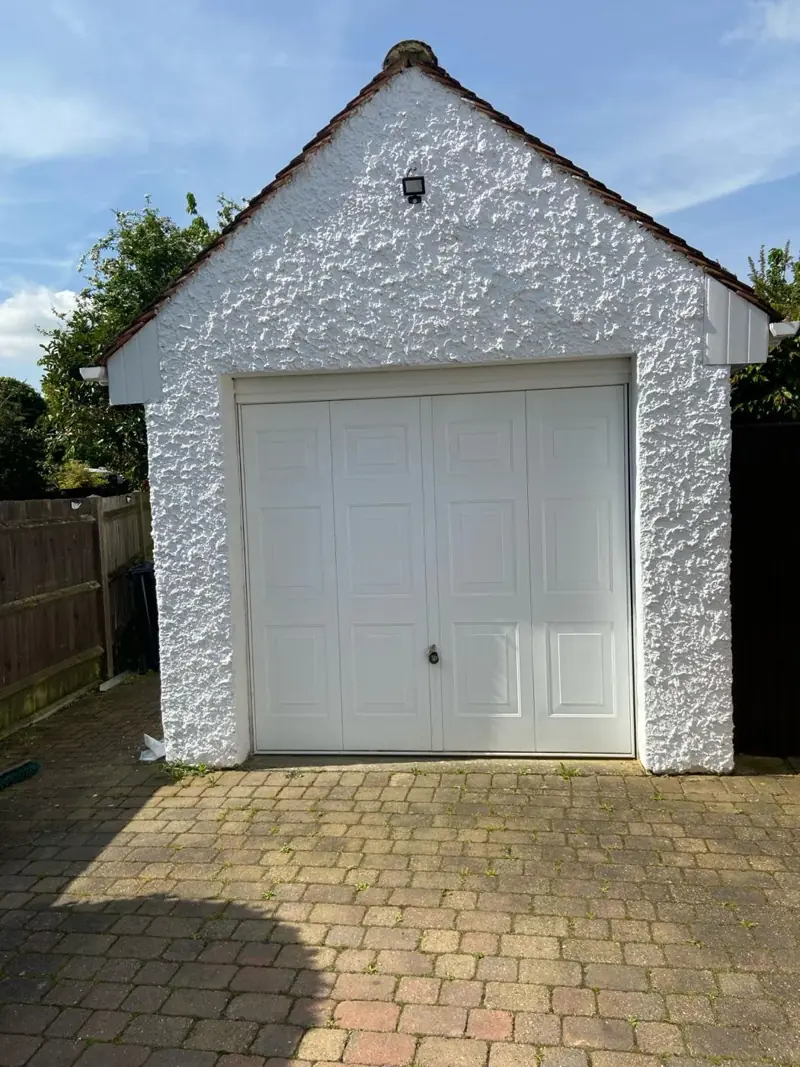
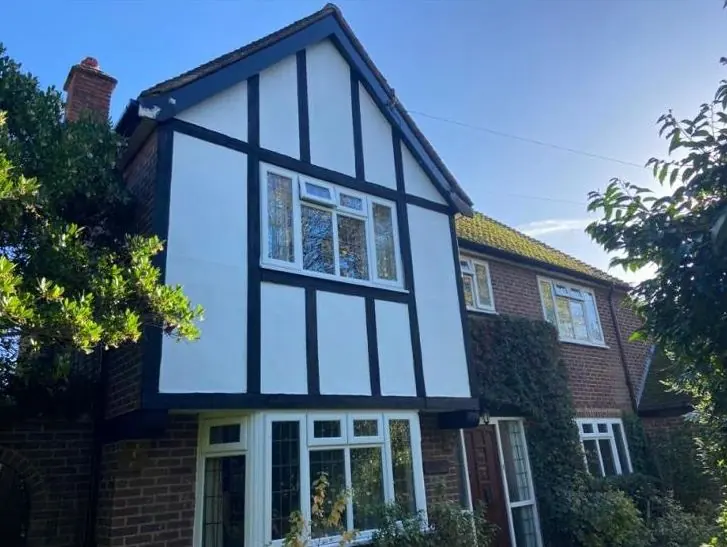
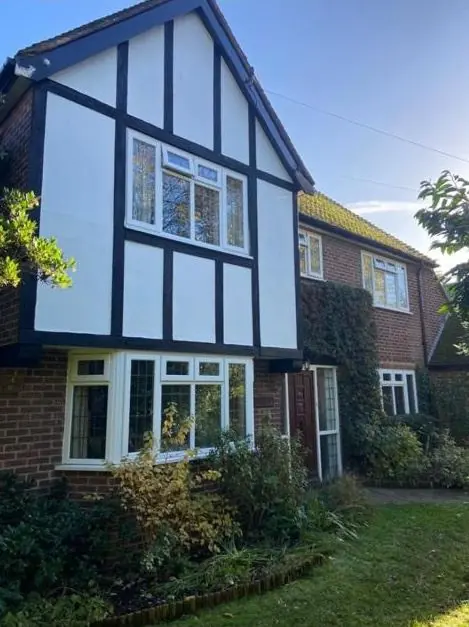
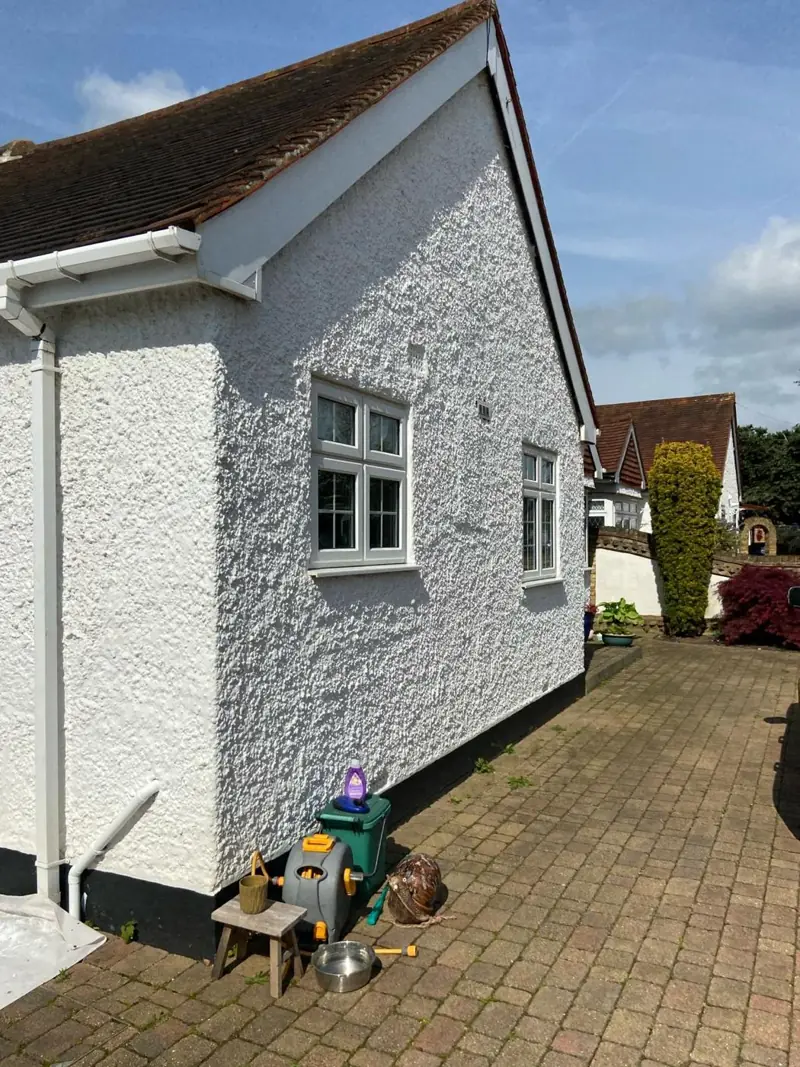
The bay is the defining feature of a Westone semi, and it is also the slowest part of the front elevation to paint. A two-storey bay has several faces of window frame, a sill on each, a small roof with its own fascia and soffit, and sometimes a rendered or pebbledashed panel between the floors. Each face is cut in separately, so a bay front takes noticeably longer than a flat one. Gable ends on the semis carry their own boards and bargeboards, and with a drive alongside, a tower can be set up there rather than long ladders. Our fascia and soffit page covers the timber work at roof level.
Weston Favell village, across the road
Westone has no conservation area of its own. The Weston Favell Conservation Area, designated in 1972, lies on the other side of the Wellingborough Road. It is a linear stone village around St Peter’s Church, the High Street and Churchway, and its stone boundary walls are named as the main unifying feature. Several buildings there are listed, including the church and the 18th-century Rectory. Owners with property on that side as well should know its stone walls and cottages need breathable, mineral-compatible finishes rather than ordinary masonry paint.
Businesses and let flats
Westone is mainly residential. Commercial premises are few: the Westone Manor Hotel plus the two pubs and general stores that a local estate agent credits to the wider Weston Favell and Westone suburb. Painting in those places is planned around guests and trading hours. Flats at Westonia Court and on Conifer Rise are the likeliest let units, where landlords usually want a durable finish and a quick turnover between tenancies.
From our base we reach Westone easily, and Dean will come out, look at the job and give you a written quote. For budgeting, see our painter and decorator cost guide.
Last updated by Dean, DH Painter & Decorator.