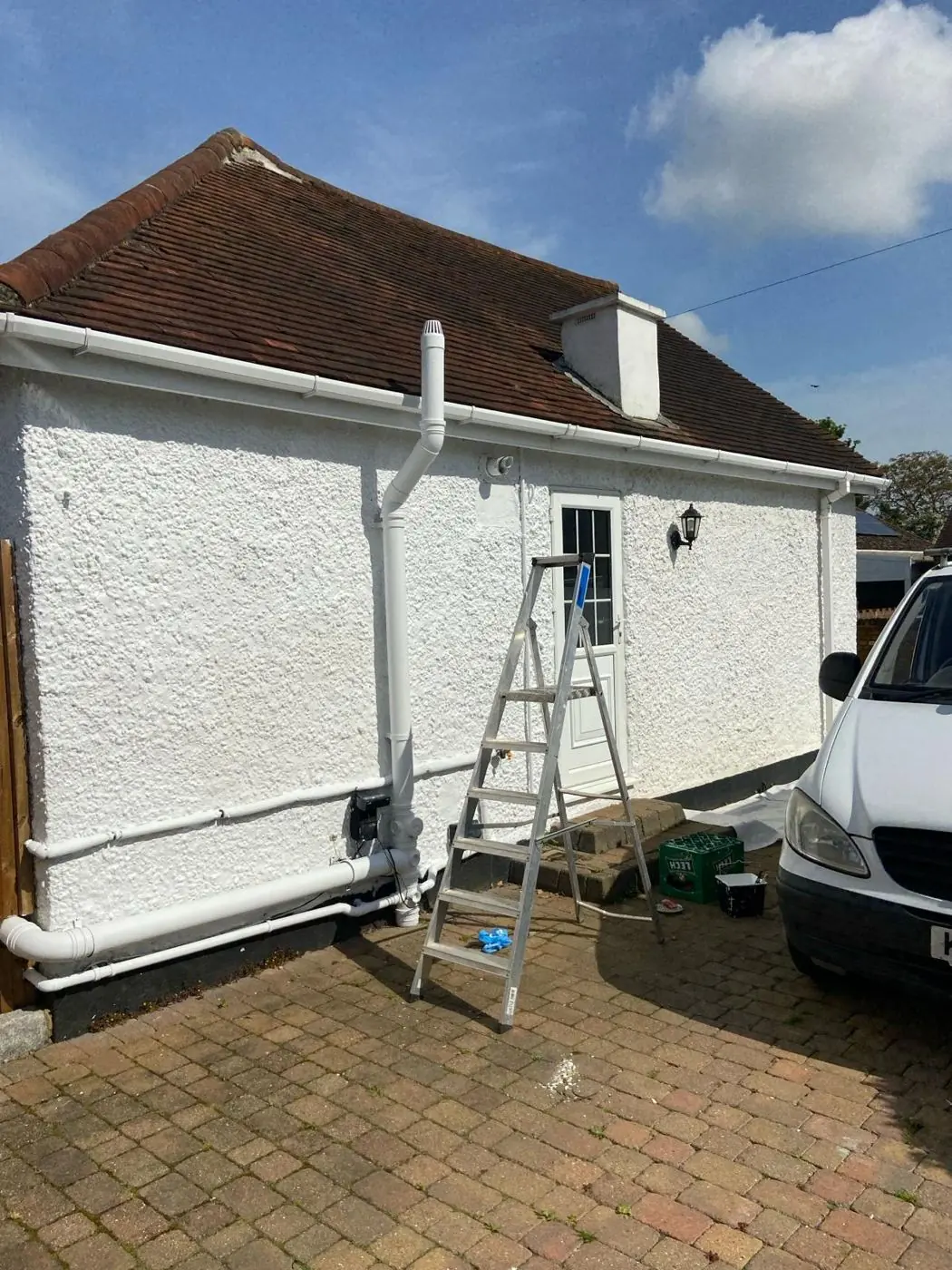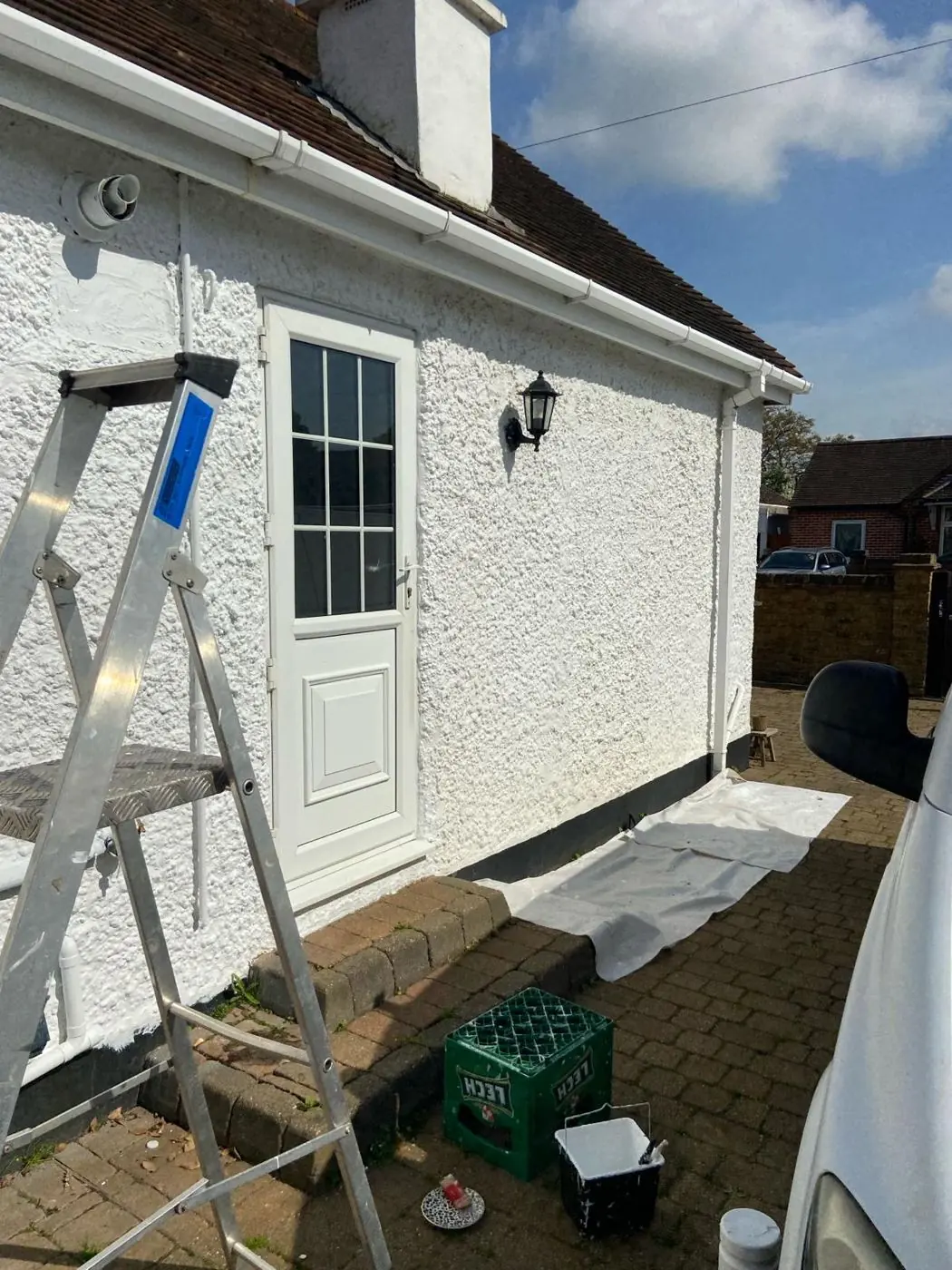
DH Painter & Decorator paints the outside of houses in Little Billing, the old village in Billing parish on Northampton's eastern side. Dean covers it from our Northampton base, about 3.2 miles from the town centre, and quotes after seeing whether your house is one of the listed cottages or one of the later homes around them.
Two kinds of house on one hillside
Outside work in Little Billing falls into two quite different jobs, depending on which side of the old village boundary a house stands. The old village around Church Lane and Orchard Hill is a cluster of listed buildings: thatched cottages of coursed rubble, the rebuilt manor house known as The Priory, the Old Rectory and the former Home Farmhouse at 2 Orchard Hill. Around them are the later closes and cul-de-sacs, such as Codlin Close, Russet Drive, Pippin Lane and Pear Tree Close, in a village that Northampton Development Corporation’s eastern expansion brought inside the town boundary in the 1970s. We quote for both, but we do not approach them the same way.
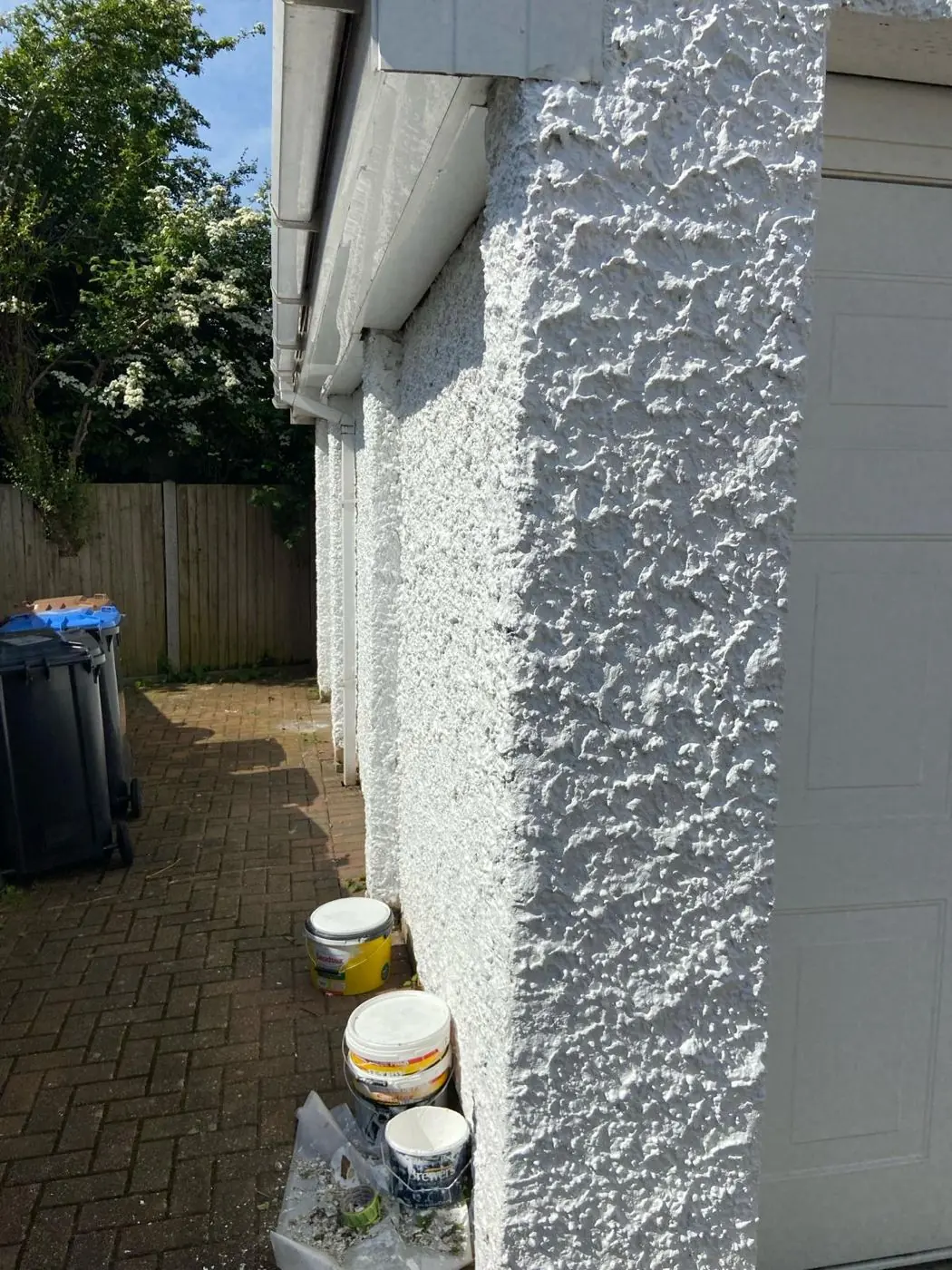
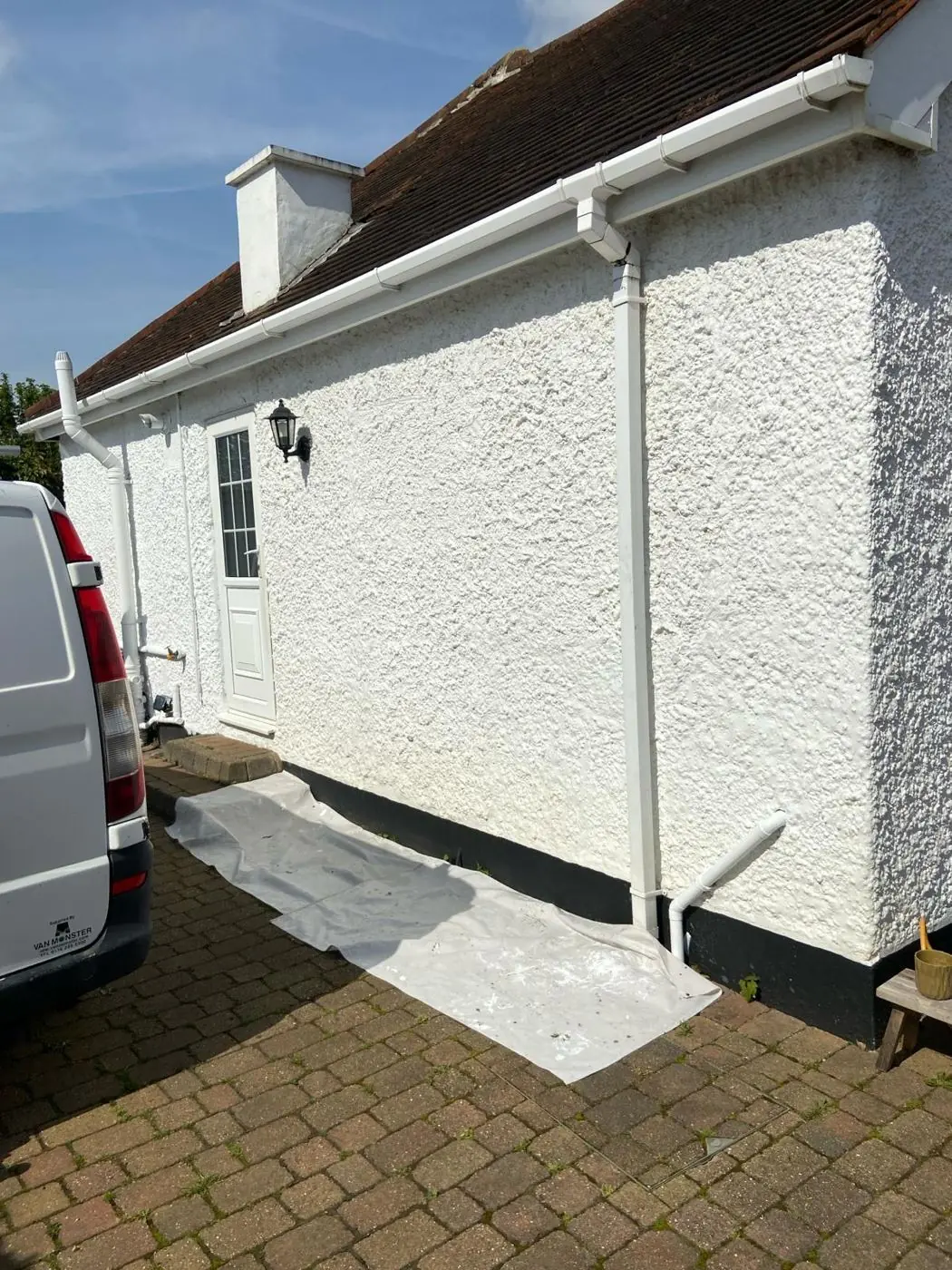
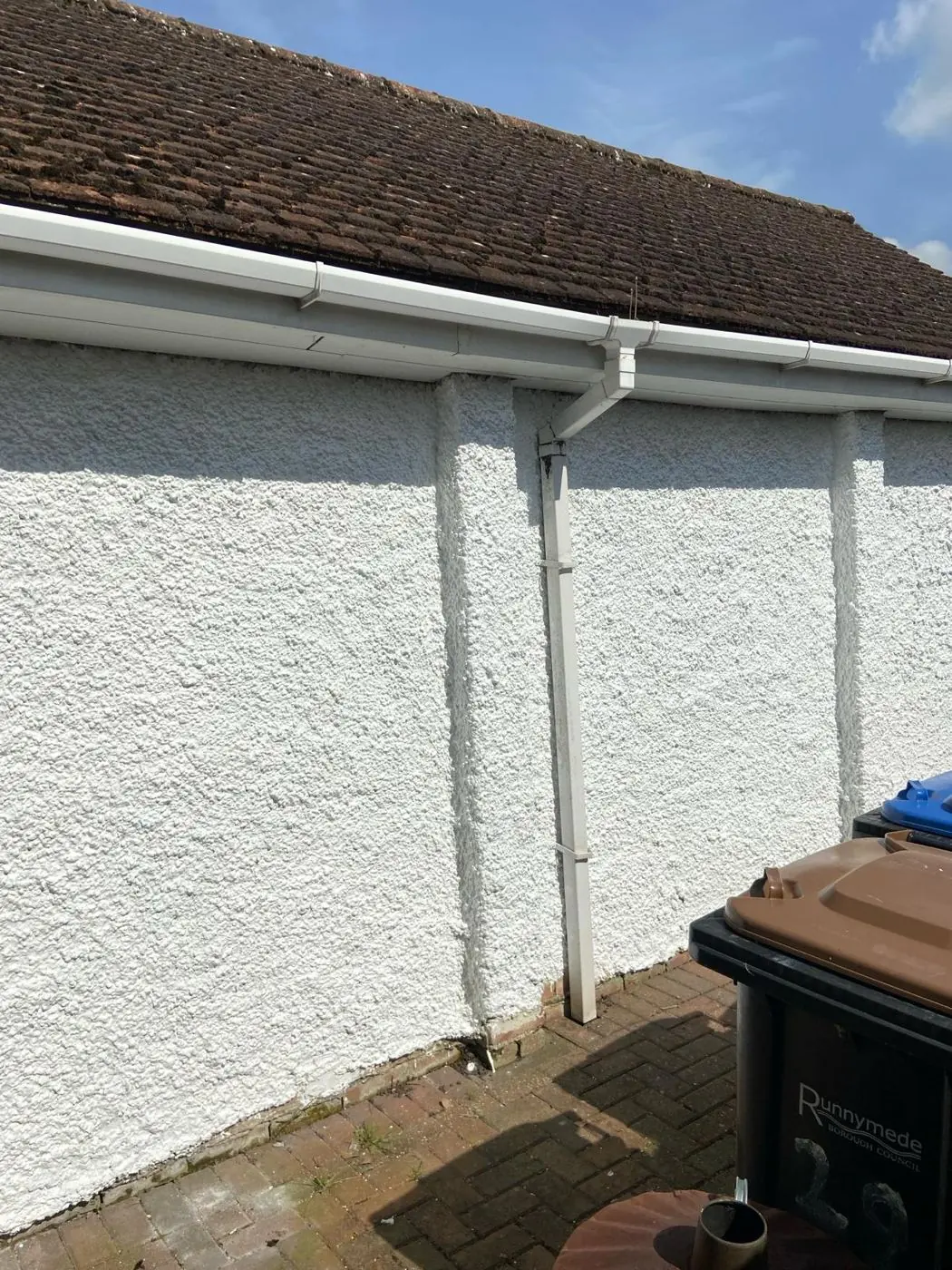
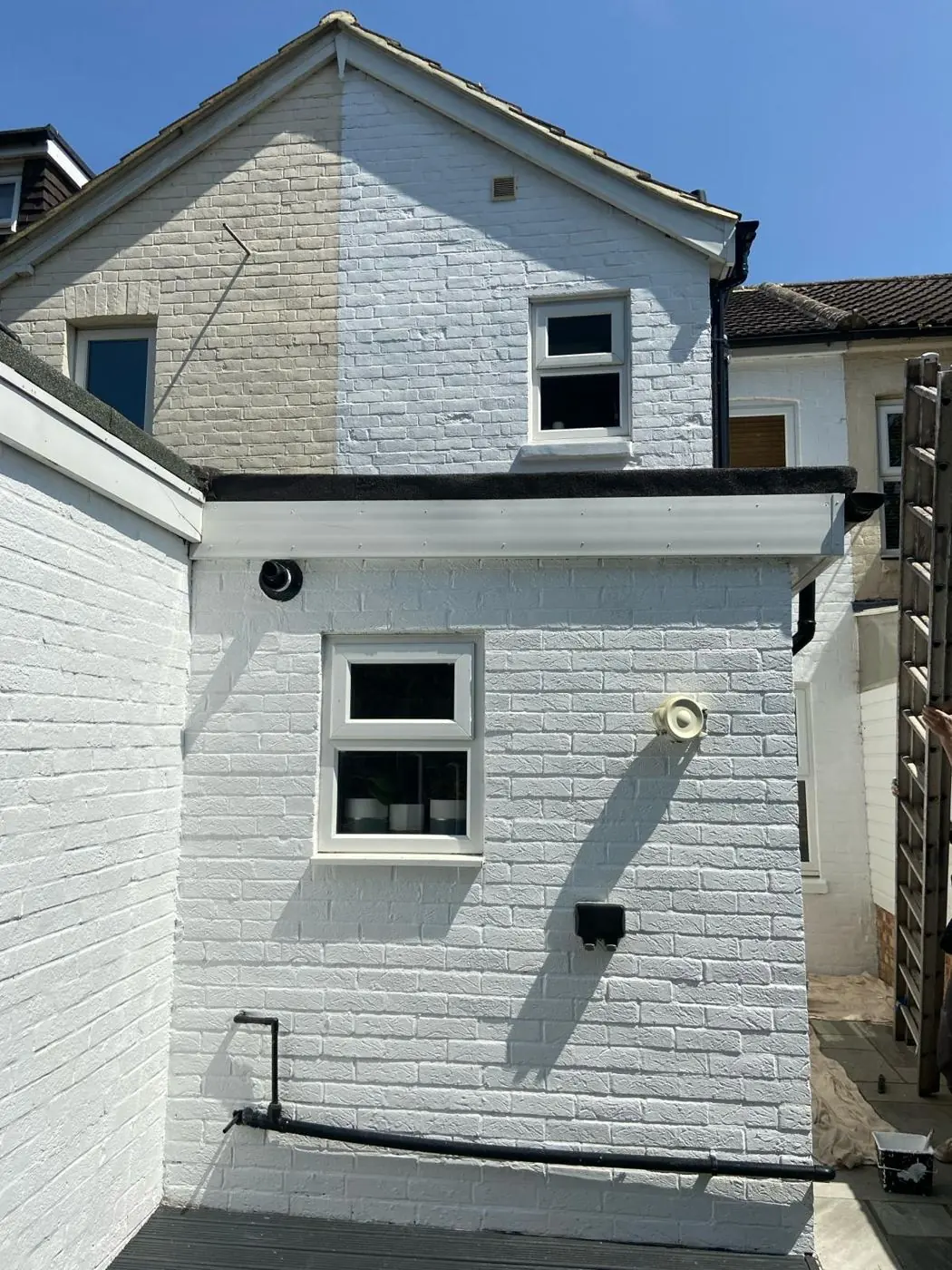
For the newer houses, an exterior repaint is a familiar list: windows and doors, fascias, any rendered panels, garage doors and garden timber. Colour there is your decision, as neither listing nor any Article 4 direction reaches those streets. That is a real difference from Great Billing next door, where a conservation area applies.
Working on the listed cottages of Church Lane and Orchard Hill
The ten listed buildings are another matter. Repainting in a new colour or switching to a different coating can count as altering a listed building’s character, which needs listed building consent from West Northamptonshire Council. Before we price outside work on Church Lane Cottage, Pyket Cottage, Knight’s Cottage, Corn Ricks or Hastings Cottage, we suggest a word with the council’s conservation officer, and we can tell you what to ask.
Most of the stone on these cottages is bare coursed rubble and should stay that way. Where something is already painted, as with Hastings Cottage’s colour-washed render, the coating has to let the solid wall breathe, which rules out ordinary acrylic masonry paint. Corn Ricks’ ironstone quoins and the ashlar dressings at 2 Orchard Hill stay unpainted, and we mask them against splashes.
Thatch changes the working method too. Old paint on casements and ledged doors comes off by scraping and hand sanding, with no heat at all, and ladders are footed so their weight stays off the thatch eaves. Casements under timber lintels, the thatched timber porch at Pyket Cottage and the door hoods get microporous or linseed-type paints, and we keep the existing profiles rather than suggesting replacements. Leaded casements at Church Lane Cottage and the mullioned lattice window at The Priory are cut in by hand.
Shade, damp and the brook
The gardens behind Valley Road and Codlin Close look onto the wooded corridor of Billing Brook and the pocket park. Rear walls there get less sun, hold moisture for longer and grow algae. We add a fungicidal wash before painting those elevations and leave longer gaps between coats. On the lower ground towards the Nene, where small streams once overflowed, timber sheds and summerhouses are tested for moisture before anything goes on them. Our guide to timing outside painting explains why we save shaded walls for the drier months.
Vans, closes and side passages
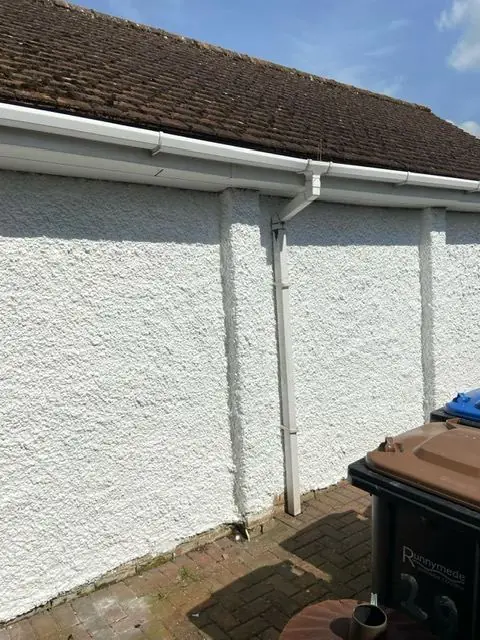
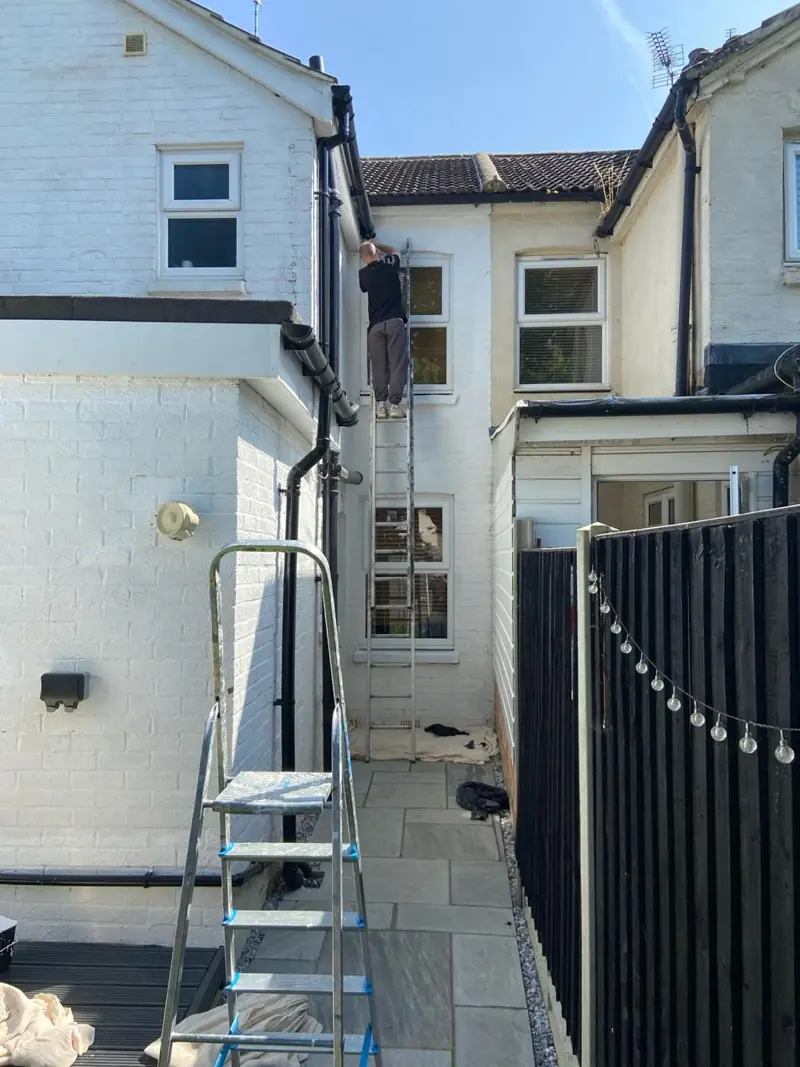
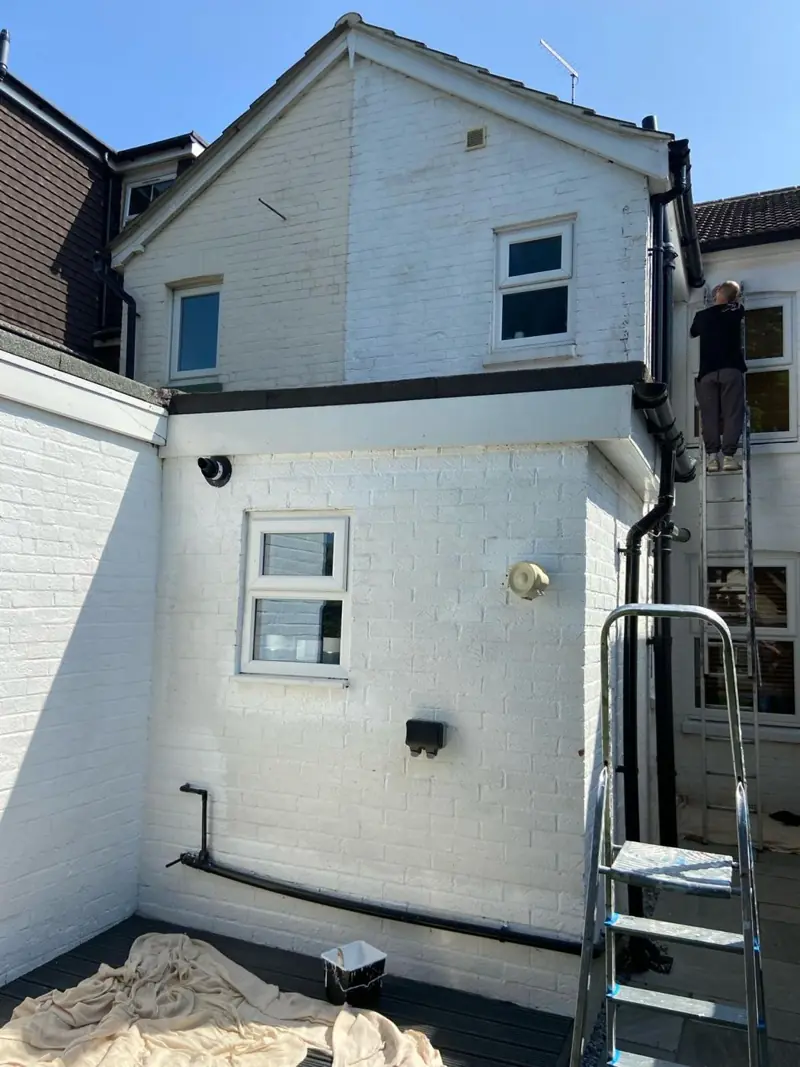
On the closes the van parks on the road and materials are walked in. Side passages between houses are often too narrow for a full tower, which means the back is reached by ladder or by a tower brought through in sections. We look at access on the survey visit, so the quote reflects the way your house can actually be reached. On the older lanes we keep kit tidy and clear of neighbours’ frontages.
For everything a full outside job can include, see our exterior painting service. The Little Billing area page covers the rest of our painting and decorating work in the village.
Last updated by Dean, DH Painter & Decorator.