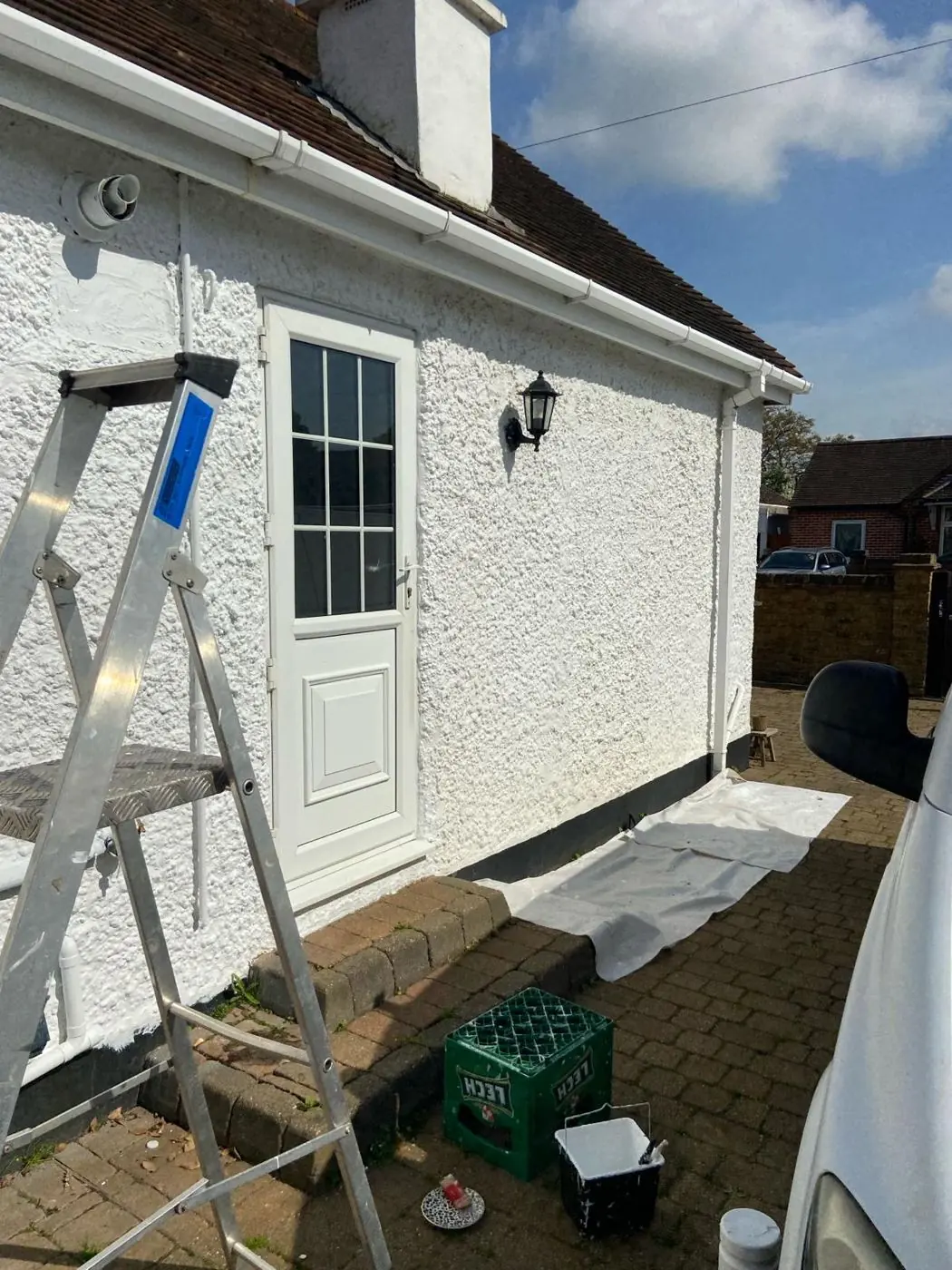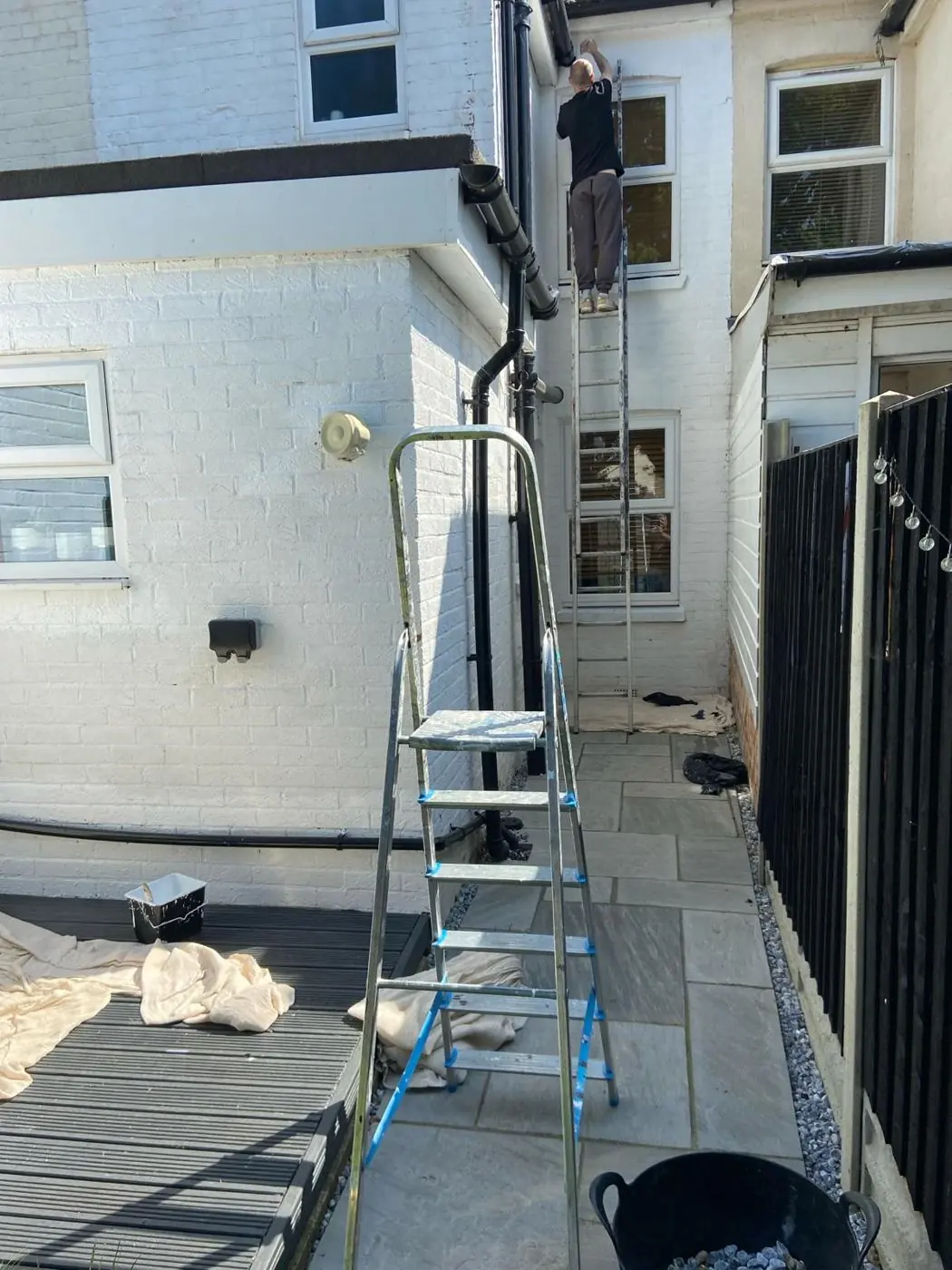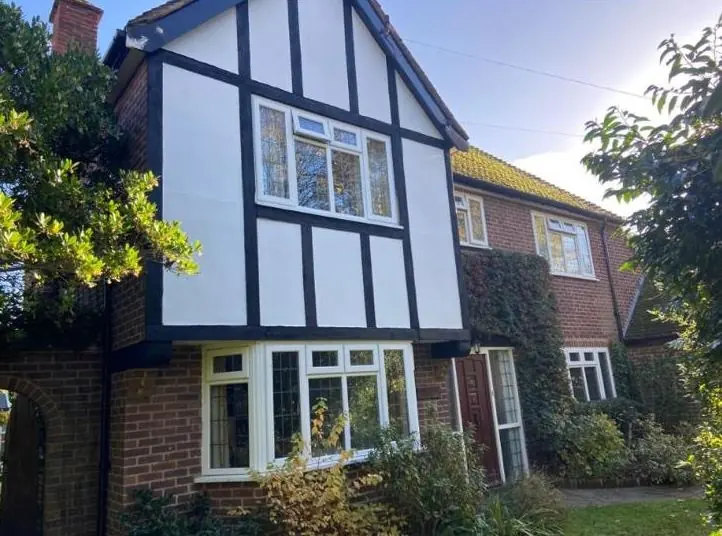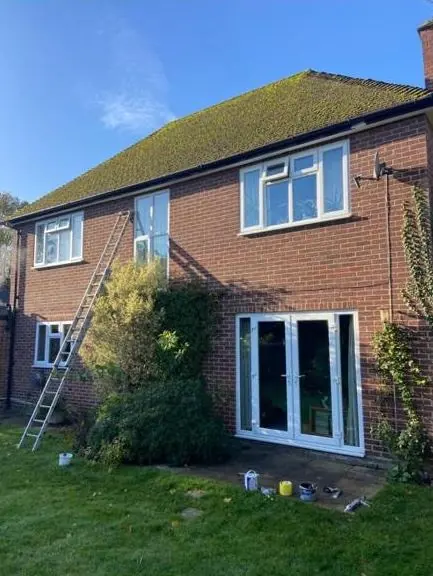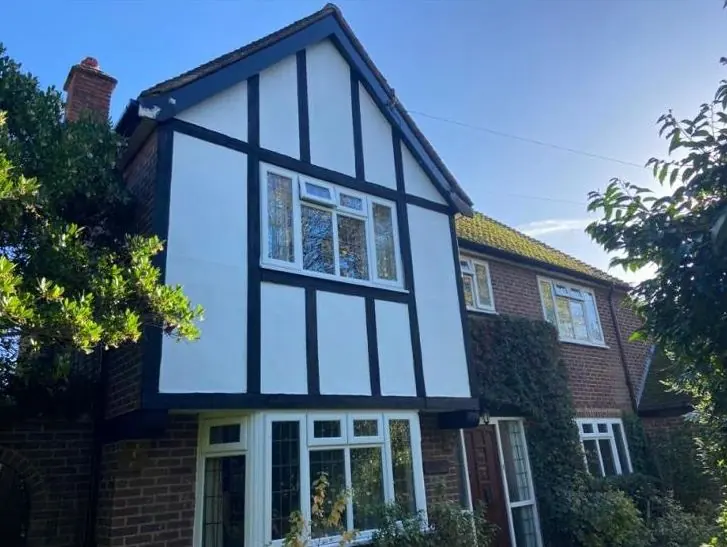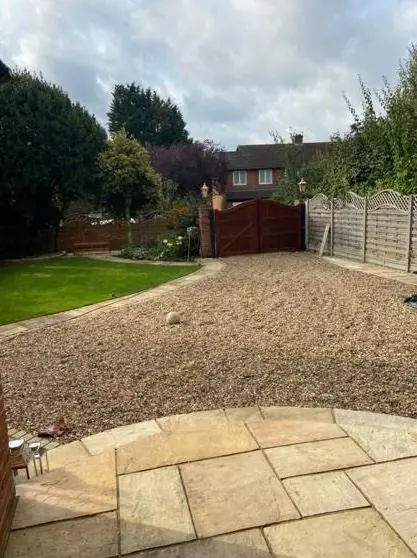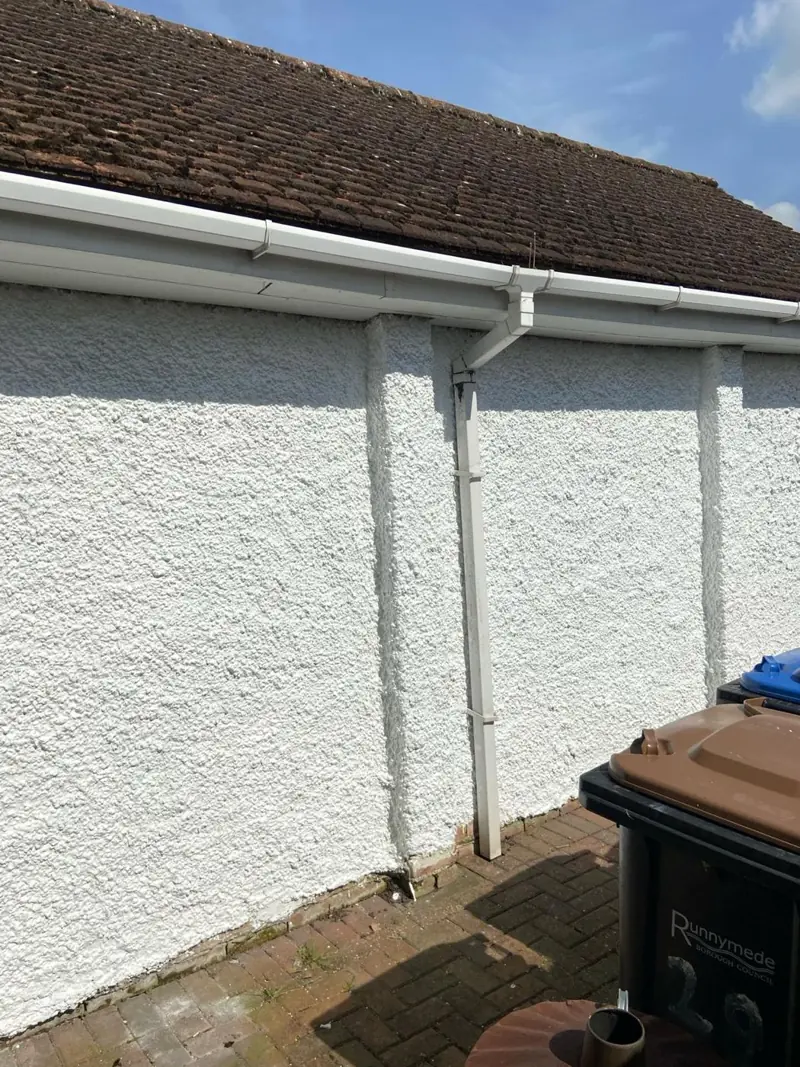
We paint rendered, pebbledashed and brick walls on homes in Westone, NN3, 2.6 miles north-east of Northampton town centre. Dean cleans, repairs and stabilises the masonry first, then applies breathable masonry paint suited to each wall.
Masonry on Westone’s semis and detached houses
Most of Westone was built out between the wars and in the post-war years as bay-fronted semis, with larger 1920s detached houses on Westone Avenue and later infill on Conifer Rise. No source we have read sets out the building materials road by road, so we look at each wall when we visit. On semis of this age, the painted masonry is often the front bay, a panel above or beside it, or a pebbledashed upper storey, while the main walls may be brick that has never been painted. Before suggesting a coating, Dean checks which surfaces are already painted and which are bare, because painting bare brick for the first time is a decision you cannot easily undo.
Westone is about 2.6 miles north-east of Northampton town centre, and we reach it easily from our base. The full method, from crack filling to finish coats, is on the main render and masonry painting page.
Washing off the Wellingborough Road film
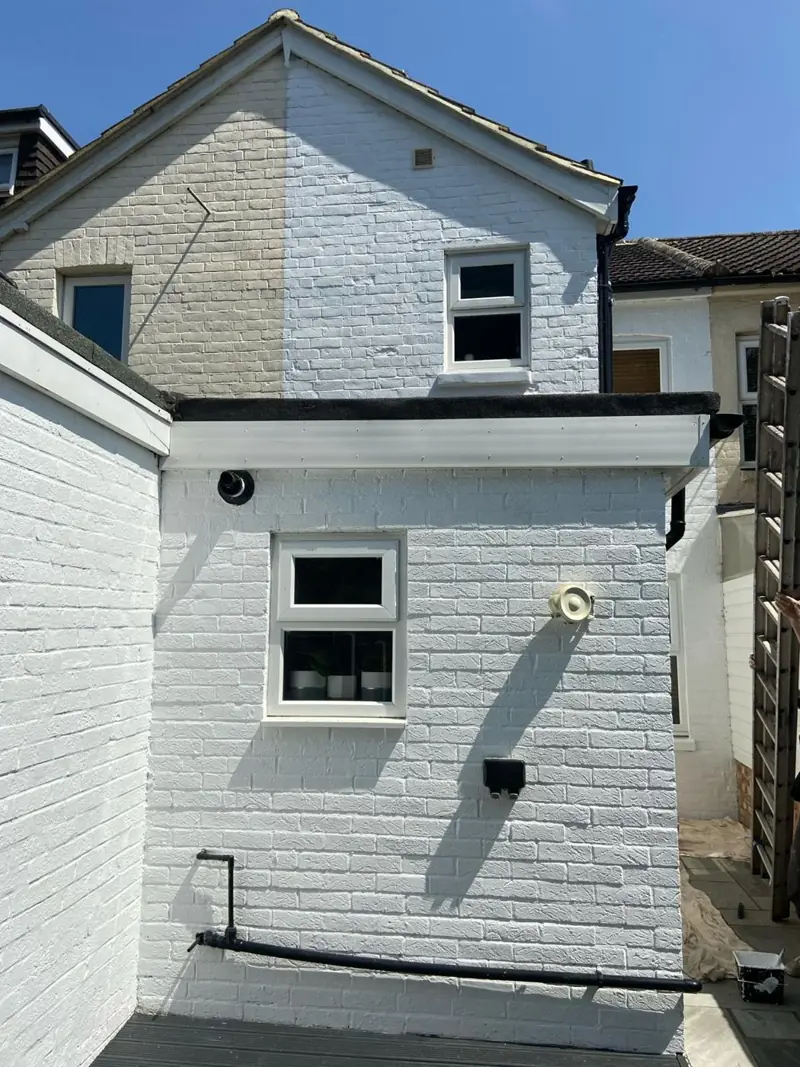
The A4500 runs along Westone’s southern edge, and render on the houses facing it collects a dark layer of traffic deposit. Pebbledash and roughcast hold it in every hollow. Masonry paint laid over that layer can lift away with it, so road-facing walls get a careful wash, are left to dry right through, and are then tested for chalkiness. Where the old coating rubs off as powder on a hand, it is treated with a stabilising solution before any colour goes on. These walls will still weather faster than a sheltered gable, and it is fair to plan for that.
Green walls under the trees
Mature trees around the former Westone Manor grounds and in the big back gardens keep some elevations in shade for much of the day. Shaded render stays damp, and algae and lichen settle into the texture. The routine is:
- a biocidal wash, left long enough to kill the growth rather than just bleach it
- a stiff brush-down once the growth has died back
- a check for leaking gutters or overflowing downpipes, which are often why one patch stays green
- coating only once the wall has dried, which can take longer on a north-facing side
Our guide to painting render and roughcast covers why textured finishes need extra paint and a deep-pile roller or brush to fill every hollow.
Where old render meets an extension
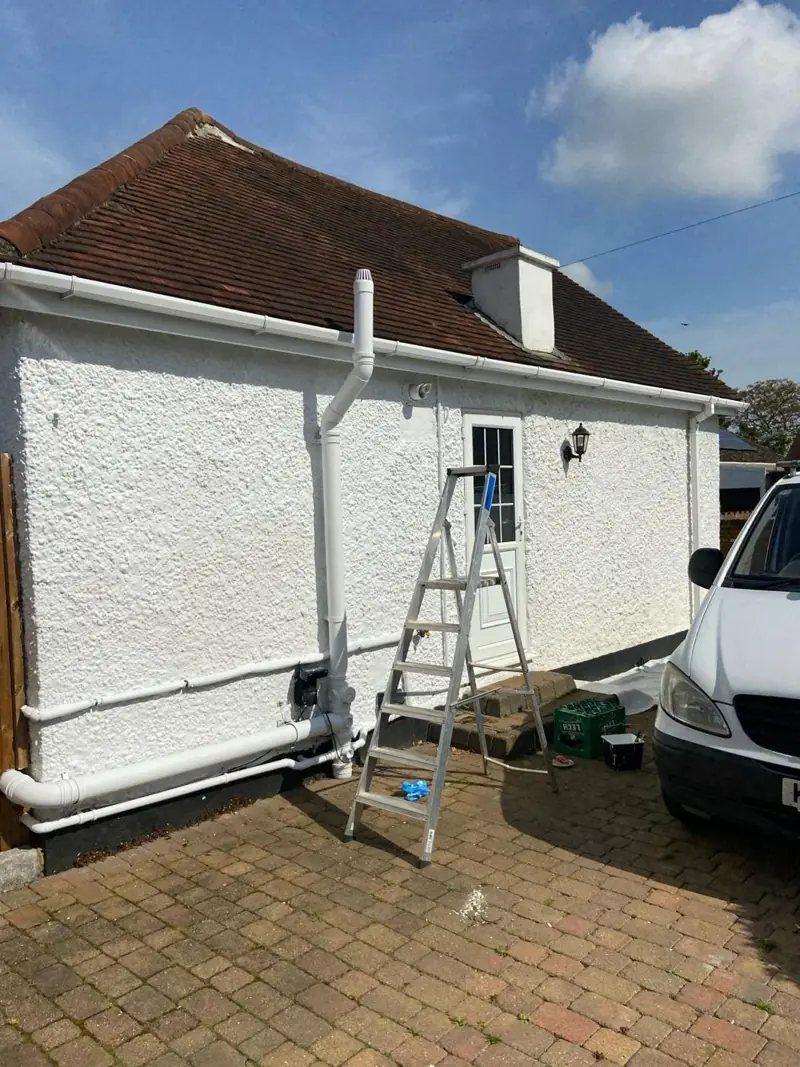
Many Westone semis have been extended, and the rear or side walls of an extension are often newer render or a different brick from the original house. New render needs to cure fully before it is painted, and the texture rarely matches the old dash exactly. Dean will tell you whether one colour across both will look even, or whether a slight difference in texture will show, so you can decide before the paint is bought.
Two sides of the A4500
| Location | Typical masonry | What it means for coatings |
|---|---|---|
| Westone (north side) | Render, dash or brick on 20th-century houses; no conservation area recorded | Standard breathable masonry paints, chosen by surface and exposure |
| Weston Favell village (south side) | Stone cottages and stone boundary walls in a conservation area designated in 1972 | Breathable, mineral-compatible finishes; bare stone usually left unpainted |
If you own property on both sides of the road, keep the two jobs separate. More about the district is on our Westone page.
Last updated by Dean, DH Painter & Decorator.