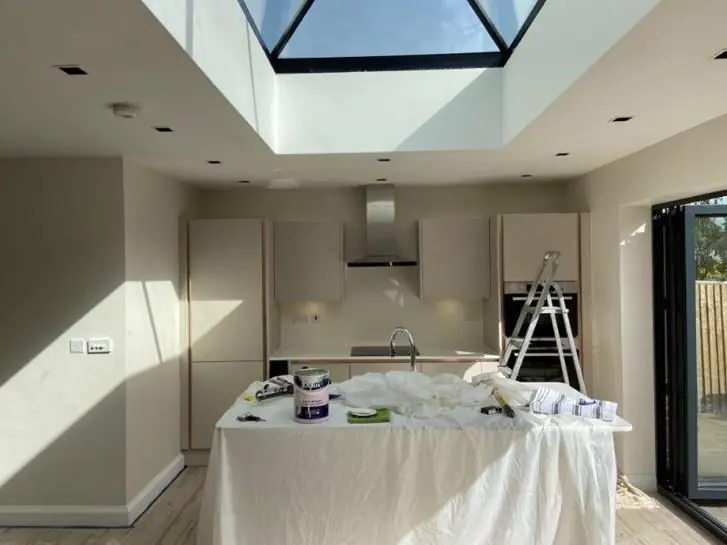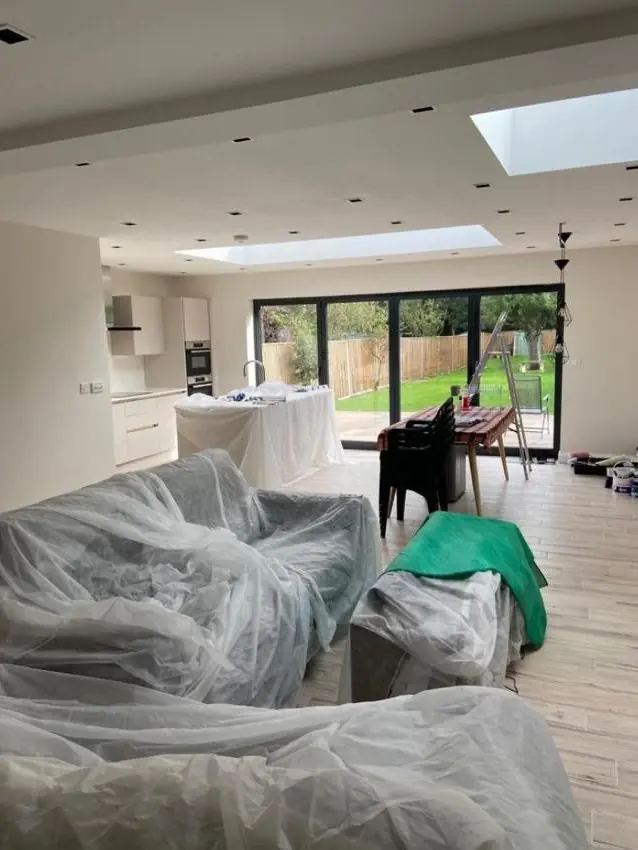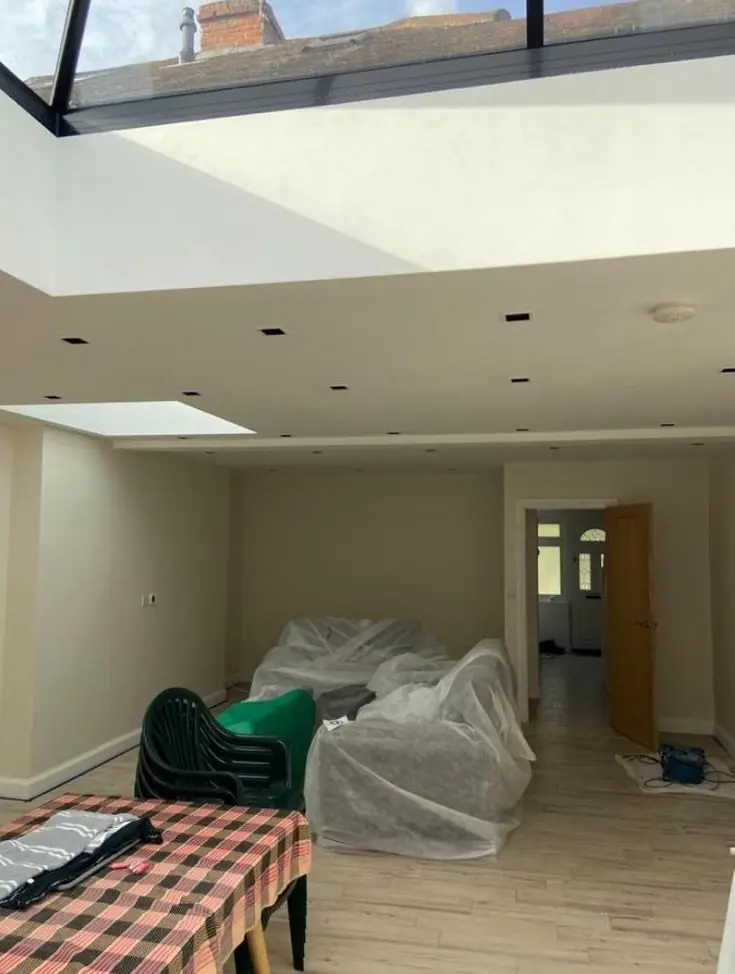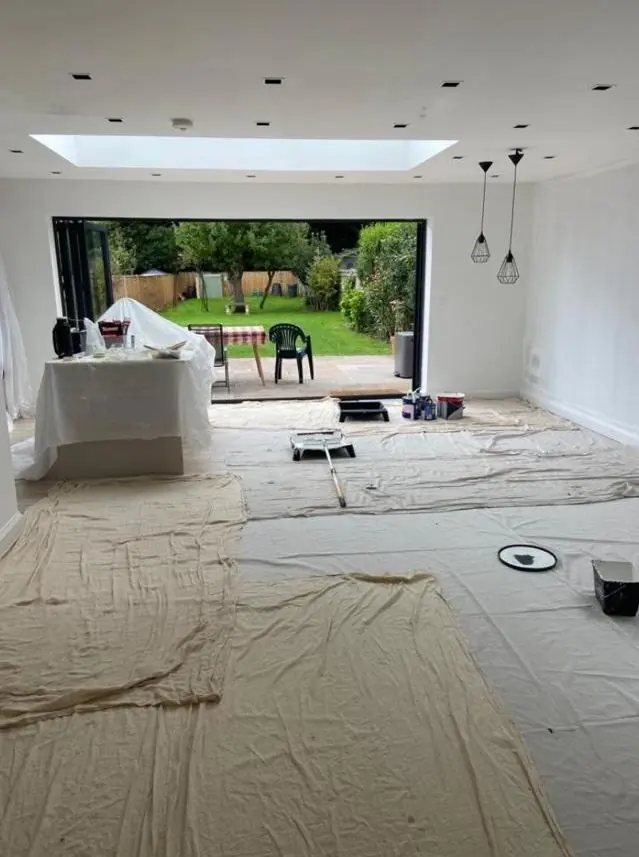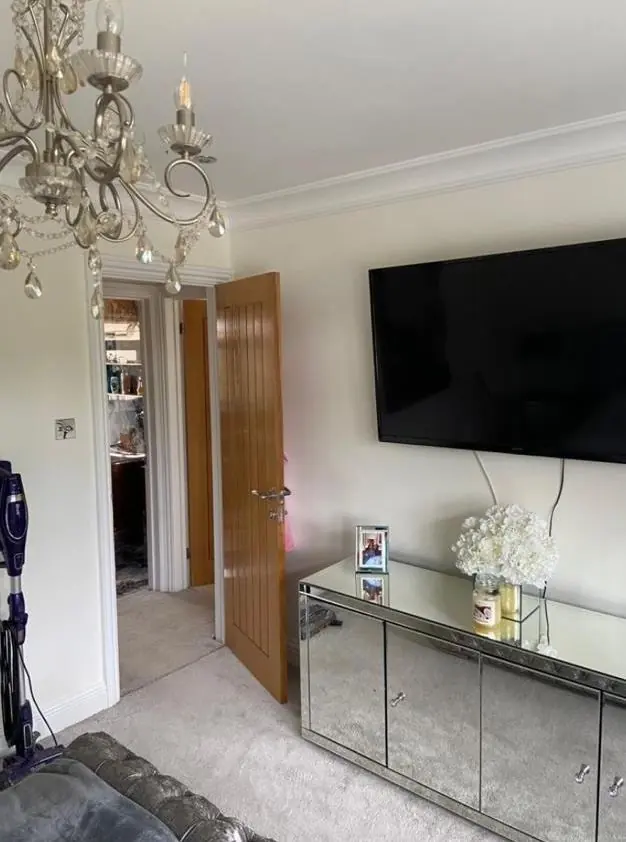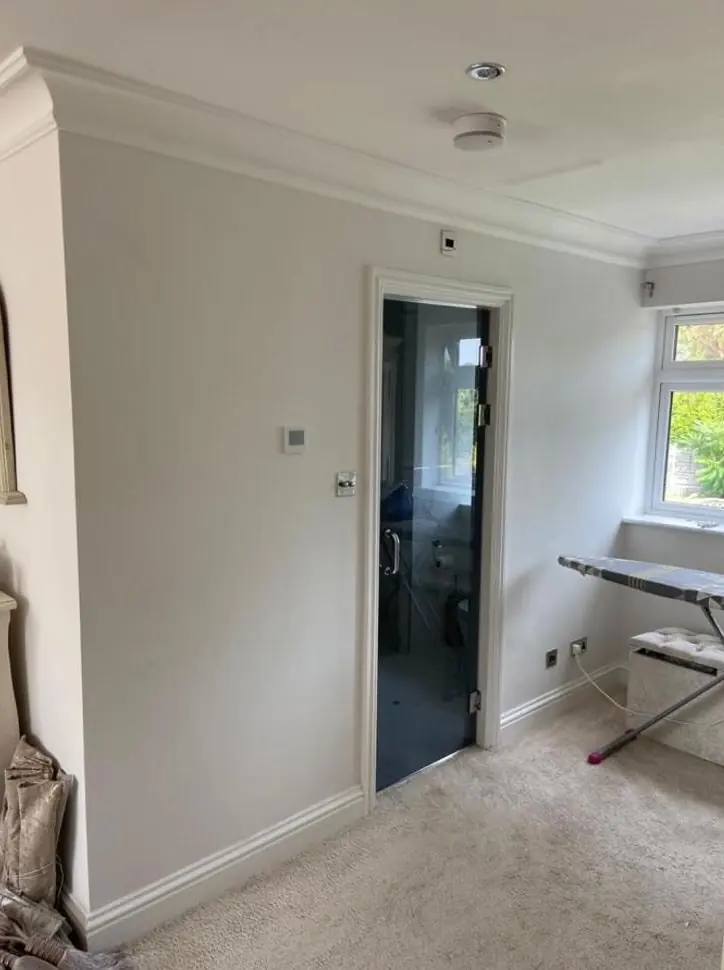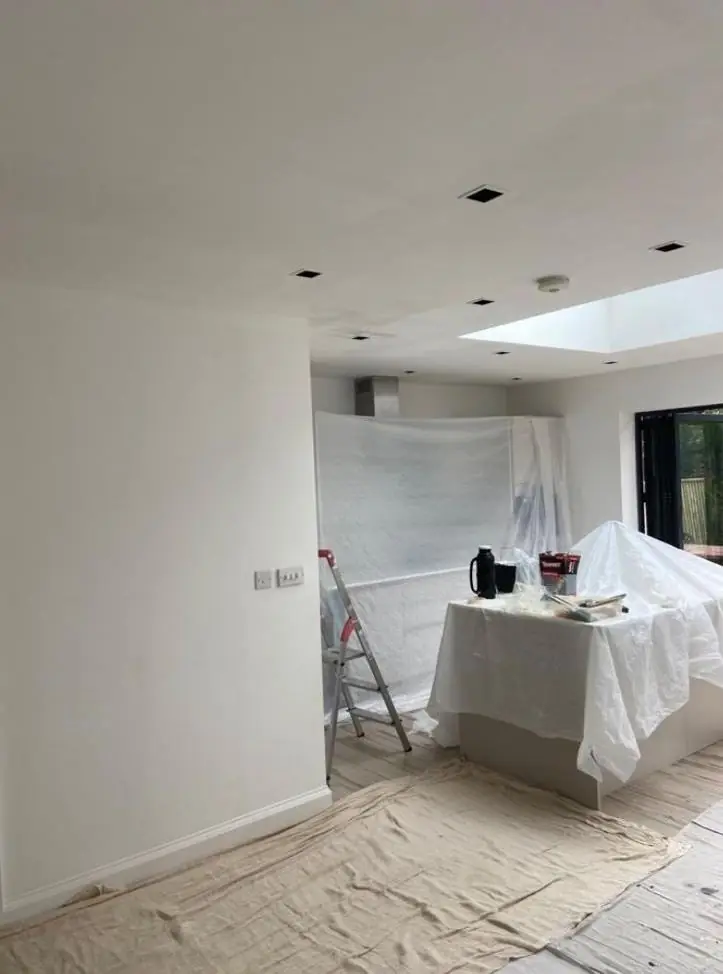
Dean decorates fresh plaster and new extensions in Westone, NN3, about 2.6 miles north-east of Northampton town centre. Many semis here have been extended at the back or into the loft, so the job is usually sealing new plaster correctly and making it sit comfortably beside the older rooms it opens onto.
An area of extended semis
The 1930s to 1960s semis that make up much of Westone were built with long rear gardens and, on roads like Ashley Way, garages and drives to the side. That space has made them easy to extend. Estate-agent listings in the area include bay-fronted semis that have already gained an extension, and loft conversions are another route to more space. Each of those projects ends the same way: a builder or plasterer leaves, and there is a room of bare pink plaster to decorate.
The trade steps for new plaster, from checking dryness to the diluted first coat, are set out on our main new plaster and extension page and in the mist coat guide. What follows is about what tends to come up in Westone houses in particular.
Where the new kitchen-diner meets the 1950s hall
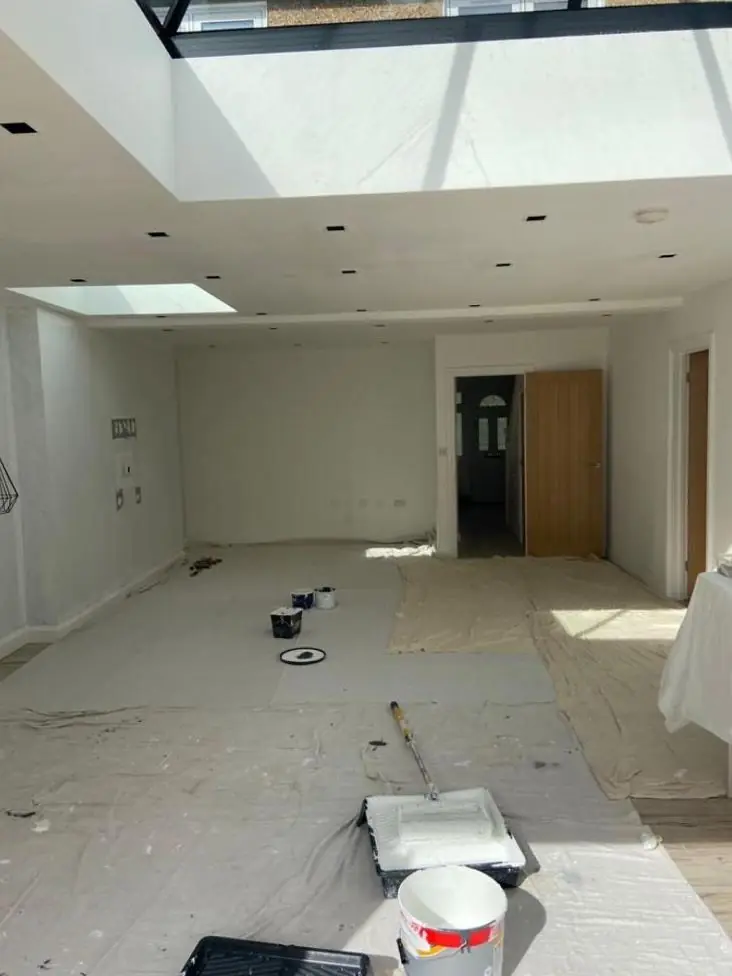
The typical Westone extension opens the back of the house into one large kitchen-diner. That means fresh plaster on three walls and the ceiling, and old painted plaster on the fourth wall, the one that used to be the outside of the house or the back of a dining room. The two surfaces behave differently:
- New plaster is thirsty and needs a mist coat so the finish does not peel.
- Old walls may carry several coats of vinyl or even distemper on the oldest houses, which has to be identified before anything goes over it.
- Where the builder has cut through for an opening, the edges around the new steel or lintel are often patched in bonding and skim, which dries slower than the rest.
We treat the old wall and the new walls as one surface in the end. That usually means a full coat of the chosen colour across the whole room, including the original wall, so there is no difference in sheen or shade when afternoon light comes across the room.
Loft conversions and the shaded rear
Loft rooms in Westone semis bring sloping ceilings, dormer cheeks and small knee walls, all freshly boarded and skimmed. Sloped ceilings show roller marks badly in low light from a roof window, so they get extra care at the mist coat stage when any texture or tide marks in the skim show up.
Drying is the other local factor. Mature trees around the former Westone grounds keep some rear elevations and gardens in shade for much of the day, and an extension on a north-facing back can take longer to dry out than one in full sun. We check moisture across every wall, paying attention to corners, reveals and behind radiators, and we will tell you plainly if it is too early to paint. Sealing damp plaster with the wrong paint only traps the moisture.
New joinery in the extension
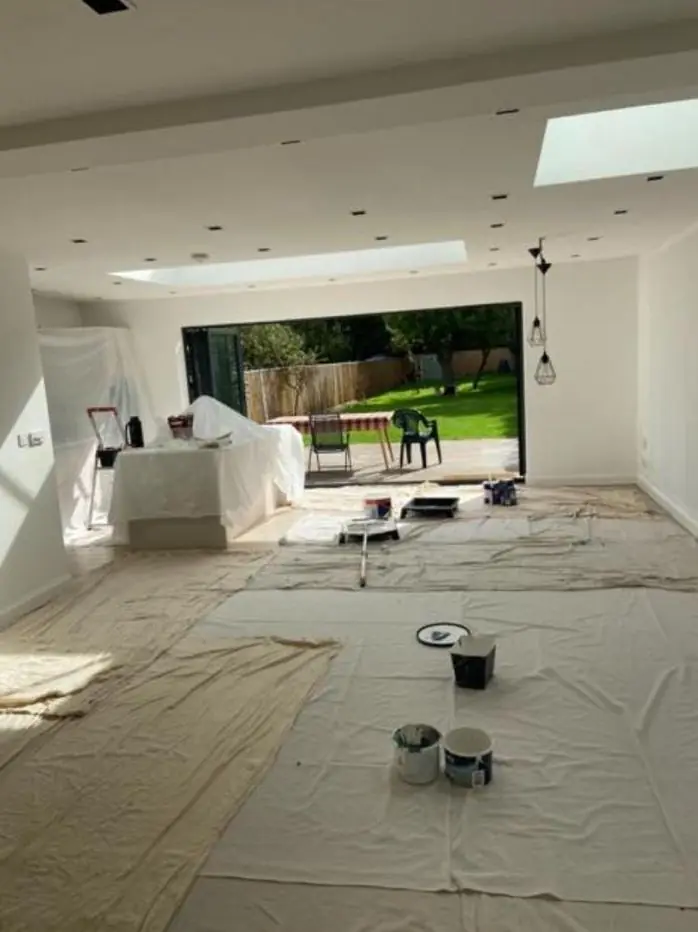
A new extension usually means new MDF skirtings, architraves and internal doors. We knot and seal cut edges, fill the pin holes and caulk the gaps where the boards meet a wall that is still settling. If the rest of the ground floor still has older softwood skirtings, we keep the paint and sheen the same so the two parts of the house read as one.
Planning the decorating early helps. If you let us know when the plasterer is due to finish, we can book the mist coat for once the walls have dried rather than weeks later. For the rest of what we cover locally, see our Westone area page.
Last updated by Dean, DH Painter & Decorator.