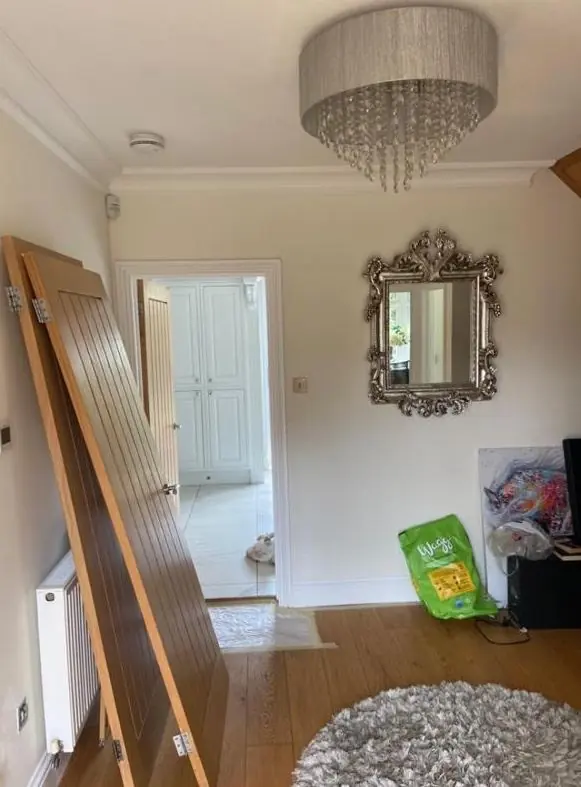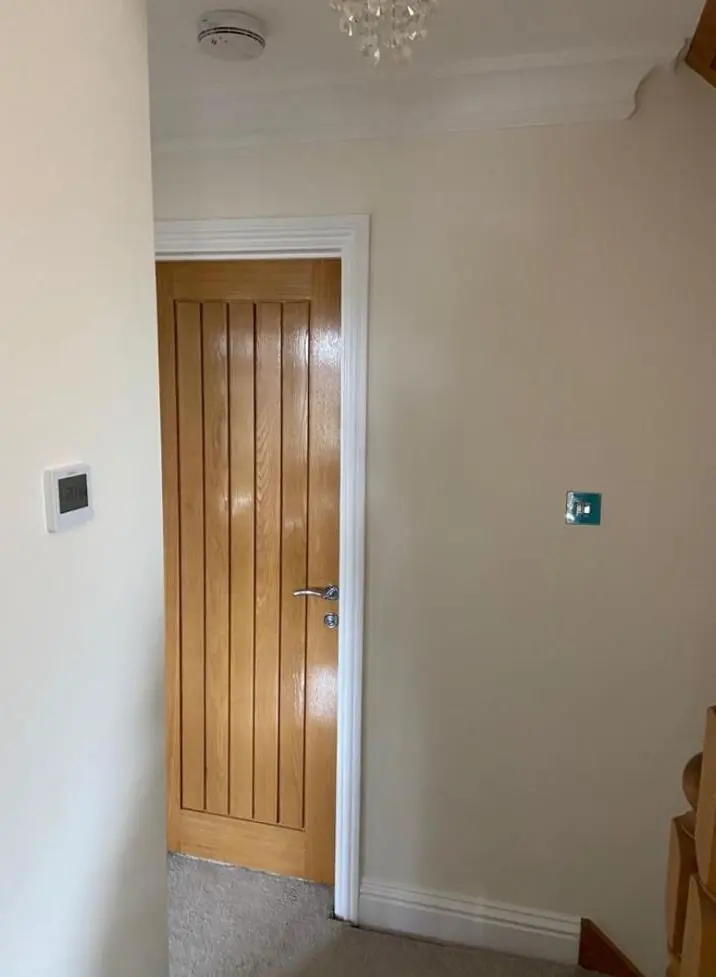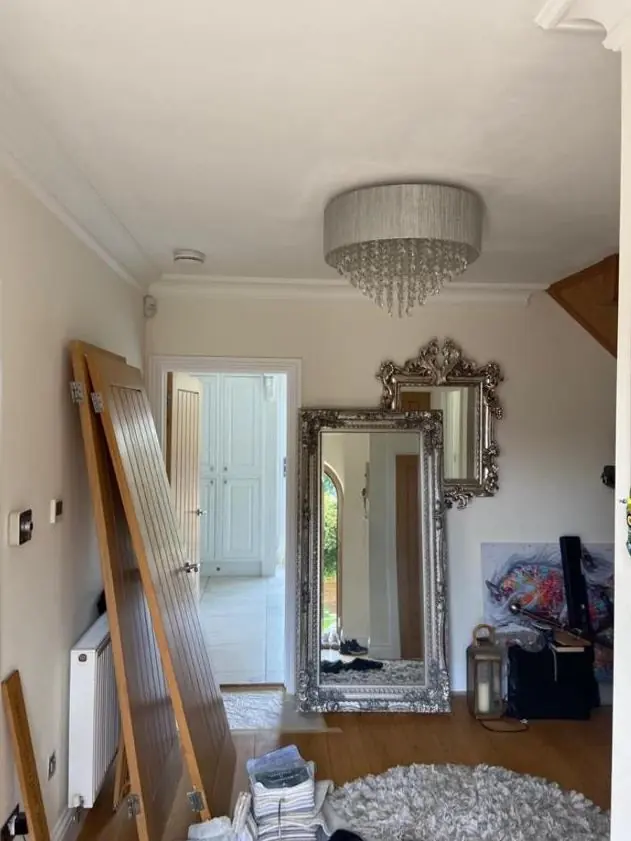
We strip and hang wallpaper across Westone, the NN3 district north of the Wellingborough Road, 2.6 miles north-east of Northampton town centre. Typical jobs here are feature walls in bay-fronted through-lounges, stairwells in the larger 1920s houses and full re-papering in homes being modernised.
What is usually under the old paper
A lot of Westone’s houses date from between the wars and the post-war years. When one comes up for sale described as needing modernisation, the walls often hold more than one generation of decorating: woodchip painted over in magnolia, a vinyl on top of a lining, or a patterned paper hung straight onto an older one. None of that can be judged from the doorway.
Before quoting a strip, Dean will lift a corner in a couple of places to see how many layers there are and whether they have been painted. Painted woodchip and paper-on-paper both take longer and need scoring and steaming. Once it is off, we expect to find some loose plaster, old fixings and cracks, and those need filling and sanding before anything new goes up. If the plaster underneath is poor, a lining paper hung across the wall gives the finish paper a sound, even base.
Chimney breasts in through-lounges
In many of the bay-fronted semis on roads such as Ashley Way and Oaklands Drive, the front and rear reception rooms have been opened into a single through-lounge. That creates a long room with the bay at one end and often a chimney breast partway along the side wall. The chimney breast is the natural place for a feature paper, and it is also where the setting-out matters most.
We centre the pattern on the breast itself by dropping a plumb line down its middle and working outwards to each edge, so the motif is balanced when you look at it from the sofa. The returns into the alcoves are wrapped with a small overlap and trimmed, so the corners stay crisp. In a long knocked-through room, the eye also travels the full length of the wall, so we check the ceiling line before hanging. A pattern that follows a sloping ceiling looks wrong from the far end.
Stairwells in the larger Westone Avenue houses
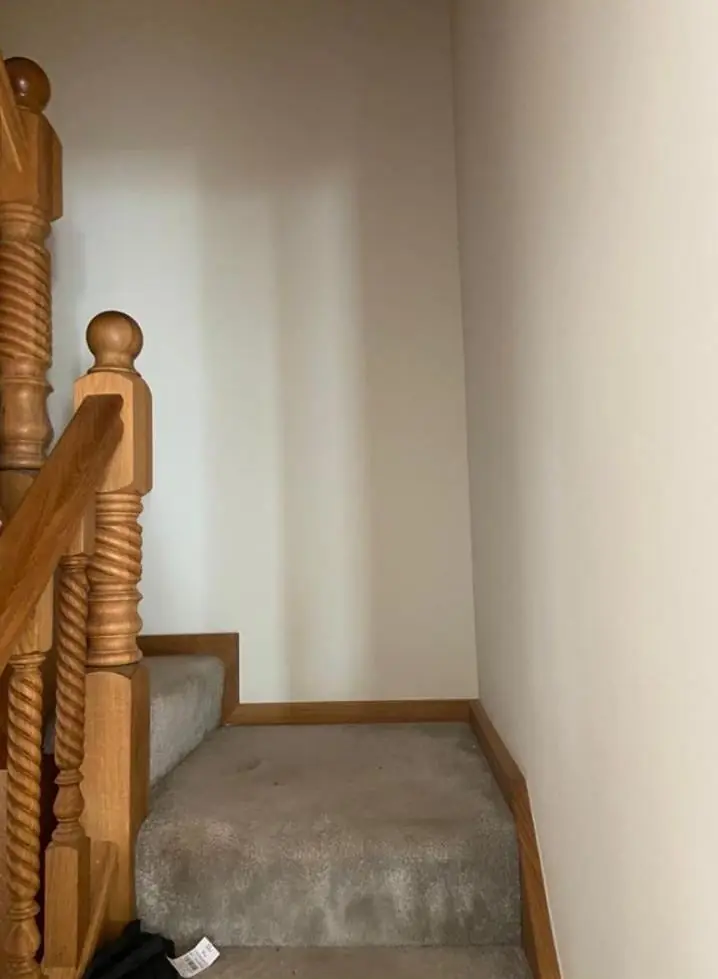
The 1925 detached houses on Westone Avenue, such as Westone Lodge, are bigger character homes with longer stair runs than the semis. Papering a tall stairwell is mostly an access problem. Lengths can be well over three metres on the head wall, and each one has to be hung from a stable platform built over the stairs rather than a stepladder balanced on a tread. We set that up first, then hang the longest drops early in the day while the paste and the wall are behaving consistently.
Heavy paper on a long drop also stretches slightly when wet, so pattern matches are checked at both the top and the bottom of each length, not just at eye level.
Papering against extensions and new plaster
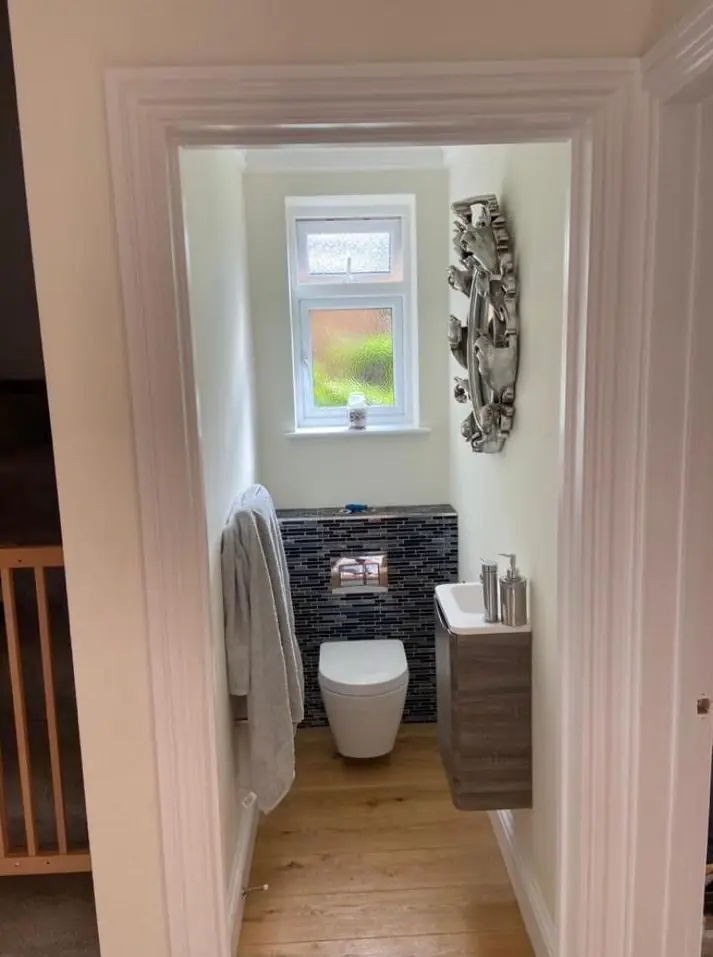
Where a semi has been extended, one wall of a room is sometimes new plaster while the rest is old. New plaster has to dry out fully and then be sized, so the paste does not soak straight in and the paper can still be moved into position. Hanging too soon traps moisture and can lead to bubbling or staining.
| Wall in a Westone house | What it usually needs first |
|---|---|
| Painted woodchip in an older semi | Scoring, steaming, filling, often lining |
| Fresh plaster in a rear extension | Full drying time, then sizing |
| Stairwell in a 1920s detached house | Safe platform over the stairs |
| Bay window walls | Careful trimming around the angled returns |
Arranging a visit
At 2.6 miles out from the middle of town, Westone is an easy trip for us. Bring us the paper you have chosen, or ask our advice on roll quantities first. Our main wallpaper hanging page covers paper types and the full process, and the Westone area page lists the other work we take on in the district. For a sense of budget, see our decorating cost guide.
Last updated by Dean, DH Painter & Decorator.