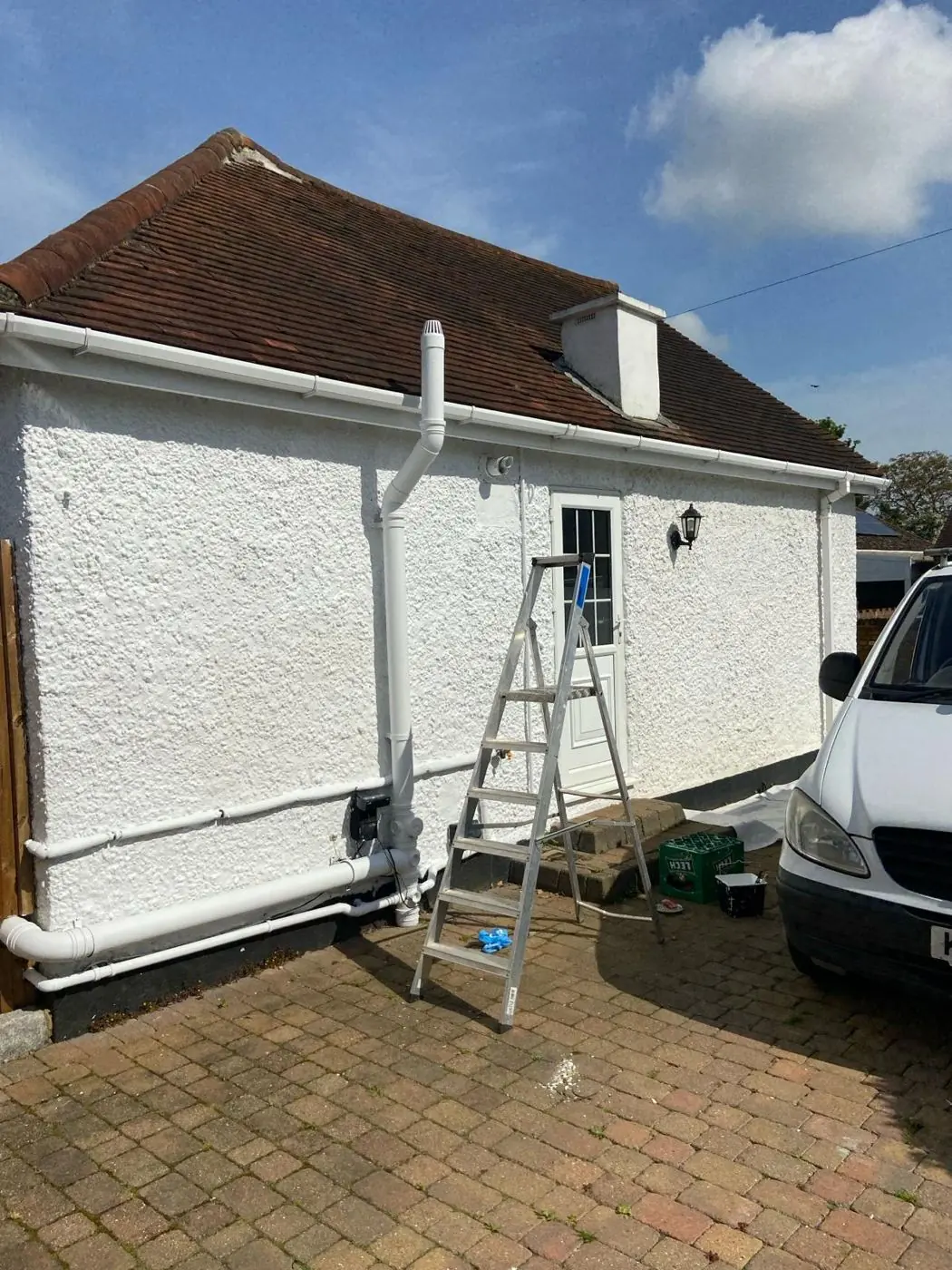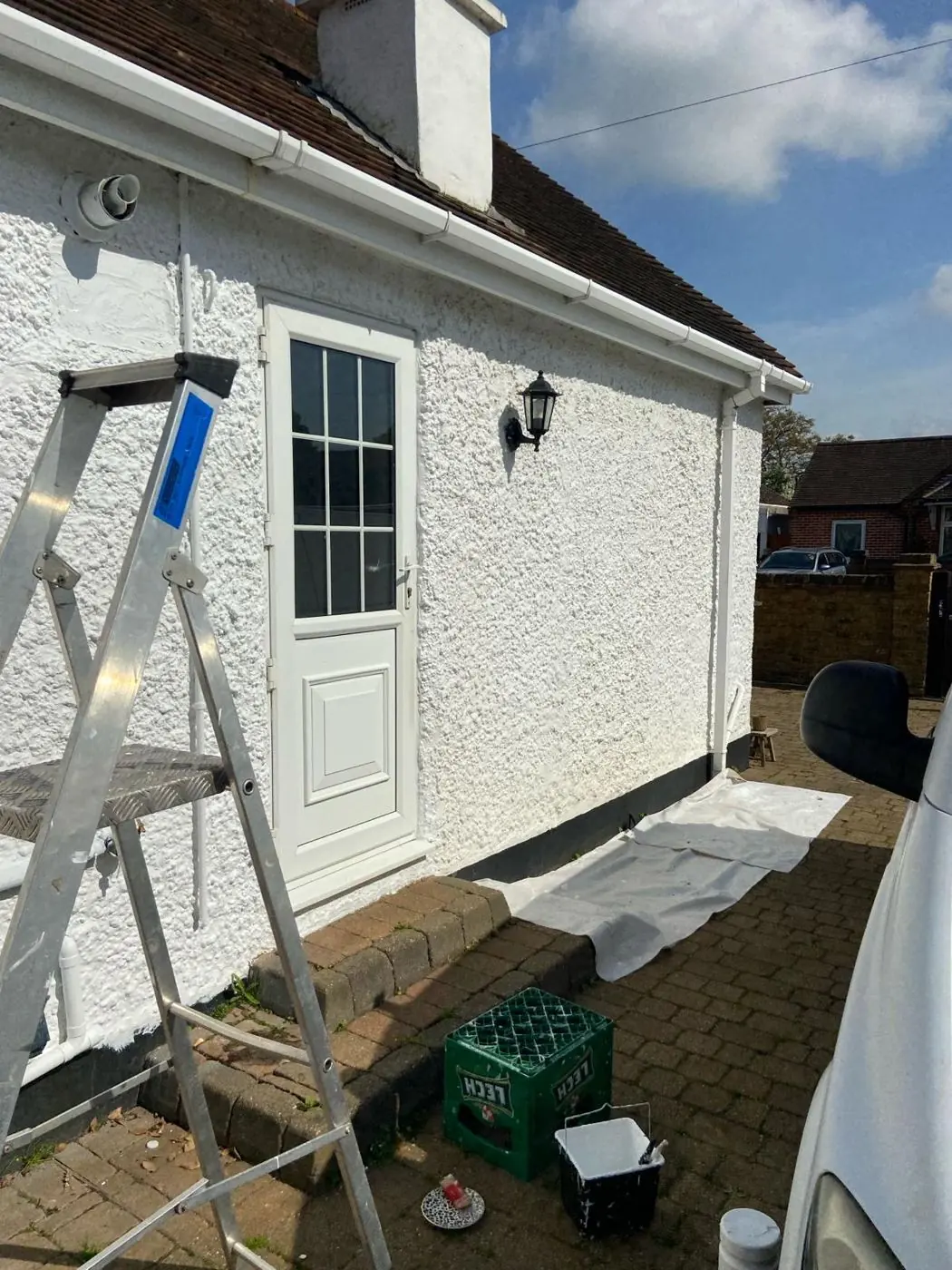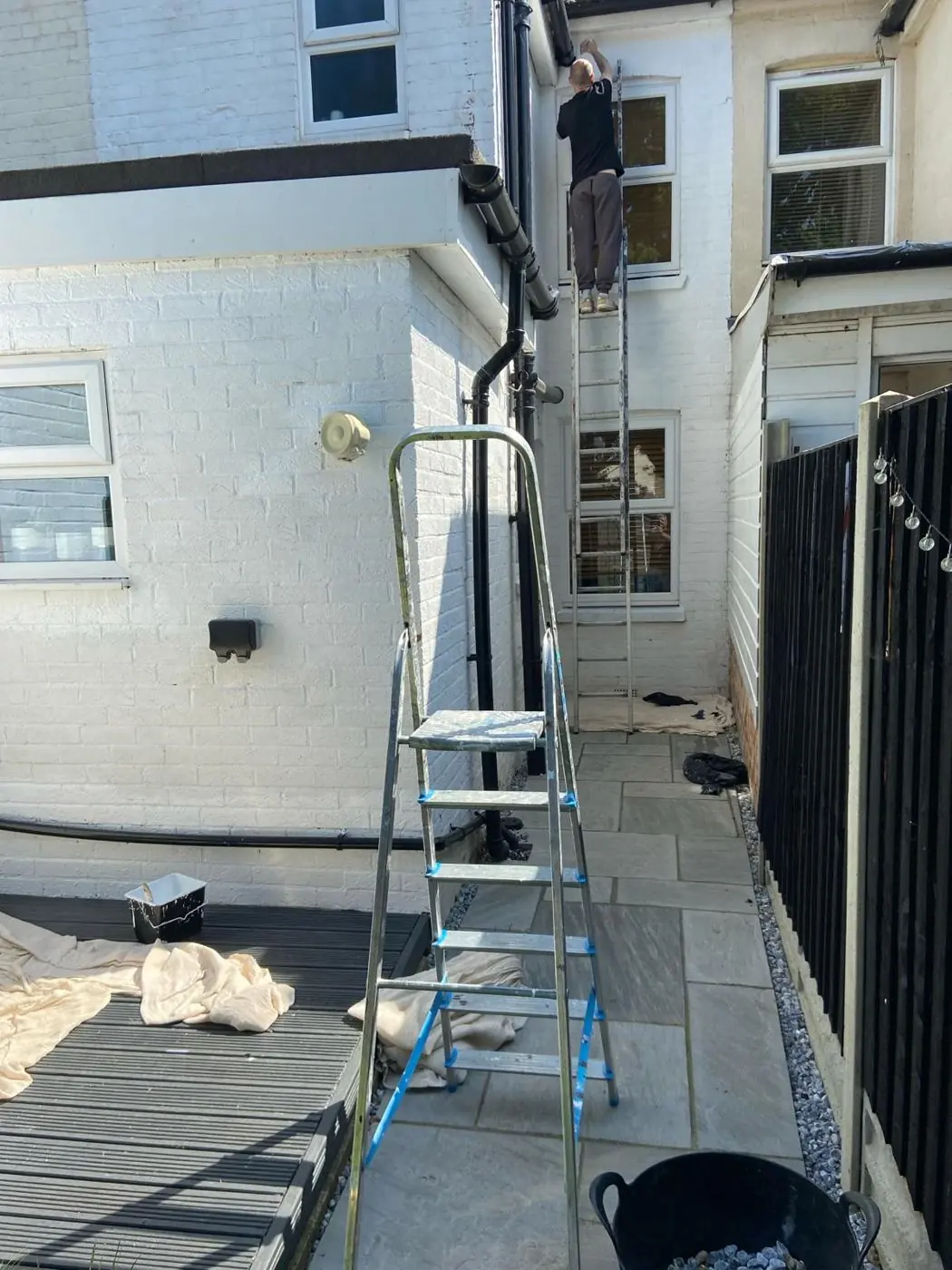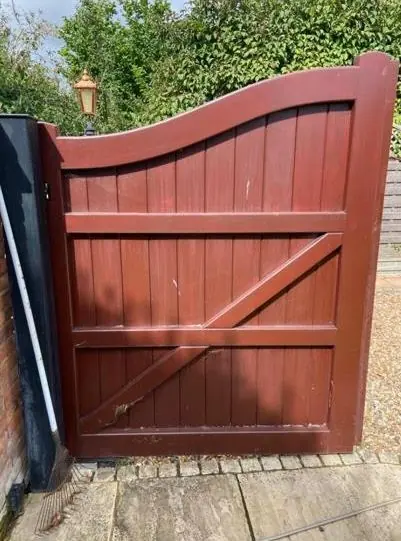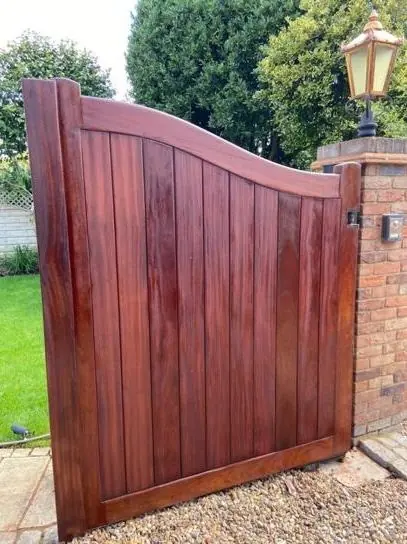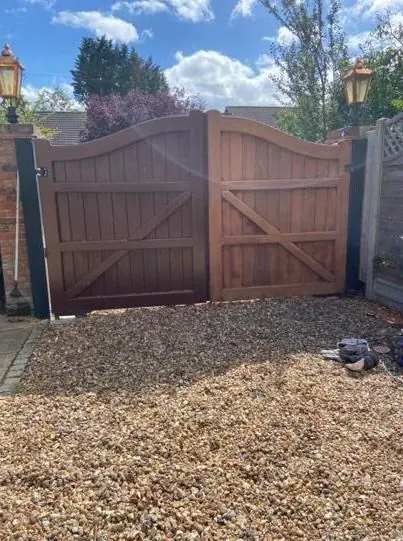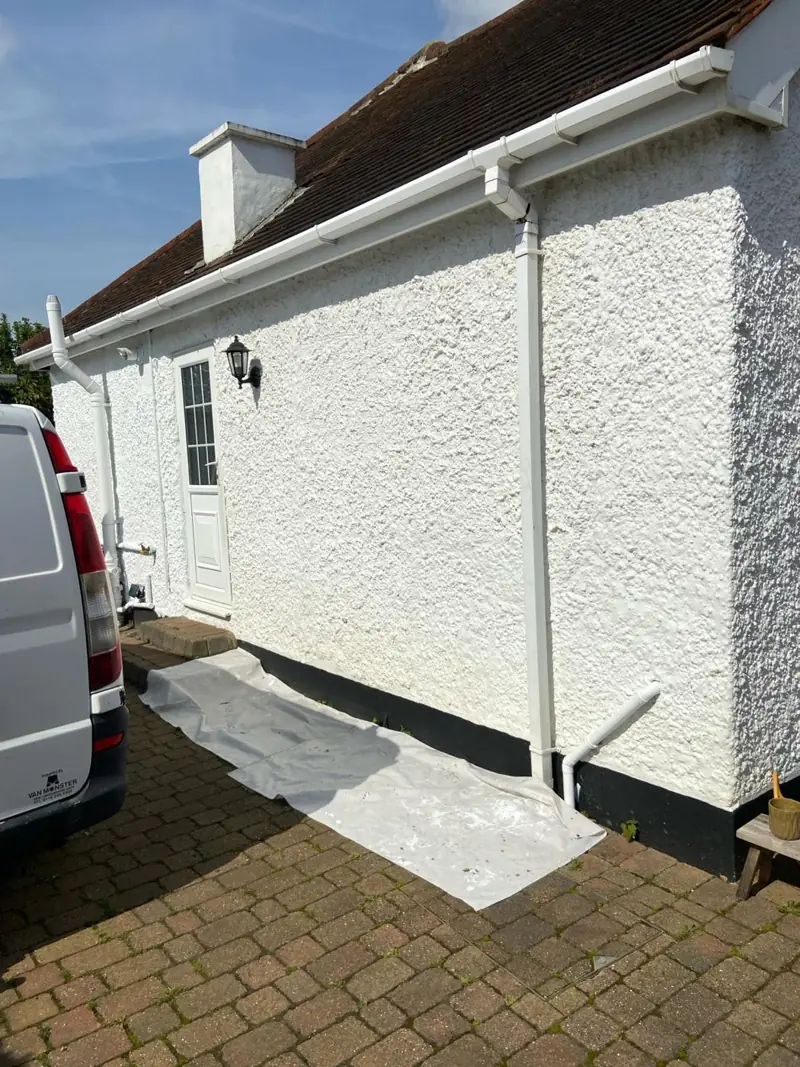
We paint house exteriors in Boothville, the NN3 neighbourhood off Kettering Road roughly three miles north-east of the town centre. Most homes here already have uPVC double glazing, so Dean prices the parts that still take paint: fascias, bay boards, front and garage doors, and any painted walls, checking each elevation on a visit first.
What is left to paint once the windows are uPVC
Sales listings for Boothville bungalows, such as those on Bibury Crescent, keep describing the same thing: uPVC double glazing throughout, and most windows across the district are now plastic. That changes the shape of an exterior job here. There are rarely timber sashes to strip and reglaze. Instead the work gathers around the pieces that never went plastic:
- timber fascias, soffits and bargeboards, which on a bungalow sit at single-storey height
- the boards, sills and small roofs over bay windows in lounges and front bedrooms
- front doors, side doors and the frames of detached garages
- metal up-and-over garage doors, which need rust treatment before any topcoat
- rendered or previously painted walls, where a house has them
The sources we rely on do not record wall finishes street by street, so Dean looks at each elevation in person before quoting rather than assuming every house on a road is the same.
Bungalows, bays and three-floor semis need different kit
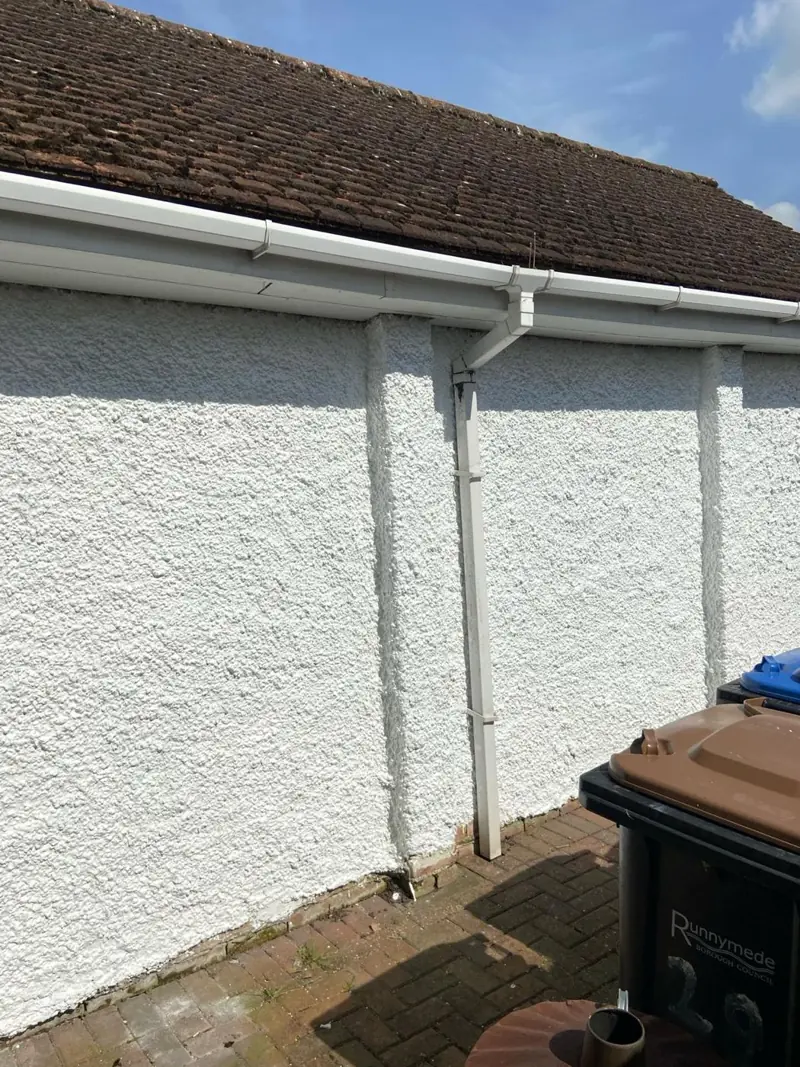
A detached bungalow in a cul-de-sac is a straightforward house to paint outside. The eaves are low, the bays are within reach of a short ladder, and the driveway usually takes the van, so most of the day goes on preparation and coats rather than moving access gear. The 1930s double bay-fronted semis by Kettering Road are another matter. Some have been extended over three floors, which puts gables and rear fascias well above comfortable ladder height and can call for a tower. We quote the access as its own line so you can see where the time goes.
Bay windows deserve a separate mention. The lead or felt roof over a bay, the board beneath it and the sill below all catch rain and sun before the rest of the front, so they are often peeling while the main fascia still looks fine. On a Boothville bungalow or bay-fronted semi, the bay is often the first part of the front to need work.
Corner plots, trees and the sunny side
Corner plots turn up often in Boothville listings, from Lumbertubs Lane to Yewtree Court. A house on a corner shows two faces to the street and to the weather, so there is roughly twice the wall, fascia and gutter run of a mid-street semi. Booth Rise sits on Northampton Sands at around 104 metres, on raised open ground, and the rear gardens are often described as sunny. South-facing paintwork up here bleaches and dries out faster, which is why we lean towards UV-stable, microporous coatings on timber.
Fronts behave differently. Mature shrubs and trees in front gardens shade the walls and drop leaves into gutters, leaving green growth on the shaded side. That gets washed off and treated with a biocide, then left to dry, before anything is painted. Houses facing Kettering Road or Lumbertubs Way pick up a film of traffic grime that also has to come off first, or the new coat will not bond.
Colour freedom, with one exception
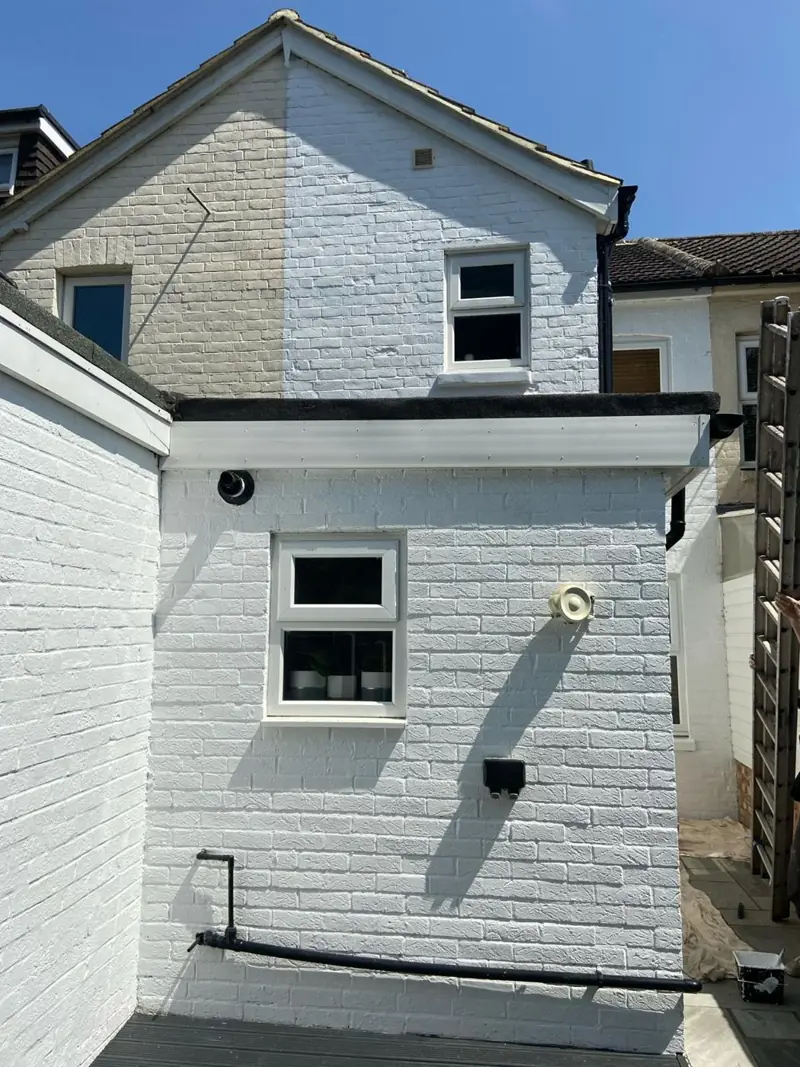
No conservation area or heritage Article 4 direction covers Boothville, so on a freehold house or bungalow you can choose the front door, garage and fascia colours you like without planning consent. The exception is leasehold property. The first-floor maisonettes at Yewtree Court, for example, may need the freeholder’s agreement before an outside colour changes, so check your lease before we order paint. Timing matters too; our guide to timing exterior painting in the UK explains why the drier, milder months suit exposed ground like this.
For how we prepare and which paints go on each surface, see our main exterior painting service. For everything else we do in the district, see the Boothville area page.
Last updated by Dean, DH Painter & Decorator.