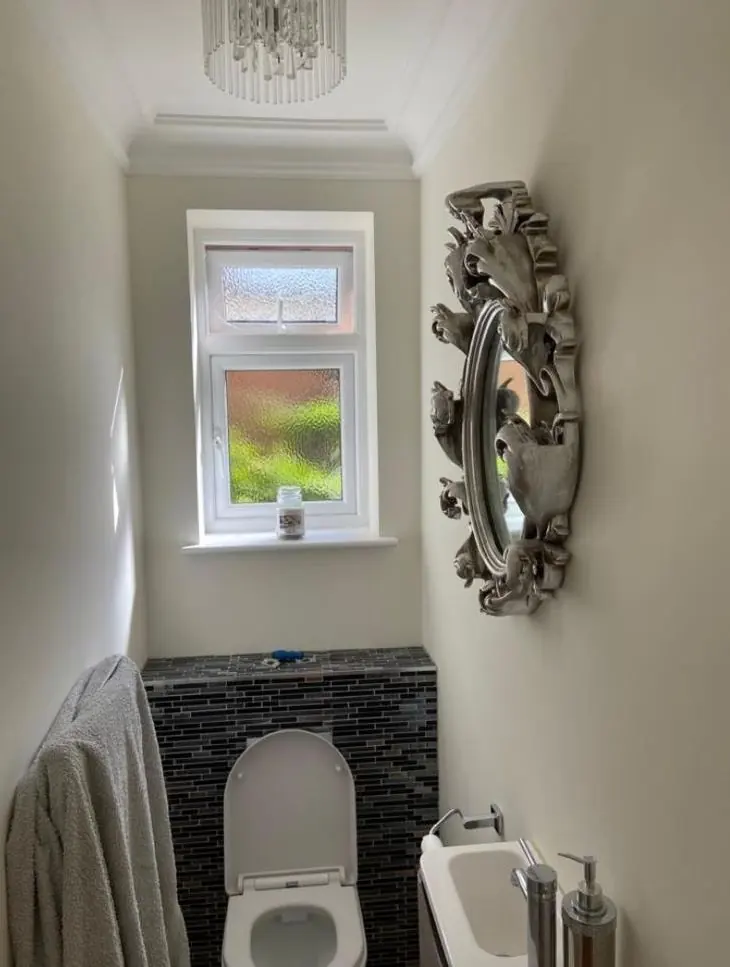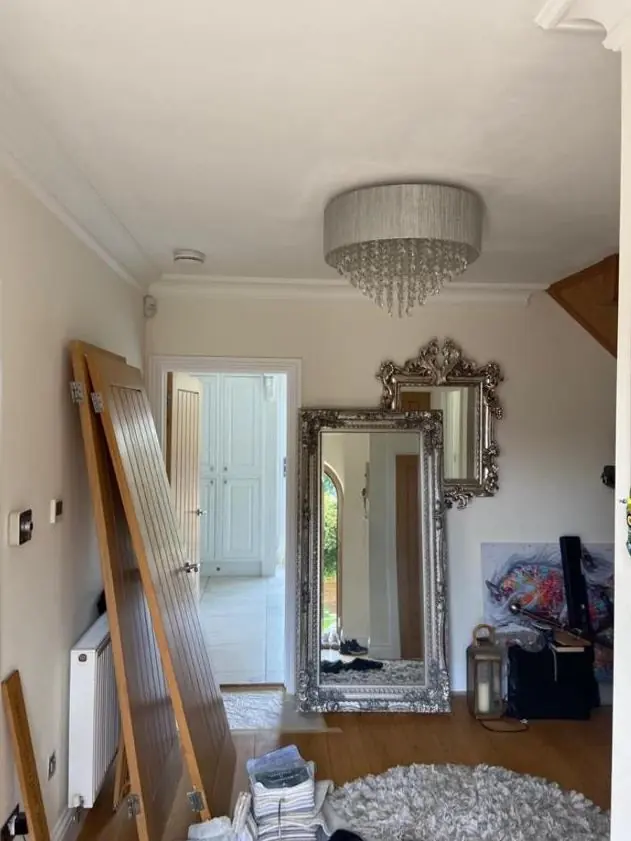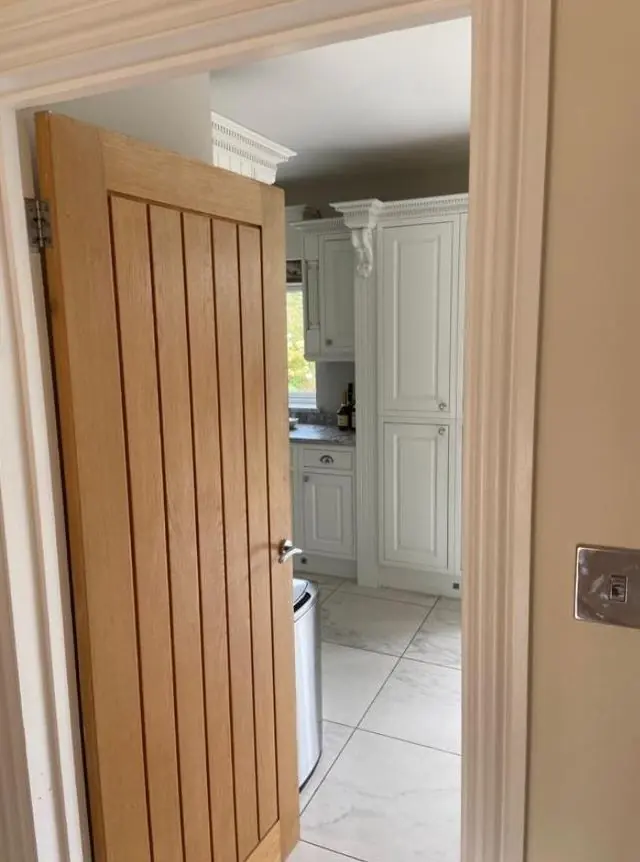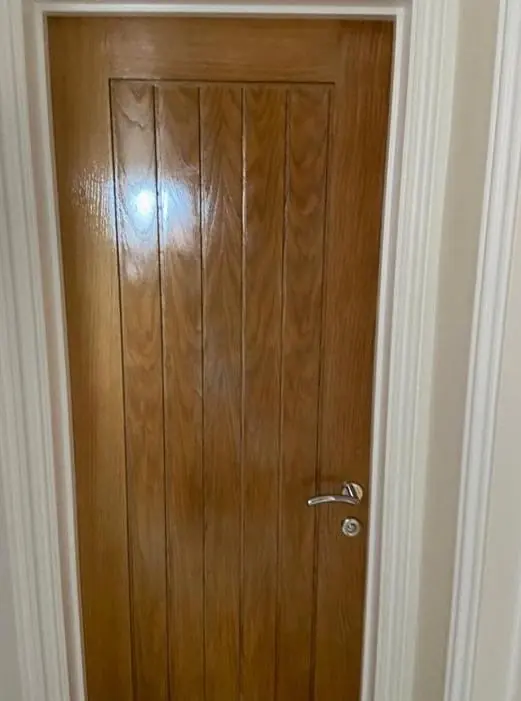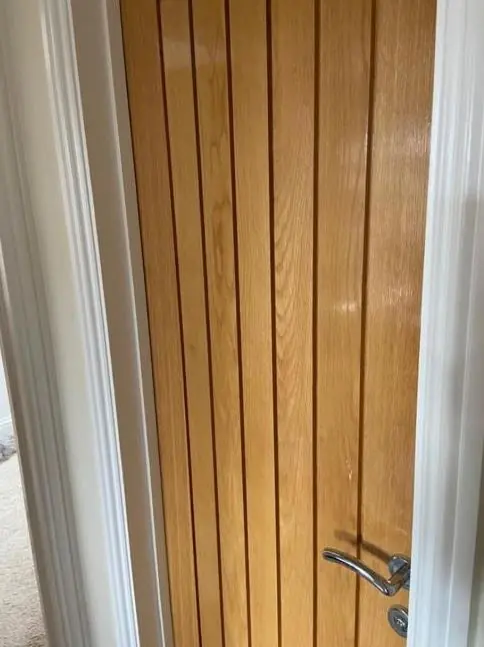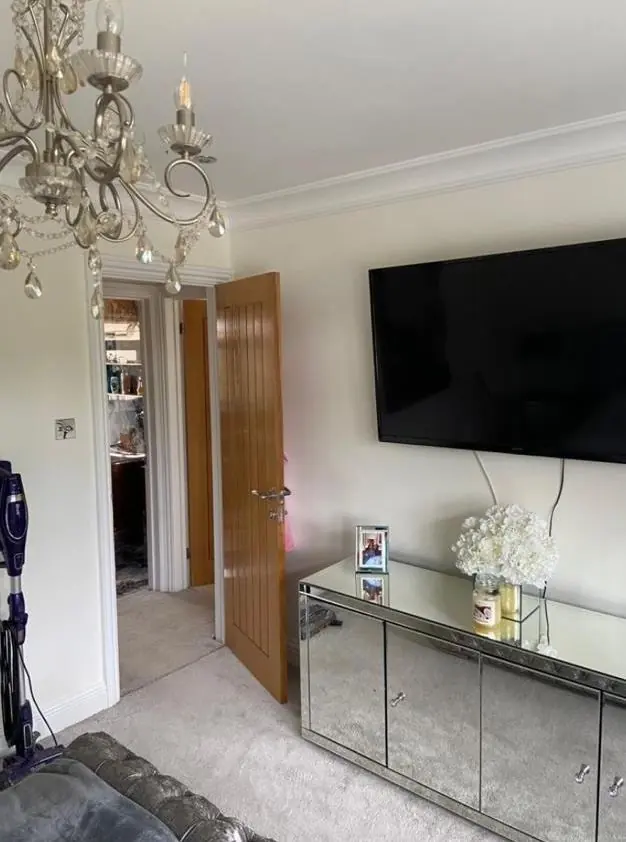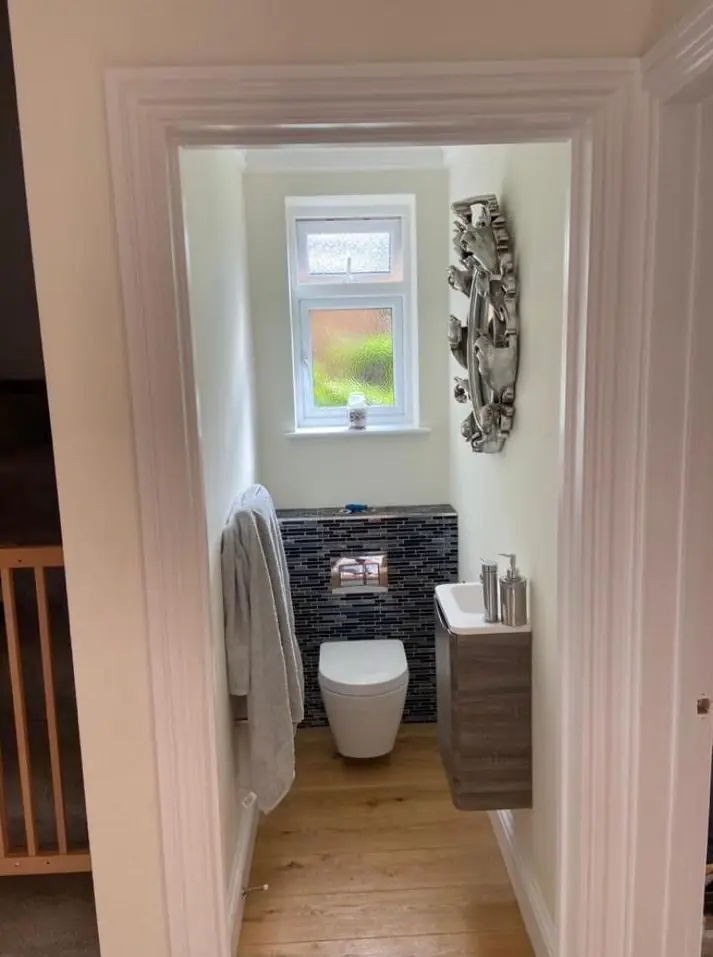
We hand-paint decorative finishes in Westone, the NN3 district on the north side of the Wellingborough Road, about 2.6 miles north-east of Northampton town centre. Here that usually means picking out period detail in the older character houses or adding feature walls and panelling to extended family semis.
Period detail from the Westone Manor era
Westone has a clear marker for what early 20th-century interiors in the district looked like. Westone Manor on Ashley Way was built in 1914 for William Sears, a Northampton shoe manufacturer, and the hotel it became still keeps an original fireplace, bay windows and architectural mouldings. A decade later came Westone Lodge on Westone Avenue, a 1925 detached character home.
Where houses of that generation keep cornices, ceiling roses, picture rails or a fire surround, those features are where decorative painting pays off. Picking them out is slow, careful work:
- Clearing clogged detail first, since decades of emulsion can soften the profile of a moulding until it looks blunt.
- Filling cracks along the line where a cornice meets the wall and ceiling, which is where movement shows first.
- Cutting the contrast colour by hand along each step of the profile rather than masking, which leaves a sharper line on curved plaster.
- Choosing a sheen for the detail that differs slightly from the walls, so it catches light without looking glossy.
Fireplaces and chimney breasts
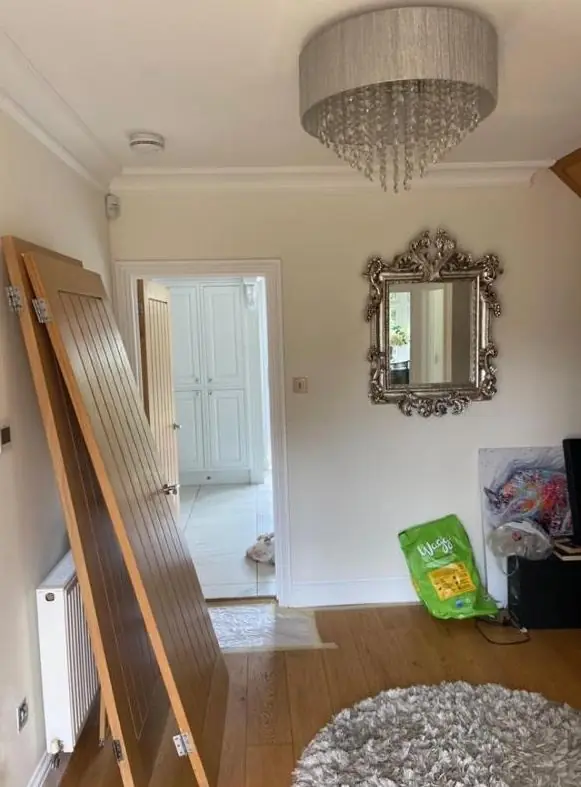
Original or reinstated fire surrounds in timber or plaster suit a painted finish in a single deep colour or a two-tone scheme, with the surround in one shade and the breast in another. A chimney breast can also take a paint effect: a soft colour-wash or a layered glaze gives depth without the commitment of a printed paper. We test any effect on a board first so you can see it in the room’s own light, which in Westone’s tree-lined rear rooms is often softer and greener than you expect.
Feature walls that give open-plan rooms some order
Many of Westone’s interwar and post-war semis along Oaklands Drive, Firtree Walk and Ashley Way have been extended, and the result is often a long open-plan kitchen, dining and family space. Large single rooms can feel undefined. Decorative painting is a simple way to give them structure without building anything:
| Finish | Where it suits a Westone extension |
|---|---|
| Colour-blocked arch or rectangle | Marking the dining area within a long open room |
| Two-tone wall split at a dado height | Linking the old part of the house to the new without a hard break |
| Painted wall panelling | Adding character to a plain new wall next to original rooms |
| Limewash-style effect | Giving texture and movement to a large blank wall |
Panelling fitted to new plaster needs the plaster fully dry and sealed first, and the joints, pins and mitres filled and sanded before the top coats so the panels read as one piece.
Bays and stair halls in the bigger houses
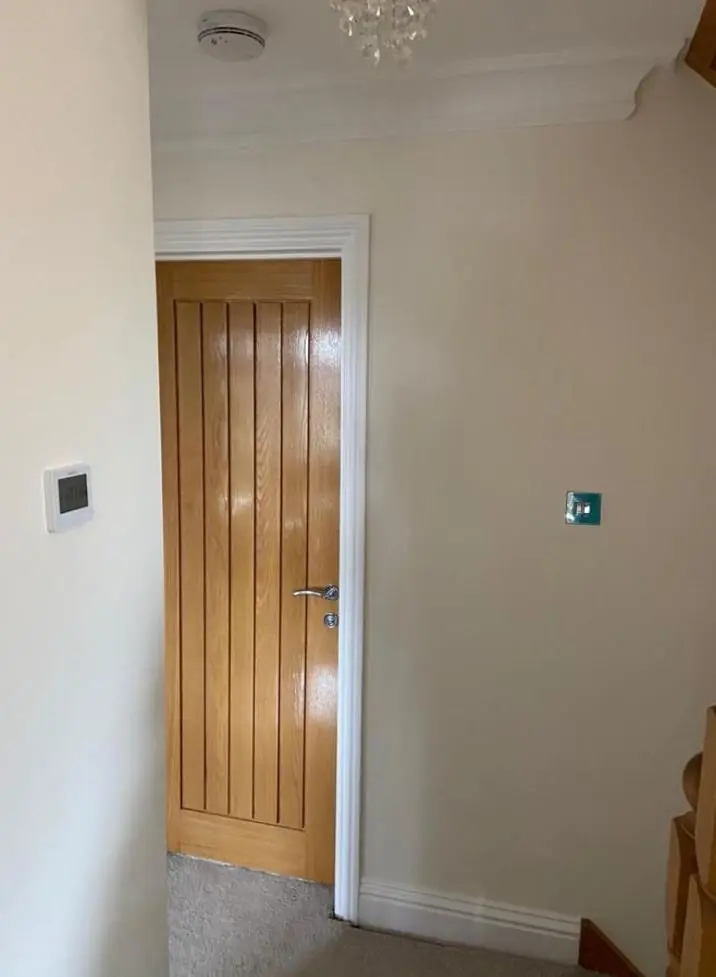
Bay windows are a feature on both the semis and the older detached houses. Painting the window reveals and the bay’s ceiling band a shade apart from the walls frames the bay neatly. In the 1920s houses, with their higher ceilings and longer stair runs, painted panelling up the stair or a contrasting dado line breaks up a tall wall that otherwise feels bare.
Before you decide
Most decorative work starts with a conversation about colour, so it pairs naturally with our colour advice. The full range of finishes we hand-paint is on our main decorative finishes page. We cover Westone, 2.6 miles north-east of the centre, from our Northampton base. Our Westone area page covers everything else.
Last updated by Dean, DH Painter & Decorator.