
We paint wardrobes, dressers, built-in cupboards, tables and chairs in Northampton and nearby towns. Dean cleans, keys and primes each piece to suit what it is made of, whether varnished, waxed, veneered or laminate, then applies hard-wearing finish coats. Every job starts with a visit and a free written quote.
Painting furniture so the finish lasts
Furniture is handled far more than a wall. Wardrobe doors open every day, drawers get pulled by their edges and table tops take plates, cups and elbows. New paint can chip within weeks if it went onto polish or wax with nothing to grip. As painters and decorators in Northampton, we treat furniture as part of our interior painting, with the same care over cleaning, keying and priming.
This page covers furniture painted in your home. Fitted pieces are painted where they stand, so built-in wardrobes and alcove cupboards can be done in the same visit as the room around them. Freestanding pieces need a room you can spare while the paint dries.
What furniture can be painted?
Most wooden, board and metal furniture can be painted if the surface is prepared for it. The pieces we paint include:
- Fitted wardrobes, built-in cupboards and alcove units, including their doors, frames and plinths
- Freestanding wardrobes, chests of drawers and bedside tables
- Dressers, sideboards and bookcases
- Dining tables and chairs, desks and occasional tables
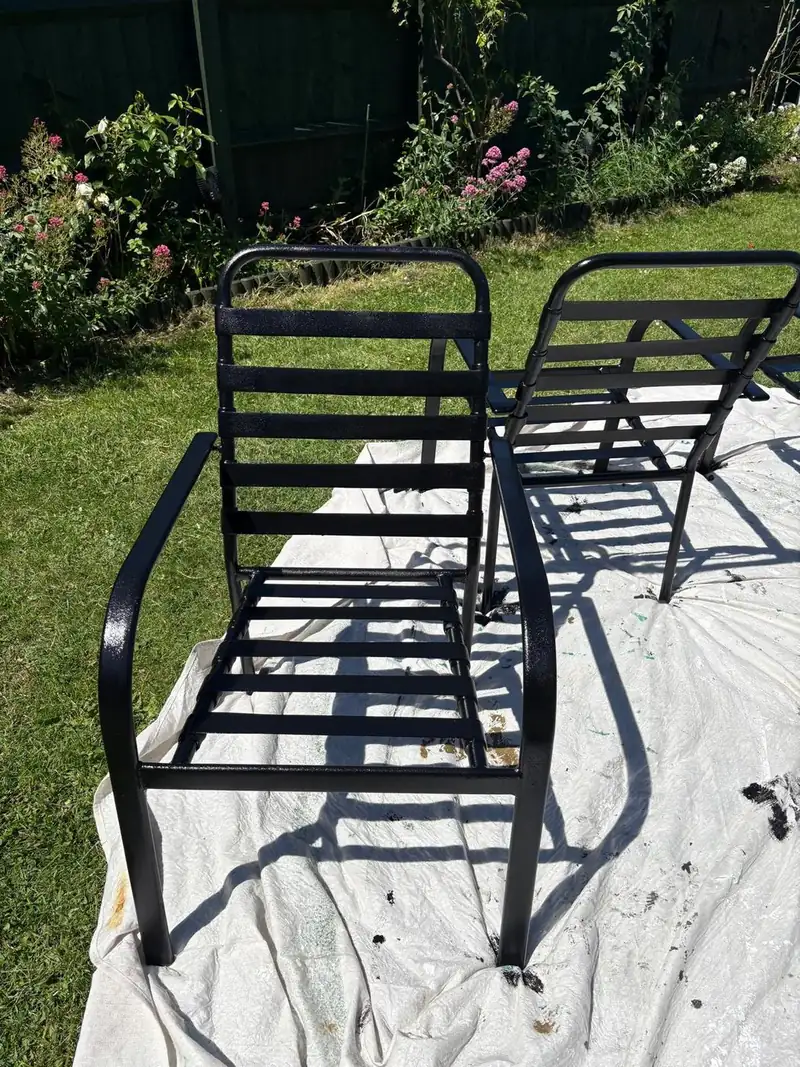
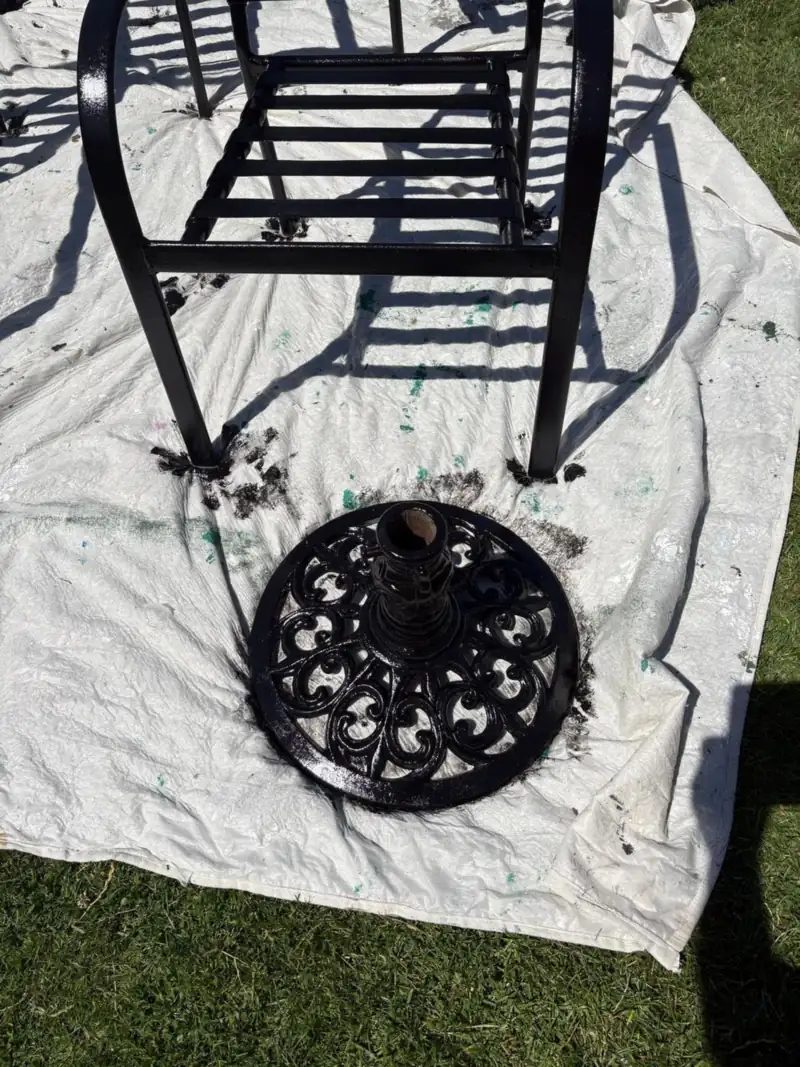
- Metal garden tables and chairs, like the set in the photos on this page
A piece may be solid pine or oak, MDF, a thin veneer over board, or plastic laminate. Each needs different preparation, so the first job is working out what the surface is. Skirtings, doors and frames in the same room are covered on our woodwork and door painting page.
One of our furniture painting jobs
Rusted garden furniture repainted black


The photos show a rusted metal garden table, chairs and parasol base before the work, then refinished in satin black and set out on dust sheets in the garden to dry.
How we paint furniture, step by step
Painting furniture comes down to six steps: checking the surface, removing the hardware, cleaning, repairing and keying, priming and finishing.
1. Checking the piece and quoting
We look at what the existing finish is: varnish, lacquer, wax, oil, old paint or laminate. A small test patch shows whether it is sound or flaking. You then get a written quote listing the pieces, the preparation and the products.
2. Protecting the room and removing hardware
Floors and nearby surfaces are sheeted. Handles, knobs and hinges come off where they can, and doors and drawers are labelled so each one goes back in its own place. Paint brushed around a fitted handle leaves a ridge that catches and chips.
3. Cleaning and degreasing
Grease from hands, polish and wax build up for years, mostly around handles and edges. Paint will not bond to grease or polish, so every surface is degreased and rinsed. Waxed pine needs the wax taken off completely, not just dulled.
4. Repairing and keying
Dents and chips are filled and sanded flush. Sound varnish and lacquer don’t need stripping to bare wood. They are sanded lightly to take off the shine and give the primer something to grip. HSE’s wood dust information sheet lists asthma among the health effects of wood dust and says hardwood dust can cause a rare nasal cancer, so dust is kept down and cleaned up as we go.
Old painted furniture needs more care. HSE’s lead FAQs put removing paint in properties built before the 1980s and dry sanding old paint among the riskiest jobs. They advise wet abrasive paper to key old paint that is in good condition. We follow that on any old paint that may contain lead.
5. Priming for the surface
The primer is chosen for what is underneath. Zinsser B-I-N, a shellac primer, lists cabinets and furniture among its uses. It seals knots and blocks tannin stains, which matters on oak, as tannin can bleed brown through pale paint. Zinsser Bulls Eye 1-2-3 is a water-based bonding primer made to stick to glossy surfaces. Both makers say sanding isn’t needed, but we still give the surface a light key, because furniture is handled every day.
6. Finish coats and refitting
Two finish coats are normal, with a light sand between them to remove dust nibs. Doors and drawer fronts are painted lying flat where possible. Once the paint is dry, hardware goes back on, doors are rehung and drawers are checked so they don’t stick on fresh paint.
Chalk paint, eggshell or satin: which finish?
The finish decides how the piece looks and how well it copes with wear. Our post on eggshell, satin and gloss covers sheen levels in more depth.
| Chalk paint | Eggshell | Satin | |
|---|---|---|---|
| Look | Flat and chalky | Low sheen, between matt and satin | Mid sheen, slightly polished |
| Protection | Needs a wax or lacquer top coat | Wipeable once hard | Wipeable and hard-wearing once hard |
| Suits | Distressed or period looks on pieces handled lightly | Display pieces and bedroom furniture | Wardrobe doors, drawers and anything handled daily |
| Watch for | Wax is softer than lacquer on table tops | Less tough on wood than satin | Shows the surface underneath, so preparation has to be good |
Annie Sloan says its Chalk Paint needs no sanding or priming. It sells a clear wax to seal and protect painted furniture, and a lacquer for a more robust finish on pieces such as dining tables. For pieces handled daily, Dulux describes Diamond Satinwood as tough, non-yellowing and resistant to scratches, stains and grease. Its Diamond Eggshell data recommends satinwood for the most durable lower-sheen finish on wood.
Varnished, veneered and laminate furniture
Each surface needs its own preparation:
- Varnished or lacquered wood: sound varnish is cleaned, keyed and primed rather than stripped. Flaking or crazed varnish has to come off where it is loose, or the paint will fail with it.
- Waxed or oiled pine: all the wax comes off first, because paint over wax stays soft and peels. Knots are sealed so resin doesn’t stain through.
- Veneer: a thin layer of real wood glued over board. Heavy sanding cuts through it quickly and soaking can loosen the glue, so it is keyed lightly by hand. Lifting edges are glued down before painting.
- Laminate and melamine: smooth plastic with nothing for paint to grip, so a bonding primer is essential. Painted laminate is never as tough as the factory face, and edges are the first place to chip.
- Metal: rust is taken back before a primer suited to metal goes on. Our metal gate and railing painting page explains metal preparation in more detail.
When not to paint a piece
Some pieces are better left unpainted, and we’ll say so if yours is one:
- Antiques and pieces with value: paint is hard to remove fully from veneer, carving and open grain, and it can affect what a piece is worth. Ask an antiques specialist or furniture restorer first.
- Swollen or water-damaged chipboard: paint won’t flatten a blown edge, and the board will keep breaking down underneath it.
- Loose joints or wobbly frames: these need a joiner or restorer first, as paint cracks along any joint that moves.
- Peeling laminate: paint over a lifting skin comes away with it.
How long does furniture painting take?
It takes longer than the brushwork suggests, because each coat needs time before the next. Zinsser gives B-I-N a recoat time of 45 minutes, and Dulux gives Diamond Satinwood 6 hours between coats. So a primer and two finish coats usually run over at least two days. A chest of drawers or bedside table is often a two-day job. A run of fitted wardrobes with several doors and drawers can take several days. The time depends on:
- the number of doors, drawers and panels
- mouldings, glazing bars and other detail
- how much cleaning, filling and keying the surface needs
- a big colour change, which can need an extra coat
- temperature and humidity, which Dulux says affect drying time
Paint is dry long before it is fully hard. Zinsser gives B-I-N a full cure of 1 to 3 days and Bulls Eye 1-2-3 a full cure of 7 days, so painted furniture needs gentle use for the first week or so.
What affects the cost of furniture painting?
Dean prices furniture after seeing it, because two wardrobes of the same size can need very different amounts of preparation. The main factors are:
- how many pieces, doors and drawers there are
- the surface, since laminate and waxed pine take more work than sound varnish
- repairs such as filling dents or gluing down veneer
- whether the insides of cupboards and the drawer sides are painted too
- the paint system, such as chalk paint with lacquer, or a primer and two coats of satin
Our Northampton decorating price guide explains how decorators price work, and our post on what a decorating quote should include shows what to check in yours. Your written quote is what counts.
Looking after painted furniture
A little care in the first week, while the paint hardens, and gentle cleaning after keep the finish looking right:
- Keep heavy things off shelves and tops for the first few days, and lift items rather than sliding them.
- Put felt pads under lamps and ornaments, and use coasters and mats on tables.
- Clean with a soft damp cloth and a little mild washing-up liquid. Scouring pads and strong cleaners dull the finish.
- Keep some leftover paint, labelled with the colour and the piece, for touching in chips.
Furniture painting in Northampton and nearby
We paint furniture in homes across Northampton. From our Northampton base we also cover towns such as Wellingborough and Kettering, as well as Milton Keynes, Bedford and Corby. If you’re unsure about colour, our colour and finish advice can help you pick a shade. Kitchen units have a page of their own, kitchen cabinet painting, and so do plastic window frames and doors, uPVC spraying.
Book furniture painting
For a free quote, call Dean on 07539 779 036 or get in touch online. Tell us what the pieces are and roughly how big they are. A few photos help, including a close-up of the current finish.
Sources
- B-I-N Shellac Primer, Zinsser UK (accessed 2026-11-26)
- Bulls Eye 1-2-3, Zinsser UK (accessed 2026-11-26)
- Dulux Trade Diamond Satinwood, Dulux Trade (AkzoNobel) (accessed 2026-11-26)
- Dulux Trade Diamond Eggshell, Dulux Trade (AkzoNobel) (accessed 2026-11-26)
- Chalk Paint, Annie Sloan (accessed 2026-11-26)
- Clear Chalk Paint Wax, Annie Sloan (accessed 2026-11-26)
- Chalk Paint Lacquer, Annie Sloan (accessed 2026-11-26)
- Wood dust: Controlling the risks (WIS23), Health and Safety Executive (accessed 2026-11-26)
- Frequently asked questions on lead, Health and Safety Executive (accessed 2026-11-26)
Last updated by Dean, DH Painter & Decorator.


