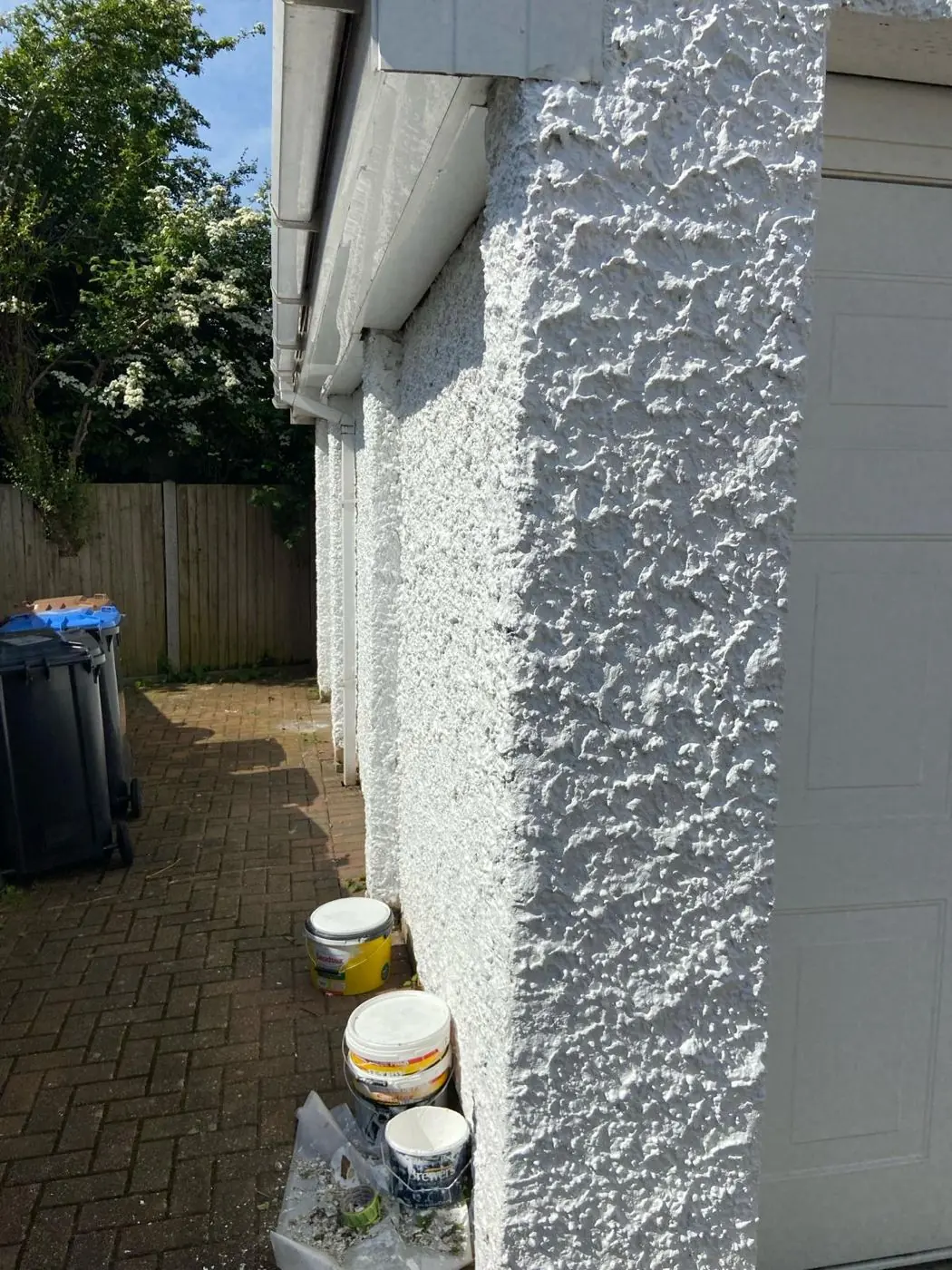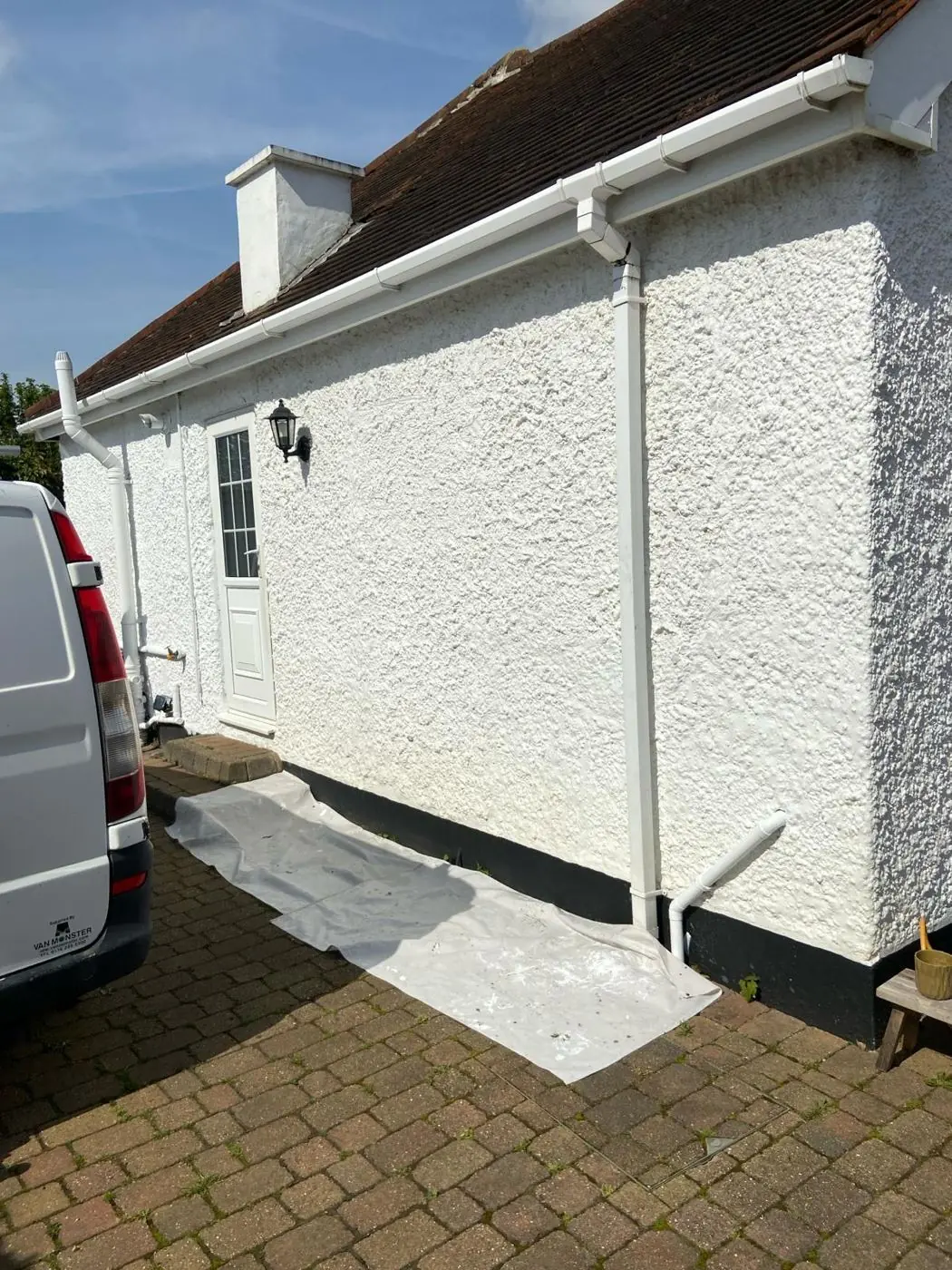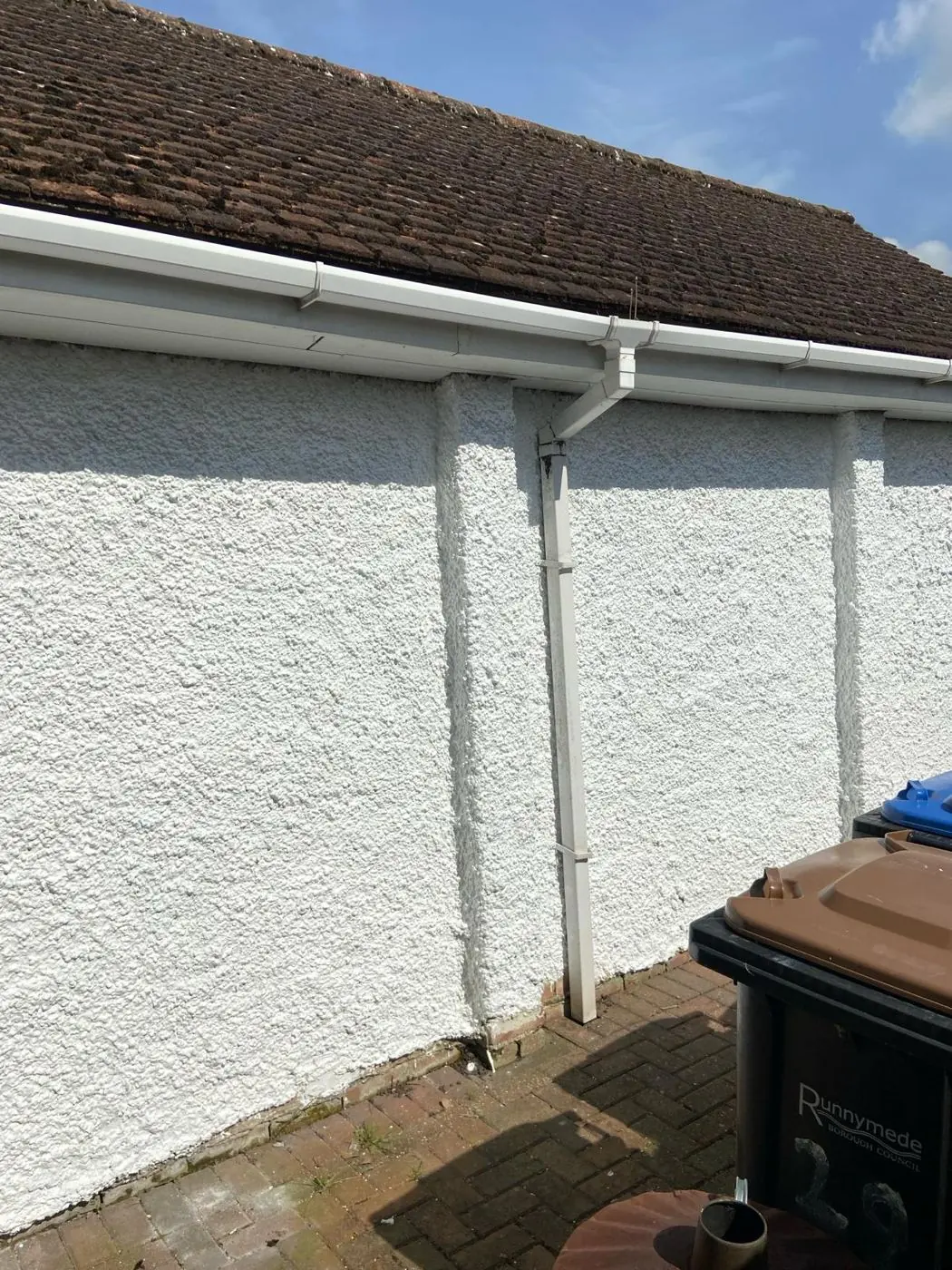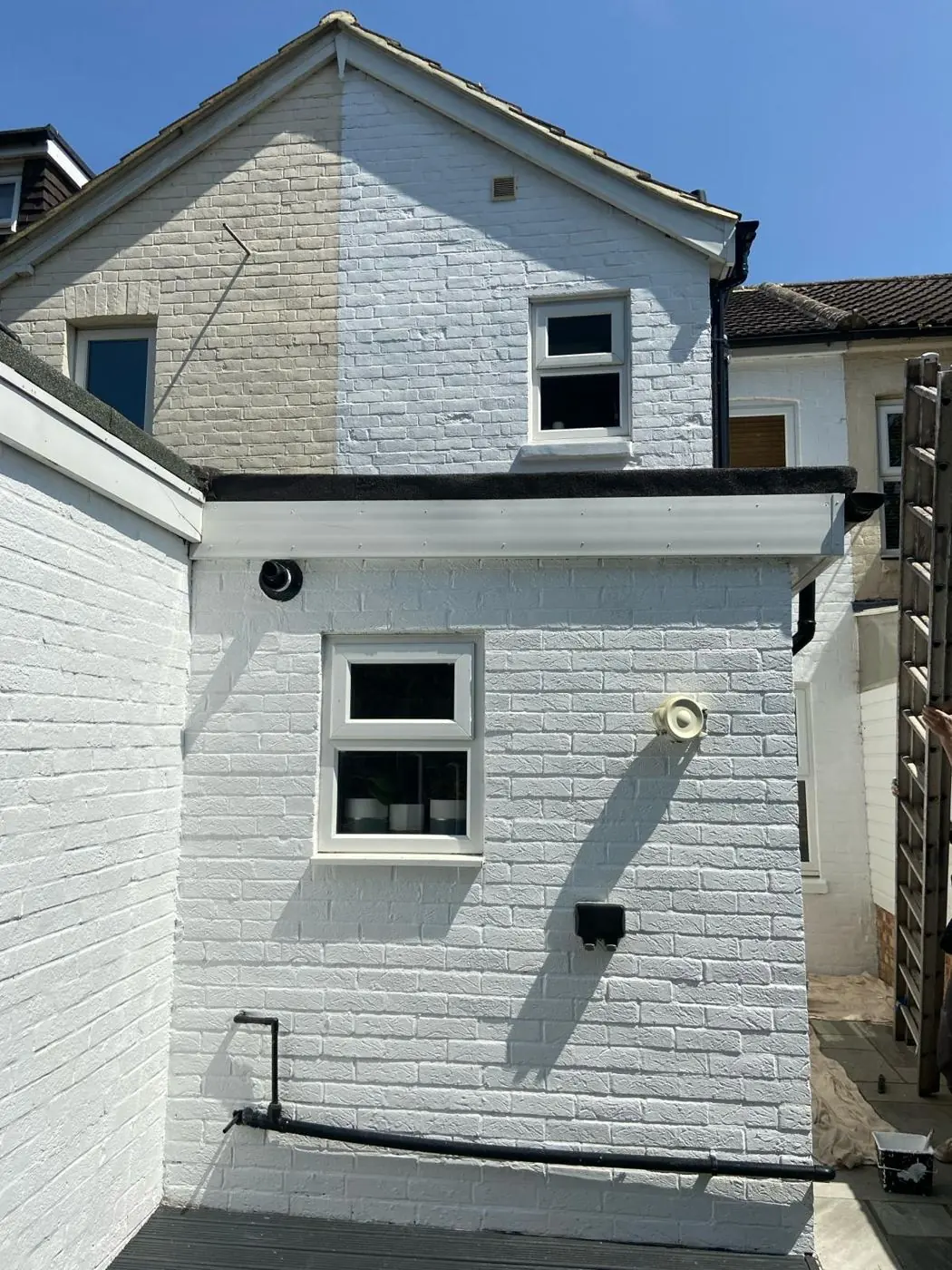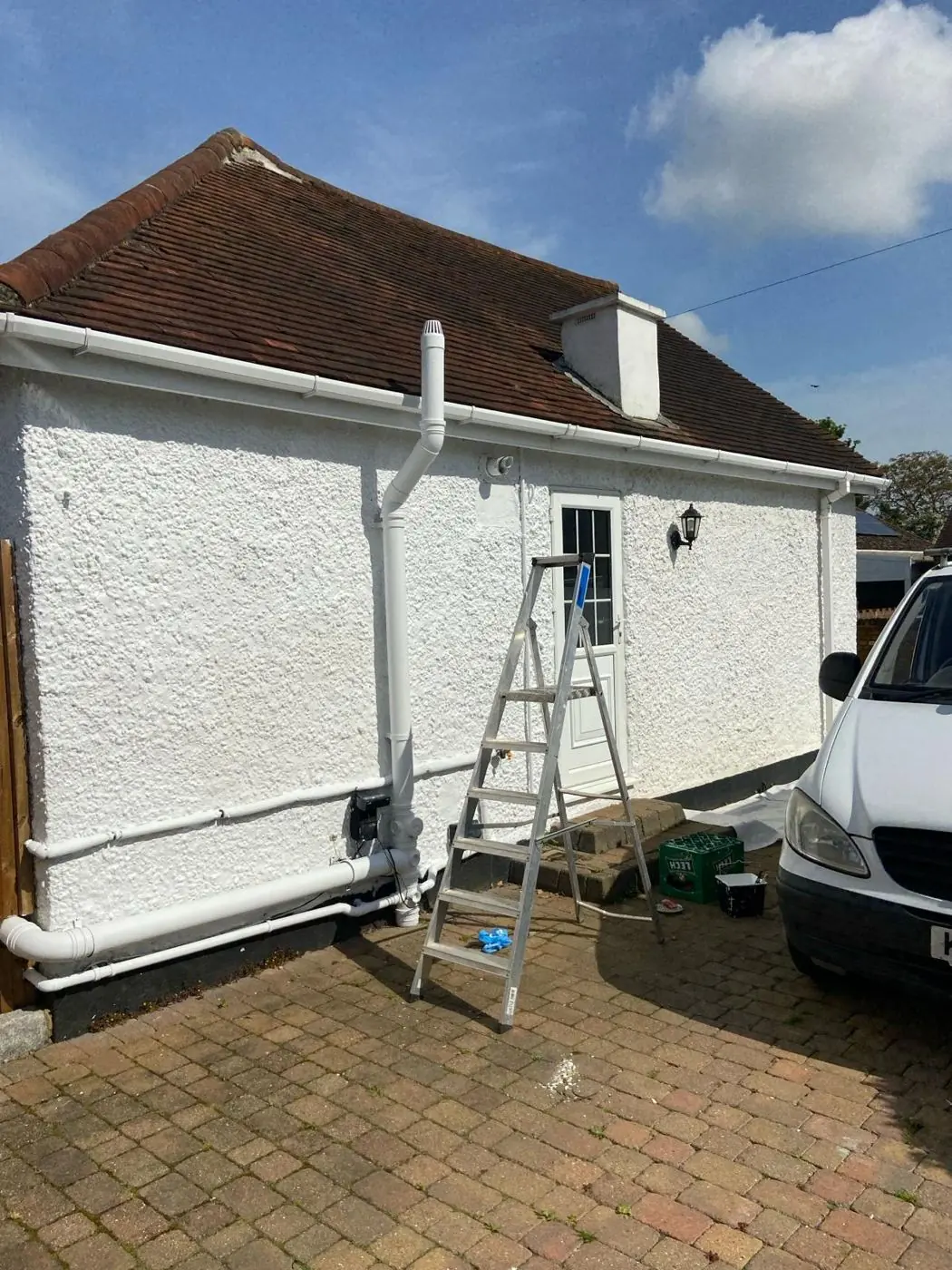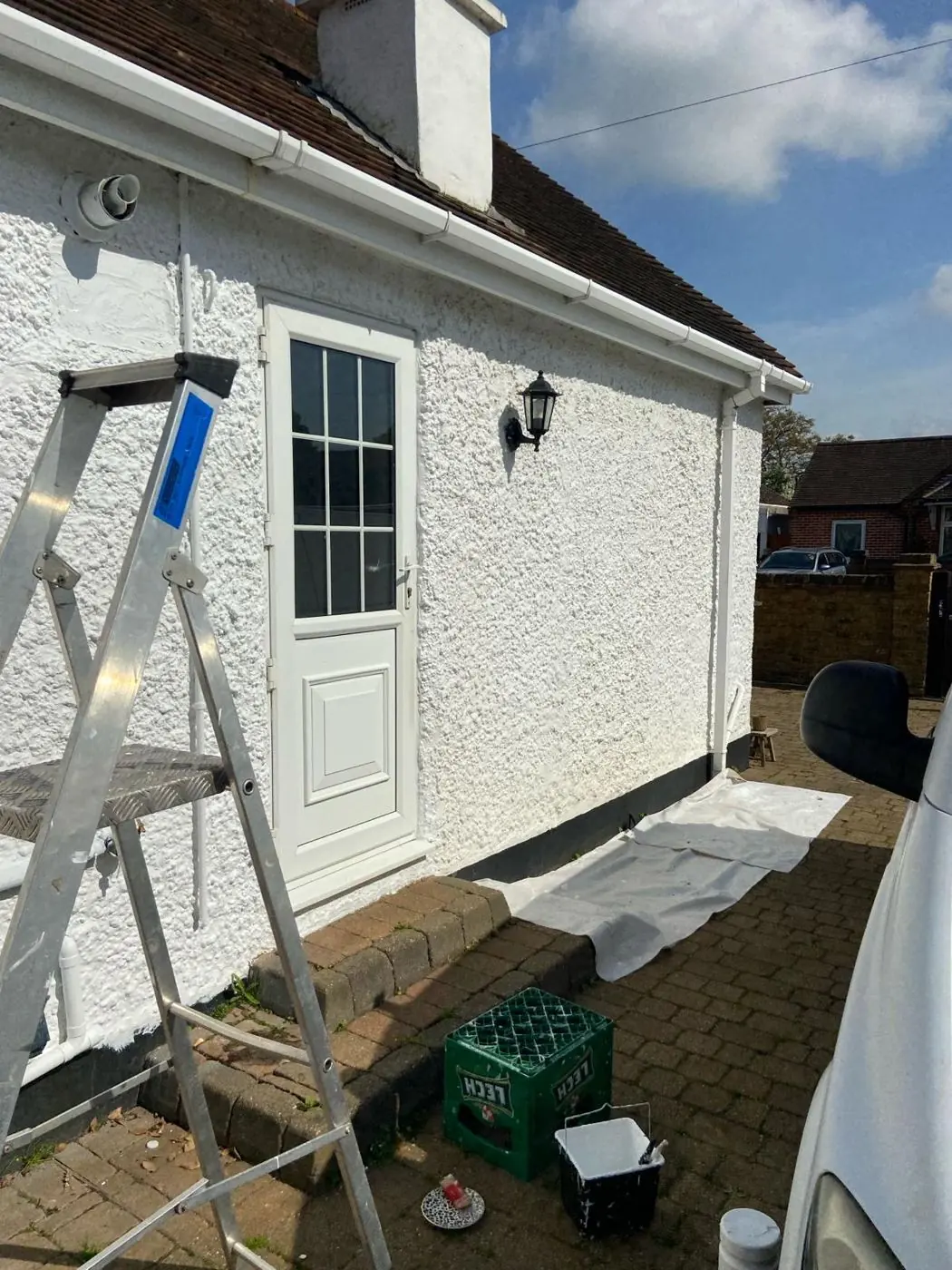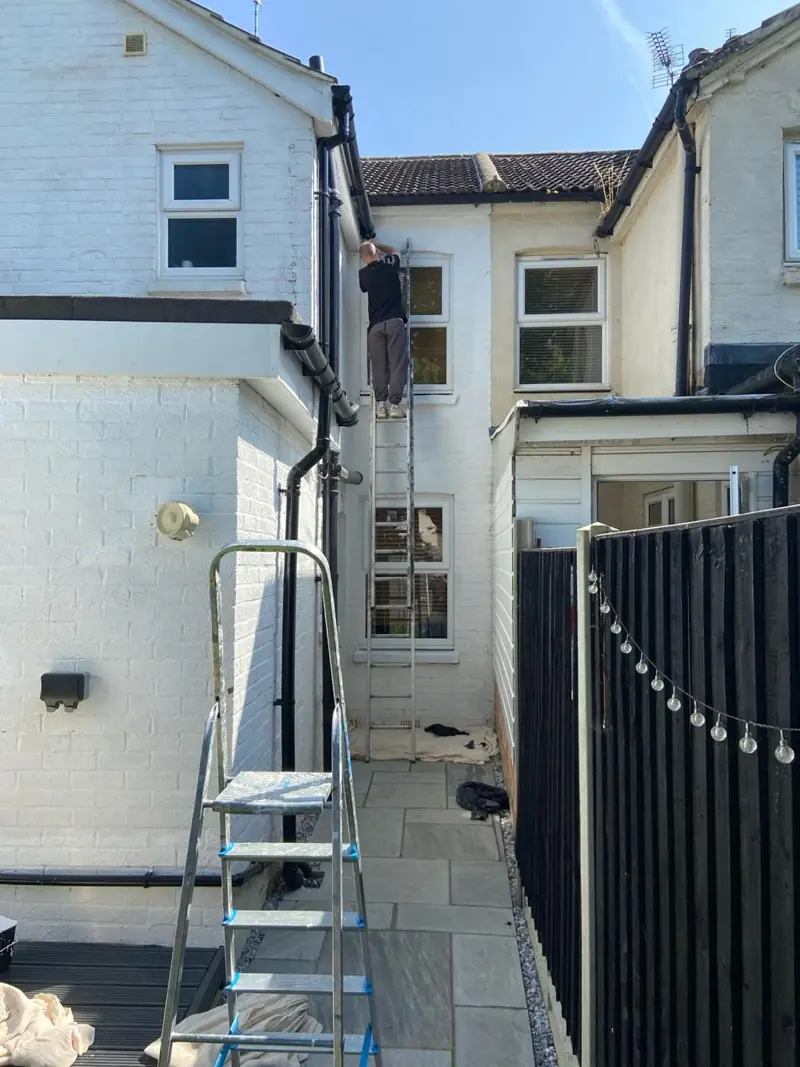
DH Painter & Decorator repaints timber fascias, soffits and bargeboards across Camp Hill, the NN4 9 estate inside Danes Camp Way. Most homes date from the 1980s, so roofline timber that has not been capped in uPVC now needs sanding back, spot priming and fresh coats.
Forty years of weather on 1980s softwood
Camp Hill was built mainly in the 1980s. Property records put the semis on Harksome Hill at 1983 to 1990, and Parsons Meade dates from 1988. The softwood fascias, soffits and bargeboards fitted then have had around 40 winters. Where nobody has capped them in uPVC, they have usually been painted several times already, and the layers are starting to crack along the joints and lift at the ends of boards.
At this age the work is mostly preparation. Each board is checked with a sharp point for soft timber, loose paint is scraped and the edges sanded so old layers do not show through as ridges, knots are sealed and bare wood is spot primed. Then come the undercoat and top coat. Our main fascia and soffit painting page sets out each stage in full.
Half timber, half plastic
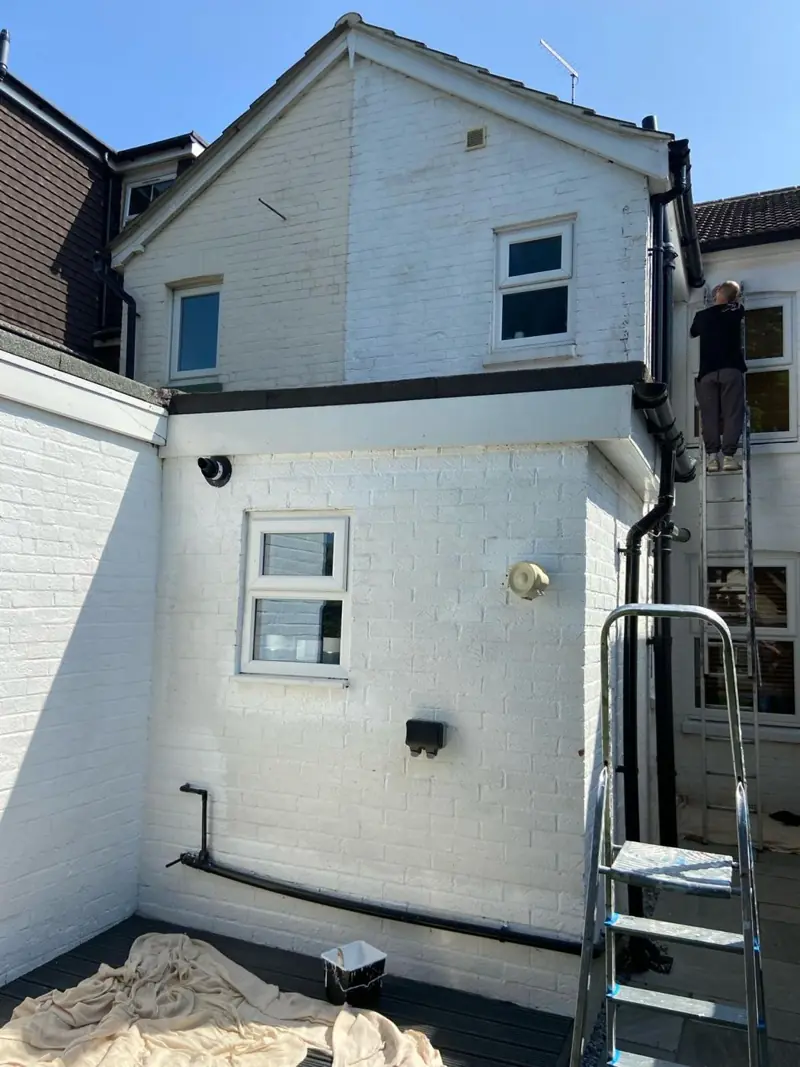
By now some Camp Hill rooflines have been boxed in with uPVC and some are still painted timber, and a house can have plastic on one elevation with timber left on another. On a terrace in one of the Squares, the eaves line runs straight across several front doors, so a freshly painted section next to a neighbour’s faded one is very visible.
We paint only the timber that belongs to you, and we can stop neatly at a party wall line. If neighbours want their section done at the same time, the work can be priced per house and carried out in one visit. That keeps the line even and saves setting up ladders twice. Gutters, downpipes and brackets can be included where they are painted rather than self-coloured plastic.
Where a house has uPVC on the eaves but timber bargeboards on the gable end, or the other way round, we paint the timber in a colour chosen to sit next to the plastic. White uPVC has a cool, slightly blue tone, so a brilliant white gloss beside it can look grey or yellow by comparison. A sample on a small area settles that before the full coat goes on.
Setting ladders on a shared surface
Roofline work needs a firm, level footing at the base of the ladder, and in Camp Hill that ground is often shared. Houses in the Squares off Dayrell Road front onto common courts, and streets such as Cullahill Court and Herne Hill Court are mapped as living streets with no separate pavement. Before we start, we agree with you:
- where the van waits, often in a nearby parking area rather than at the door
- which part of the court the ladders and sheets will cover, and for how long
- how neighbours, prams and bikes get past while we are working overhead
Bungalows such as those at Parsons Meade have low eaves that are easier to reach, but that housing is social-rent and managed by Northampton Partnership Homes. Any eaves work there is commissioned by the landlord, and ladders are placed so residents’ paths and wheelchair routes stay open.
Shade, trees and the drying window
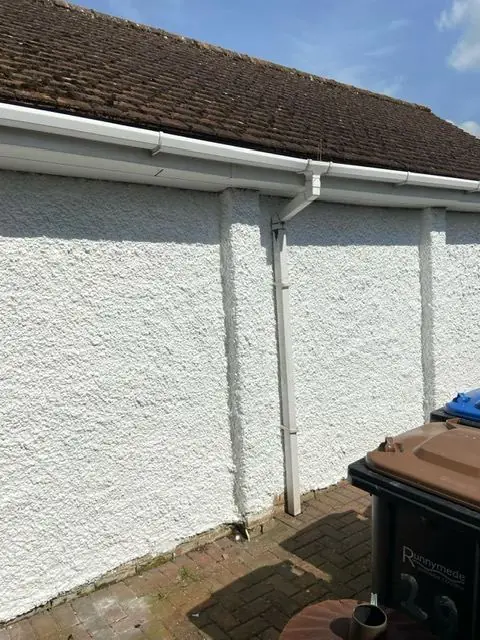
Soffits on north- and east-facing eaves get almost no sun on the Hunsbury Hill slope and are often the dampest boards on the house. Near the wooded edge of the country park, eaves and gutters also collect leaves, which hold water against the timber. We clear gutters where needed during preparation and only paint once the boards are dry, which can mean waiting a little longer on the shaded side. If you are planning the timing, our guide to planning exterior painting around the seasons may help. Other services we offer locally are listed on the Camp Hill area page.
Last updated by Dean, DH Painter & Decorator.