DH Painter & Decorator covers Camp Hill (NN4 9), the estate on the north-eastern slopes of Hunsbury Hill about 1.8 miles south-west of Northampton town centre. Dean has over 30 years in the trade and plans each job around the area's compact 1980s homes, shaded hillside elevations, parkside trees and shared courts.
Where Camp Hill is, and what it was built on
Camp Hill is a late-20th-century housing estate on the north-eastern slopes of Hunsbury Hill, about 1.8 miles south-west of Northampton town centre and inside the Danes Camp Way ring road. Since 2013 it has been part of West Hunsbury civil parish. It is easy to mix up with its neighbours, so it helps to be precise: Briar Hill lies to the north across Danes Camp Way, the larger detached streets of West Hunsbury and Hunsbury Meadows are to the west, and East Hunsbury is on the far side of Towcester Road.
The ground has an unusual history. It is an outcrop of Northampton Ironstone, quarried from the late 19th century until the 1920s, and a 2013 assessment placed land at Camp Hill within the former Camp Pit, worked between 1882 and 1887. The Iron Age hillfort on the hilltop is now a Scheduled Monument inside Hunsbury Hill Country Park, around 38 hectares of woodland and open space with the Northamptonshire Ironstone Railway Trust’s heritage line running through it. The houses came later, as part of the wave of Hunsbury development through the 1970s, 1980s and beyond.
The homes, and what each type needs
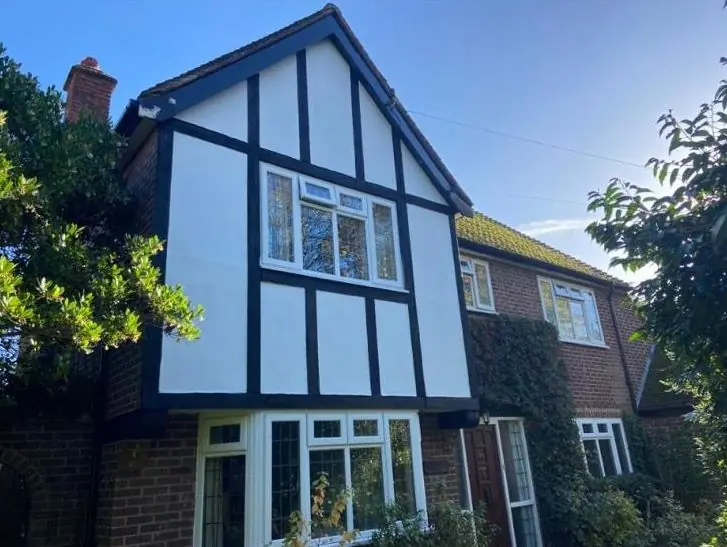
Camp Hill’s housing is mostly from the 1980s, and it falls into a few clear groups. Each has its own decorating pattern.
| Property type | Where | What usually matters |
|---|---|---|
| Two-bed semis, c. 721 sq ft (1983 to 1990 on records) | Harksome Hill | Whole-house interior repaints in one visit; tired original softwood doors and skirtings |
| Terraces and leasehold flats | The Squares off Dayrell Road, including Haselrig, Farraxton, Higgins and Benjamin Squares | Shared courts, matching neighbours outside, freeholder consent for communal areas |
| Retirement bungalows (1988, social rent) | Parsons Meade | Work arranged through Northampton Partnership Homes; low-odour paint and clear routes |
| Detached homes, including a bungalow on Claystones | The West Hunsbury side of the estate | Wider walls with space for a feature wall or panelling |
| Grade II listed farmhouse | Rotherthorpe Road | Like-for-like finishes on ashlar and sashes; consent for changes |
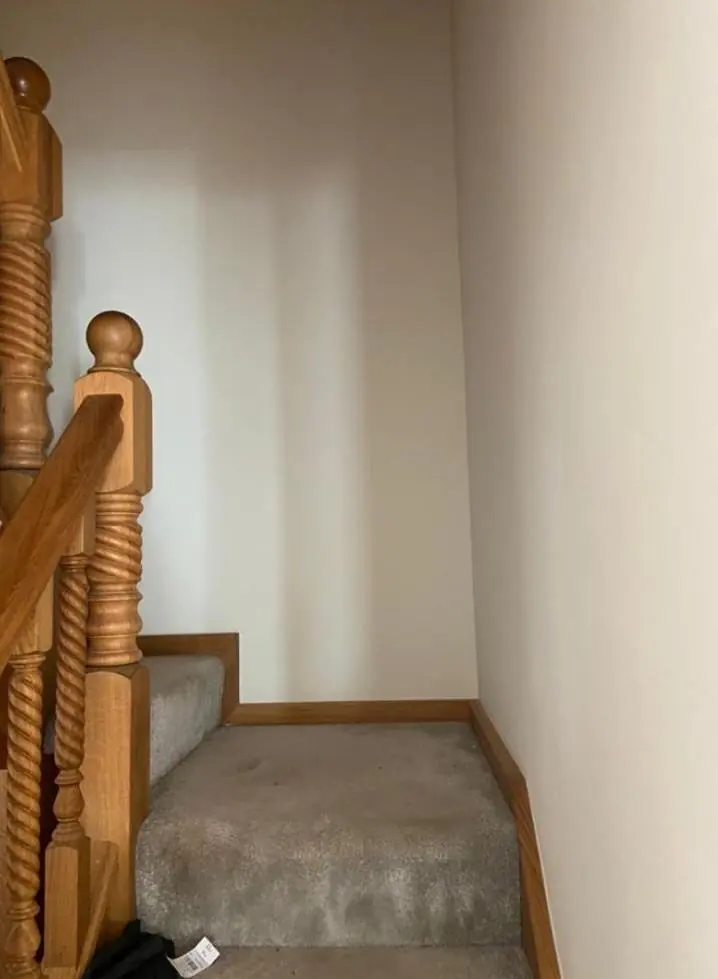
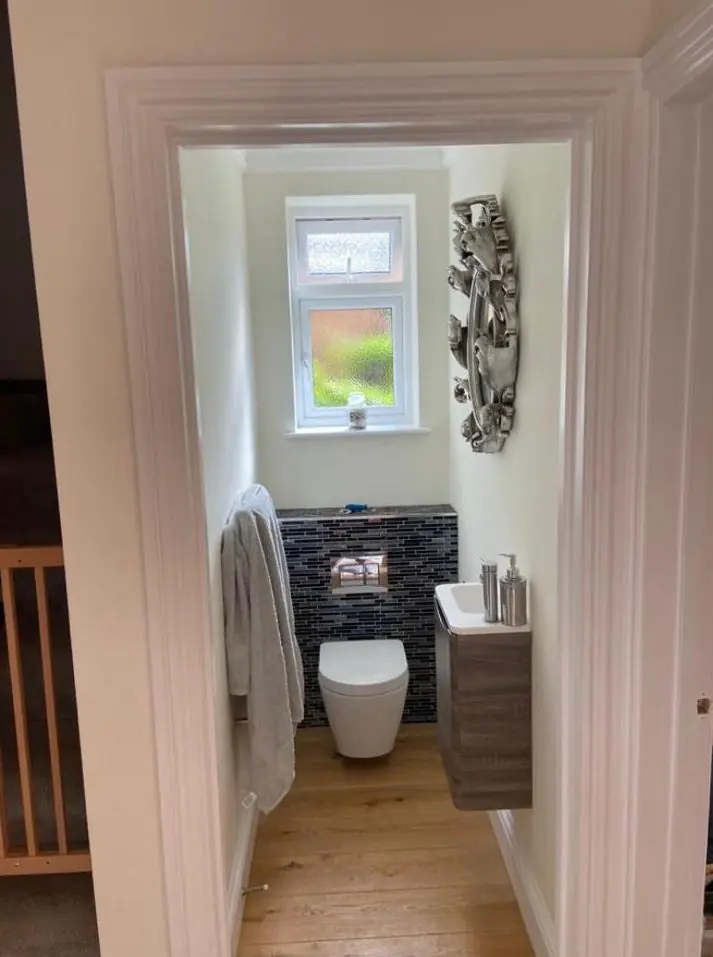
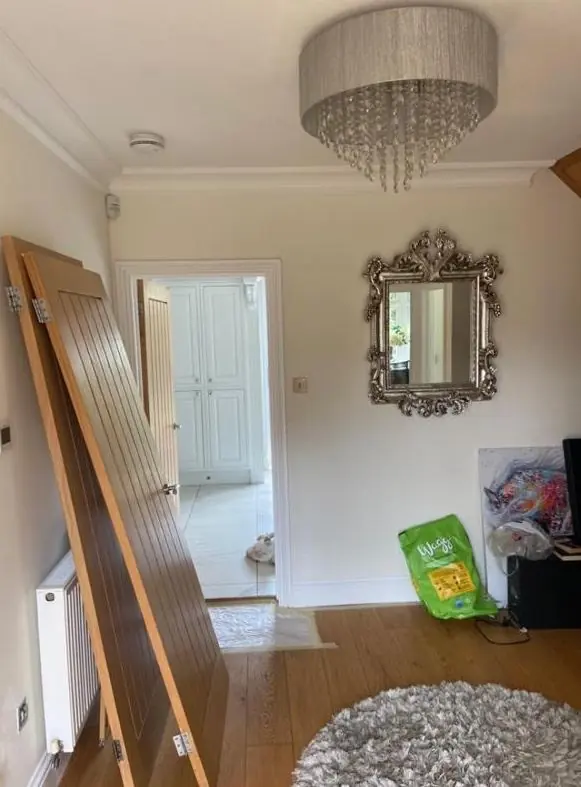
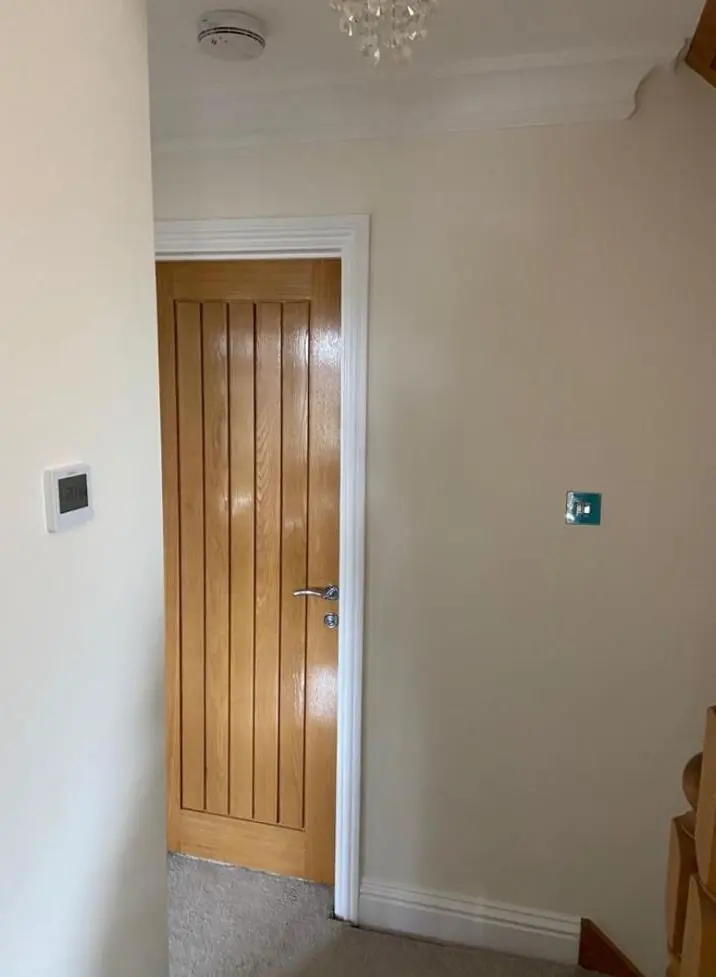
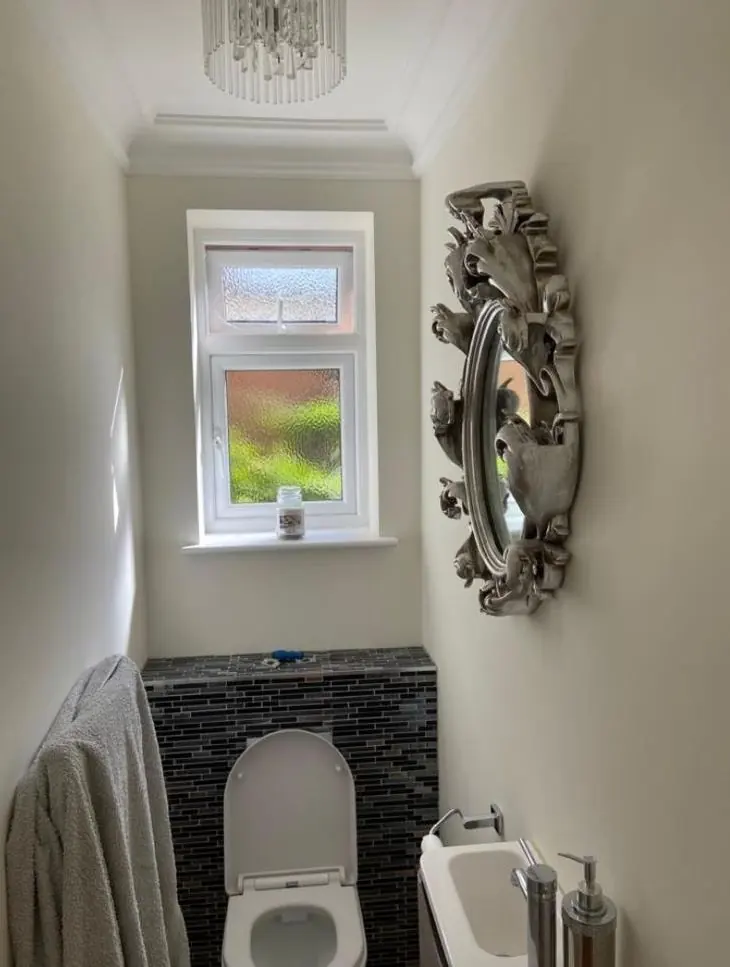
The compact semis and terraces make up most of the estate. In homes this size, a full interior repaint is a short job, and it makes sense to treat the house as one scheme so the colours flow. After around forty years, the original 1980s softwood doors, skirtings and architraves usually need filling and sanding rather than just another top coat. Where an artex ceiling from the build has since been re-skimmed, the fresh plaster needs a mist coat before any emulsion.
Outside: the slope, the park and the ring road
Three things shape exterior work in Camp Hill more than anything else.
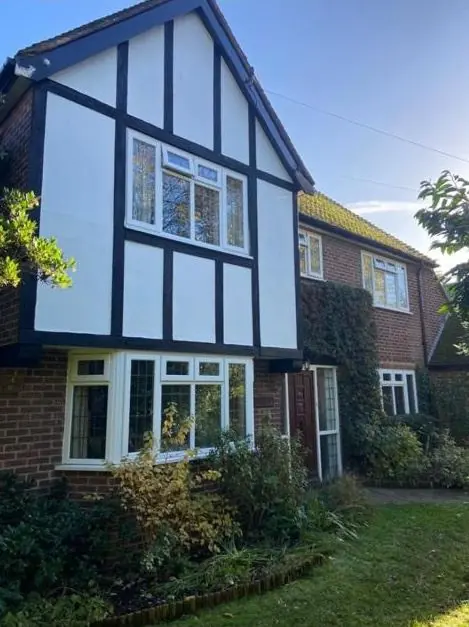
- Orientation. Because the estate faces down the north-eastern side of the hill, many elevations and gardens face north or east and get little sun. Paint on those walls dries slowly, so we wait for a longer settled spell and use mould-resistant finishes on shaded surfaces. Our guide on when to paint outside in the UK explains the timing.
- Trees. Homes beside the wooded country park get leaf fall, sap and green algae on fences, sills and timber. Those surfaces are washed with a fungicidal treatment and left to dry before any stain or paint goes on.
- Traffic film. Properties close to Danes Camp Way collect a greasy film from traffic, particularly on render panels. It has to be washed off, or masonry paint will not bond properly.
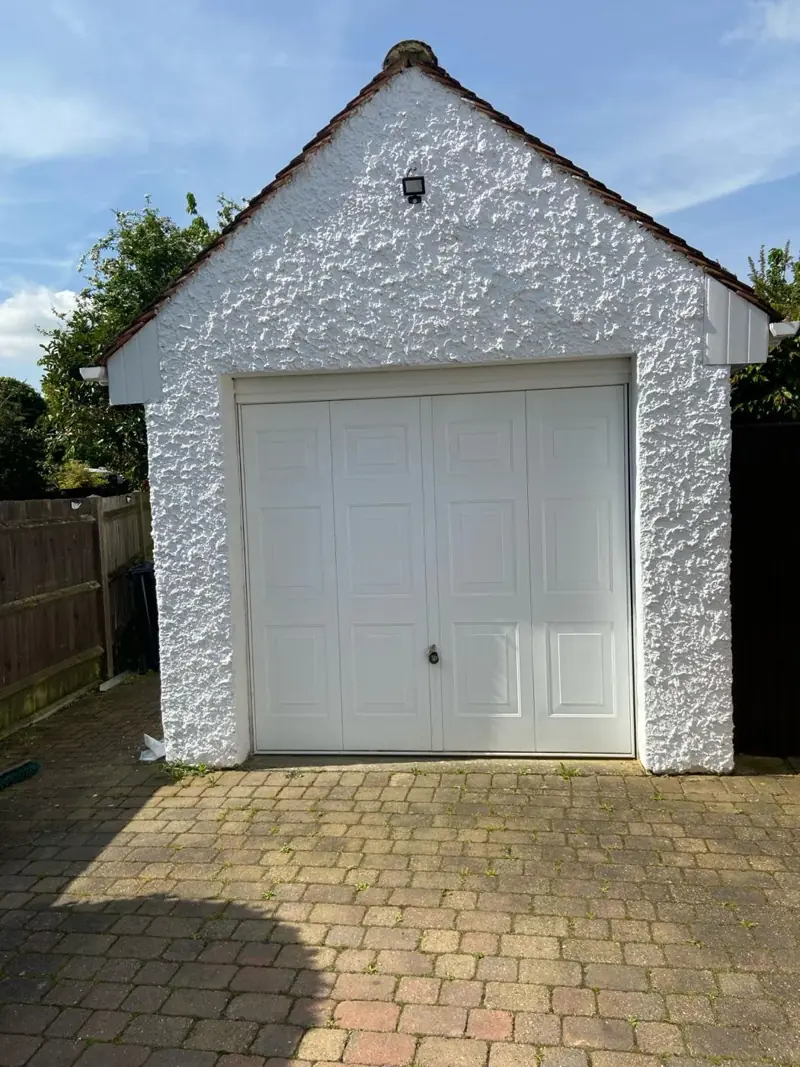
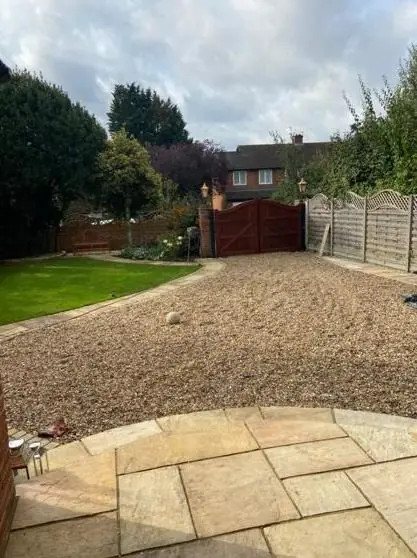
On many houses the main exterior job is the original timber. Fascias, soffits and bargeboards from the 1980s that have not been capped in uPVC now need sanding back, spot priming and repainting; see our fascia and soffit painting page. Back gardens are closely packed, with long shared runs of timber fencing, so fence and gate staining is common too, ideally with a stain that resists algae where the garden is shaded.
Getting to the door: courts, living streets and the roundabout
Access is the practical detail that most affects how a Camp Hill job is planned. Several roads, including Summerfields, Merry Hill, Cullahill Court and Herne Hill Court, are laid out as living streets with shared surfaces, so the van often has to park away from the frontage. The terraces in the Squares open onto shared courts, so ladders, dust sheets and tins are carried in from shared parking areas. On exterior work in a court, we keep paths clear for neighbours and agree where ladders can stand. Short cul-de-sacs such as St Benedict’s Mount, Sentinel Road and Reedhill off Hunsbury Hill Road are easier to reach. The Danes Camp Way, Hunsbury Hill Road and Hunsbarrow Road roundabout queues at peak times, so early starts and deliveries are timed around it.
Listed, leasehold and rented homes
There is no conservation area in Camp Hill, so most owners can change exterior colours without planning permission. The exception is Hunsbury Hill Farmhouse on Rotherthorpe Road, an 18th-century ashlar house with 19th-century wings, listed Grade II in 1976. Its sash windows and stonework call for like-for-like finishes, and changes may need listed building consent.
Leasehold flats, such as those in Benjamin Square, often need freeholder or management company agreement before communal or exterior repainting. The small terraces and flats are also the sort of property that suits buy-to-let, and for landlords we offer landlord decorating with durable neutral finishes between tenancies.
The local centre and community buildings
Camp Hill has a neighbourhood centre rather than a high street. The units near the Harksome Hill, Hunslet Lane and Dayrell Road roundabout on Hunsbury Hill Road include a convenience shop, post office, pharmacy, hairdresser and dentist, alongside the health centre and St Benedict’s church. Work on these units is split into small sections during normal working hours so each business can keep its door open. Camp Hill Community Centre on Dayrell Road, the Parsons Meade Community Hub and Hunsbury Park Primary School are the main larger interiors, and they need hard-wearing, scrubbable finishes. Details are on our commercial painting page.
Getting a quote
Camp Hill sits 1.8 miles south-west of the town centre, well inside the area we cover from Northampton. Dean visits to see the job, notes the access and parking, and gives a free written quote. We do not list fixed prices, because the condition of the woodwork and the access vary so much from house to house, but our cost guide explains what affects the figure. Call Dean on 07539 779 036 to arrange a visit.
Last updated by Dean, DH Painter & Decorator.