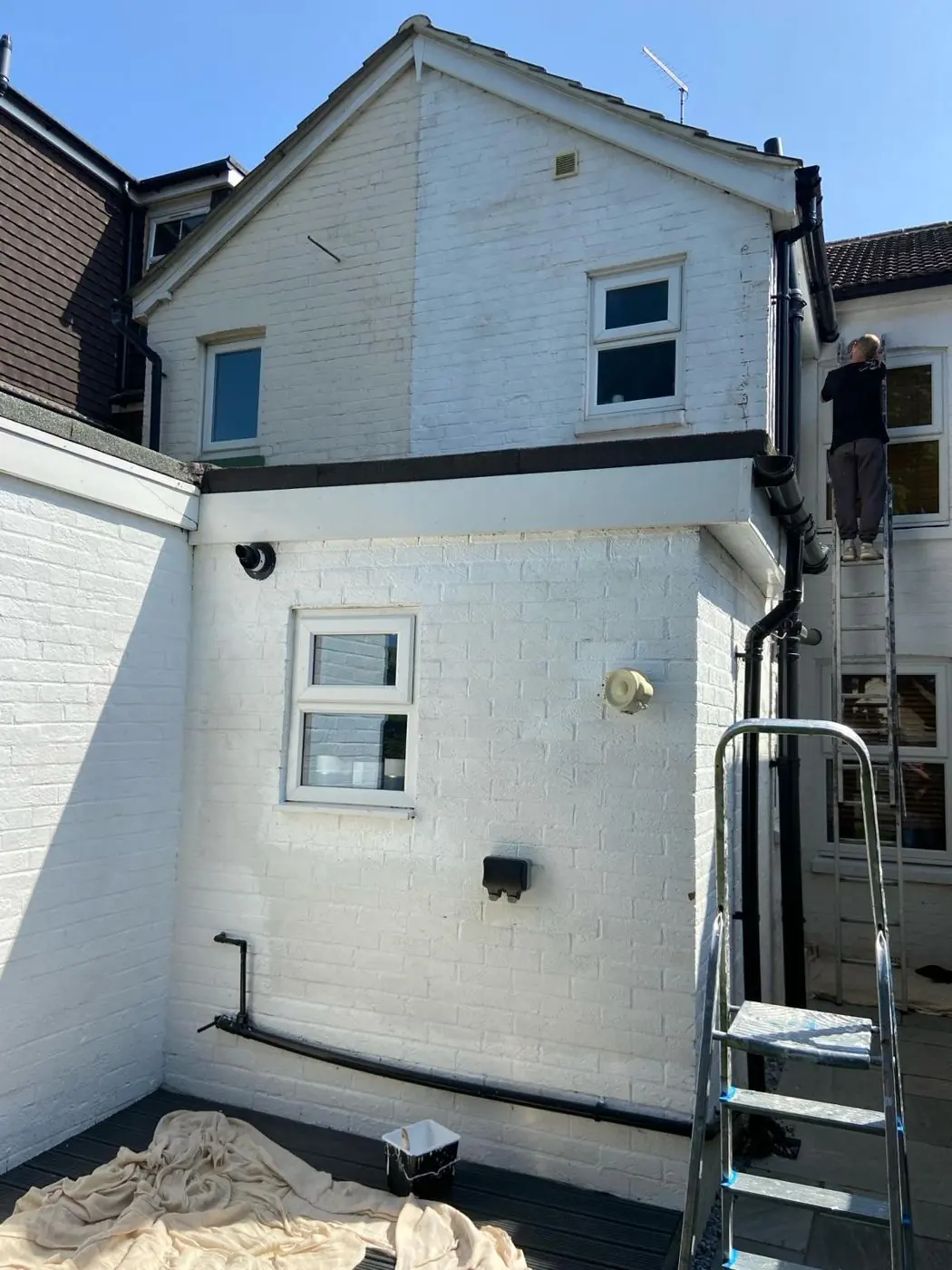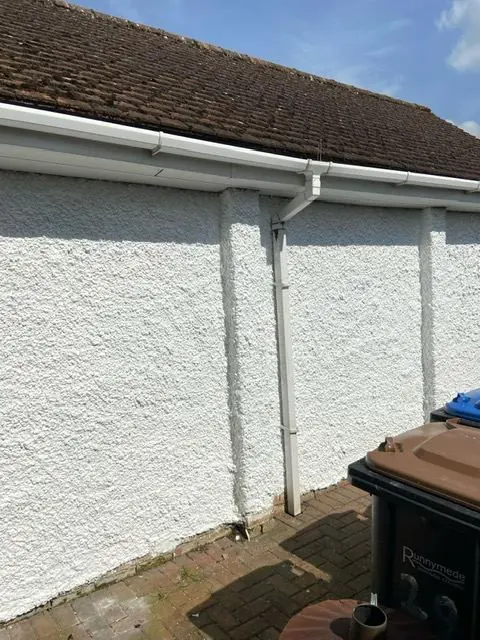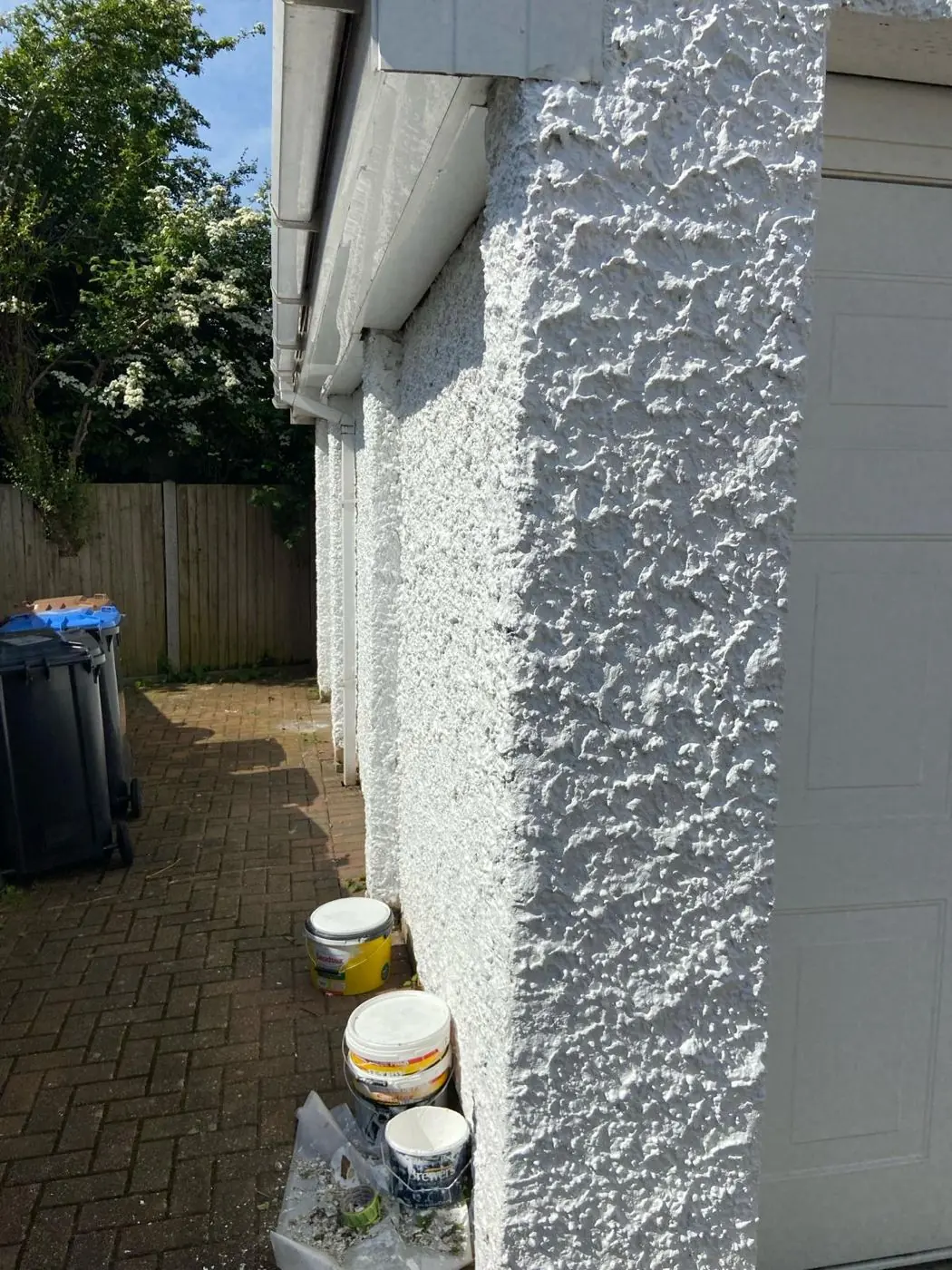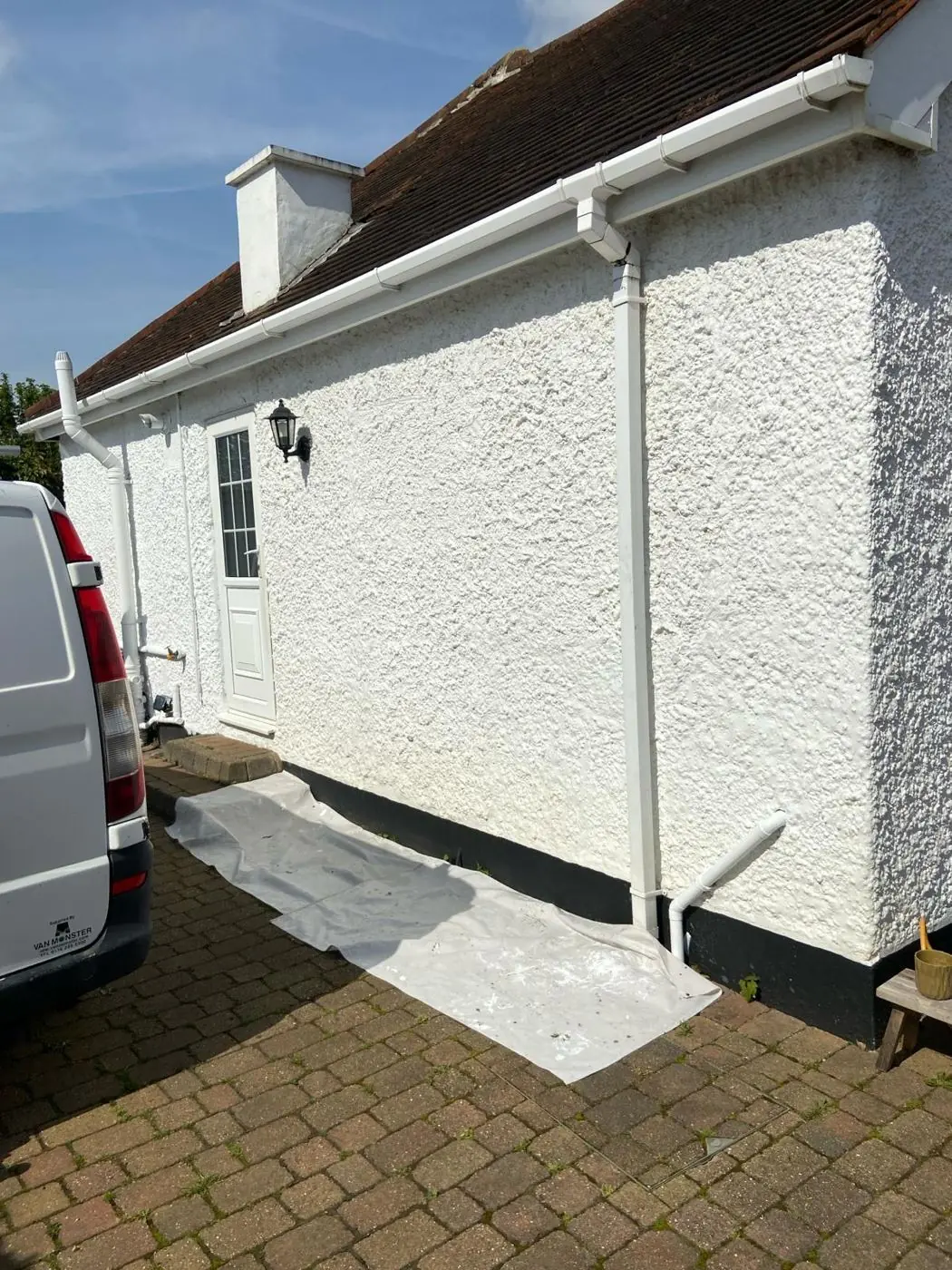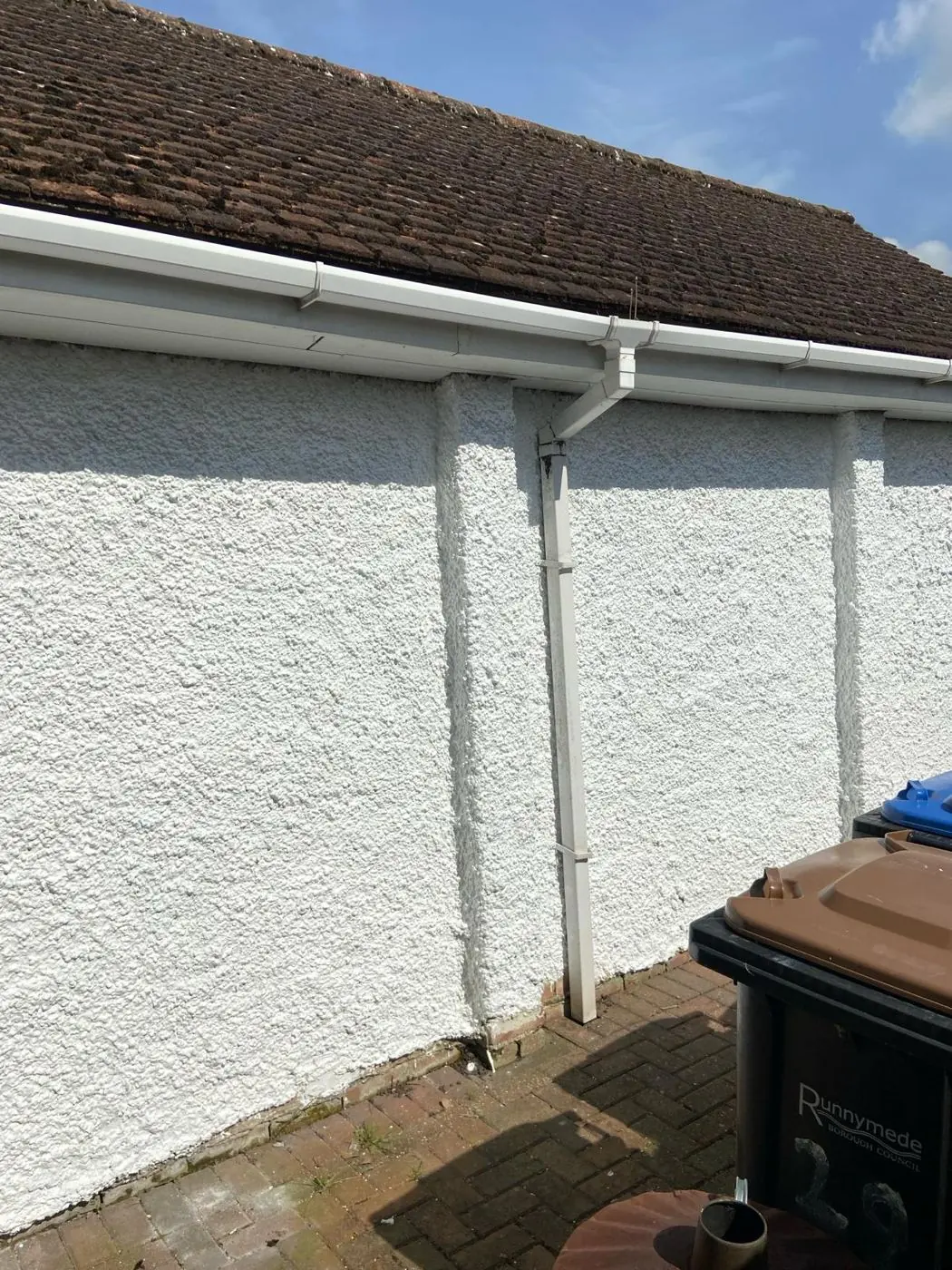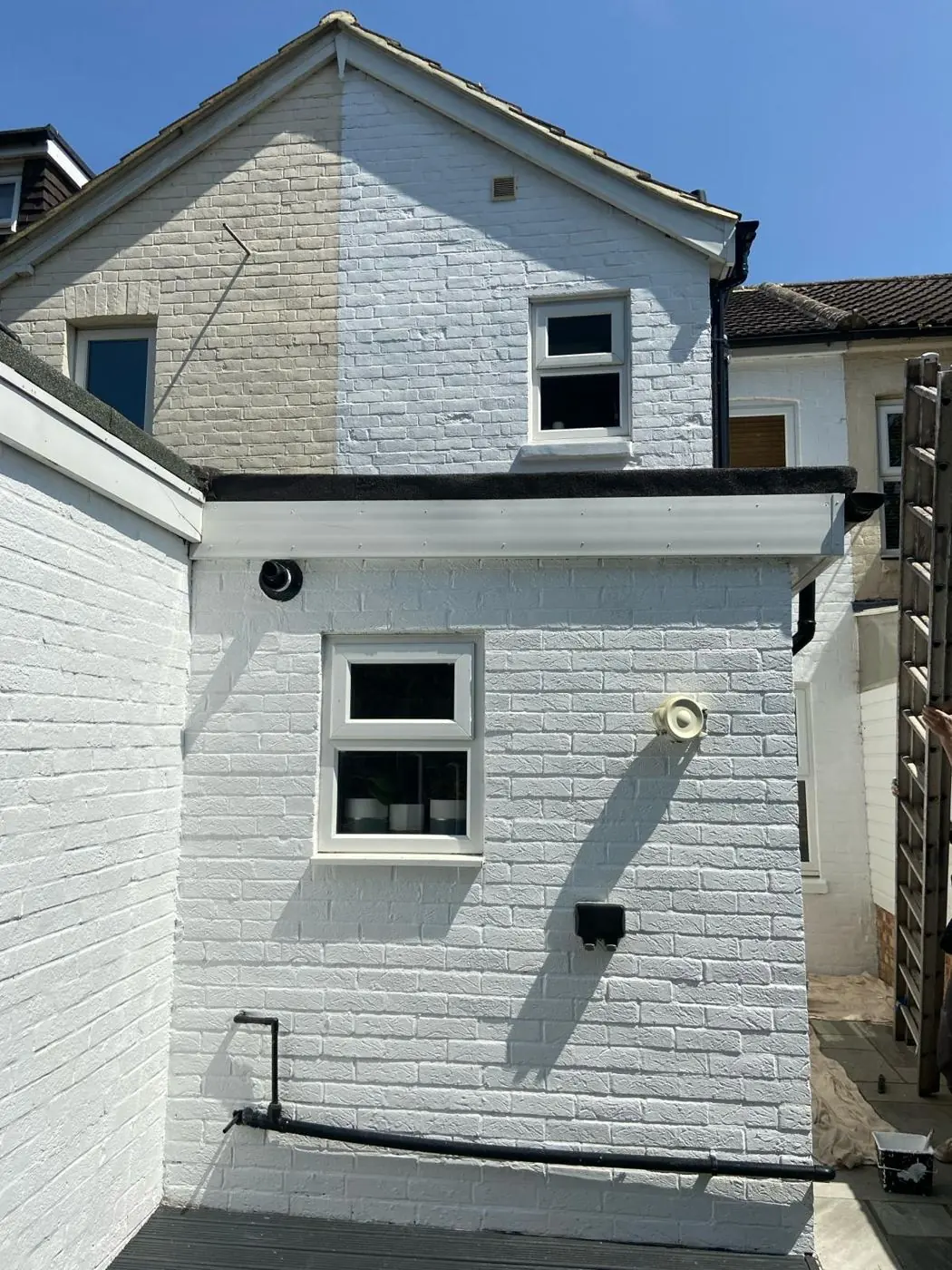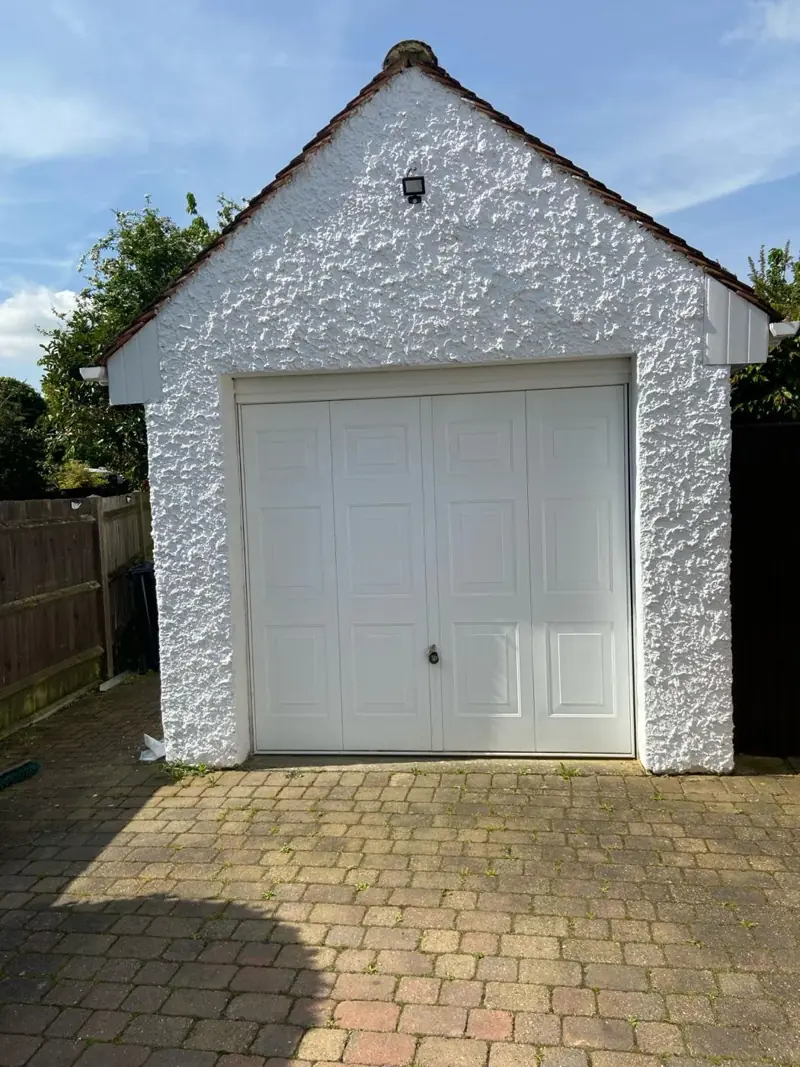
We paint render and masonry on homes in Camp Hill, NN4, about 1.8 miles south-west of Northampton town centre. On this estate that usually means render panels and part-elevations rather than whole rendered houses, cleaned of traffic film or algae first and finished in breathable masonry paint.
Panels, not whole houses
Render in Camp Hill tends to be limited to panels and part-elevations: for example a band under the windows or a section of one elevation. The estate was built mostly in the 1980s, and fully rendered houses are not what defines it. That changes how a masonry job is priced and planned. The area to coat is often small, but it sits right next to the joinery, brickwork and neighbouring property, so masking and clean edges take up a large share of the day.
A small panel also shows its condition clearly. Hairline cracks, chalky old paint and a green tinge on the lower edge are all easy to see, and all have to be dealt with before the top coats. The method we follow for every masonry job, from survey to second coat, is on our main render and masonry painting page.
The grey film from Danes Camp Way
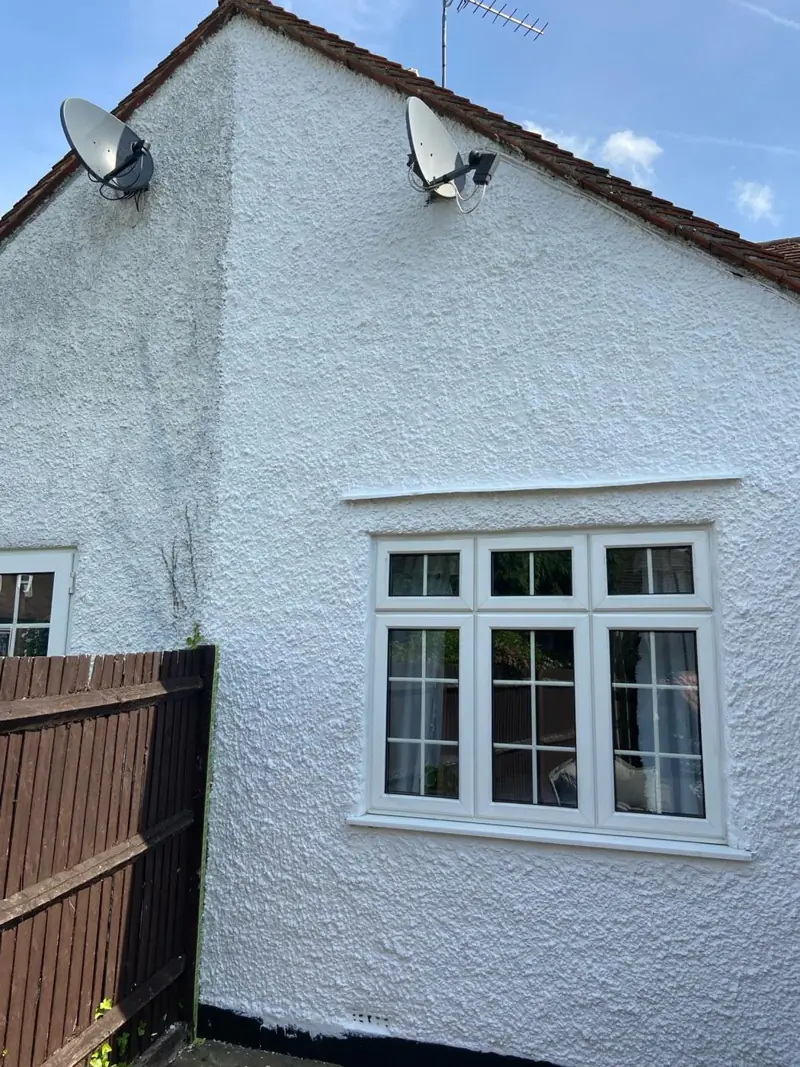
Danes Camp Way is a trunk ring road along the northern edge of Camp Hill. Houses close to it gather a fine, greasy layer of traffic grime on their render and masonry. Masonry paint will not bond properly to that film, even when the wall looks only slightly dull. So on homes near the road, preparation starts with a thorough wash of every surface to be painted, then enough drying time before the first coat. Skipping that step is the usual reason a fresh coat starts peeling within a couple of winters.
Walls turned away from the sun
Much of the estate looks down the north-east flank of the hill. Walls turned north or east get little sun and can stay damp for days after rain. On those walls we look for three things:
| What we find | What it means for the job |
|---|---|
| Green or black growth at the base | Fungicidal wash, left to work, then brushed off before painting |
| Render still dark from the last rain | Wait for a dry spell; paint on damp render lifts |
| Powdery, chalking old paint | Stabilising solution so the new coat has something firm to grip |
For the shaded side we use a breathable masonry paint with a mould-resistant film. Homes that back onto the wooded hillfort ramparts in the country park get extra shade and leaf debris, so expect the algae wash to be part of the quote there. Our guide to painting render and roughcast covers the products in more detail.
Terraces, flats and matching the neighbours
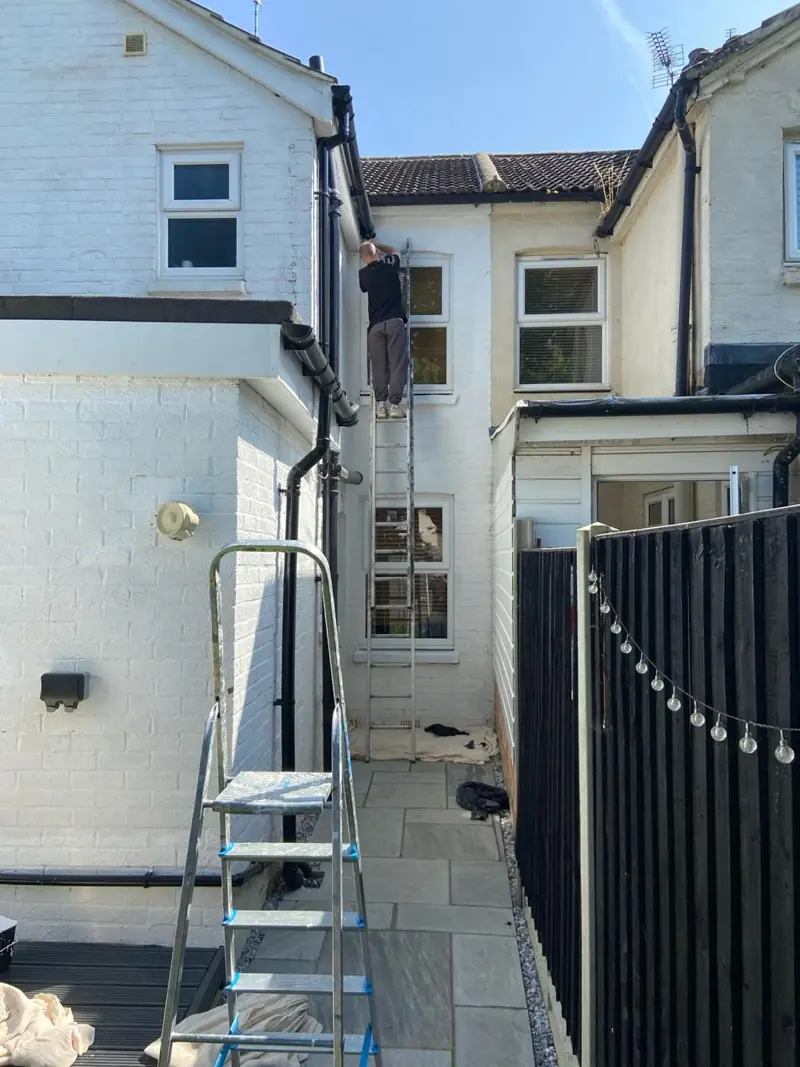
Terraces in the Squares share party walls, so a render panel on one house often lines up with the same panel next door. With no conservation area in Camp Hill, owners can choose a new masonry colour, but a terrace usually looks better when the change sits well with the adjoining houses. We stop the paint at a clean, straight line on the boundary and keep the shared court clear while we work.
Leasehold flats, such as those in Benjamin Square, are different. External walls normally belong to the freeholder, so any masonry painting needs their consent, or the managing agent’s, before it is booked.
The one wall we would not paint
Hunsbury Hill Farmhouse on Rotherthorpe Road is built of ashlar stone and has been Grade II listed since 1976. Bare ashlar is meant to breathe and weather as stone, and coating it with masonry paint would trap moisture and could need listed building consent. If you own or manage the farmhouse, we can advise on its painted joinery instead. For other work across the estate, visit our Camp Hill page.
Last updated by Dean, DH Painter & Decorator.