Dean of DH Painter & Decorator hangs wallpaper in Camp Hill, the 1980s estate on the north-east side of Hunsbury Hill in NN4 9. In the area's small 1980s living rooms a single feature wall often works better than papering every wall, and he can strip, line and hang either way.
Why one wall often beats four in a Harksome Hill lounge
The two-bedroom semis on Harksome Hill, dated by property records to 1983 to 1990, are about 721 square feet in total, and the terraces in the Squares off Dayrell Road are similarly compact. Living rooms of that size can feel boxed in when a strong pattern wraps every wall. A single papered wall gives the pattern somewhere to sit while the other three walls stay in a plain emulsion picked from the paper’s background colour. The room keeps its sense of space and you still get the character of the design.
Which wall? In these houses it is usually the one you face as you walk in, or the wall behind the sofa, rather than the window wall, which is broken up by the opening and reads poorly with a large repeat. A bedroom chimney breast is a classic choice in older homes, but most 1980s estate houses do not have one, so the bed-head wall tends to take that role instead. Dean will look at the room with you and suggest the wall that gives the most return for a roll or two.
Stripping what the last owner hung
Most houses here are around forty years old, so there can be two or three layers of paper, sometimes painted over. The approach depends on what the paper is stuck to:
- Where walls are plasterboard, as they often are in houses of this age, heavy soaking or aggressive scraping can tear the board’s paper face. We score gently, use steam sparingly and seal any damaged patches before lining or papering again.
- Where walls are wet-plastered, stripping is more forgiving, but the plaster underneath may need filling and sanding after decades of picture hooks and shelf plugs.
- Painted-over paper is the slowest to remove, and it is worth knowing about at quote stage.
Lining paper is worth considering on walls that are uneven after stripping, especially under thinner or lighter designs that show every bump.
Choosing a paper for a room that faces the hill
With the estate on the shaded flank of Hunsbury Hill, many of its rooms face north or east. In that light, very dark grounds can swallow a small room by mid-afternoon, and cool grey papers can look flat. Papers with a warm background, a little sheen or a metallic thread catch what light there is. Pattern scale also matters: a big botanical repeat suits a full-height feature wall in a lounge, while a smaller, tighter pattern sits better on a short bedroom wall where you would only see one or two repeats. If you are undecided, our colour advice for Camp Hill covers how the hillside light changes colour choices.
Narrow stairs and getting the rolls in
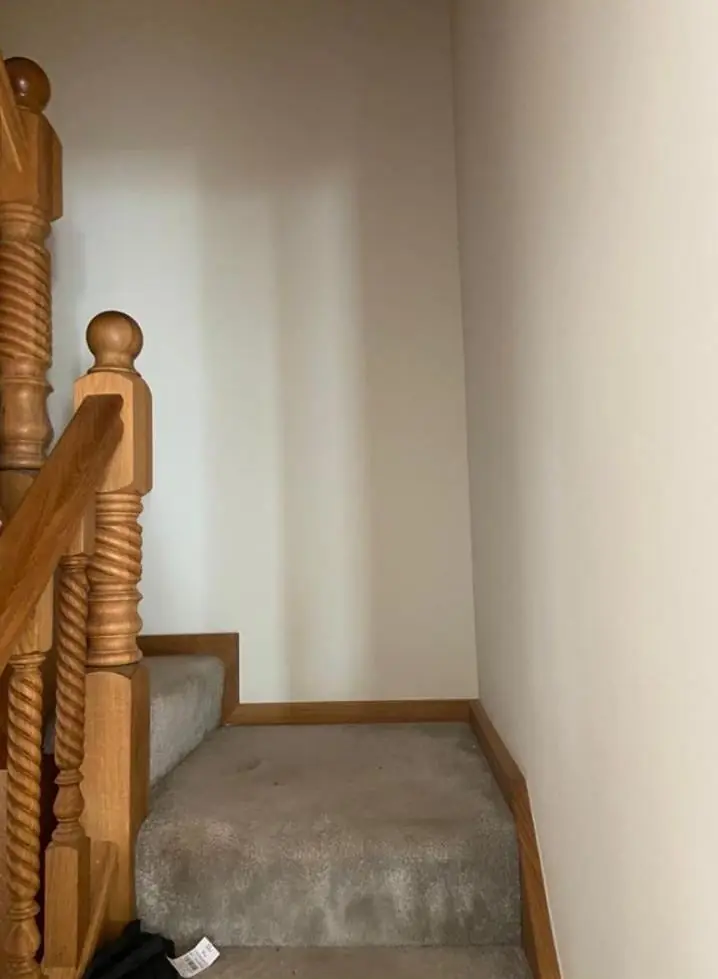
The small semis and terraces here generally have a straight, narrow flight of stairs. Papering a stairwell means hanging long drops over the stair void, which needs a stable platform rather than a stepladder balanced on a tread. We set up modest staging that fits the flight, so plan for the stairs to be out of easy use for part of the day. Getting the rolls and paste table in is straightforward, although in the Squares and on the living streets we often park in a shared area and carry everything to the door.
Booking wallpapering in Camp Hill
For a Camp Hill job, buy the paper from the same batch number and allow an extra roll for pattern matching; Dean can measure up for you before you order. The hanging method itself, from pasting to trimming, is set out on our main wallpaper hanging page, and the rest of our Camp Hill coverage is on the Camp Hill area page.
Last updated by Dean, DH Painter & Decorator.