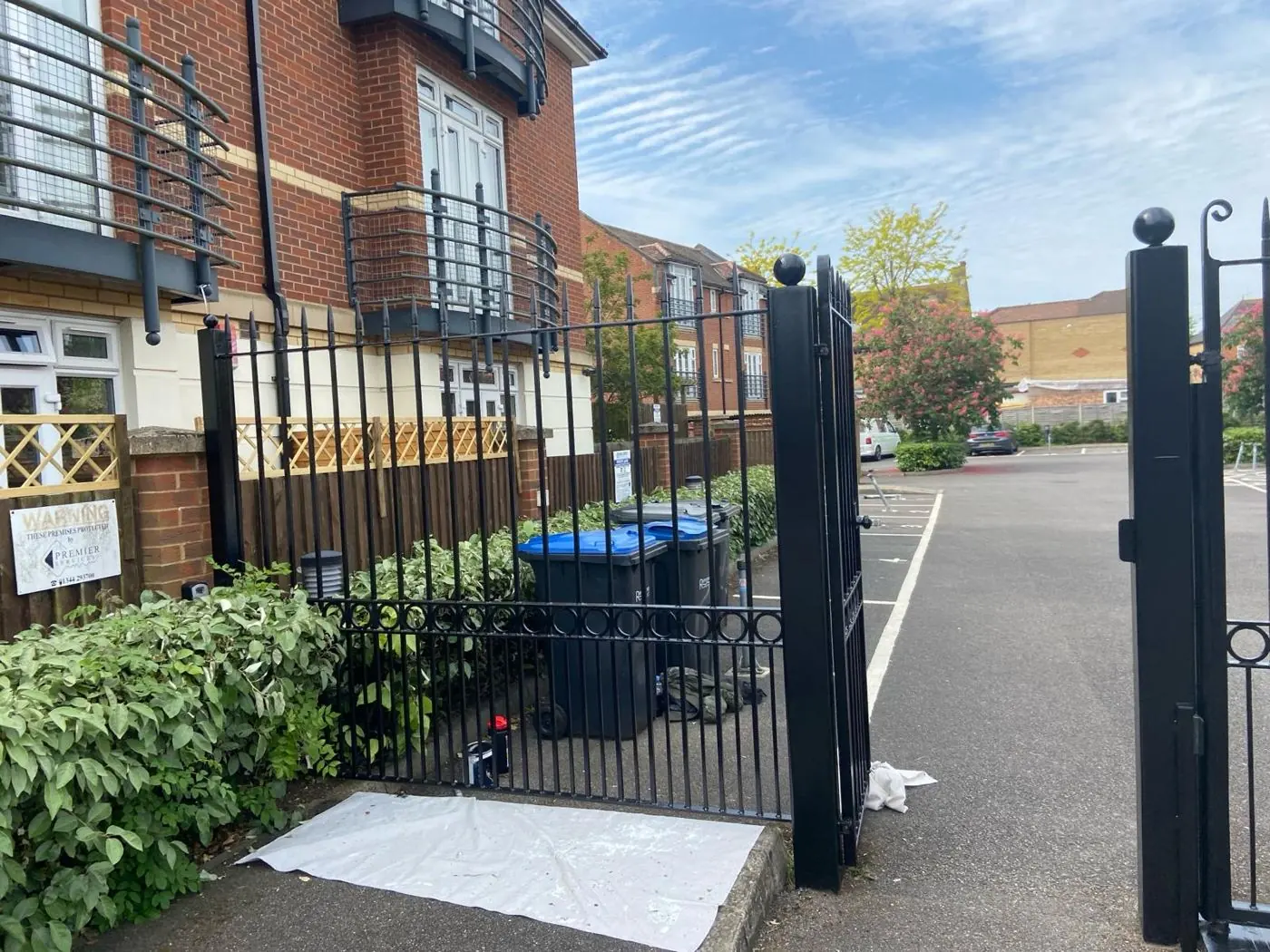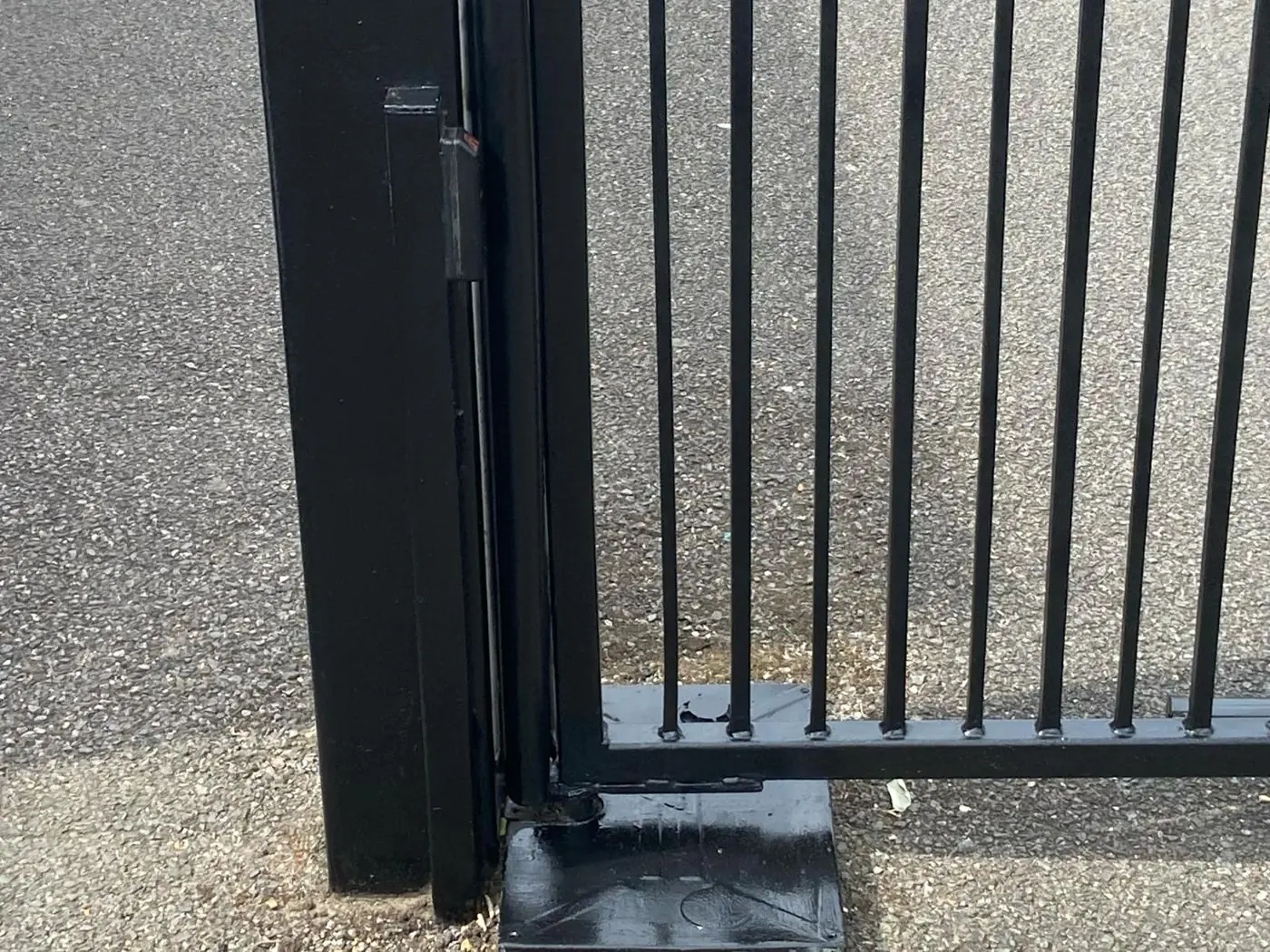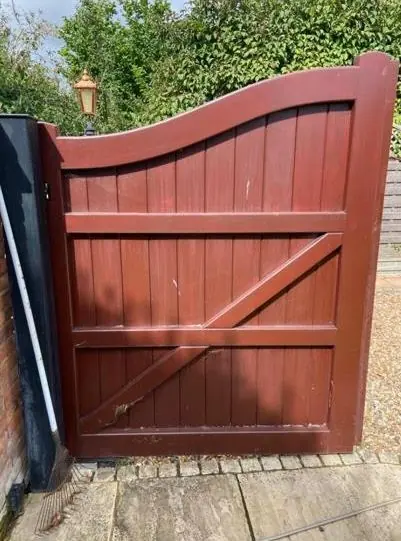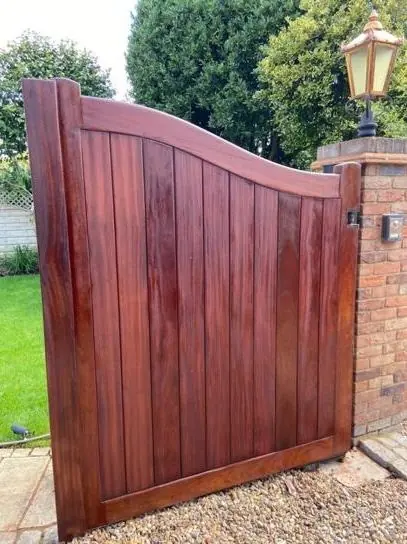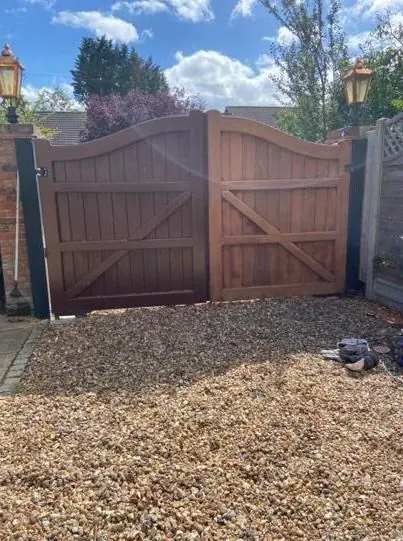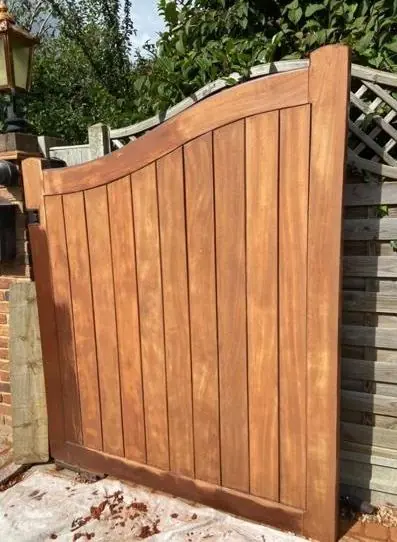
We stain and paint garden fences and timber gates in Camp Hill, NN4, on the Hunsbury Hill side of Northampton. The estate's closely packed 1980s gardens share long runs of fencing, and gardens next to Hunsbury Hill Country Park need algae treatment before any stain goes on.
Small gardens, long boundaries
Camp Hill’s 1980s semis and terraces sit close together, and their gardens are divided by long runs of timber fencing. On the compact two-bedroom houses like those on Harksome Hill, the fences can make up most of what you see from the back door. That makes the finish on them matter more than the size of the garden suggests.
It also means most fences have two owners. We stain your side of a boundary fence, and we only do the other face with your neighbour’s agreement. When both households want it done, one visit covers the whole run in one colour, which looks tidier than two shades meeting at the posts. The general method for panels, posts and gates is on our main fence and gate staining page.
Fences that back onto the hillfort woods
Hunsbury Hill Country Park runs along the south-east side of the estate, and its wooded hillfort ramparts mean some gardens back straight onto mature trees. Fences there catch falling leaves, sap and a coat of green algae that builds up on the shaded faces. Stain applied over that growth does not soak in, and it fails early.
So for these gardens the job starts a step earlier:
- Brush down loose leaves and debris from rails, panels and gravel boards.
- Apply a fungicidal wash and leave it to work on the algae.
- Scrub off the dead growth and let the timber dry out fully.
- Brush in a stain that resists algae, worked into lap overlaps and the end grain of posts.
Sap marks from overhanging branches are cleaned at the same time, because they can show through a lighter stain. Any boards or posts that have gone soft where leaf litter has been piled against them are pointed out at the quote, since staining rotten timber only hides the problem for a season.
Picking a stain for a shaded slope
Most of the estate faces north and east down the side of Hunsbury Hill, so many fences spend a large part of the day in shade. That affects the choice of product. A penetrating stain that wears down gradually is often easier to maintain on a damp boundary than a thick film that can peel. Mid and darker browns or greens hide the faint staining that leaf fall leaves behind, while very pale shades tend to show it within a season. With no conservation area in Camp Hill, the colour is your choice, though on the Squares’ terraces it is worth agreeing with neighbours who share the same run.
Getting the stain to the back garden
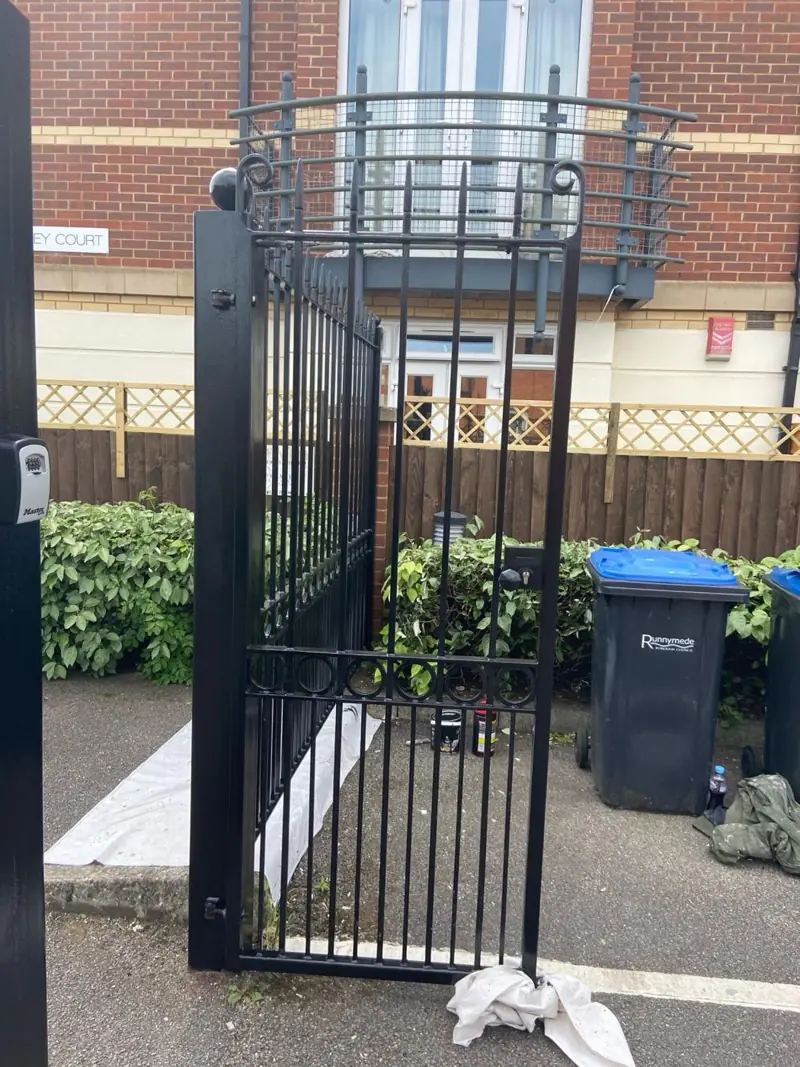
Many homes face onto shared courts or living streets, where the van parks some distance from the front door. Where a terrace has no side passage, tins, brushes and sheets come through the house, so we sheet the route through the hall and kitchen before carrying anything in. For a garden backing onto the park, we work from your side only and do not go into the park itself. Timing matters too: we stain in a dry spell, which on the shaded slope can take a little longer to arrive. Side gates get the same treatment as the panels, with extra attention to the bottom rail and the hinge side, where water sits longest. Have a look at our Camp Hill area page for the other work we cover nearby, or our cost guide for what affects the price.
Last updated by Dean, DH Painter & Decorator.