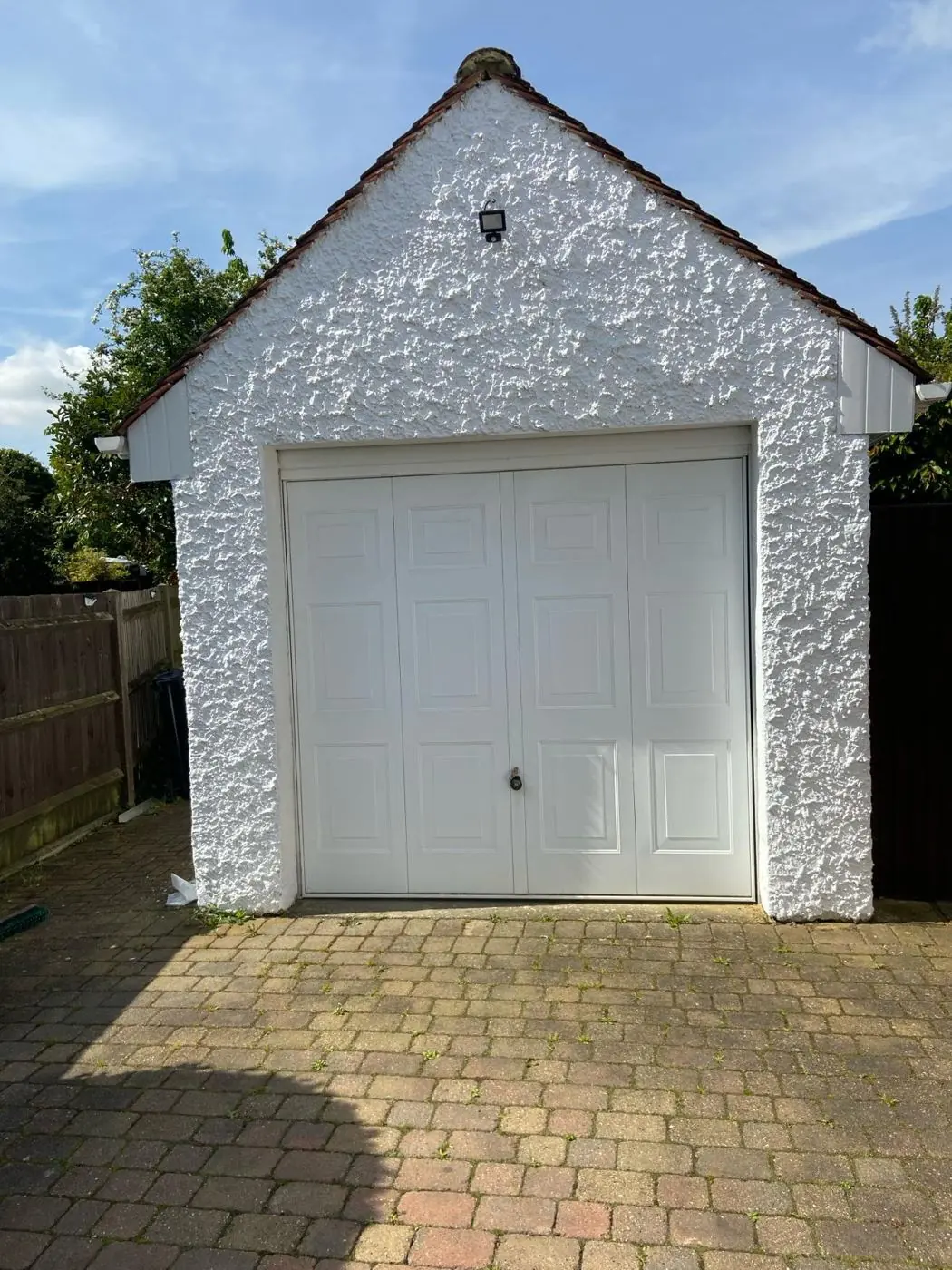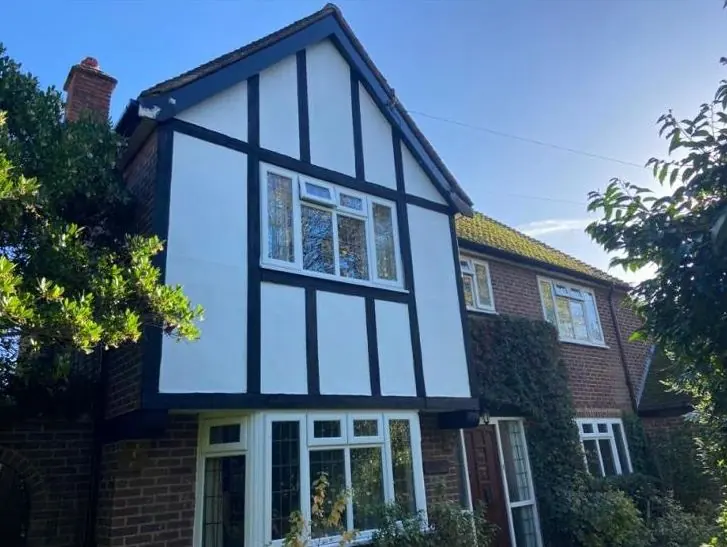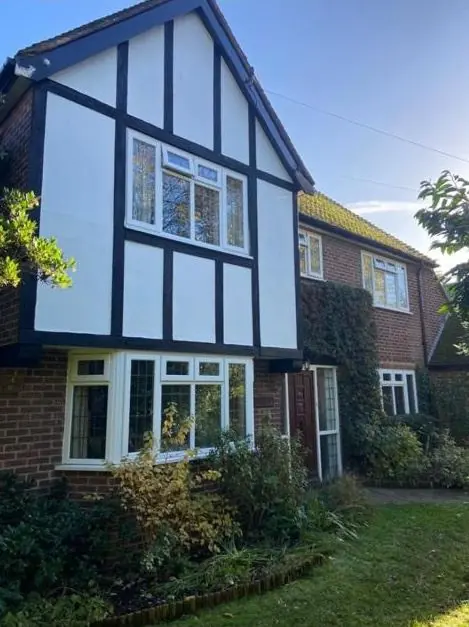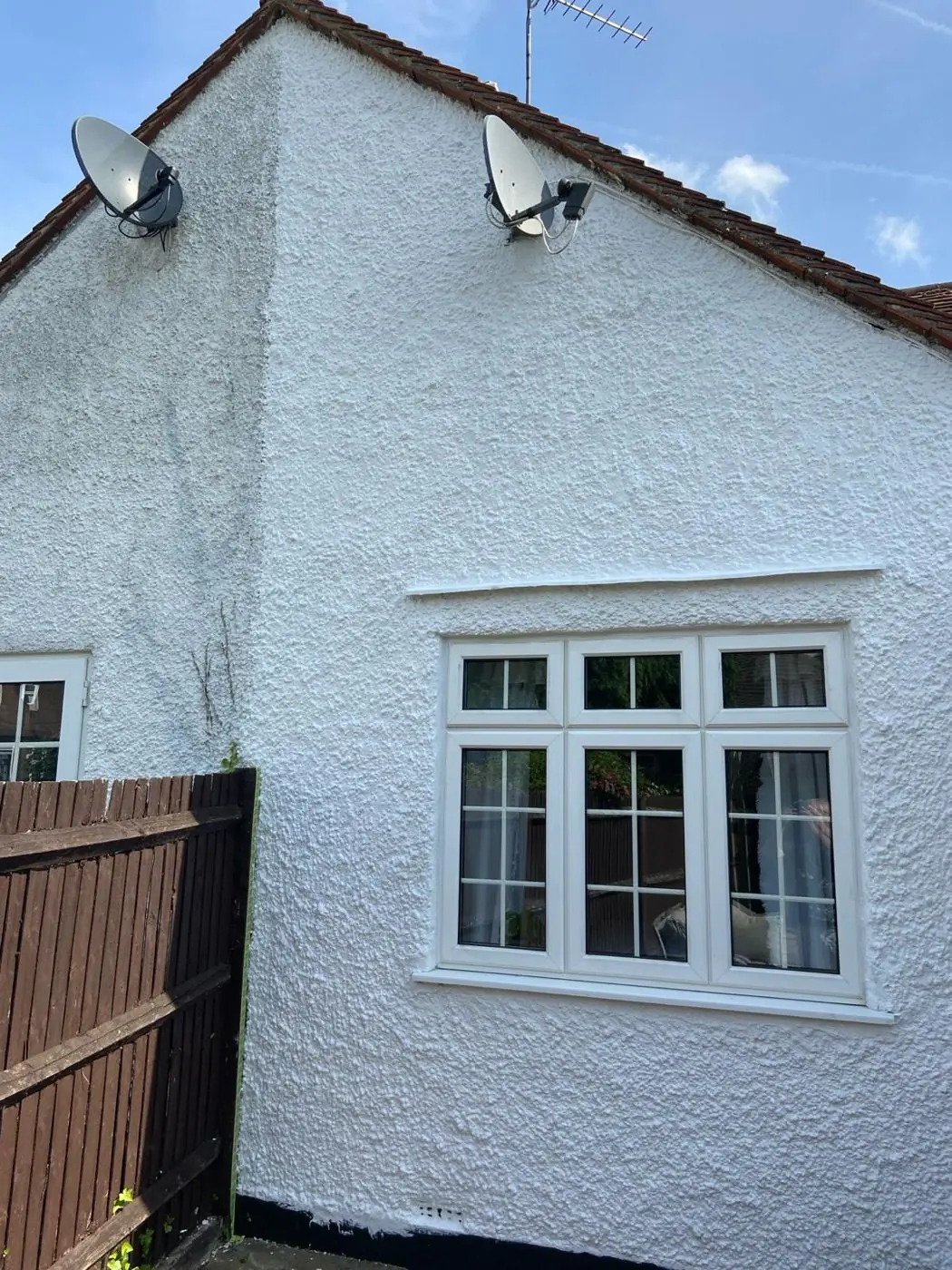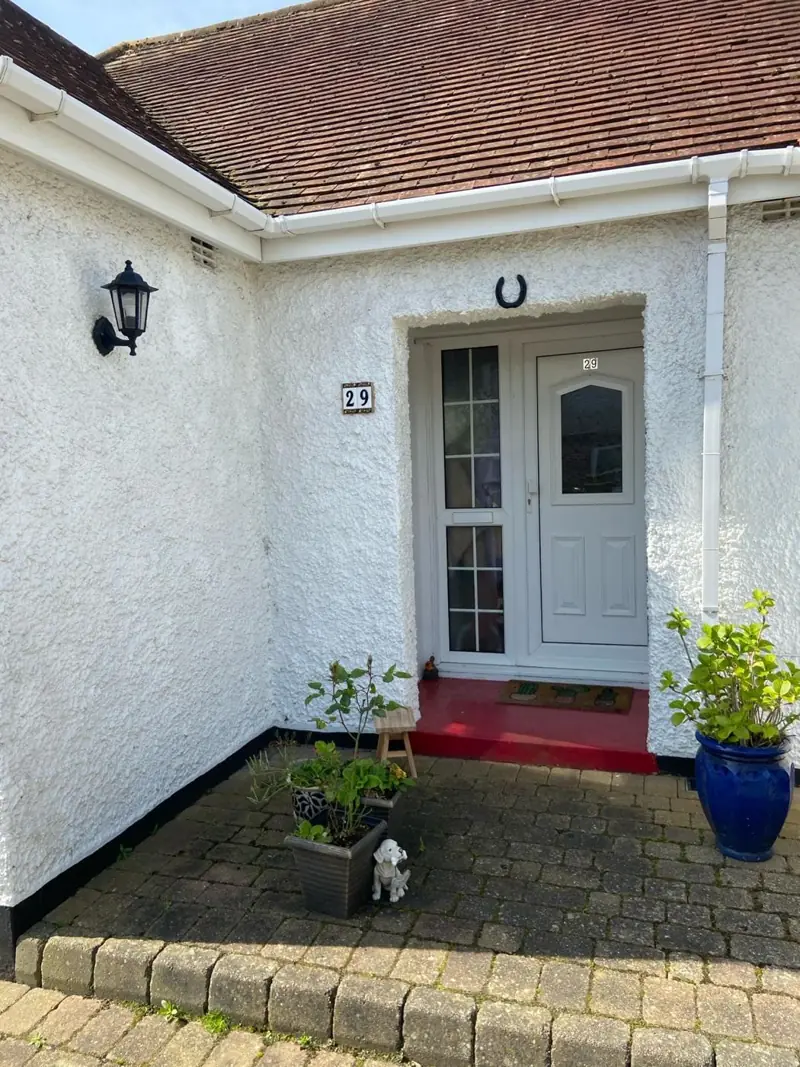
DH Painter & Decorator prepares and paints fascias and soffits in Briar Hill, NN4, about 1.3 miles south-west of Northampton town centre. Timber eaves on the estate's 1970s terraces are the usual job, with back elevations reached through rear garden gates where a terrace has them.
Why the eaves carry most of the paintwork on these terraces
Briar Hill’s terraces went up from 1969 onwards, in the Northampton Development Corporation years of the town’s expansion. A recent Southwood Hill listing describes double glazing, and where the frames are uPVC the windows do not need painting. What is often left in timber is the roofline: the fascia boards that carry the gutters and the soffits underneath. On a typical estate house these are the largest painted surfaces outside, and the ones that fail first, because rainwater, sun and any gutter leak all reach them.
A fascia and soffit job in Briar Hill is therefore a roofline job in its own right, not a small add-on. Dean checks every board for soft or split timber, opens joints and failing paint, repairs or flags what needs a carpenter, then primes and paints the run as one. The step-by-step method is on our main fascia and soffit painting page.
Reaching the back of a terrace through the garden gate
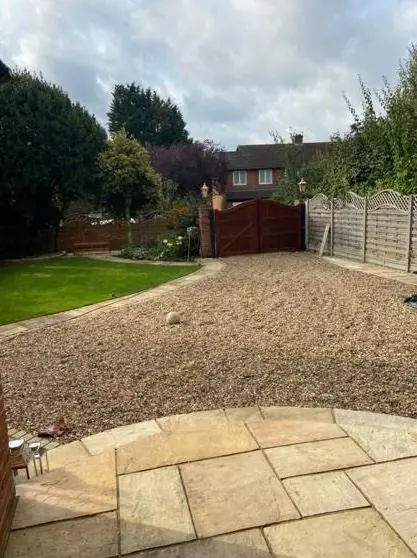
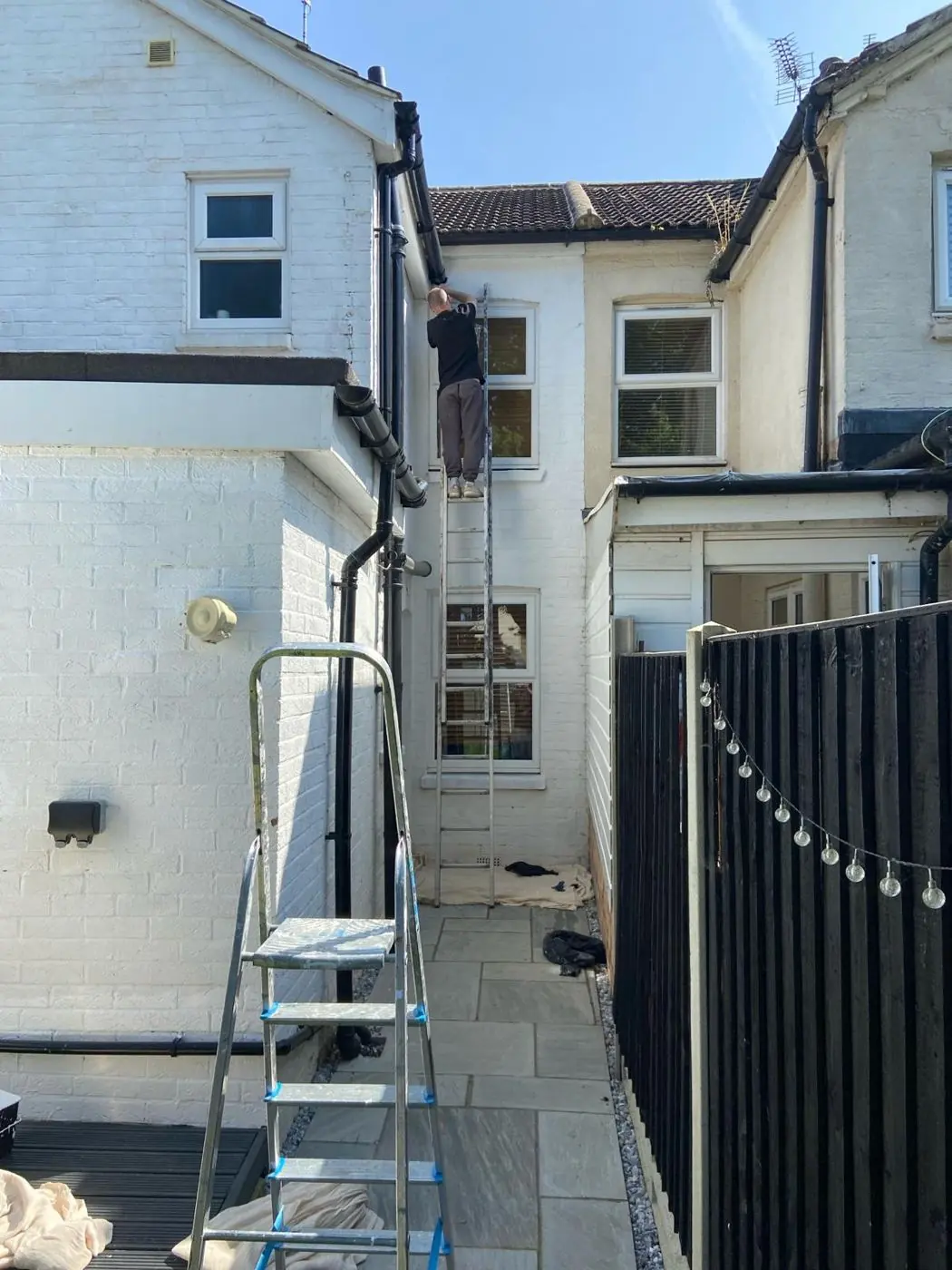
The back of a mid-terrace house is normally the awkward part of any roofline job, because there is no side passage. Some Briar Hill terraces avoid that problem: a three-bed terrace on Southwood Hill is described as fenced with rear gated access from the garden. Where a house has that kind of gate, ladders and a stand-off can come in from the back without passing through the house, and the rear fascias can be done on the same visit as the front.
Front access has its own quirk. Terraces like those on Southwood Hill share a communal parking area rather than having a drive, and the estate’s footpaths run apart from the roads, so some front doors face a path. Equipment is carried from the parking court, ladders are footed on shared paths, and we keep a walkway clear for neighbours while we work.
Boards that face down the valley
The estate is laid out on the north-facing slope of the Nene Valley, at about 80 metres. A fascia on a north-facing elevation gets little sun, so after rain the timber stays damp for longer, and soffits tucked under the eaves dry slowest of all. That has three consequences for how we plan the work:
- we probe north-facing boards more carefully, as slow drying is where rot starts
- green growth on soffits and gutter fronts is washed off and treated before preparation
- painting waits for a run of dry days so the primer goes onto timber that is dry through, not just dry to the touch
The south-facing side of the same house often has the opposite problem: paint that has chalked and faded in the sun. Each side is prepared for what it actually shows.
Bungalows and the old farmhouse
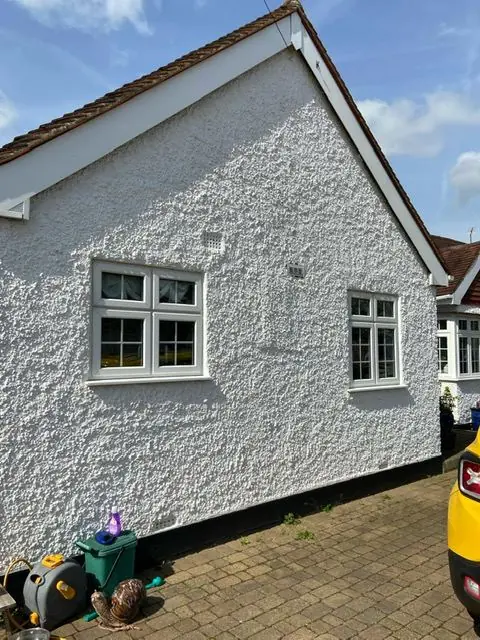
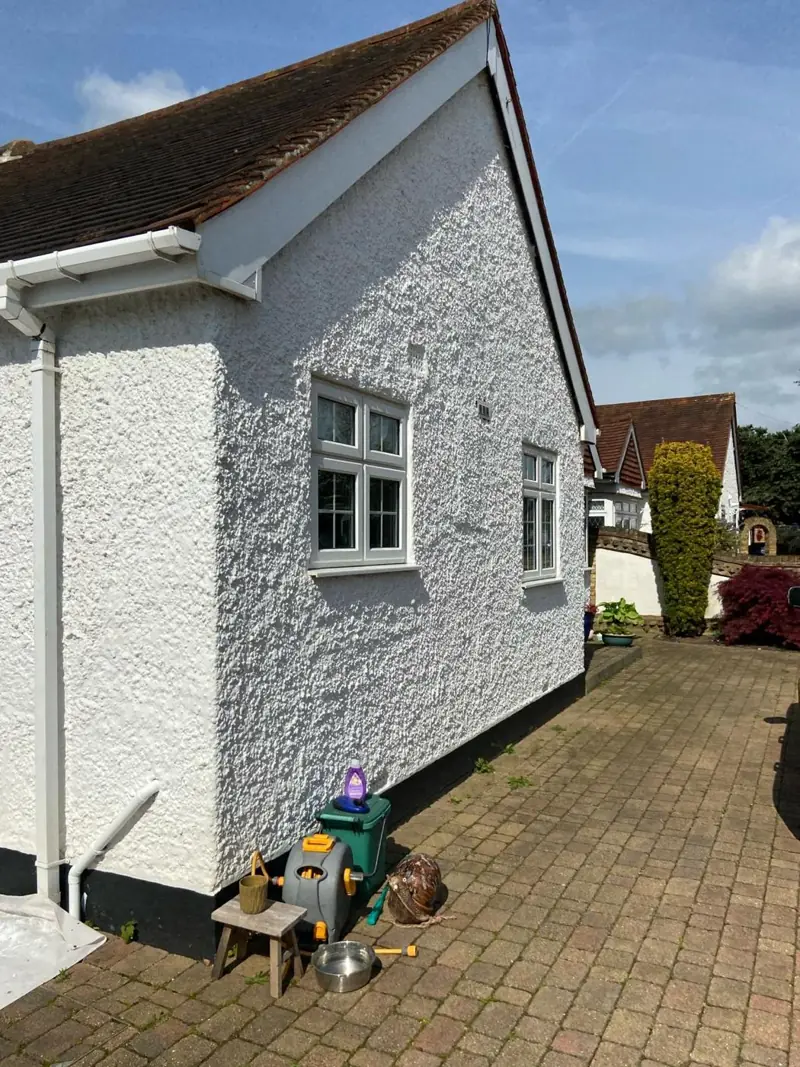
Single-storey eaves are much easier to reach, which helps on bungalows. The two retirement schemes in Briar Hill, Southwood Hill (1971) and Blackberry Lane (1987), are social-rented homes managed by Northampton Partnership Homes, so roofline painting there is arranged through the landlord. Some Blackberry Lane bungalows are built to mobility and wheelchair standard, so routes to the door are kept clear throughout and water-based, low-odour products are used.
Briar Hill House, the Grade II listed farmhouse, has a hipped Welsh slate roof with wide eaves. Eaves on a listed building should be repainted like-for-like, with joinery preparation suited to old timber. For costs on any of these, our painter and decorator cost guide explains what affects a quote, and our Briar Hill area page covers the neighbourhood as a whole.
Last updated by Dean, DH Painter & Decorator.