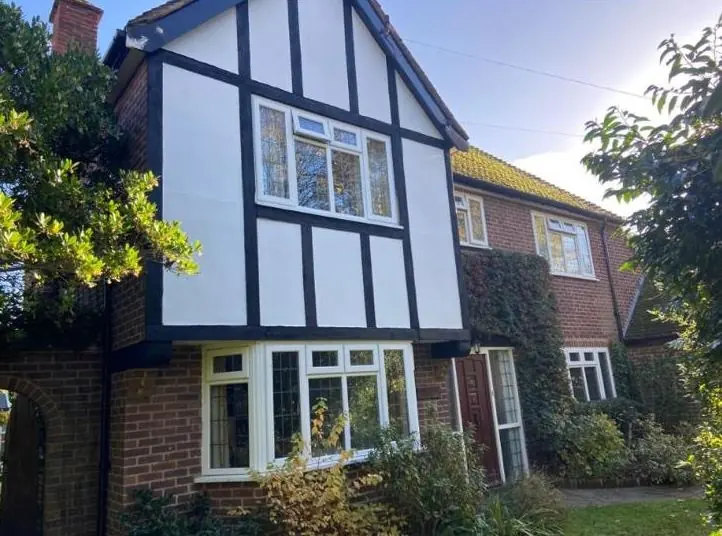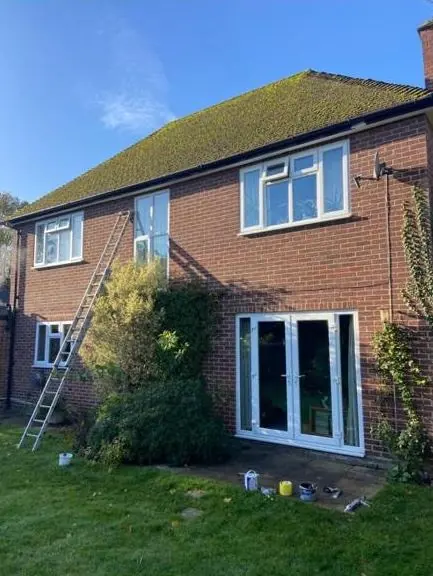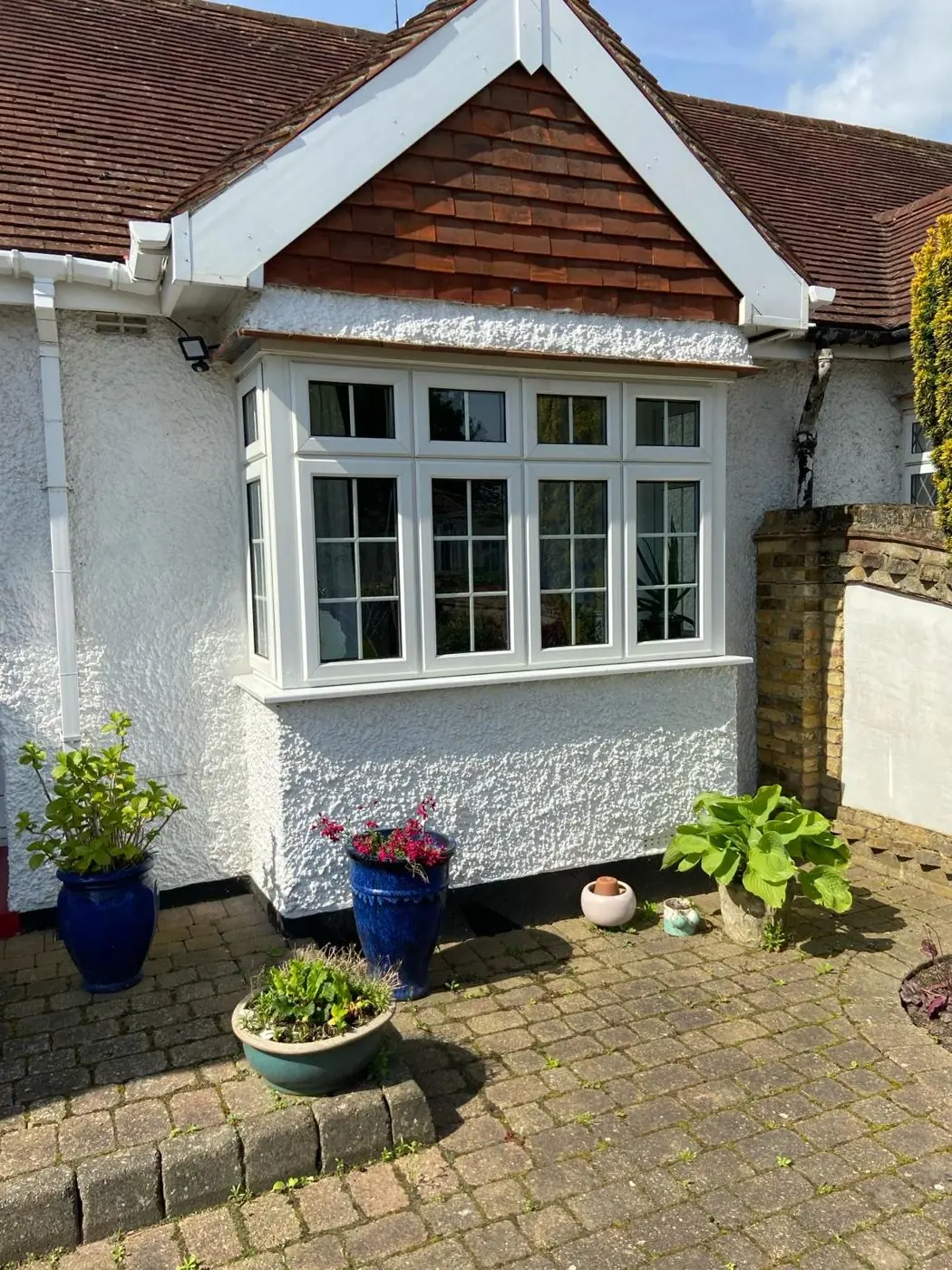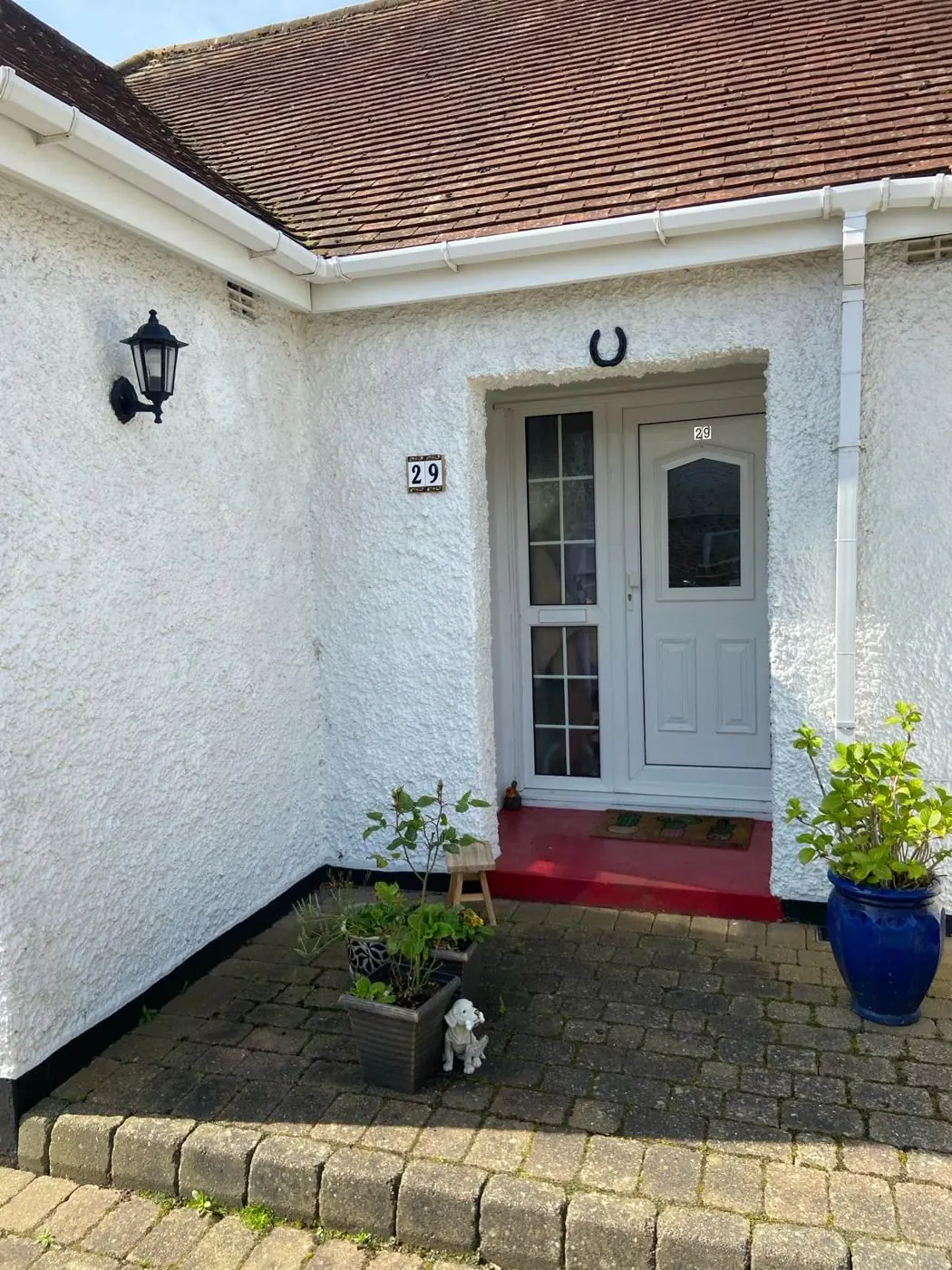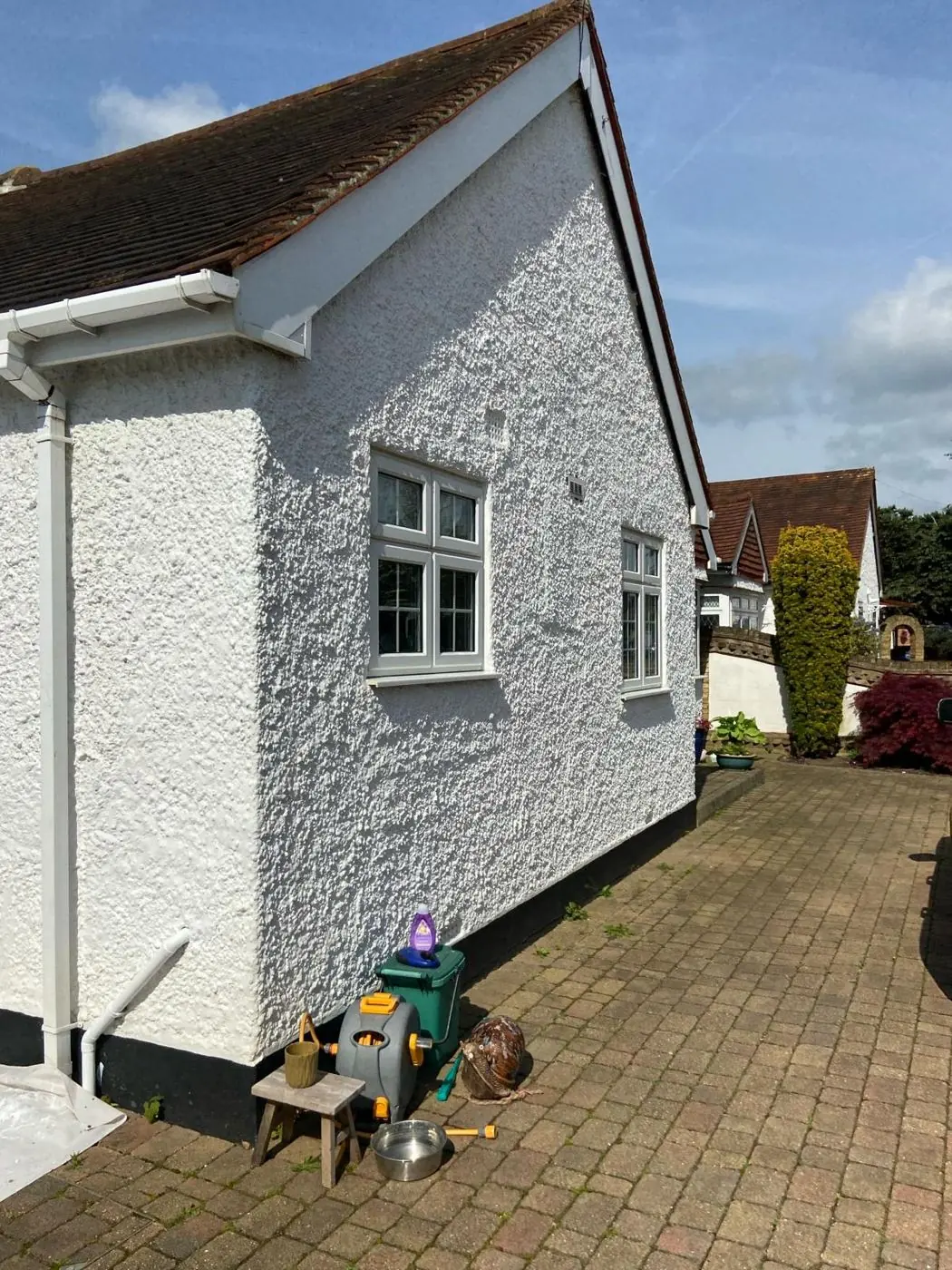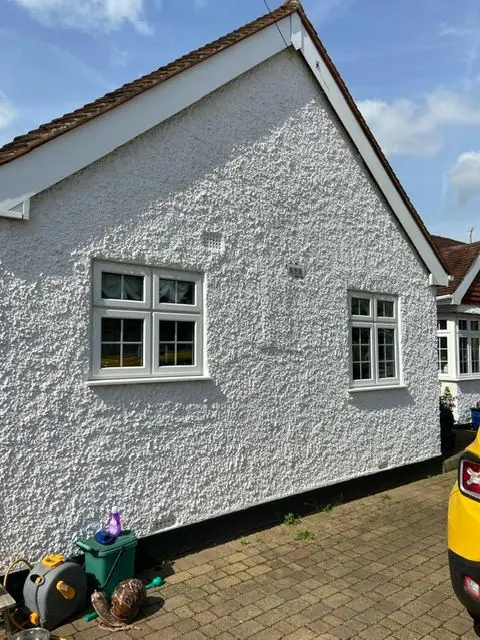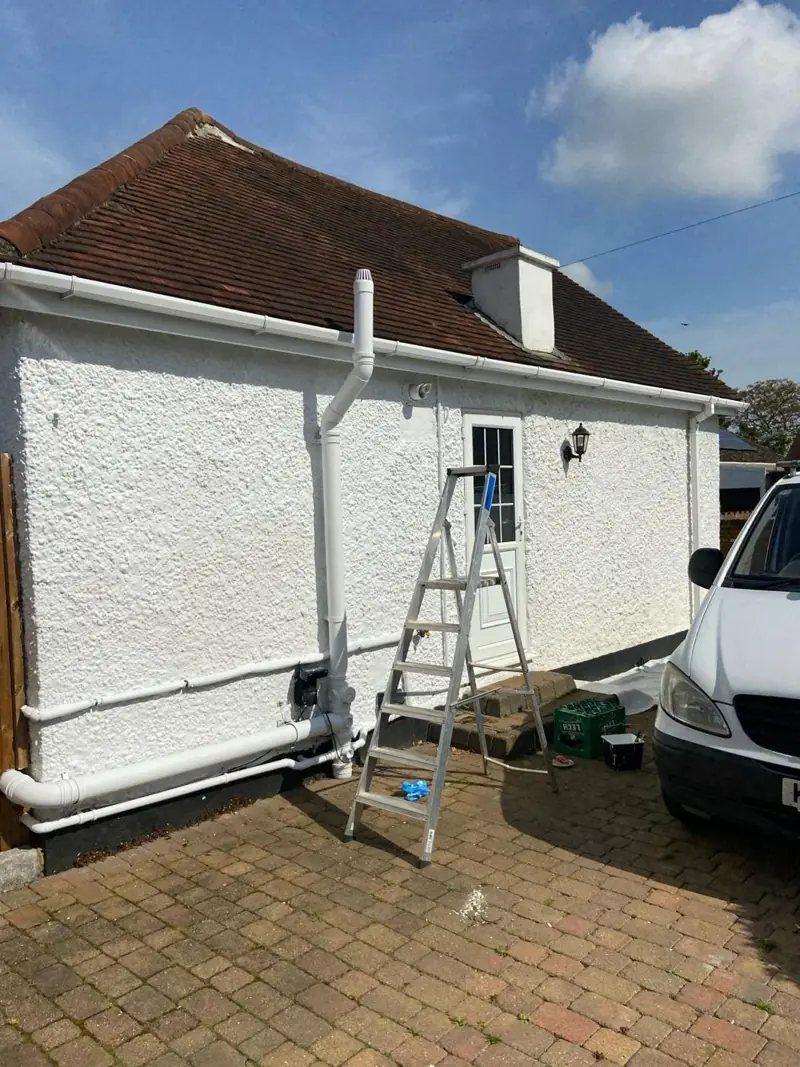
DH Painter repaints fascias, soffits and bargeboards in Hunsbury Meadows, NN4, on the south-west edge of Northampton, 2.2 miles from the centre. Many of the estate's late-1990s detached houses may still have their original painted timber at the eaves, and on a detached home that means long runs on all four sides.
More roofline than a semi
Land Registry records for the core Hunsbury Meadows streets show 73 detached first sales against 36 terraced and 21 semi-detached, and outside Riverstone Way almost every close is detached. That matters for roofline work. A mid-terrace has a front and a back fascia; a detached house on Whitesands Way or Quarterstone has eaves along both long sides plus a bargeboard up each gable, and some have a double garage with its own short roofline too. Before quoting, we walk round the whole house and measure every run, because the amount of board is often more than people expect.
Timber or uPVC: the first question
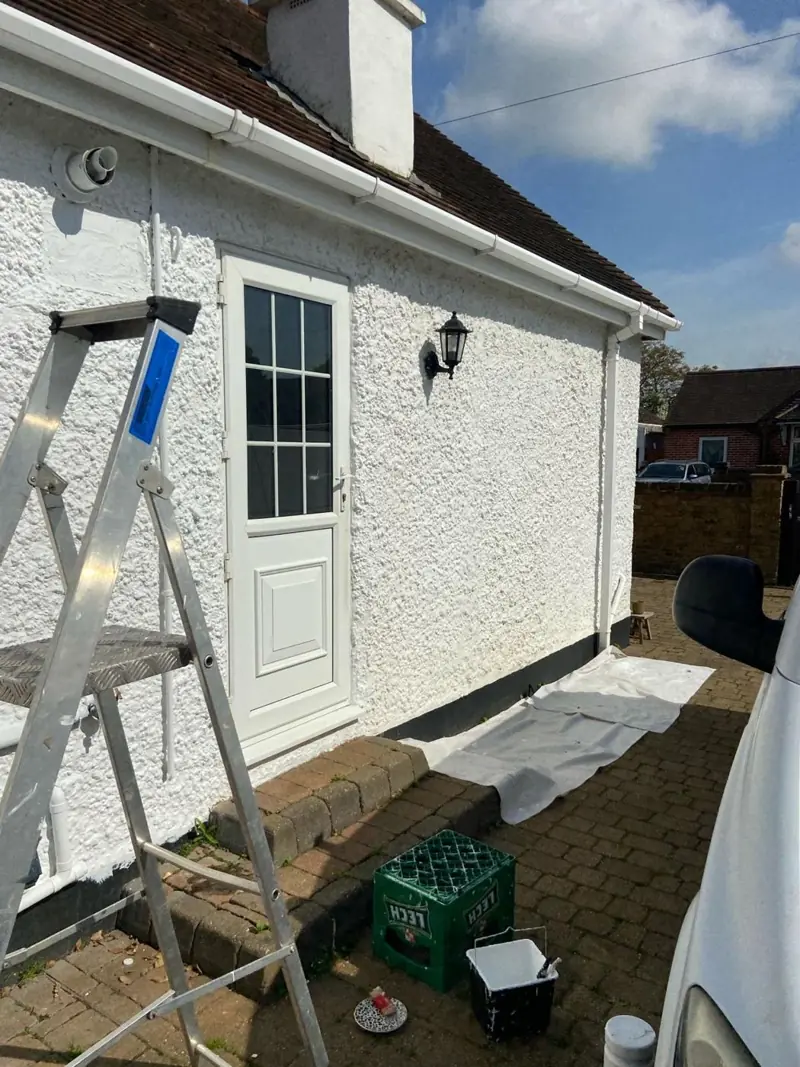
The homes built between 1996 and 2001 are of an age where painted timber fascias, soffits and bargeboards were still common, but over 25 years some owners will have had them replaced with uPVC. Pineham Lock, built between 2012 and 2015, is not documented either way in the sources we hold. So the first job on any survey is simply to check what is up there.
- Painted timber gets the full treatment: scrape, sand, spot-prime bare wood, fill, undercoat and gloss or a durable satin.
- uPVC is usually cleaned rather than painted. Painting it is possible with the right primer, but we will explain the trade-offs first.
- A mix of both, for instance uPVC fascias with original timber bargeboards, is quoted board by board.
What 25 years at the eaves looks like
On the original timber, the trouble spots are predictable. Paint fails first at joints between boards and at the cut ends of bargeboards, where end grain soaks up water. Soffits under the eaves stay drier but go chalky and grey. The lower ends of bargeboards on the gables, nearest the gutter, are where soft timber is most likely. We probe anything that looks suspect, and if a section has gone past filling we tell you before painting, so you can have a carpenter splice in new wood rather than pay for paint on a board that will not last. The general preparation method is set out on our main fascia and soffit painting page.
Gutters and downpipes are left in place where possible. Brackets are masked or painted round, and if the guttering itself is blocked or dripping onto the fascia, it is worth sorting that at the same time, because a wet board will not hold paint for long.
Working from the drive in a cul-de-sac
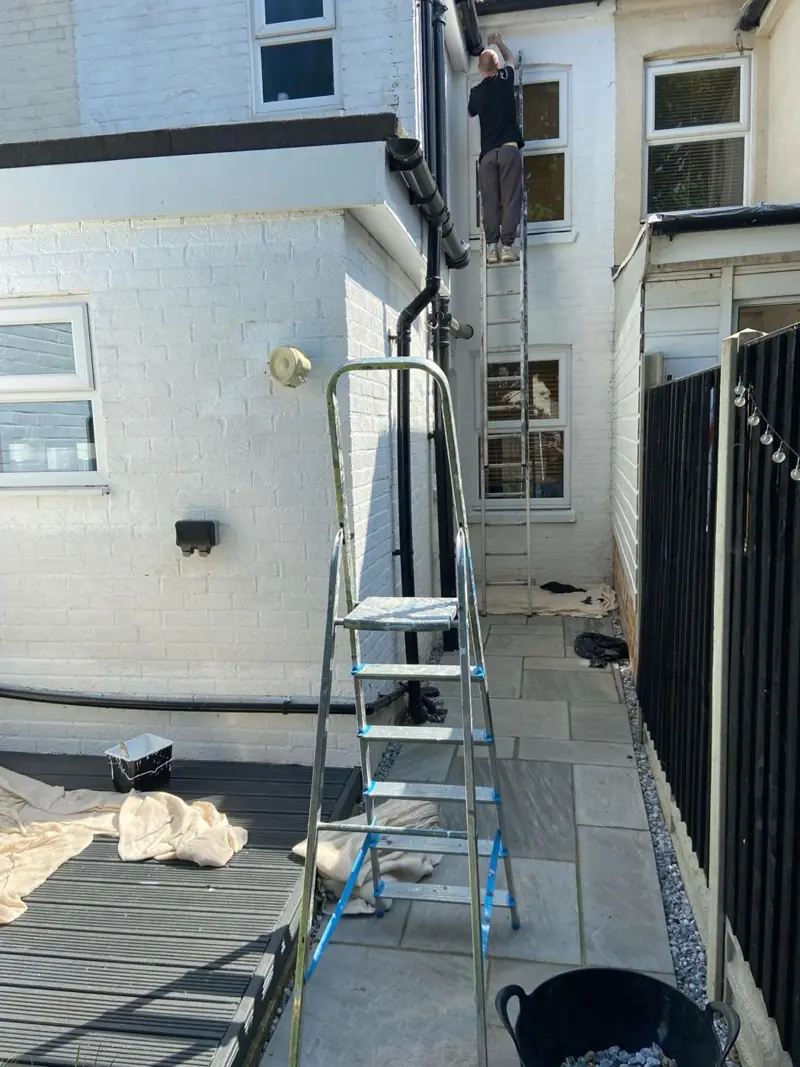
Most core-estate homes have block-paved drives and side access, which suits a mobile tower for the gable bargeboards and ladders with stand-offs along the eaves. The tower stands on boards so the paving is not marked, and sheets go down under every run as scrapings and paint drips fall straight onto the drive below.
Several of the closes, among them Cobblestone Court, Dapplestone Close and Brindlestone Close, are shared-surface living streets, so the van is parked where it does not block neighbours’ drives, and we let the people either side know when a tower is going up. Where a house backs onto a public footpath, overgrown boundary hedges can leave no flat ground to foot a ladder. The parish council reminds residents that hedges along rights of way are the owner’s job, so trimming them back a few days before the work helps.
Hunsbury Meadows has no conservation area, so colour is your choice: white, black, anthracite and dark green are all straightforward on sound timber. For background on the estate’s two building phases see our Hunsbury Meadows page, and for how quotes are put together, the painter and decorator cost guide.
Last updated by Dean, DH Painter & Decorator.