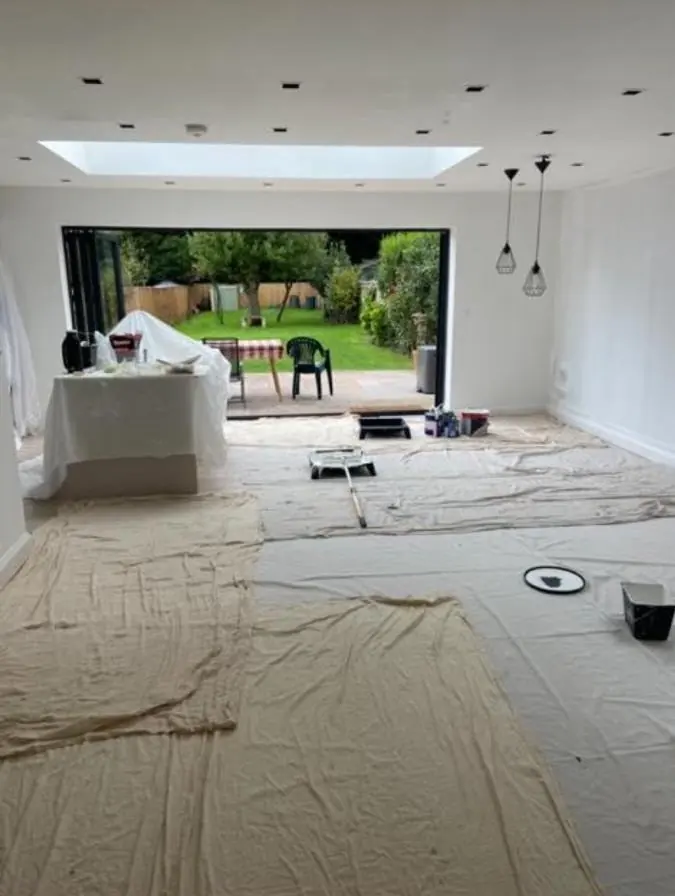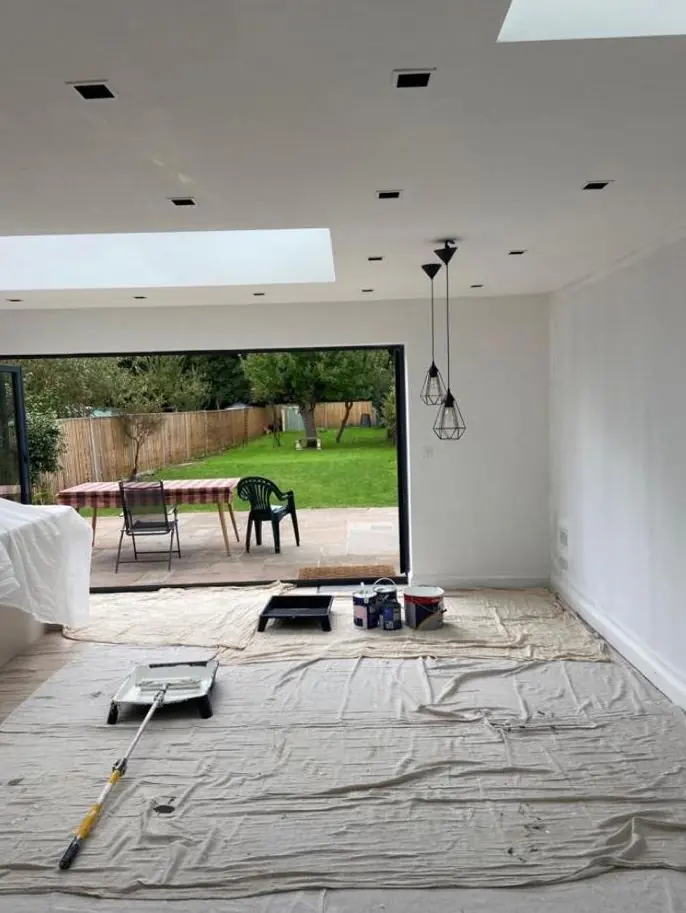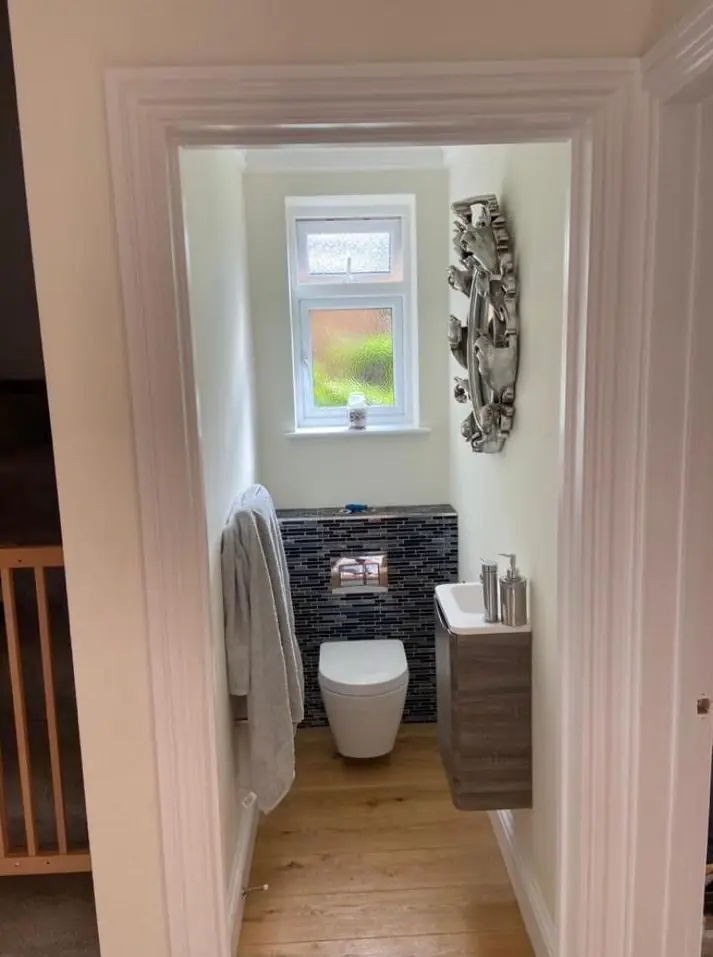
We decorate rented homes in Great Houghton for landlords and letting agents, mostly between tenancies. The village is about 2.7 miles south-east of Northampton town centre, and Dean handles both the later estate houses and the older stone cottages, quoting for free.
What letting a house in Great Houghton involves
Great Houghton is a small place, with 651 residents at the 2021 census, and we haven’t found published figures on how many homes are let. What we can say is which kinds of house a landlord might own here, because the housing falls into clear groups. The 1960s and 1970s houses include set-back cottages that were originally council housing. The 1980s estate runs south to Leys Lane. Newer groups of homes sit south of the old railway cutting and on the east side. And the conservation area holds 17th-century stone cottages, some of which are among the parish’s 17 list entries. Each group needs a different approach to a turnaround repaint.
Estate houses: quick, consistent and hard-wearing
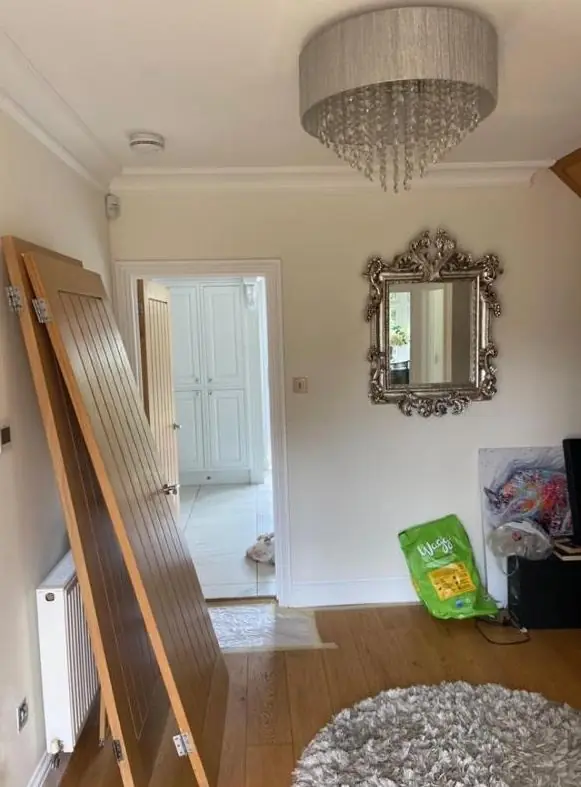
The 1960s to 1980s houses south of the old railway cutting, including the set-back former council cottages, have plaster or plasterboard walls and standard trim, so they suit fast turnarounds. Agreeing with you or the agent which rooms need full coats and which only need touching up, then keeping one neutral scheme across the house, is what keeps a void short.
A record of the colours and finishes used, room by room, makes the next turnaround quicker. The full process is on our landlord and letting agent decorating page.
Letting an older stone cottage
If the let is one of the older houses on High Street, The Green or Willow Lane, a quick magnolia-over-everything job is the wrong call. Walls there are often lime plaster on stone, and sealing them with vinyl-heavy paints can trap damp, which then shows up as blistering and mould complaints from the next tenant. A breathable emulsion lasts better on those walls.
Listed status also matters to a landlord. Like-for-like redecoration is usually fine, but changes to the character of a listed interior or exterior can need consent. The Neighbourhood Plan expects original timber doors and windows in the conservation area to be kept, so a let cottage with peeling casements is a candidate for repair and repainting rather than new uPVC. We check the position before suggesting anything beyond a straight refresh.
Cottages in the old core: windows, walls and boundary stone
A let stone cottage on The Green or Cherry Tree Lane usually comes with flush timber casements and a stone boundary wall at the front. Tenants rarely report a failing window until water gets in, so a turnaround is a good moment to check the bottom rails and sills on the south and west faces, which take the worst of the hilltop weather. Small repairs and a fresh coat then are far less disruptive than waiting for a mid-tenancy problem.
Timing, access and the outside of the property
Void periods are short, so the date matters. In the old core, High Street is narrow, used as a cut-through by traffic, and short of parking, so we agree where the van can stop before the first day. Empty houses on the hilltop can also get cold in winter, which slows drying. We ask for the heating to be left on low during the work.
A scrubbable matt or eggshell on lower hallway walls, with standard emulsion in bedrooms, keeps the next turnaround short.
On the outside, fascias and fences on the estate houses take wind and rain on the open hillside, and a tidy front makes a difference to listing photographs. If the exterior needs attention, we can quote for it alongside the inside so the property is ready to let in one go. For costs, see our painter and decorator cost guide, and for more on the village’s housing, the Great Houghton area page.
Last updated by Dean, DH Painter & Decorator.