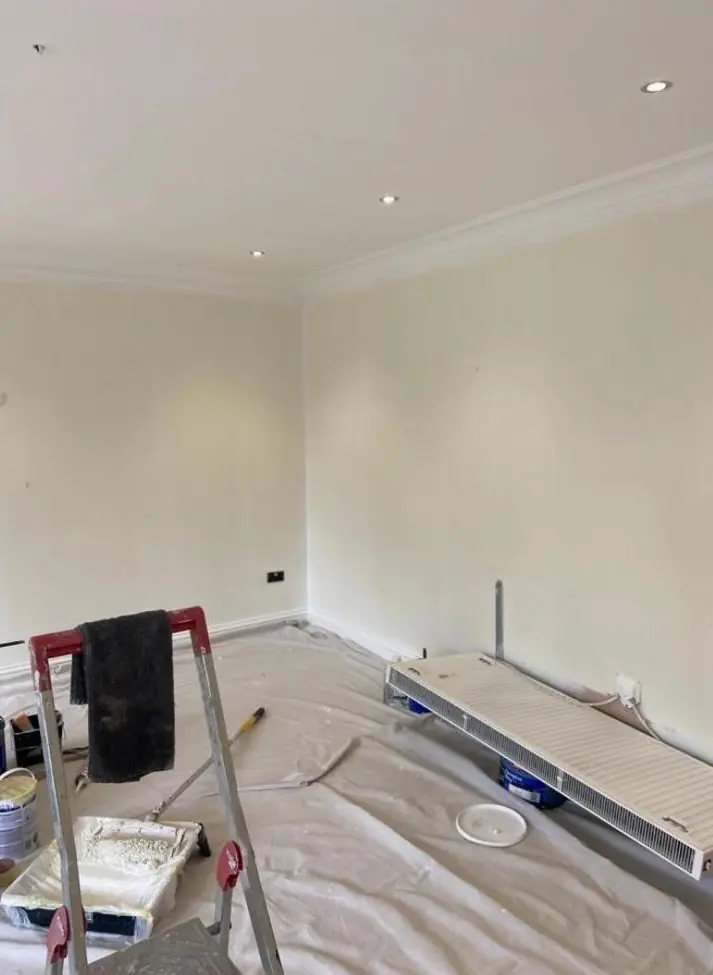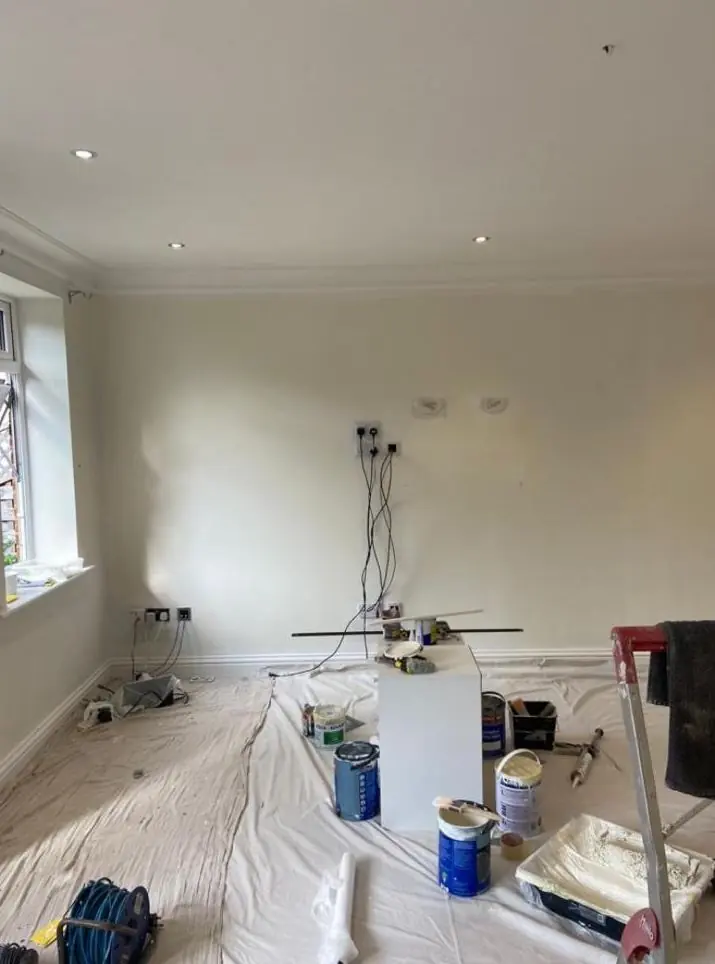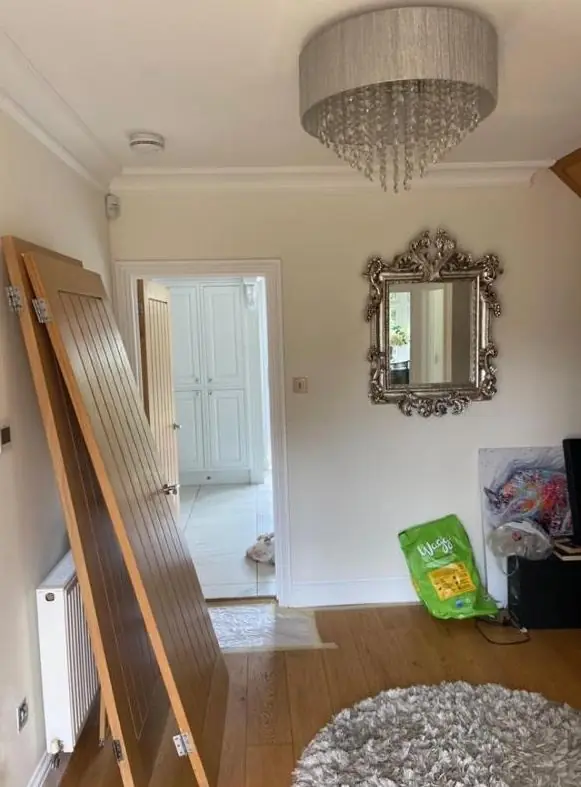
Dean hangs wallpaper and lining paper in Great Houghton, the NN4 village 2.7 miles south-east of Northampton. In the old stone houses that means lining first and setting the pattern to cope with walls that lean; on the estate south of the railway cutting the rooms are truer and papering is simpler.
Papering walls that were built in the 1600s
The oldest houses in Great Houghton went up in the 17th century in coursed rubble and limestone with ironstone bands, and their walls show it. They lean, they bulge between window openings, and the corners are seldom square. Hang a strong vertical stripe on one of those walls without planning and the stripe will run off at an angle against the ceiling line.
So in the conservation area we spend more time on setting out than on hanging. Dean finds the true vertical, then decides where any loss of pattern will be least noticed, usually behind a door, in an alcove or along a chimney breast return. Small, loose patterns and plain textured papers hide movement in the wall far better than geometric repeats or wide stripes, and we will say so before you order rolls.
Why lining paper earns its keep in the old core
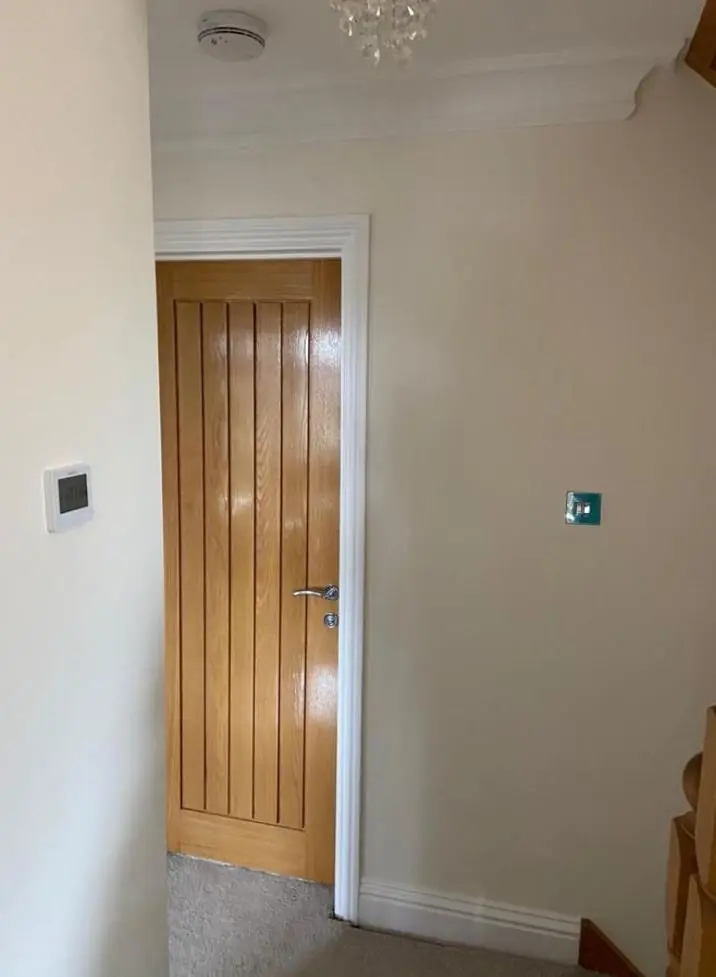
Lime plaster on stone moves and breathes. A heavyweight lining paper hung horizontally across it bridges fine cracks and shallow hollows, gives the finishing paper an even suction, and stops the joints of the top paper sitting on the joints of the lining. In some rooms the lining paper alone, painted in a breathable emulsion, is the finish people settle on, because it softens the wall without hiding its age.
The choice of paper matters too. Solid vinyls form a barrier that can hold moisture against an old wall. Traditional papers and many non-wovens let the wall breathe better, and they are kinder to the plaster when the time comes to strip them.
That stripping is where old houses catch people out. Steam and heavy scraping can pull weak lime plaster away with the paper. We test a small area first and work slowly, and if the plaster starts to come away we stop and talk to you before going on. In a listed house, disturbing historic wall finishes may also need consent.
The estate homes and newer closes
South of the old railway cutting the picture changes. The 1980s estate that runs up to Leys Lane and the later closes such as Rectory Close and Lime Farm Way have plasterboard and plaster walls that are much nearer to plumb. Paper goes up faster there, and bolder patterns are realistic. Common jobs are a feature wall behind a bed or sofa, a papered chimney breast, or a stairwell where a long drop of paper needs scaffolding boards and a steady hand.
Newer extensions and infill houses may have fresh plaster. That needs sizing or a suitable primer before paper goes on, so the paste doesn’t soak straight in and the paper can be removed later without damage.
Planning a papering job in the village
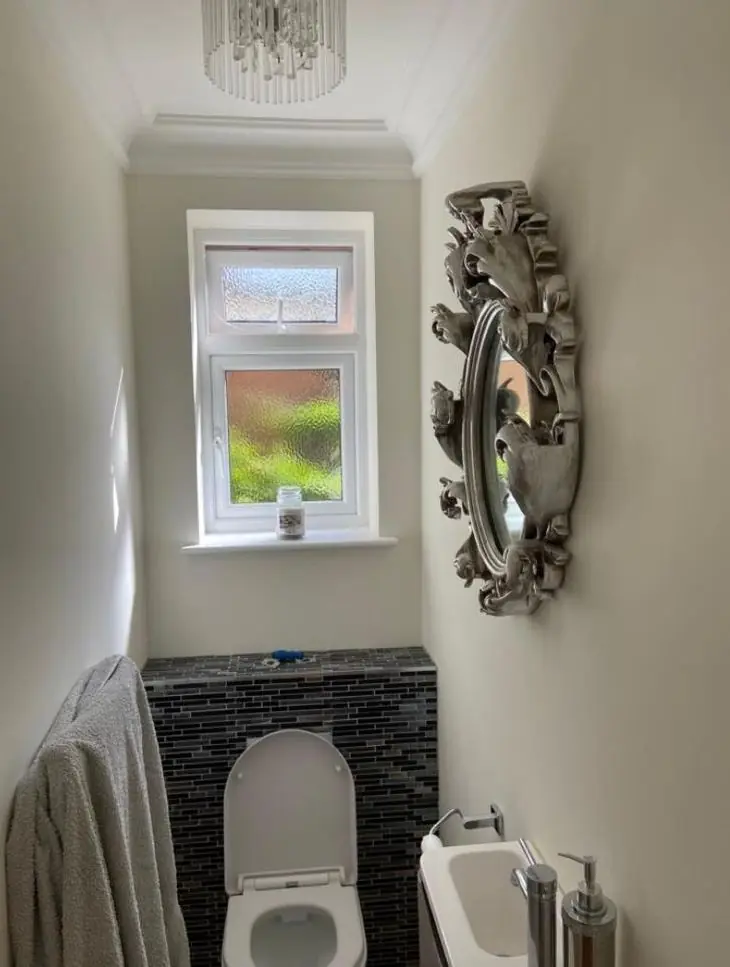
- Order rolls from one batch and allow for pattern waste; on bowed cottage walls the waste is usually higher than a calculator suggests.
- Let us see the walls before you buy, so we can flag patterns that will fight the shape of the room.
- In the core, plan for the narrow High Street and footpath-free Cross: we unload and carry in by hand where the van can’t sit outside.
More on papers, preparation and finishes is on our main wallpaper hanging page, and the Great Houghton page lists the rest of the decorating we do in the village.
Last updated by Dean, DH Painter & Decorator.