We decorate hallways, stairs and landings in Great Houghton, the NN4 hilltop village about 2.7 miles south-east of Northampton town centre. Dean works on both the period houses in the conservation area and the later homes south of the old railway cutting, with stairwell access equipment and a free quote.
Two kinds of staircase in one village
Great Houghton divides neatly in two for this kind of work. North of the old Northampton to Bedford railway cutting is the conservation area, with stone houses from the 17th century and later. South of the cutting are the 1960s and 1970s houses, the larger 1980s estate up to Leys Lane, and newer closes. The hallways in each half raise different problems, so it helps to know which kind you have before the quote.
| Where | Typical stair and hall | What the decorating involves |
|---|---|---|
| Stone houses on High Street, The Green, Willow Lane | Older timber staircases, uneven lime plaster, low or irregular ceilings | Careful prep of old timber, breathable emulsion or lining paper, hand cutting-in |
| 1960s-80s homes south of the cutting | Straight or quarter-turn flight, plasterboard or plaster walls, softwood spindles | Stairwell staging, filling settlement cracks, durable wall finish, spindles and handrail |
| Later closes such as Rectory Close and Lime Farm Way | Varies from house to house | Checked on the visit; access kit chosen to suit the stairwell height |
Old staircases in the conservation area
Some of the older houses keep original timber staircases. The Manor House at 1 Willow Lane, built in 1672, has an oak staircase, and stairs of that age need careful thought. Original oak may have been left bare, waxed or oiled, and painting over it would be hard to undo. We check what finish is already on the treads, strings and balusters and talk it through with you before anything is sanded. Where a stair has been painted for generations, we key and repaint it without filling the detail of old turned spindles.
The walls beside these stairs are often lime plaster that bows and dips. Vinyl wallpaper and plastic-heavy paints trap moisture in old walls, so we usually suggest a breathable emulsion, or lining paper where the surface is too uneven to paint well. On any of the 17 listed buildings, internal alterations can need consent too, so we stick to like-for-like redecoration unless you have confirmed otherwise.
Estate stairwells south of the cutting
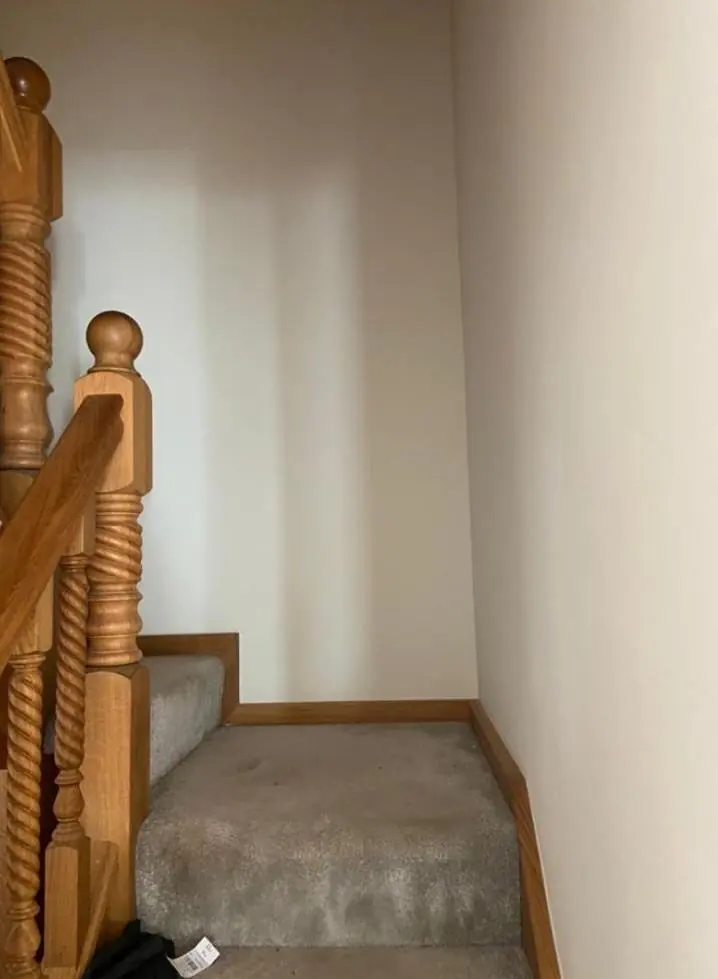
In the 1980s estate homes, the job is usually the familiar one: a tall wall above the stairs that can’t be reached from a stepladder, a landing ceiling with a hairline crack along the board joint, and a run of spindles. We set up stair platforms or adjustable staging so the high wall is reached safely, and we keep the flight usable during the work. Our hallway, stairs and landing decorating page covers the access kit and order of work in detail.
Getting the kit up the hill
Stair platforms and boards come in the van, and in Great Houghton parking is the bit to plan. High Street carries through traffic, including lorries, and residents say parked cars already cause congestion. If your house is in the old core, a word beforehand about where the van can stop for loading saves blocking the road. On the estate roads south of the cutting, any off-road space you have makes loading simpler.
Hallways also get the worst of the winter on a hilltop. The village rises to 326 ft, residents report frosty, snowy spells, and muddy boots and wet coats mark the lower walls and skirtings near the front door. A wipeable matt or eggshell on those lower walls, and planning the redecoration for after the worst weather, helps the hall stay clean longer. More about the village’s housing is on our Great Houghton page.
Last updated by Dean, DH Painter & Decorator.