Dean gives colour and finish advice as part of decorating jobs in Great Houghton, the hilltop village in NN4 about 2.7 miles south-east of Northampton. In the conservation area that means colours that suit stone and slate and checking consent on listed buildings; south of the railway cutting there is far more freedom.
The village palette is already set by its stone
Walk down High Street or round The Green and the dominant colours are not paint at all. They are the warm brown of ironstone, the paler cream of limestone and the blue-grey of Welsh slate roofs. The church of St Mary, rebuilt in 1754, is ironstone ashlar with a limestone upper tower. The Manor House on Willow Lane mixes coursed limestone with ironstone bands. Any colour on a door, window or gate in the core is seen against those materials, so that is where advice starts.
Off-whites with a little warmth, stone and putty shades, deep greens, and blue-greys that echo the slate tend to sit comfortably beside ironstone. Bright pure white can look stark against the brown stone, and very saturated colours fight it. None of this is a rule, but it is what Dean looks at when you hold sample cards up against your own walls.
When a colour change needs permission
| Property | What to check before choosing |
|---|---|
| Listed buildings (17 entries in the parish) | Listed building consent before changing external colours or finishes, and before altering historic interiors |
| Unlisted houses in the conservation area | Policy GHNDP2 in the Neighbourhood Plan expects original windows and doors to be kept, so repainting them sympathetically is the usual approach |
| The White Hart and The Old Cherry Tree | Both inns are Grade II listed, so exterior colour changes go through consent first |
| Homes south of the railway cutting | Outside the conservation area; normal freedom of choice |
We found no Article 4 direction for the village in the sources we checked, but that is worth confirming with West Northamptonshire Council if you plan a bold change in the core. Matching an existing colour on a listed house is usually far simpler than changing it.
Light inside the older houses
The conservation area has many groups of mature trees, and the 17th-century houses have small casement and leaded windows set in thick walls. Rooms behind them can be dim for much of the day. Cool greys and blue-whites tend to turn flat and chilly in that light. Warmer neutrals, soft yellows and earthy shades hold up better, and a flat or chalky finish suits uneven lime plaster because it doesn’t pick out every ripple the way a sheen does.
Sheen is part of the advice as much as colour. Breathable mineral and clay paints on old walls usually come only in flat finishes, which narrows the choice but looks right in those rooms. Inside the two listed inns, where a bar or dining room may be lit mostly by lamps, it is worth judging samples under the same lighting the customers will see.
More room to experiment on the estate side
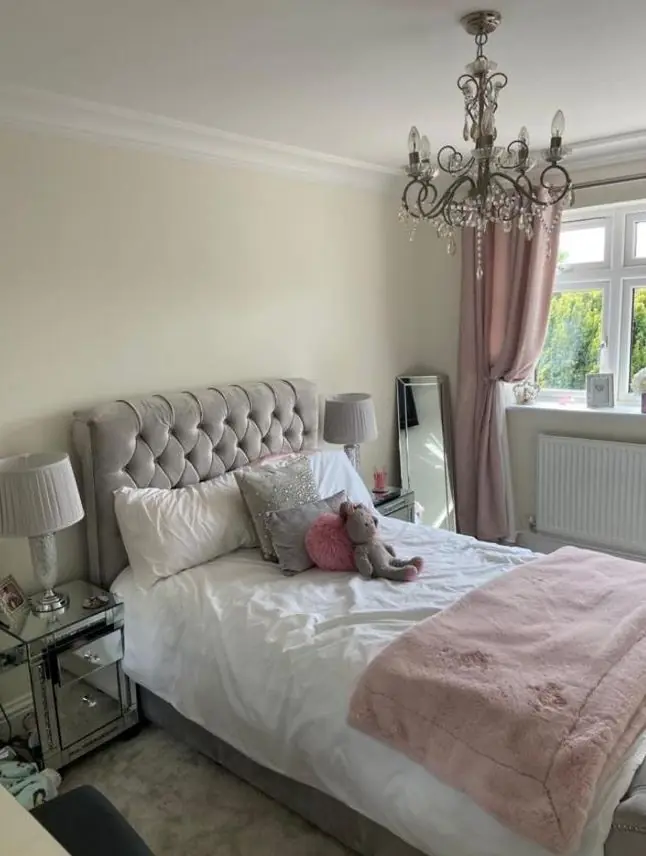
The 1980s estate up to Leys Lane and the later closes have larger windows and straight plastered walls, so they can carry colours that would feel heavy in a cottage. Up on the hilltop, rooms facing open fields get plenty of daylight, which makes deeper shades workable in living rooms and bedrooms. Here the questions are practical: which finish to use in a busy hall, whether a feature wall will date, how a colour reads under evening lighting.
Colour advice comes as part of the decorating rather than as a separate design service. Read more on our colour and finish advice page, or see the Great Houghton overview for the other work we cover in the village.
Last updated by Dean, DH Painter & Decorator.