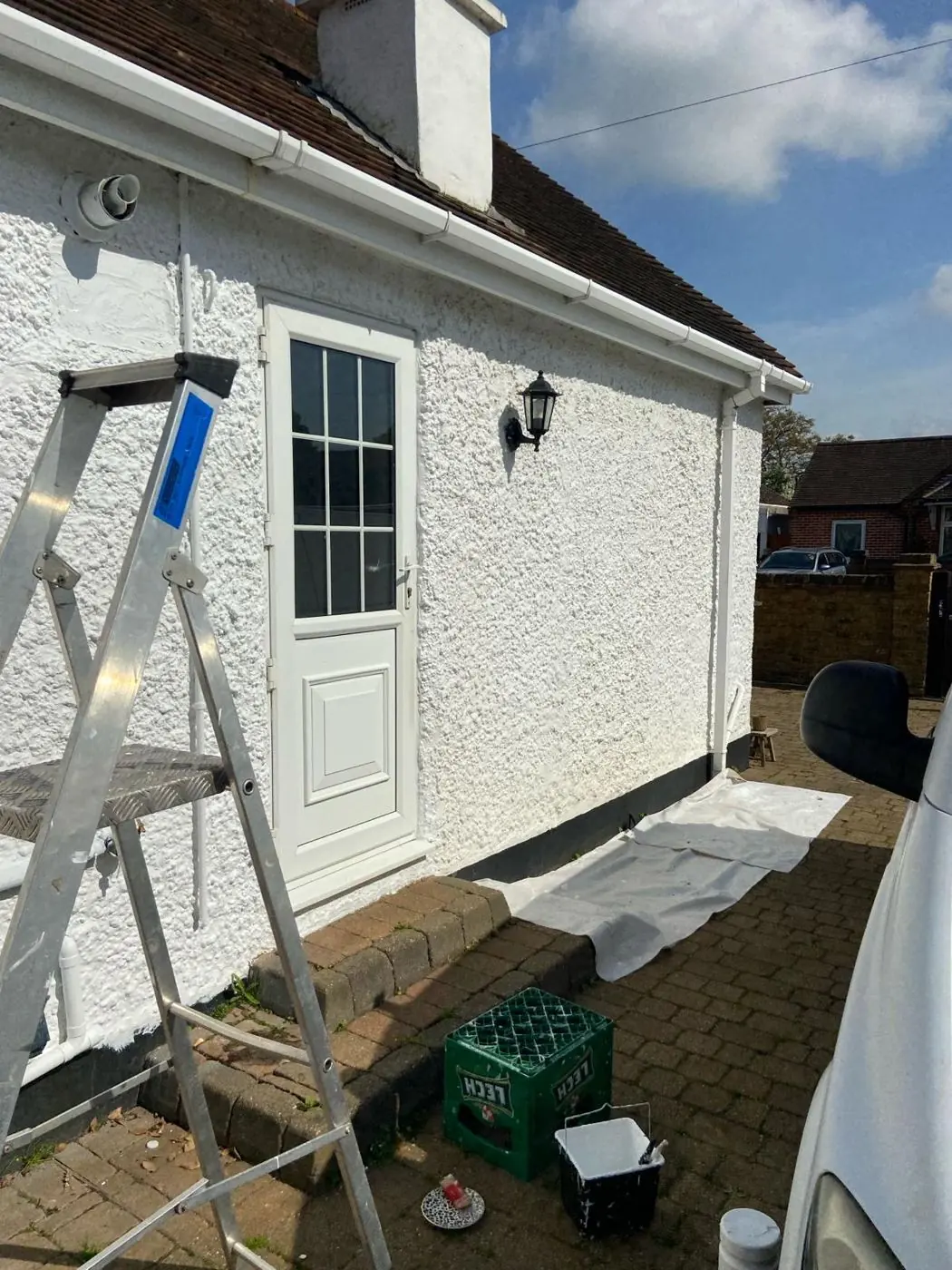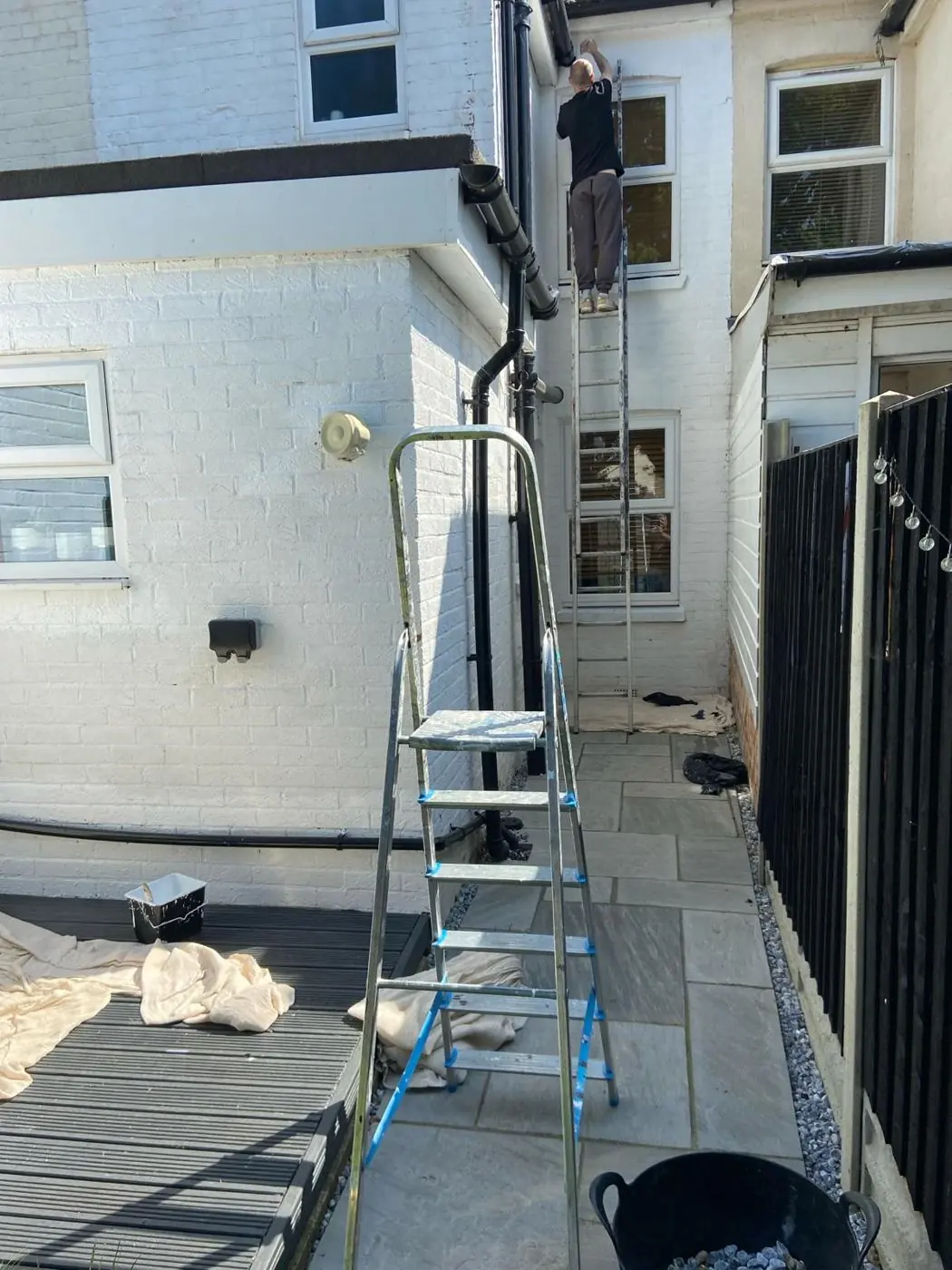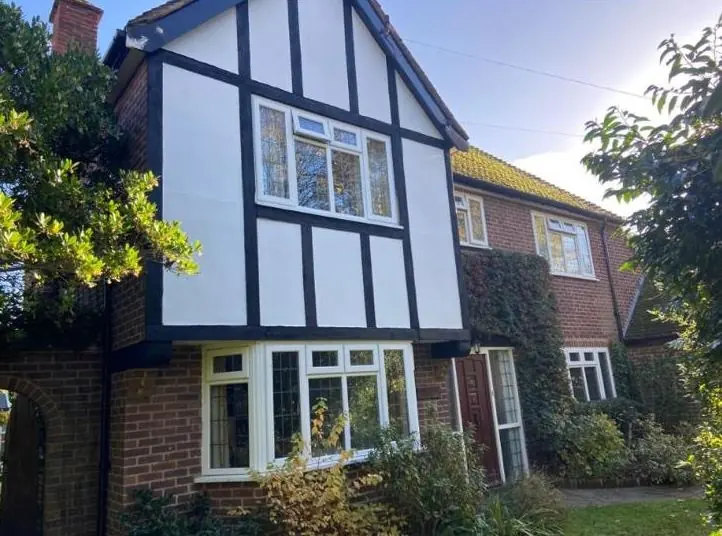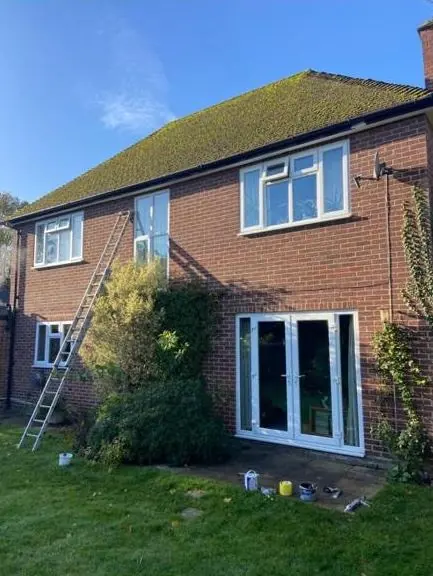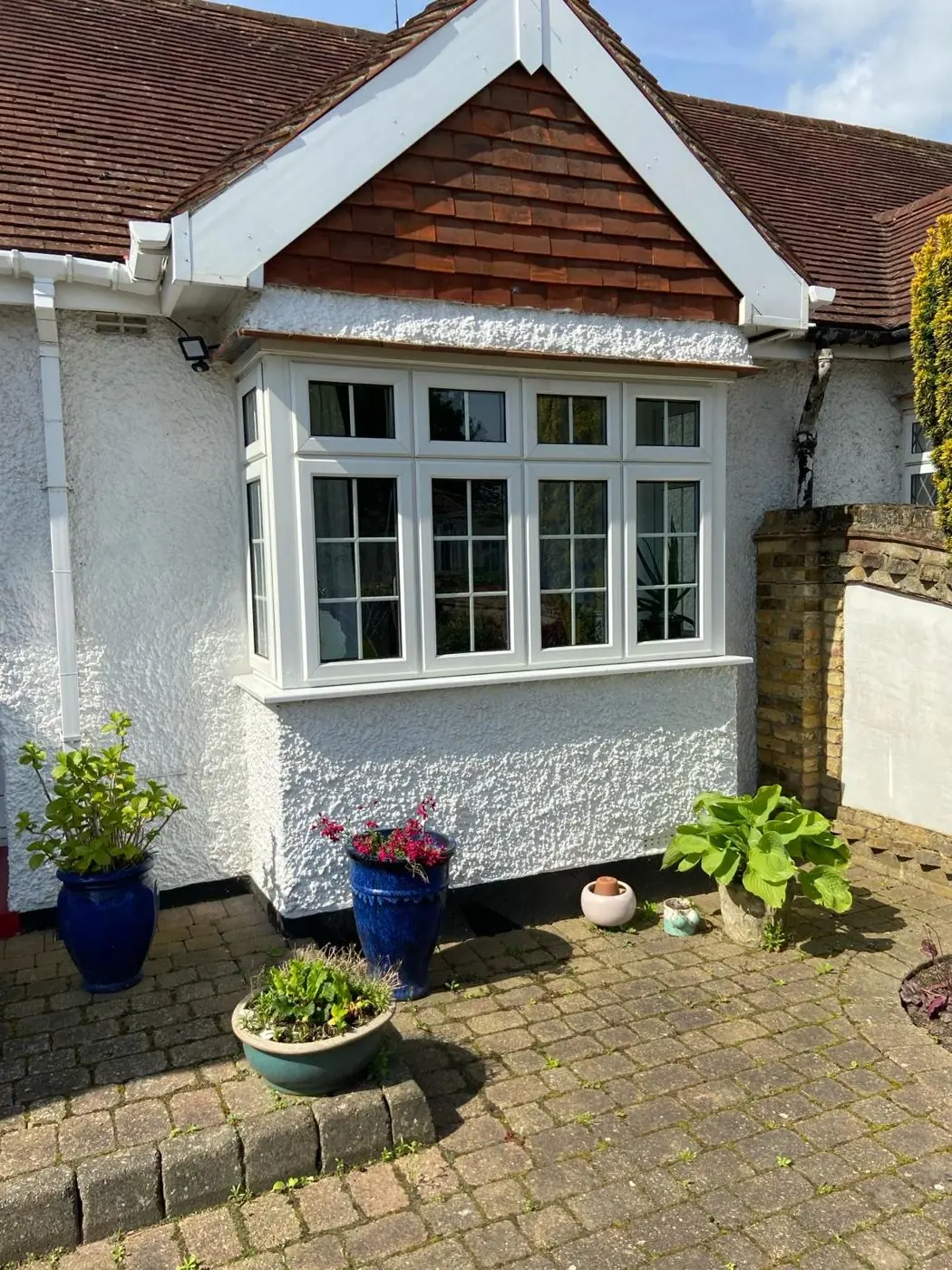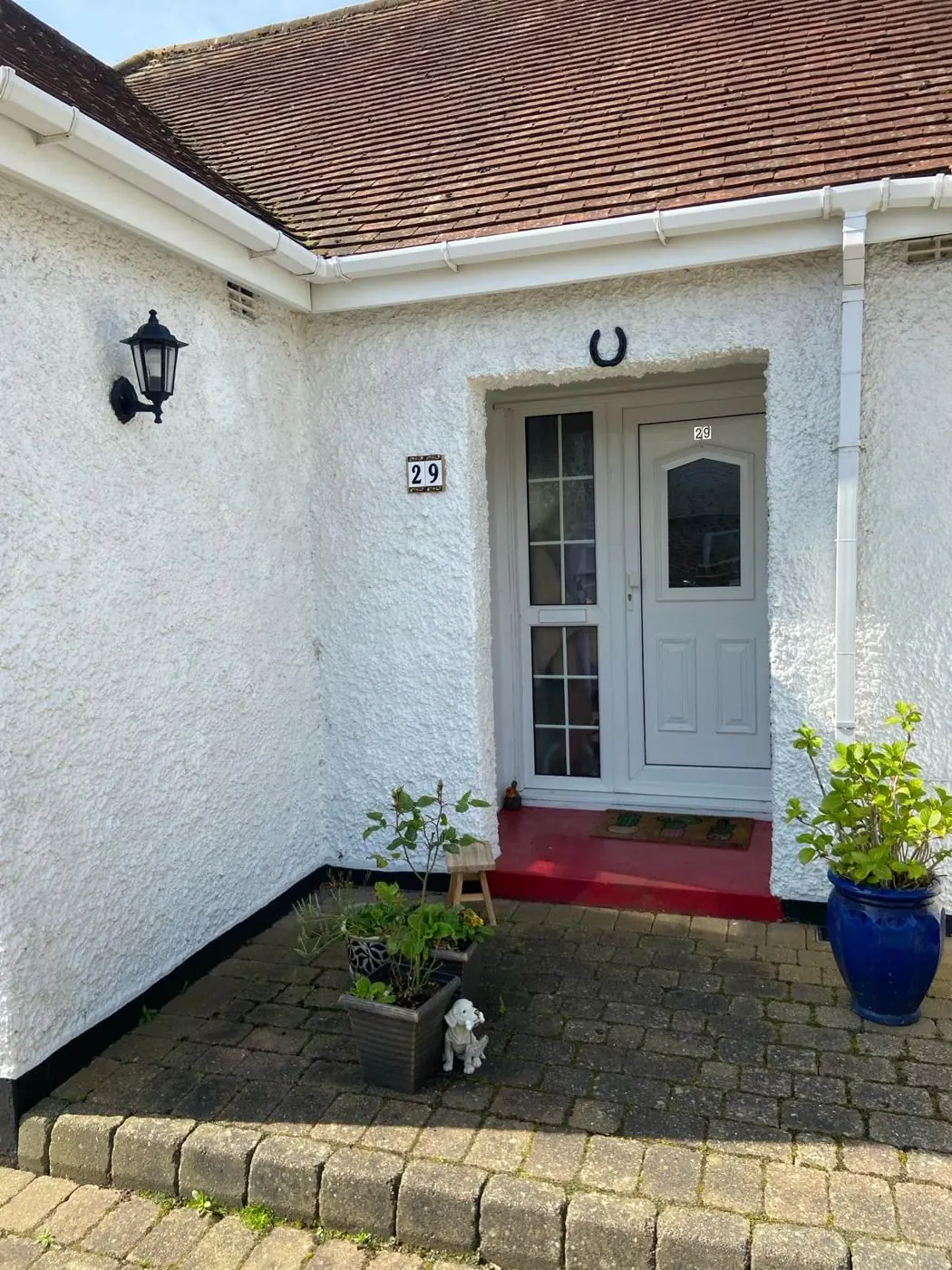
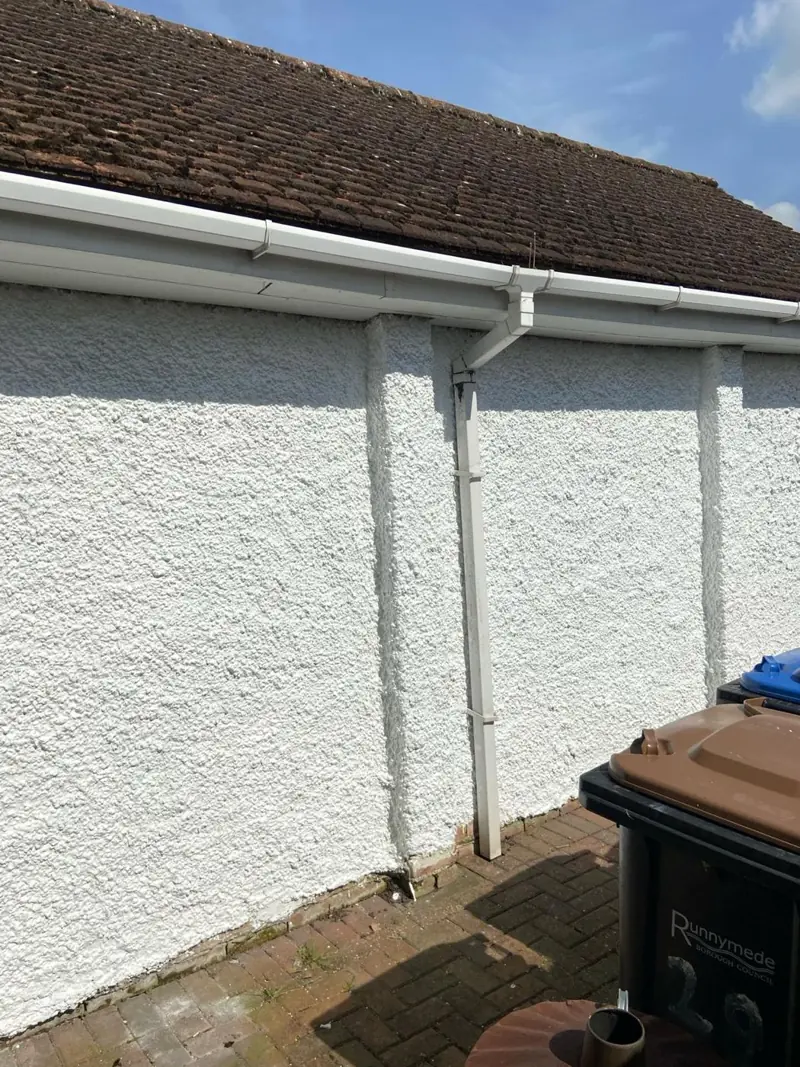
We paint fascias, soffits, bargeboards and gutters in Great Houghton, NN4, about 2.7 miles south-east of Northampton town centre. Most of this work is on the 1960s to 1980s houses south of the old railway cutting, where timber roofline boards face the full weather of an exposed hillside.
Rooflines on the estates south of the cutting
The former Northampton to Bedford railway cutting splits Great Houghton in two. North of it is the stone-built conservation area. South of it are the houses built on old farmland in the 1960s and 1970s, the larger 1980s estate that runs up to Leys Lane, and later groups of houses on the east side. Many of the older homes in that southern half were built with timber fascias, soffits and bargeboards. After a few decades, and several repaints, the end grain at joints and the lengths behind leaking gutter outlets are where the paint lets go first and the wood starts to soften.
Before quoting, Dean checks the boards from a ladder, pressing a sharp point into the board ends, mitres and any dark patches. Short soft sections can be cut out and spliced; long runs of rot are a job for a carpenter or roofer before any painting, and we will tell you so.
Wind, sun and the direction your house faces
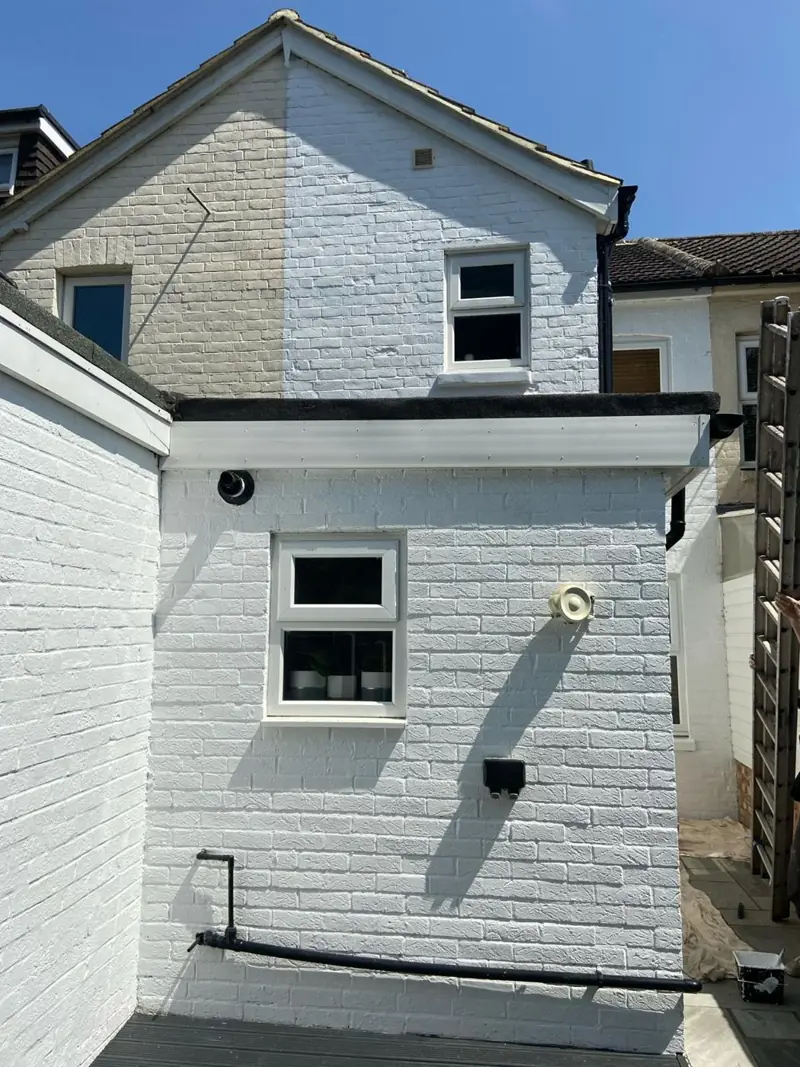
The village rises to 326 ft and sits on the skyline above the Nene Valley, with open fields around it. On a hillside like this the south and west rooflines take the wind-driven rain and the strongest sun, and their gloss dulls, cracks and peels years before the north side does. On those faces we sand back to a sound edge, spot-prime bare timber, seal any knots, then undercoat and finish with a durable exterior gloss or a microporous system that lets the timber breathe. Painting the gutters and downpipes on the same visit keeps the whole roofline even. Where the house also has a timber porch canopy or a bay roof facing the same way, it is worth adding to the job, since it has had the same exposure and will be close to failing too.
Trees, leaves and sap
Where houses sit near the mature trees that mark much of the village, the problem is different. Leaves block gutters, water overflows down the face of the fascia, and the boards stay wet. Sap and bird droppings speckle the soffits. On these properties we clear the gutters first, wash the boards with a mould treatment, and only paint once the timber has had time to dry out properly. Late spring to early autumn gives the most reliable drying days; our guide on which months suit outdoor painting explains why.
Older houses in the conservation area
In the historic core, any roofline timber, such as bargeboards or the pedimented dormers on Great Houghton House, is treated as original material: repaired and repainted rather than swapped for uPVC, in line with Neighbourhood Plan policy GHNDP2. On a listed building, a change of colour needs consent first. Near the thatch at The Manor House, or any thatched roof, we use no heat guns or flame.
Getting access
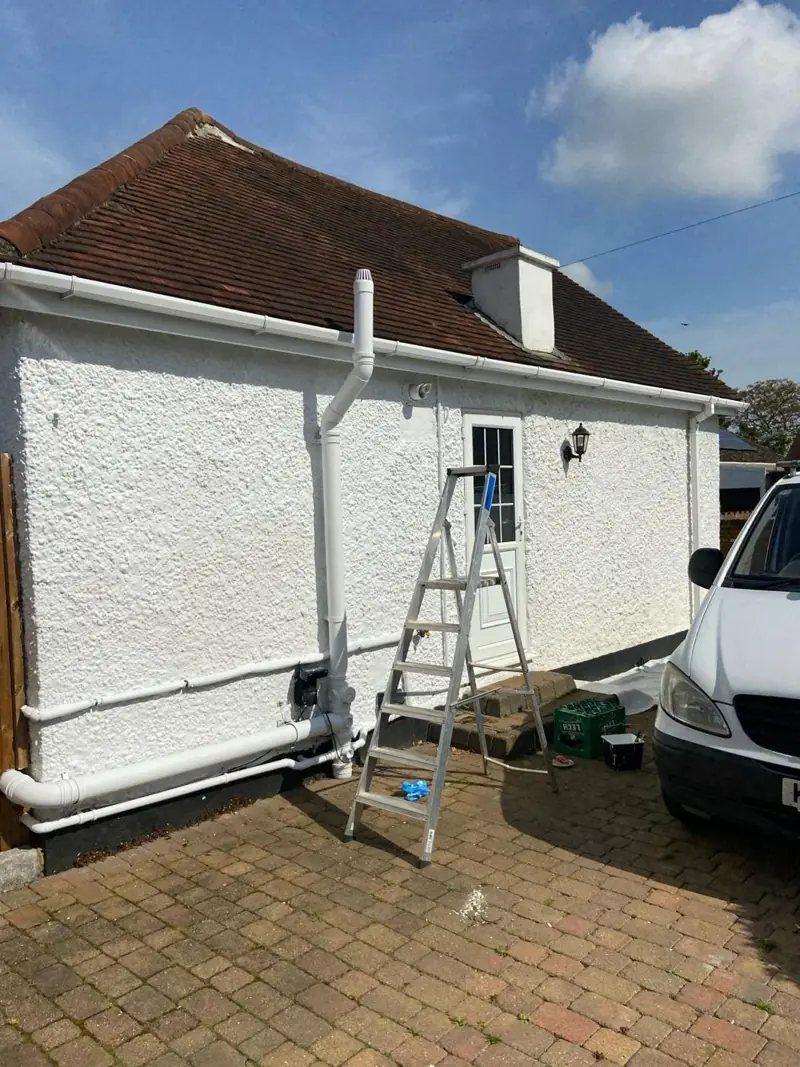
On the estate roads, a driveway in front of the house makes ladder and tower placement simpler, though conservatories and garage roofs below the eaves need boarding or a stand-off so nothing rests on them. In the old core, houses often front straight onto a narrow High Street or onto The Cross, which has no footpaths, so we plan where the ladder footing goes and keep pedestrians clear. Our main fascia and soffit painting page covers the full process, and our page on Great Houghton lists the other work we cover in the village.
Last updated by Dean, DH Painter & Decorator.