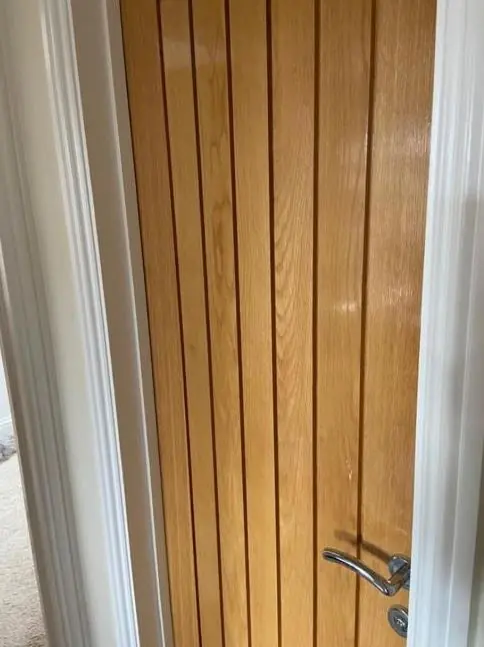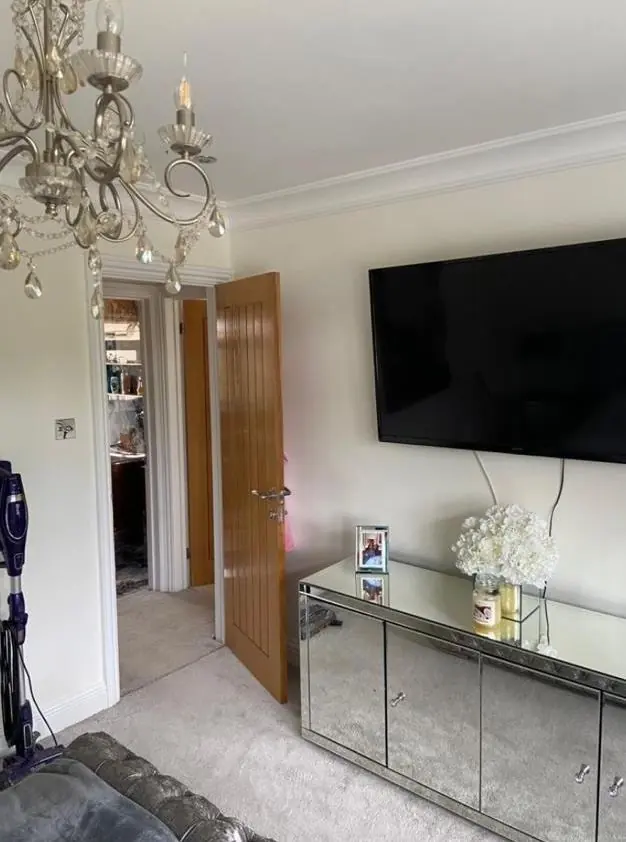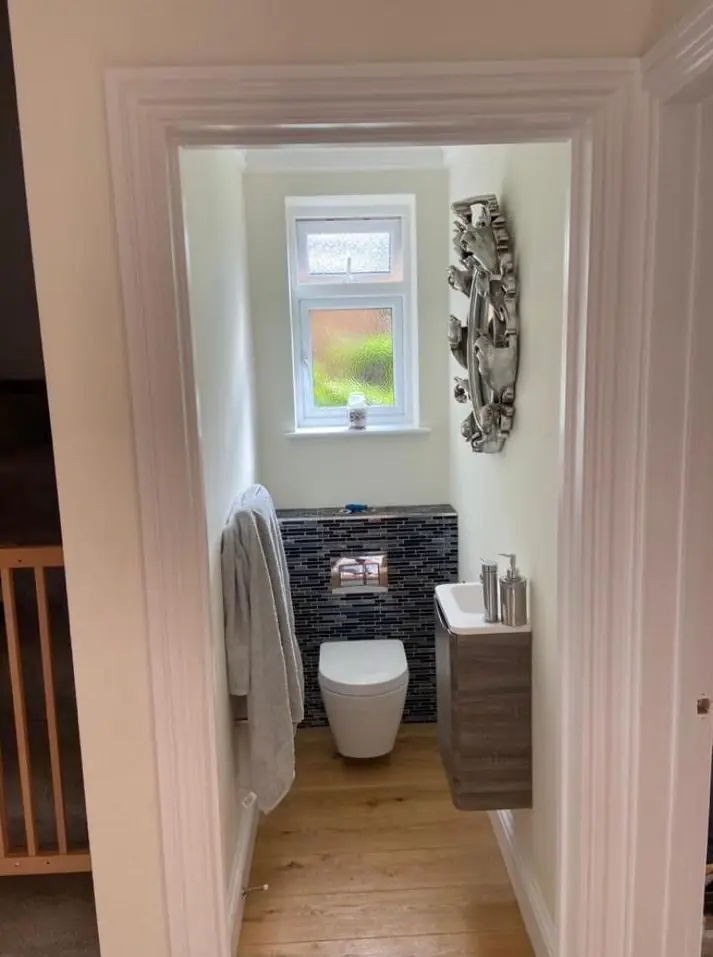
DH Painter & Decorator applies decorative paint finishes in Great Houghton, about 2.7 miles south-east of Northampton in NN4. In the old stone houses that usually means limewash-look walls and flat heritage colours; in the newer homes it is more often painted panelling and feature walls.
Finishes that belong in a 17th-century room
Great Houghton grew from about 1600 around its manor house, church and the Bedford road, and the houses from that period still form its core. Their rooms were never meant to have the hard, even sheen of modern paint. A decorative finish in one of those houses is usually about looking appropriate rather than looking new.
The finish people ask about most is a limewash look: soft, slightly mottled colour that varies with the wall beneath it. On sound lime plaster it can be real limewash or a mineral paint applied in thin, uneven coats and brushed out in different directions. The result is a wall with depth that suits the bowed surfaces and deep window reveals of the old cottages. Flat heritage colours in clay or chalky paints are the quieter alternative, and they suit rooms where the age of the wall should be the feature.
What we would leave alone
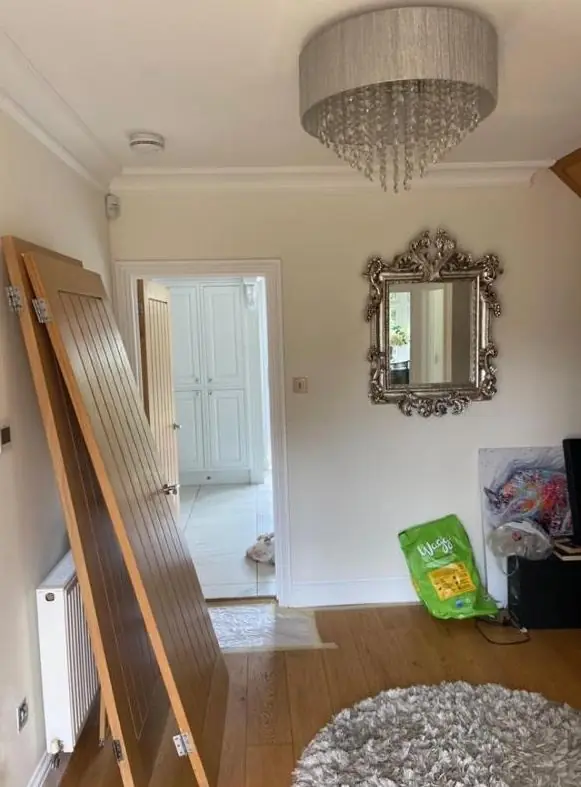
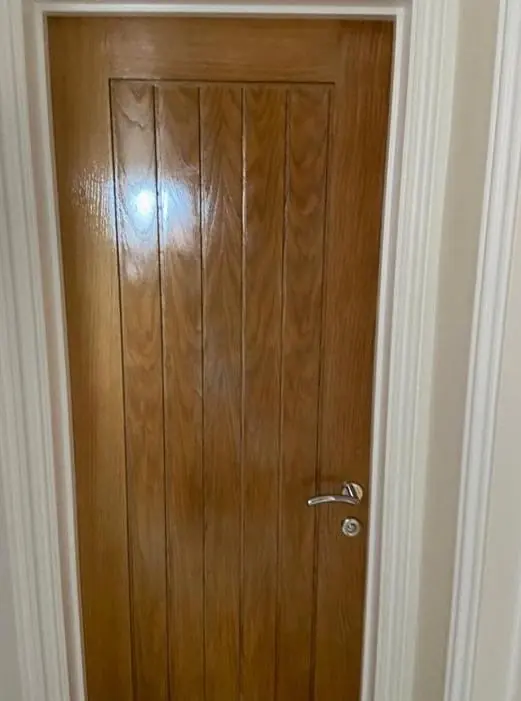
Some of the most valuable surfaces in the village are better left unpainted altogether. The Manor House on Willow Lane, dated 1672 and listed Grade II*, has an oak staircase; old oak like that should be cleaned and cared for, not given a paint effect. The same goes for original beams, panelled doors with old finishes and stone fireplace surrounds. Faux wood graining or marbling has a place, but not over the genuine article.
Listing covers interiors. With 17 list entries in the parish, any decorative scheme in a listed house that changes historic surfaces needs a check with the council’s conservation officer before work begins. Where consent is needed, a sample board or a test patch in a cupboard helps everyone agree on the look first.
Panelling, two-tone walls and feature walls in the newer homes
South of the old railway cutting, the 1960s and 1970s houses, the 1980s estate up to Leys Lane and the newer closes have flat, modern walls, and that suits a different kind of decorative work:
- Painting new MDF panelling or wall battens so the joints, pins and mitres disappear under the finish.
- Two-tone schemes with a crisp horizontal line at dado height in halls and dining rooms.
- A single feature wall in a deep colour, colour-drenched including the skirting, or with a soft colourwash effect.
- Picking out the stair spindles or doors in a contrast colour.
A colourwash that looks right in a stone cottage can look forced on new plasterboard, and a sharp geometric panel scheme can look out of place against a bowed lime wall. Matching the effect to the house matters more than the effect itself.
How a job is put together
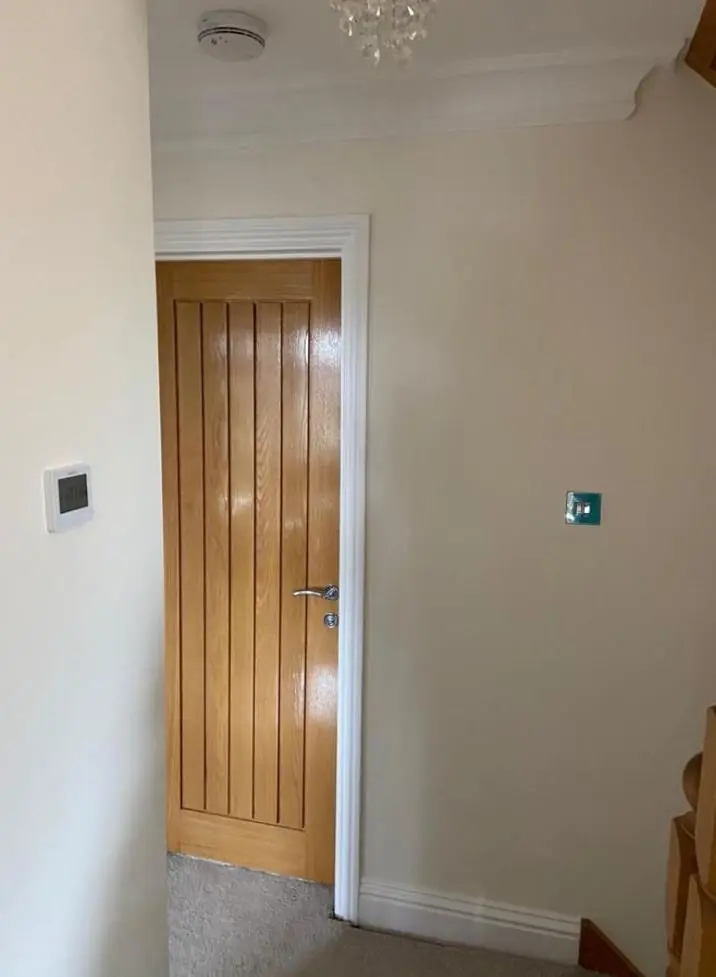
Dean starts by seeing the room and the wall, because the substrate decides what is possible. Lime plaster limits you to breathable materials; modern plaster opens up glazes, scumbles and acrylic effects. Samples come next, then the preparation, which takes most of the time on any decorative job. In the conservation area core, with its narrow High Street and footpath-free Cross, we also plan where to park and how to bring materials in before the first day.
Our main decorative finishes page explains the techniques in more depth. For the rest of our work in the village, see the Great Houghton page, and for budgeting, our painter and decorator cost guide.
Last updated by Dean, DH Painter & Decorator.