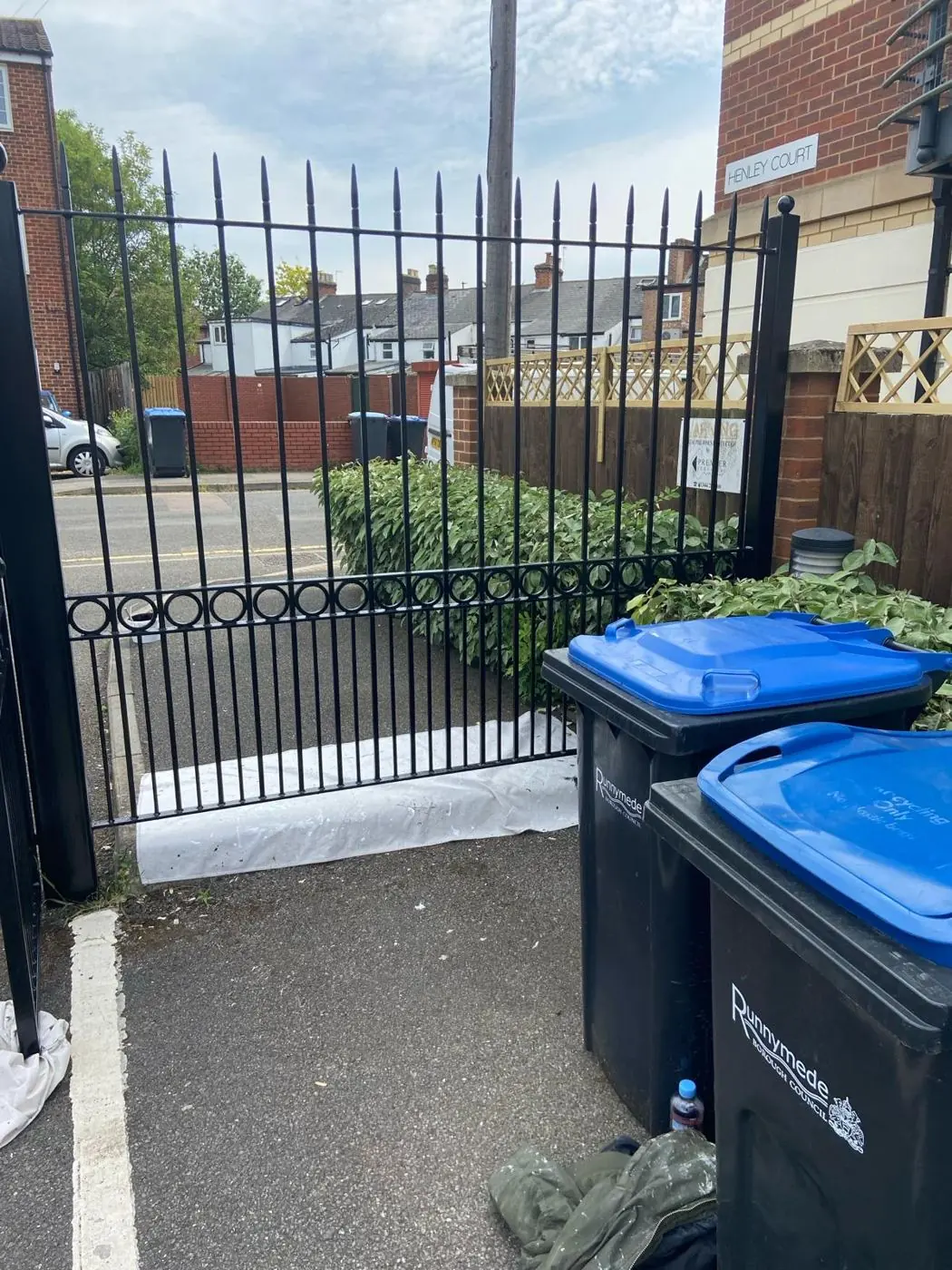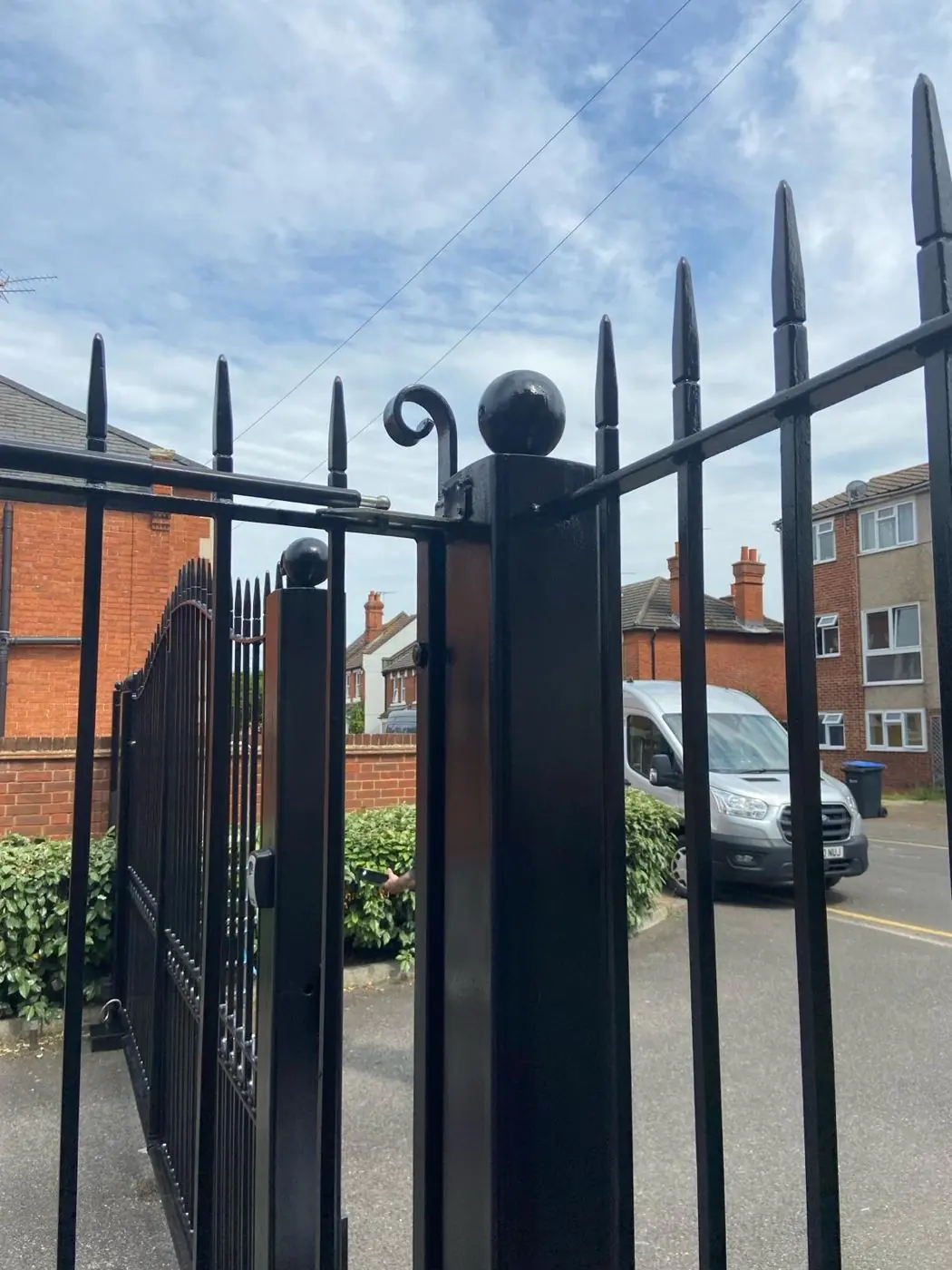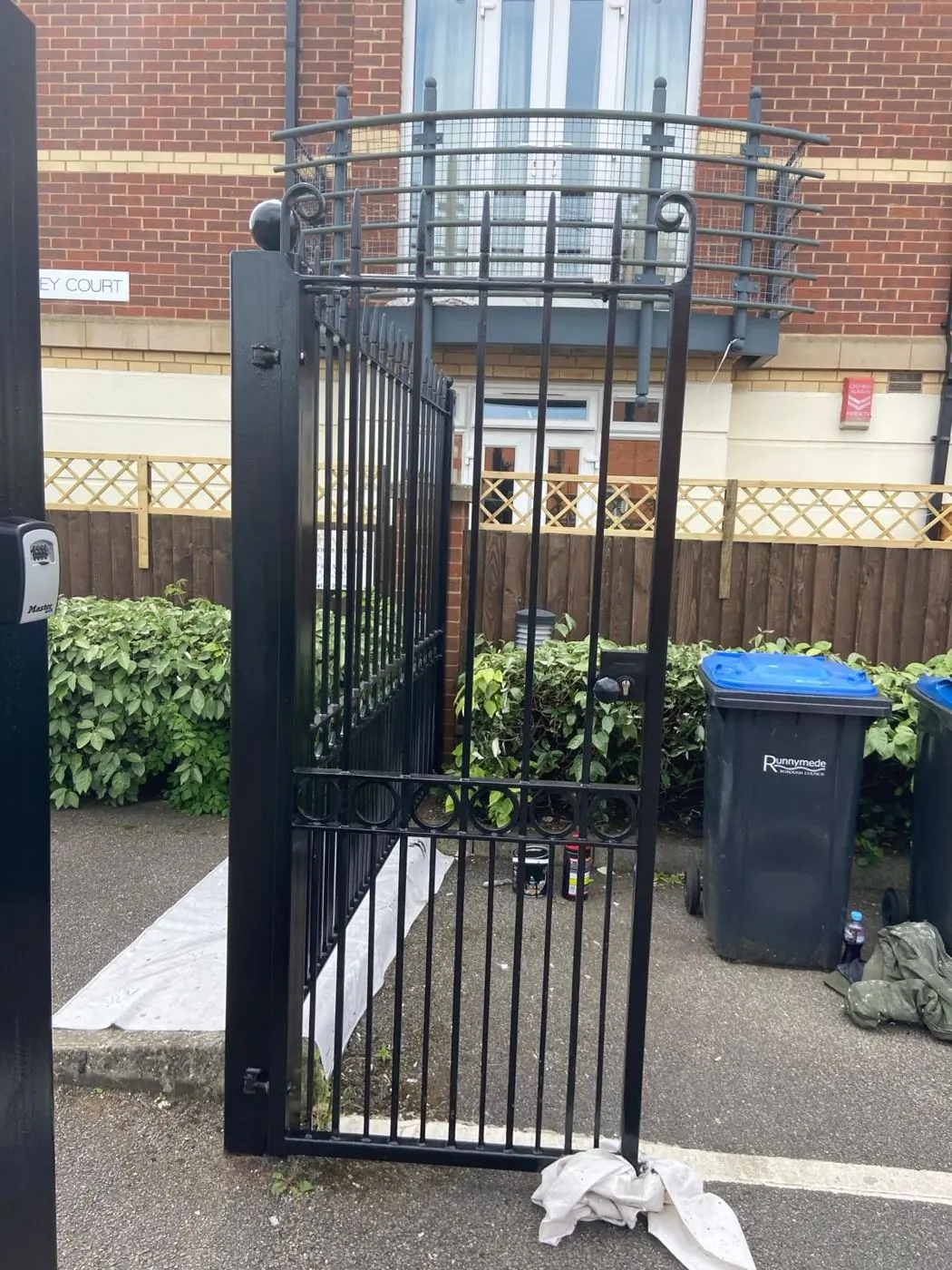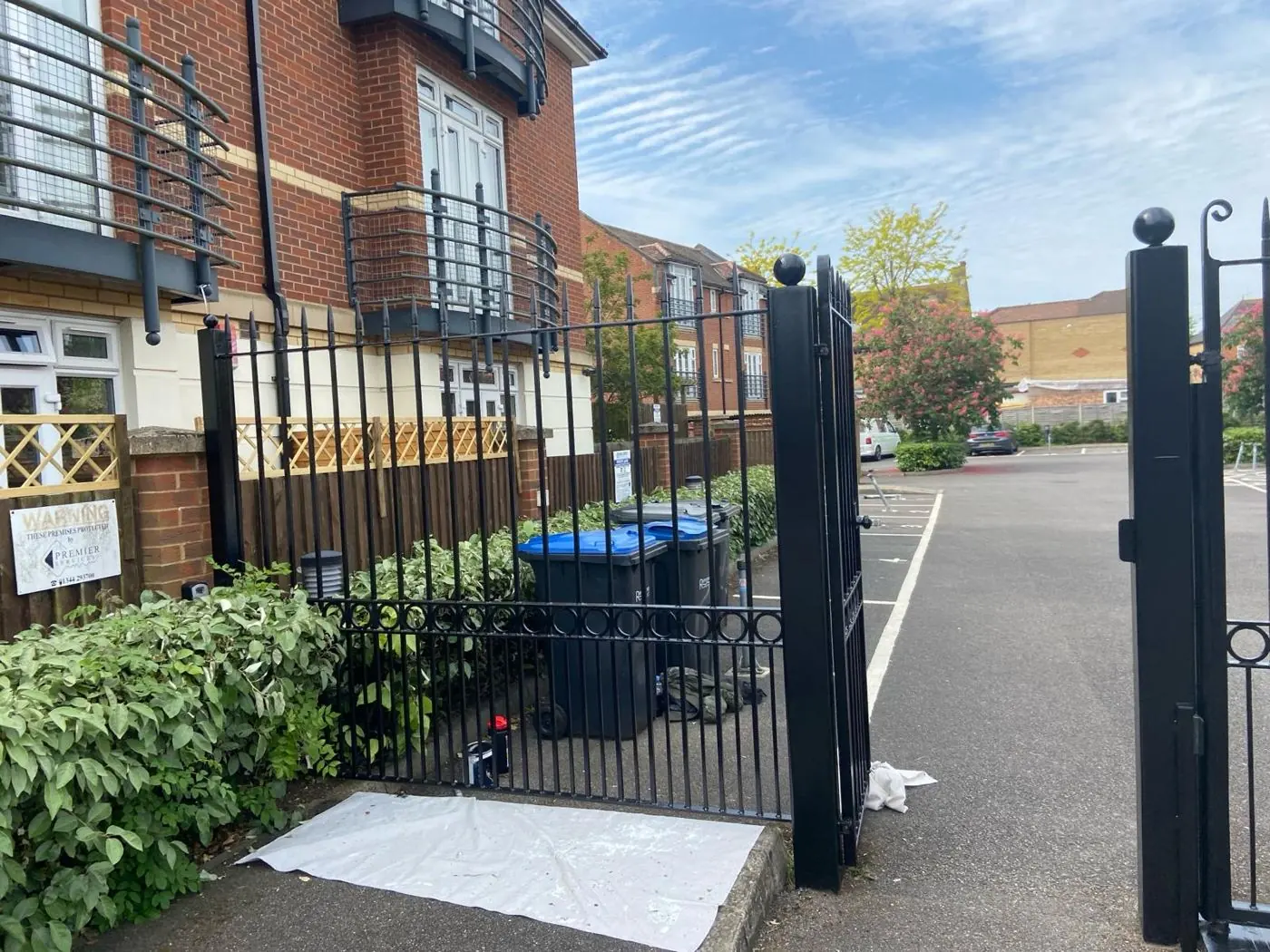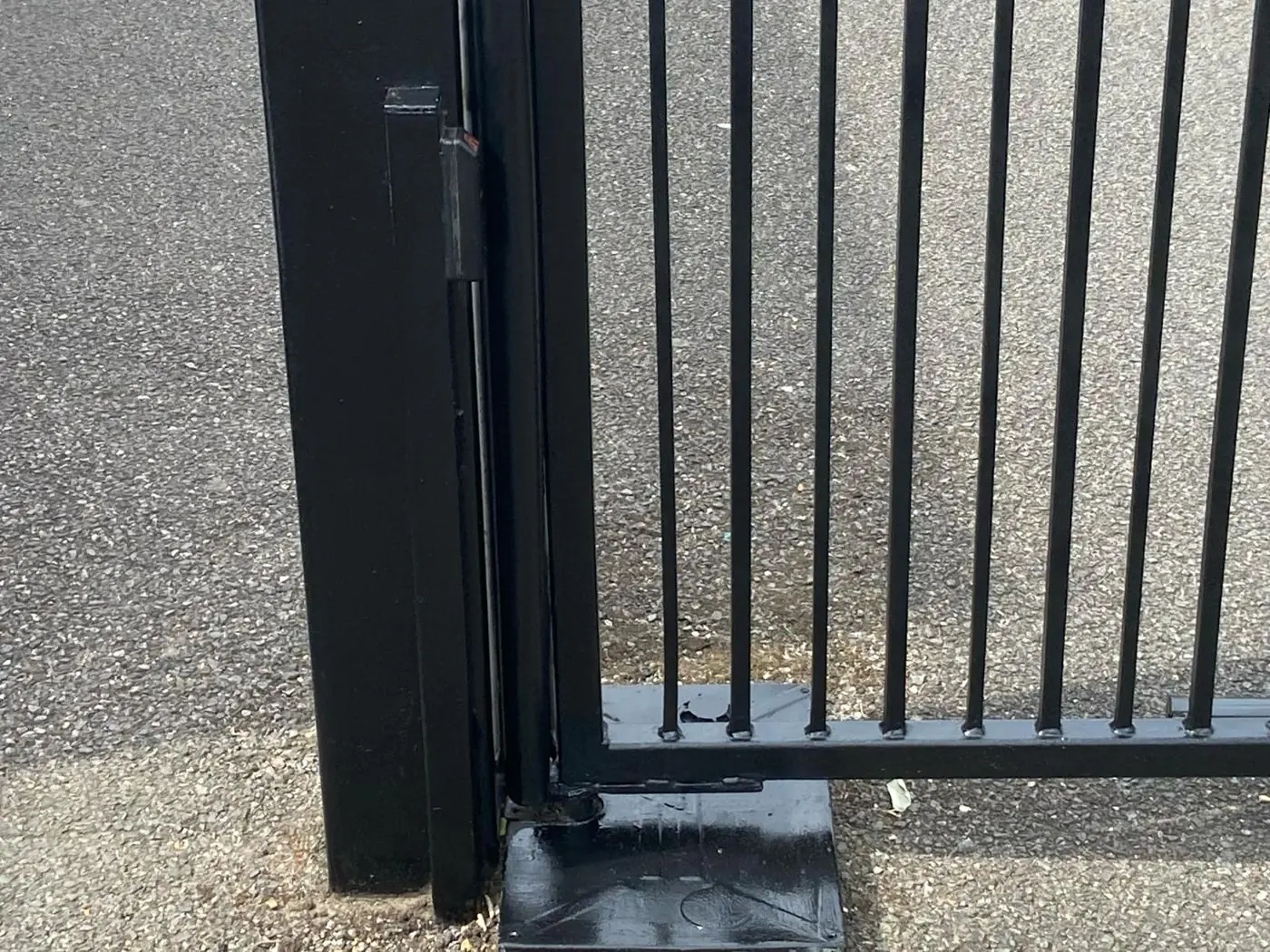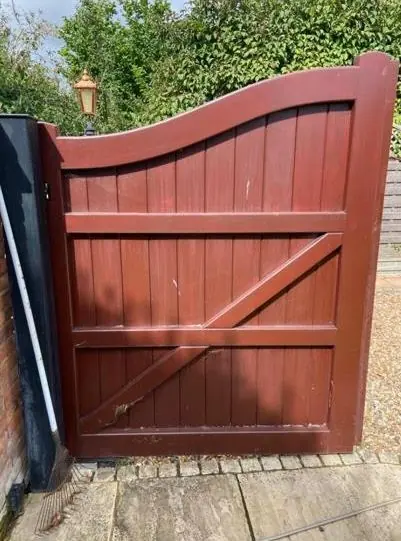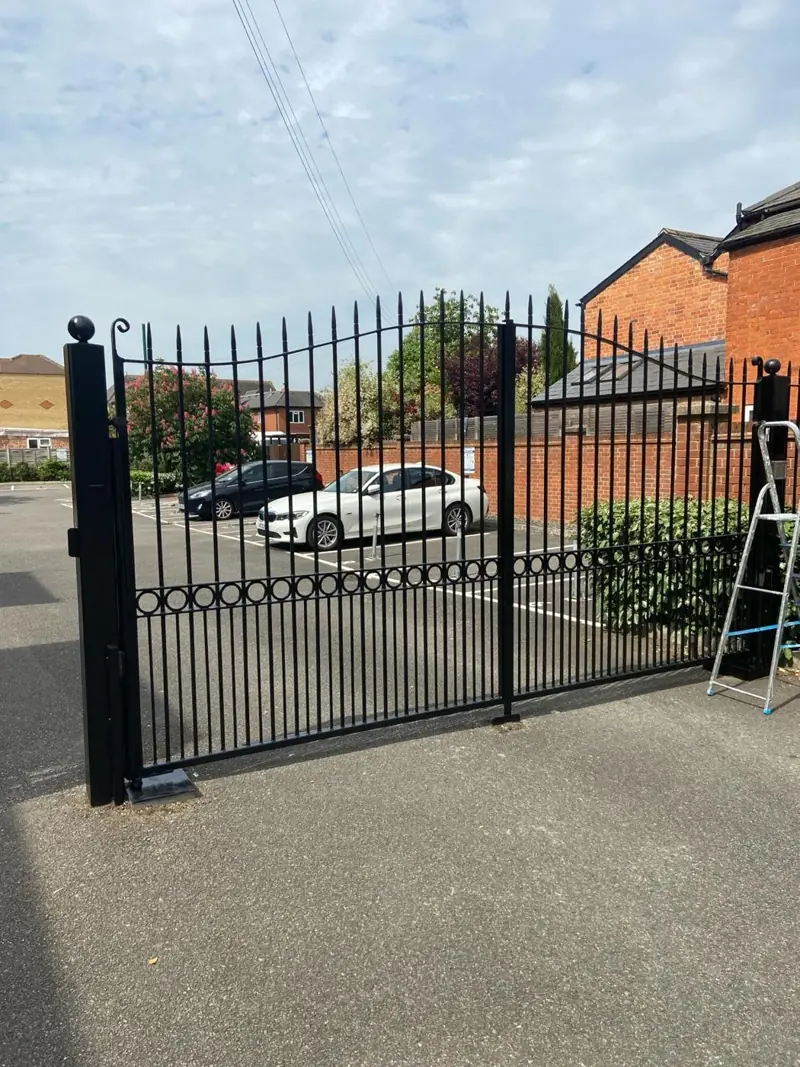
We stain and paint garden fences and wooden gates in Great Houghton, NN4, about 2.7 miles south-east of Northampton town centre. Most of the fencing is around the houses south of the old railway cutting, while in the older core the timber is mainly gates set into stone walls.
Two kinds of garden boundary
Stone walls line at least one side of every road in Great Houghton’s conservation area, and the Neighbourhood Plan expects those walls and their copings to be kept. So in the old core around High Street, The Green, Willow Lane and Cherry Tree Lane, the timber we deal with is mostly gates: side gates, garden gates and the occasional pair of drive gates hung in a gap in the stonework. South of the former railway cutting the picture flips. The 1960s to 1980s houses and the later closes have timber fencing between gardens and along their back boundaries, which is where most fence staining in the village happens.
Fences on an open hillside
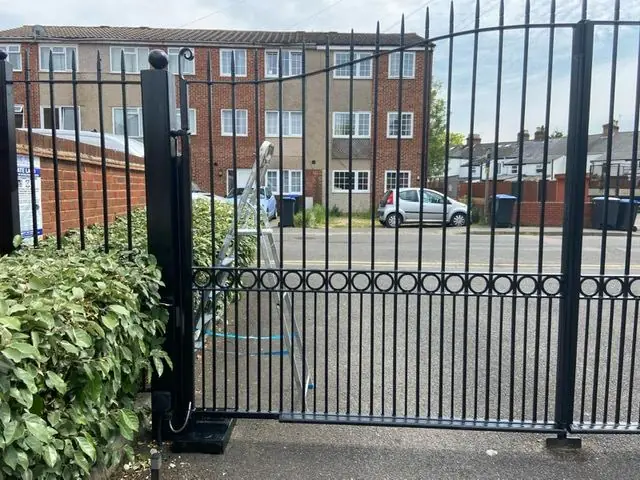
Great Houghton rises to 326 ft with fields and woodland around it. Back fences that face open ground on the south and west catch the sun and the rain without any shelter, so stain fades and the timber turns grey and dry faster than it would in a town garden. For these runs we usually suggest a stain that soaks into the wood and wears back gradually, because it can be topped up without stripping. Where the fence is already grey and patchy, an opaque fence paint covers better. Dean will look at the timber before recommending either. Colour is your choice on the newer roads, though softer browns and greens tend to sit better against the fields and hedgerows behind these gardens than bright or very pale shades, which show weathering faster.
Runs that back onto hedgerows or sit under the mature trees take longer to dry after their wash-down than the open, field-facing ones, so on a single garden the shaded side may have to wait a day while the sunny side is coated.
Gates hung in stone walls
A timber gate in a conservation area wall needs more care around it than on it. The stone and the copings either side must not be stained, so we mask the stone faces where the gate meets the wall and use a brush rather than a sprayer. Stain on limestone or ironstone is very hard to remove without damaging the surface. Hinges and latches are taken off or masked, and any rust on them is dealt with before the timber is coated. If the gate is on a listed property, or in a listed boundary wall such as the separately listed garden wall at Great Houghton House, check before changing its colour.
Hedges, grazing land and gates onto lanes
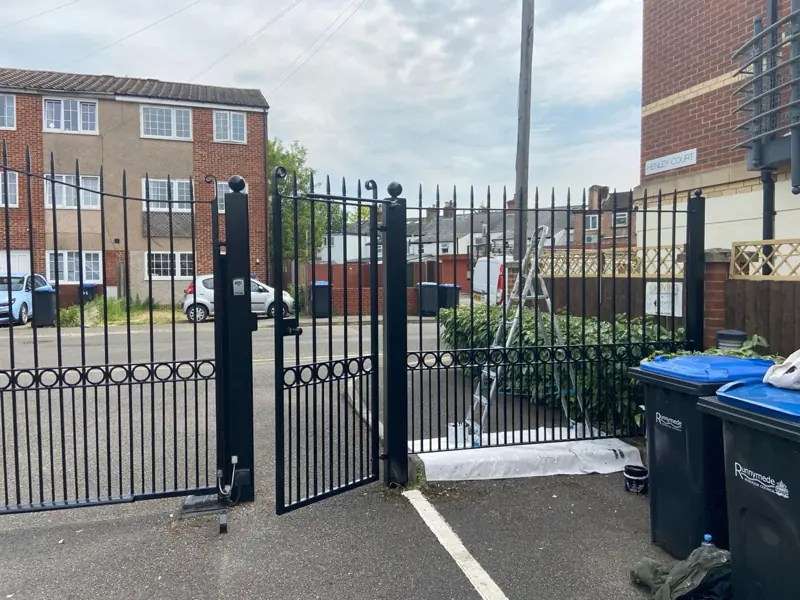
The playing field on Leys Lane is ringed by hedgerows, and there is open grazing land off Cherry Tree Lane. Where a garden fence runs along a hedge like these, the hedge grows into and against fence panels, holding damp at the face of the boards, so a run along a hedge often needs cutting back by the owner before it can be coated. Where a gate opens onto a lane rather than a private drive, we keep it propped shut while the finish dries so it is not handled wet.
Leaves, shade and timing
Mature trees, hedgerows and the woodland edge mean many gardens here are part-shaded and collect leaf litter at fence bases. Timber that stays damp will not take stain evenly, so we time the work for a dry spell after the wood has had a few days to dry. Frosty winters on the hill rule out the cold months. If a fence and a gate are both due, doing them together means one dry window and one set of plant covers rather than two.
Full details are on our main fence and gate staining page. For other work in the village, see Great Houghton.
Last updated by Dean, DH Painter & Decorator.