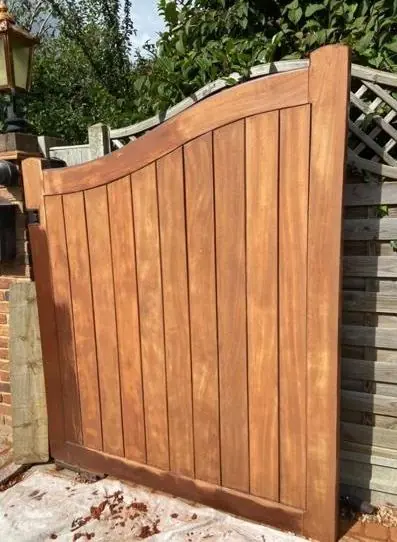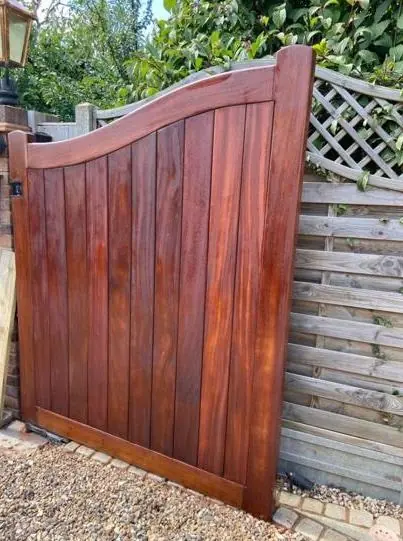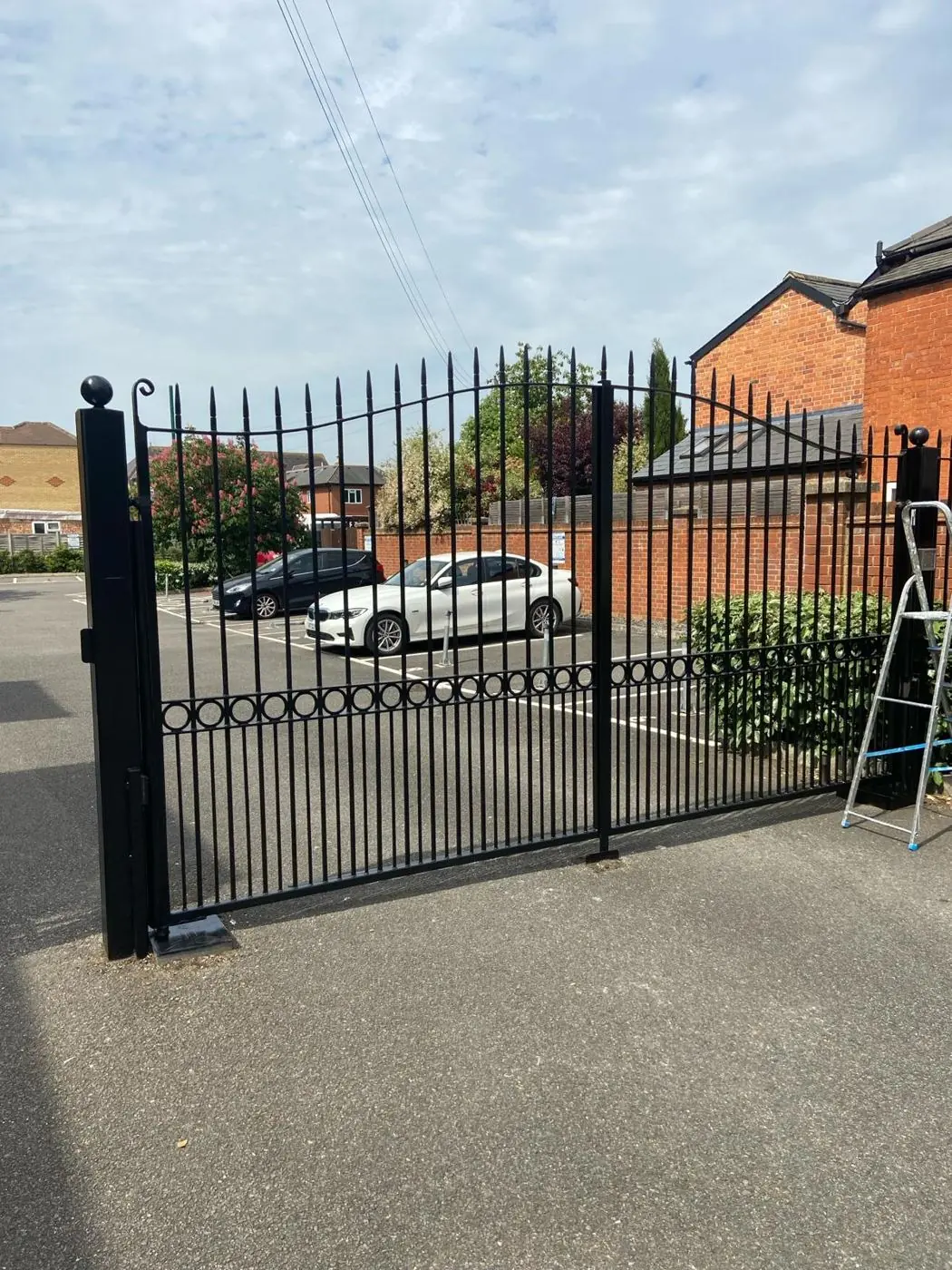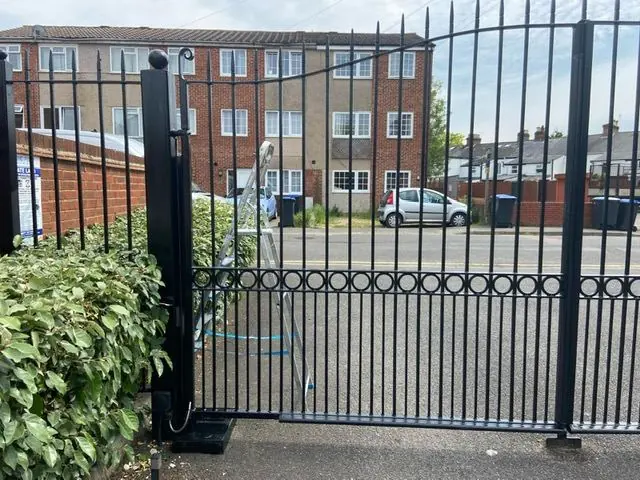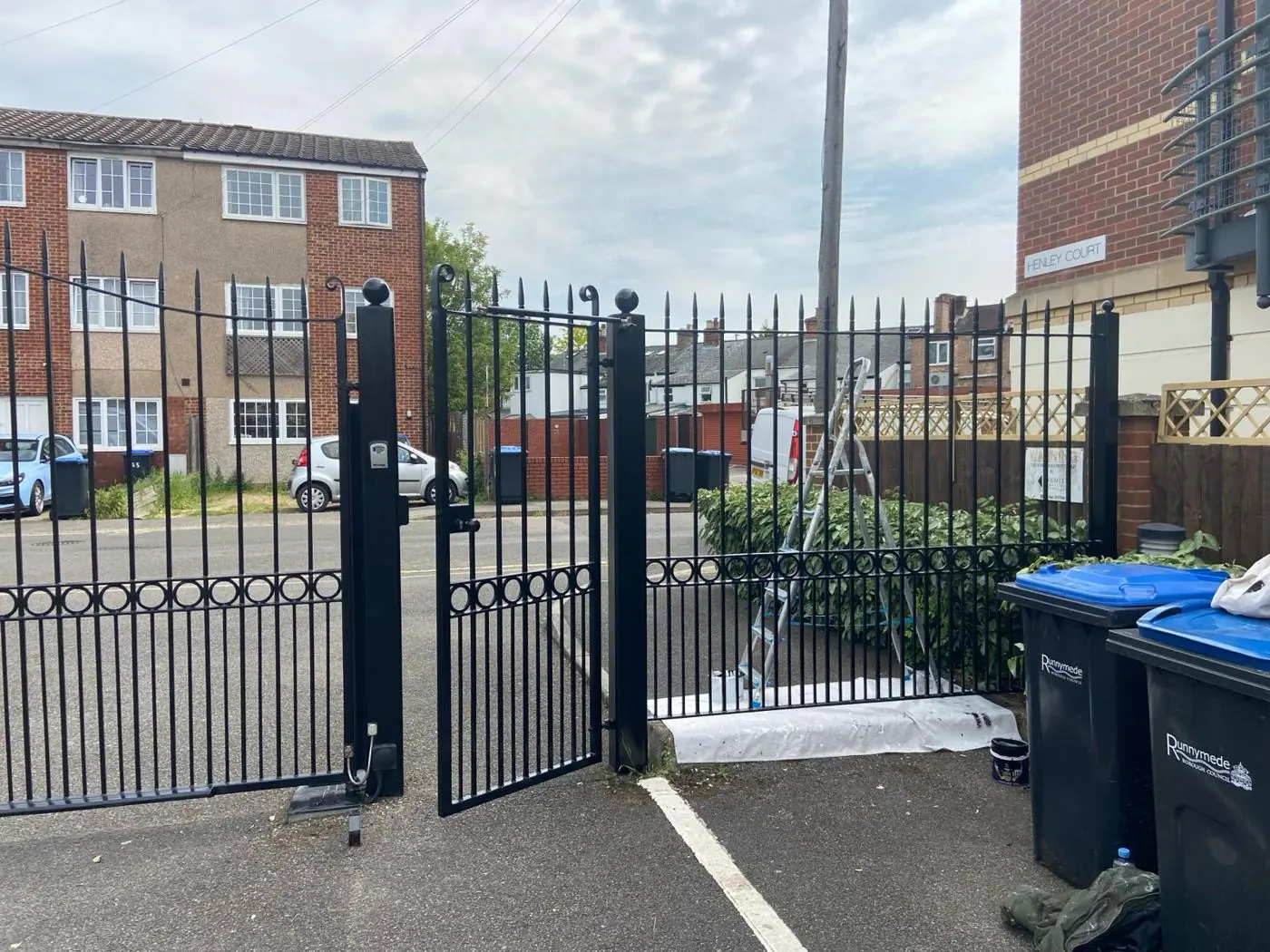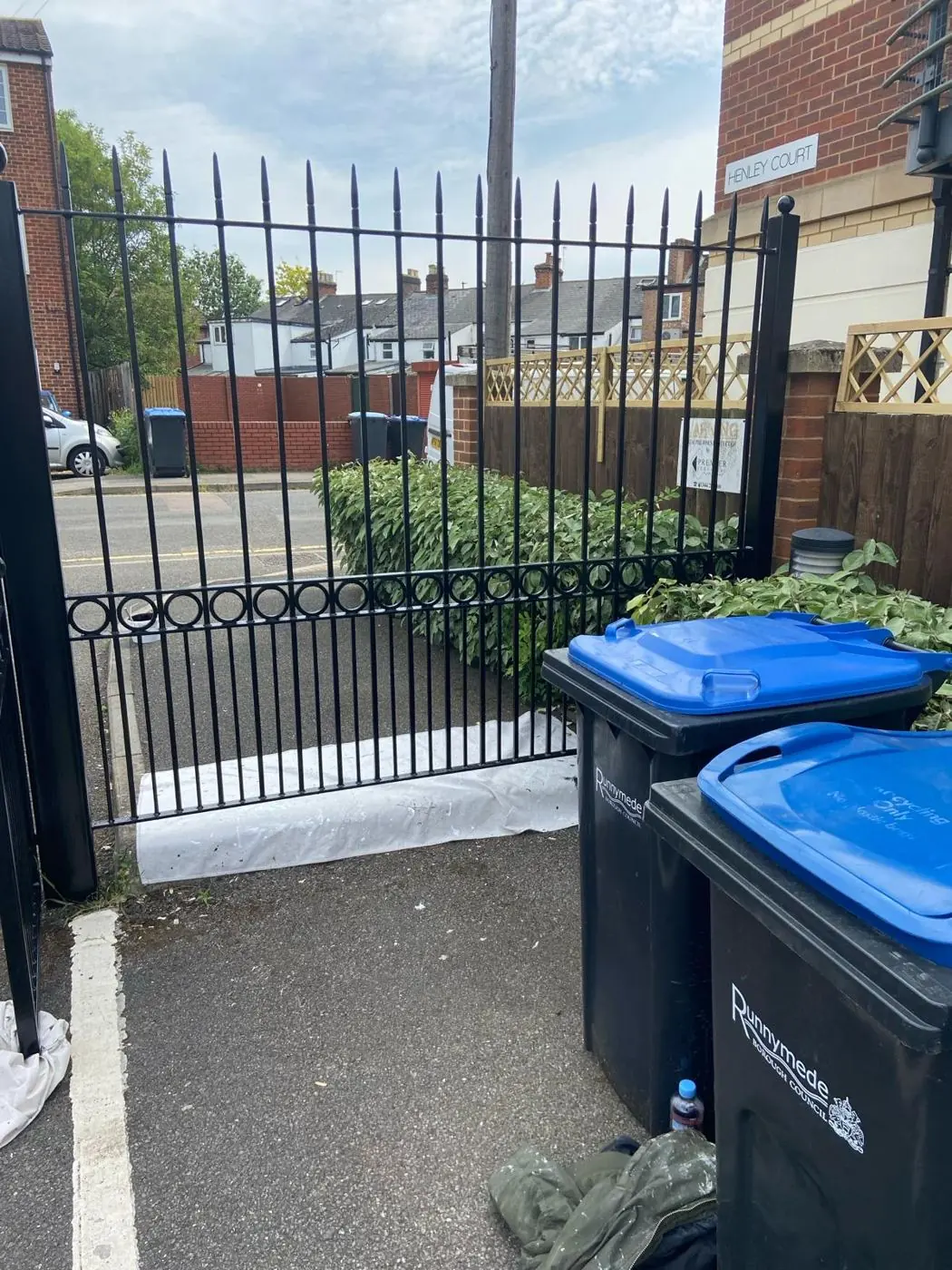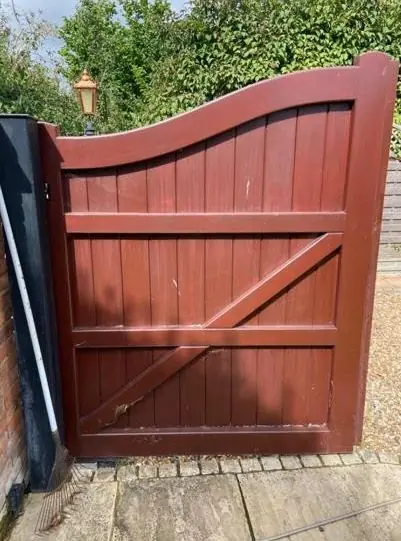
We repaint metal gates and railings in Great Houghton, NN4, about 2.7 miles south-east of Northampton town centre. Much of the ironwork here sits in or on stone boundary walls in the conservation area, so the job is about removing rust properly while keeping the stonework free of paint and rust marks.
Ironwork that meets old stone
Great Houghton’s conservation area is defined in part by its walls. Stone boundary walls line at least one side of every road in the old village, and policy GHNDP2 of the Neighbourhood Plan expects them and their copings to be kept. Where a metal gate or a run of railings is fixed into that stonework, it is the meeting point that causes problems. Rust expands as it forms, and a corroded post or hinge pin leaded into a stone can crack it from inside. Orange run-off also stains the limestone and ironstone below.
So the work starts at the fixings. We clean back around posts and hinge pins as far as we safely can, treat any rust there, and make sure the paint seals the joint where metal enters stone. The stone faces and copings are masked throughout, and all coating is done by brush. Painting the stone itself, even to hide old rust marks, is not appropriate in the conservation area.
What is the gate made of?
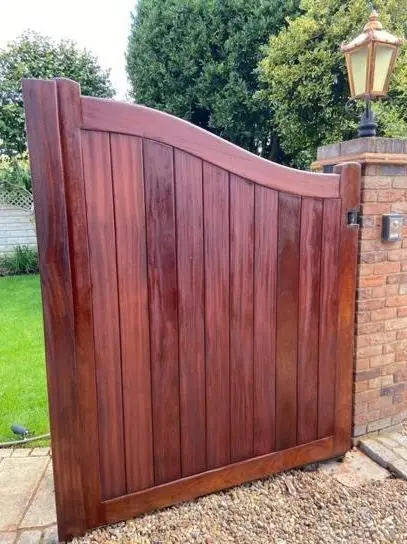
The metal decides the primer, so we identify it first:
- Wrought iron, likely on older gates in the core, often under many layers of old paint. It scrapes back well.
- Cast iron finials and panels are brittle, so they are hand-cleaned rather than hammered.
- Mild steel, typical of modern drive gates on the newer roads south of the old railway cutting, rusts quickly where the coating is broken.
- Galvanised steel needs a primer made for zinc or ordinary paint peels off in sheets.
Hilltop frost and damp shade
At up to 326 ft, Great Houghton gets frosty winters, and water that sits in a cracked coating freezes and opens it further. Gates under the village’s mature trees stay damp for longer and collect leaf mould at their bases and in their bottom rails. Both speed up rust. After wire brushing back to sound metal, we apply a rust treatment to any pitting we cannot fully remove, prime the bare areas, then build up the finish with undercoat and a durable exterior gloss or a direct-to-metal paint. We work in dry weather only, because condensation on cold metal ruins the bond. Moving parts are left to harden before the gate is swung, and hinges and latches are freed and greased once the paint is dry, so they do not crack the new coating the first time they are used.
Choosing a colour that suits the street
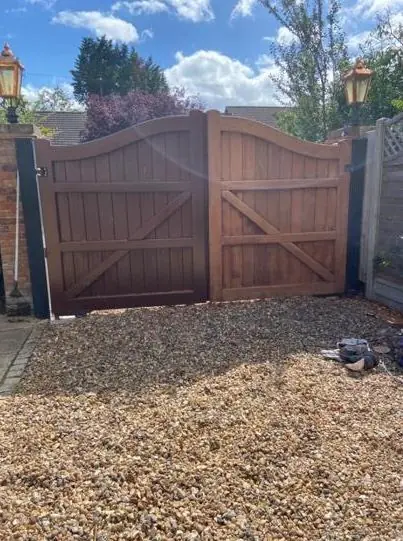
Black is the traditional choice against stone, but dark greens, greys and blues also suit limestone and ironstone well. If the gate belongs to one of the 17 listed buildings, or is part of a listed wall, changing its colour needs listed building consent, so check before choosing something new. On the 1960s to 1980s estate houses and later closes there is no such restriction. Our metal gate and railing painting page explains the full preparation process.
Working on a busy road
Many gates in the old core open straight onto High Street, a narrow through route used by HGVs and lined with parked cars, or onto The Cross, where there are no footpaths. We keep dust sheets and tools inside the gateway where possible and avoid leaving freshly painted gates open into the road. We cover the whole village from our Northampton base; see Great Houghton for the rest of what we do there.
Last updated by Dean, DH Painter & Decorator.