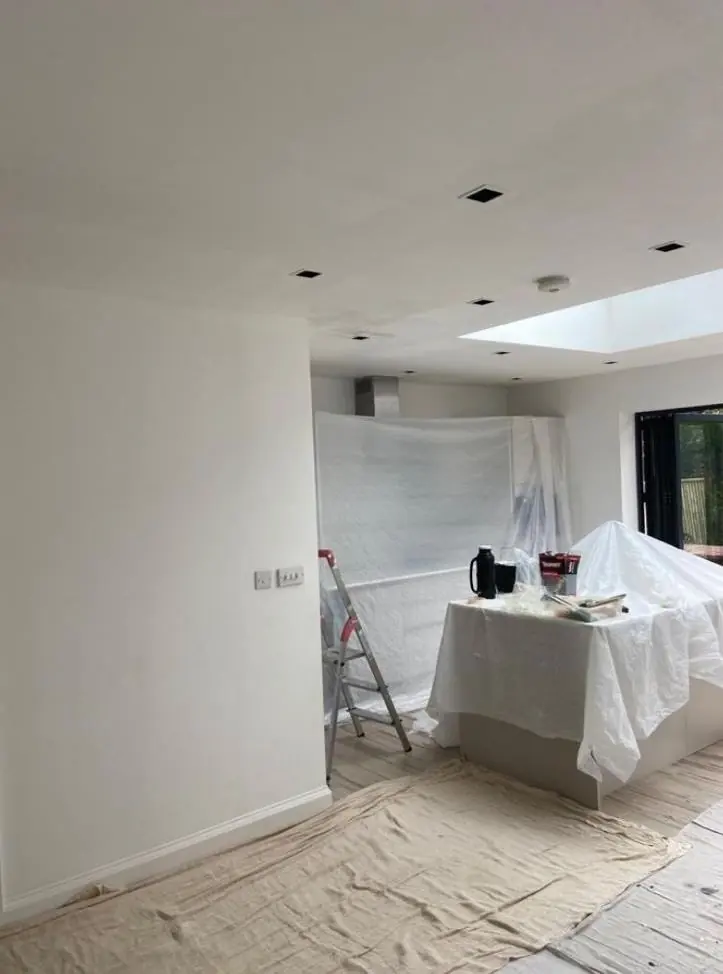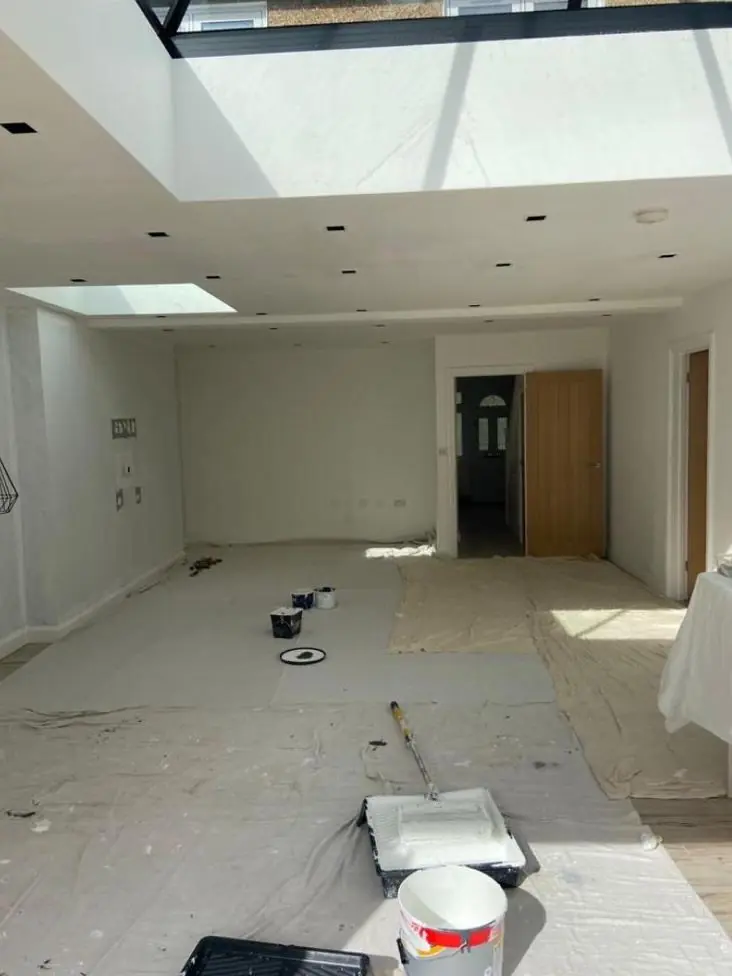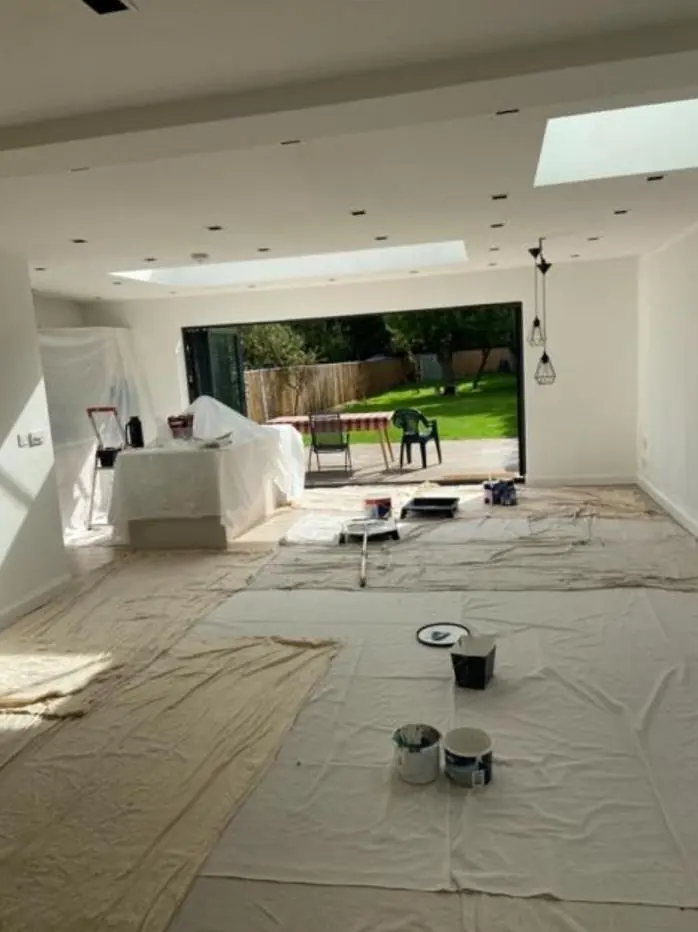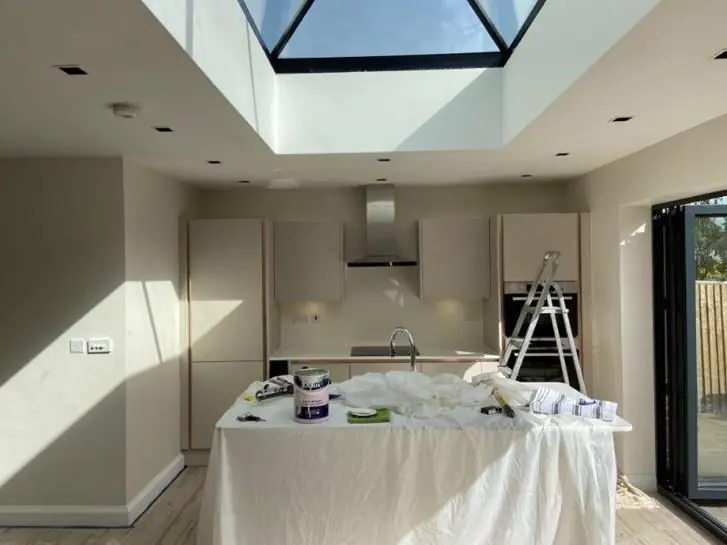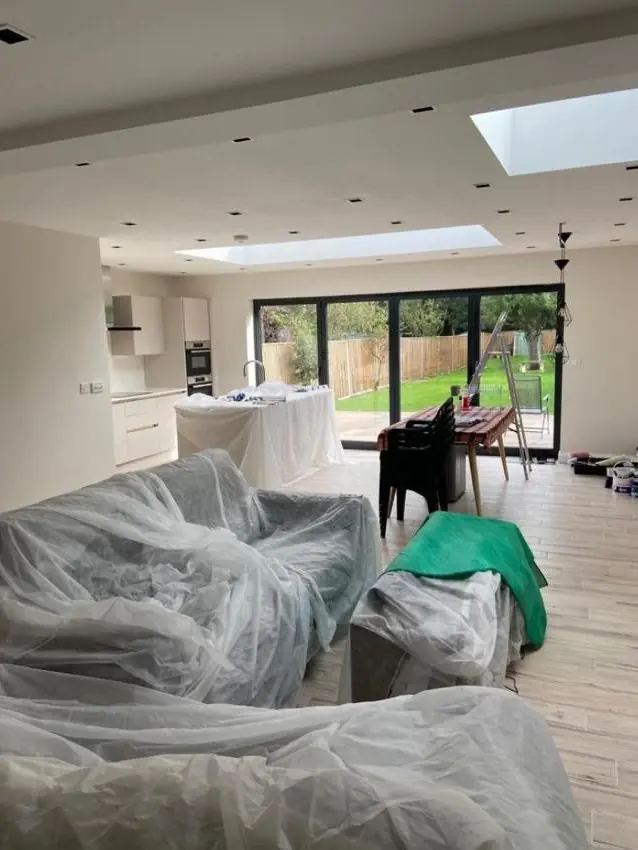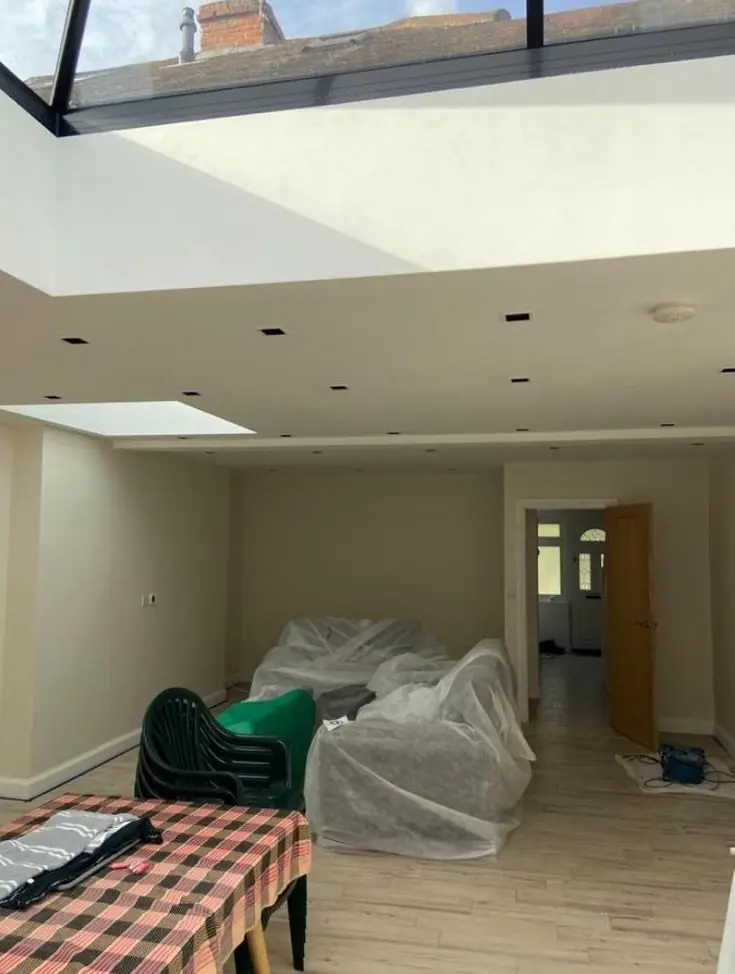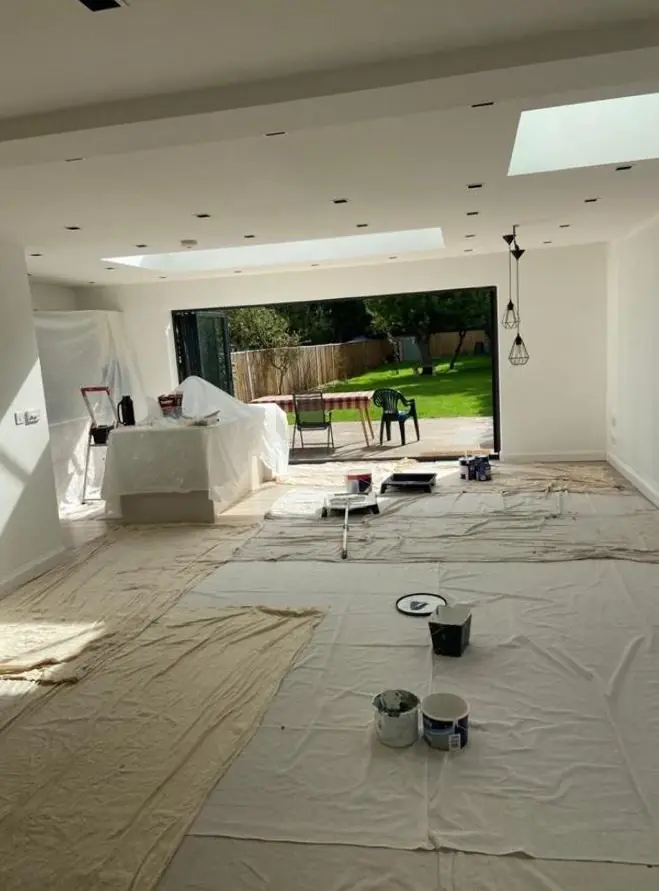
DH Painter & Decorator seals and decorates new plaster in Great Houghton, about 2.7 miles south-east of Northampton town centre. Dean handles single re-skimmed rooms, newer houses and extensions, including where new work joins an older stone house in the conservation area. Quotes are free.
Where fresh plaster turns up in Great Houghton
New plaster here comes from three main sources. There are re-skims in the 1960s to 1980s houses south of the old railway cutting, where tired walls and artexed ceilings get a fresh skim. There are the newer groups of houses and the estate expansion on the east side of the village. And there are extensions and alterations to the older houses in the conservation area. Each one needs the same basic sequence: dry plaster, a breathable mist coat, then finish coats. What changes is where the new work meets the old.
The full sequence, from drying checks to snagging, is on our new plaster and extension painting page, and the reasons behind the mist coat are in our mist coat guide. This page is about the parts specific to the village.
Extensions on the stone houses north of the cutting
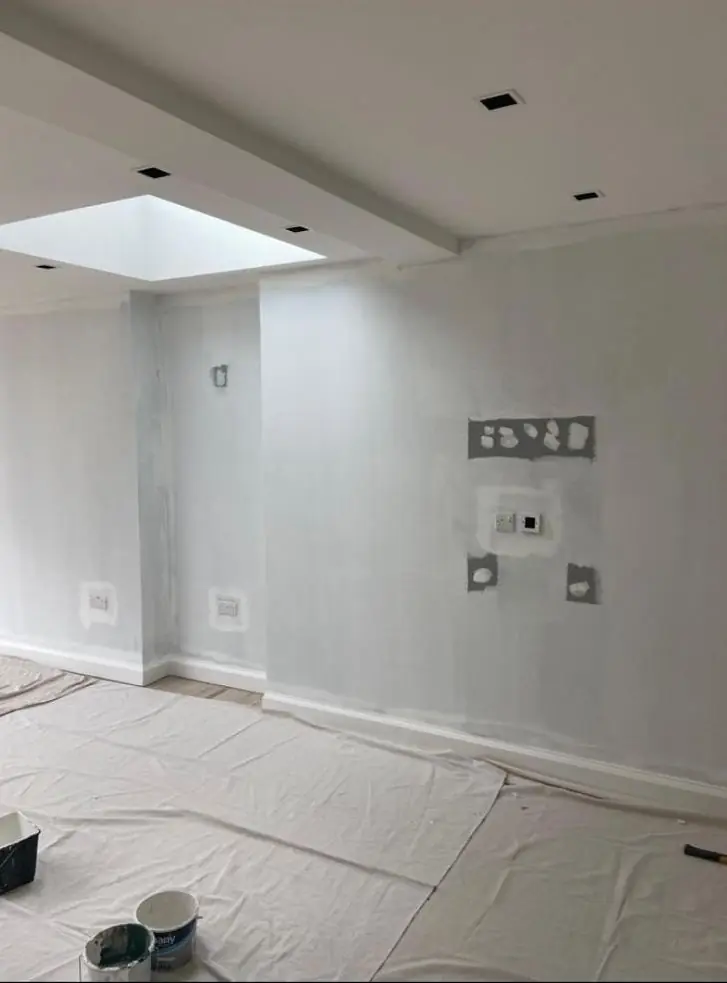
The houses on High Street, The Green, The Cross and Willow Lane are mostly 17th-century coursed rubble, limestone and ironstone, with lime plaster inside. When one of them is extended, the new rooms are usually gypsum plaster on modern blockwork, while the original rooms stay lime. The two materials behave differently:
- New gypsum is sealed with a thinned contract matt or dedicated mist coat, then two finish coats.
- Old lime walls in the original part should stay on a breathable paint so moisture can still escape from the stone.
- Where the two meet, at an opened-up wall or a new doorway, the join often moves slightly as the new work settles, so we fill with a flexible product and allow a short wait before the final coat.
Getting the colour to run on from the old rooms into the new is often the main request. A breathable paint on lime and a standard emulsion on gypsum can read slightly differently in the same colour, so we suggest a test patch on each before committing. On any listed building, the extension will have needed consent, and the approved details may say something about finishes. It is worth checking those papers before we choose paints.
Newer homes and re-skims south of the cutting
In the estate houses that run up to Leys Lane and the newer closes nearby, re-skims are usually about replacing textured ceilings or tidying walls after rewiring. These are plasterboard and gypsum throughout, so the work is simpler. Once the skim has gone a pale, even colour with no dark patches, it gets a mist coat. Any trowel marks or small cracks show up at that stage, and we fill and sand them before the two top coats. New skirtings and architraves, often MDF, are sealed and painted in the same visit.
Drying time on an exposed hill
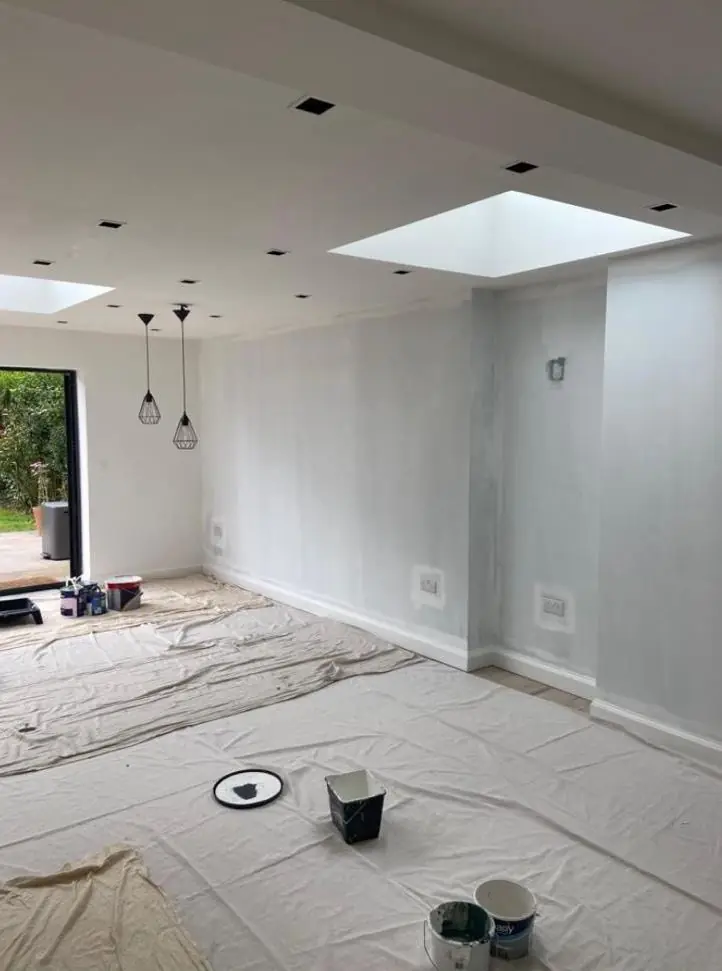
Great Houghton sits between about 200 ft and 326 ft above sea level, and residents report frosty winters with some snow. In cold months, plaster in an unheated new extension can take a long time to dry, especially behind radiators and in corners against an outside wall. Painting too early traps moisture and leads to flaking. We check every wall before starting and would rather move the date than seal damp plaster.
Builders’ vans, skips and our own van all need space, and High Street already struggles with parked cars and through traffic. If you have a build going on in the old core, we can fit our dates around the other trades to keep the road clear. Read more about the village’s mix of housing on the Great Houghton area page.
Last updated by Dean, DH Painter & Decorator.