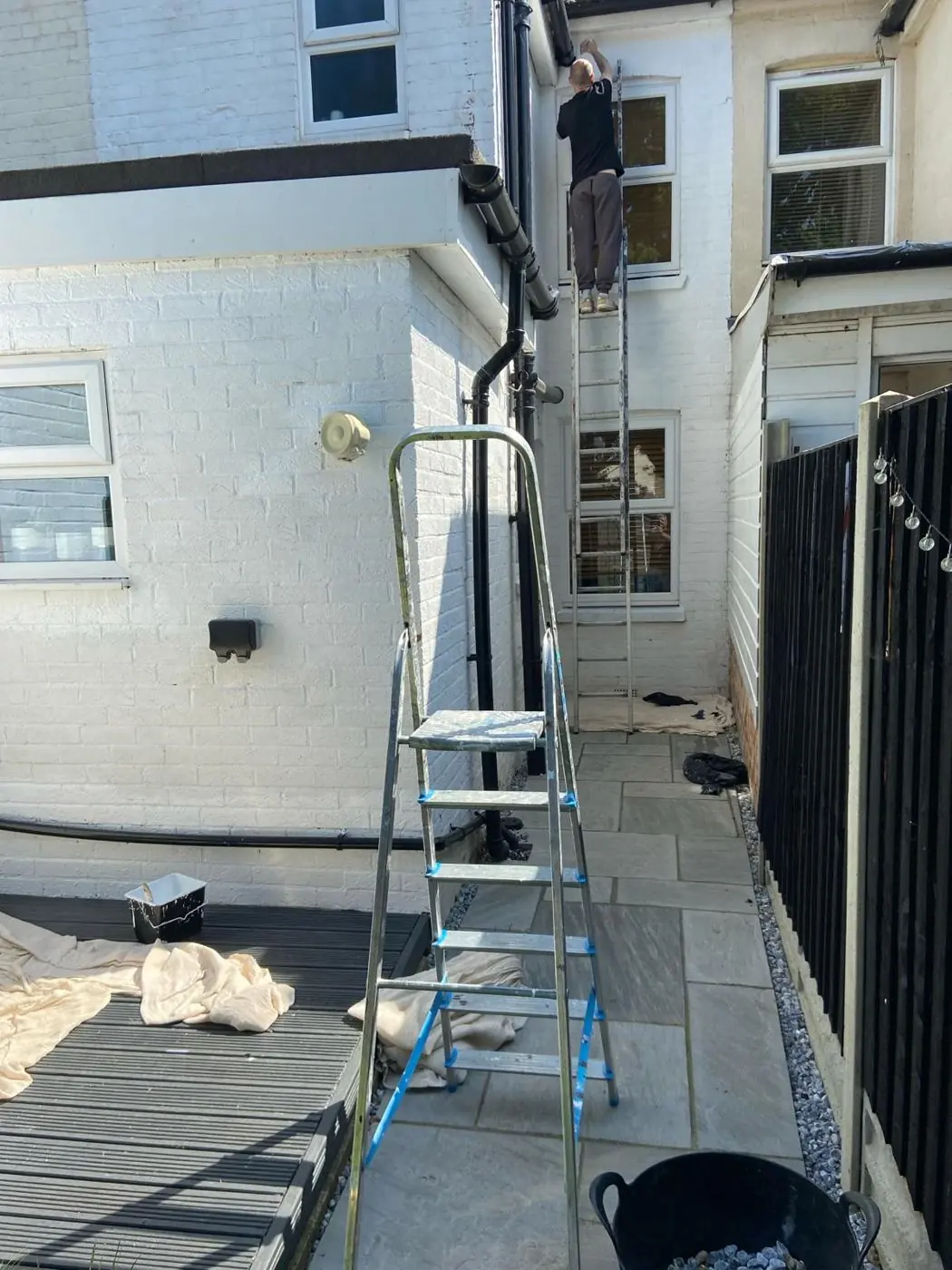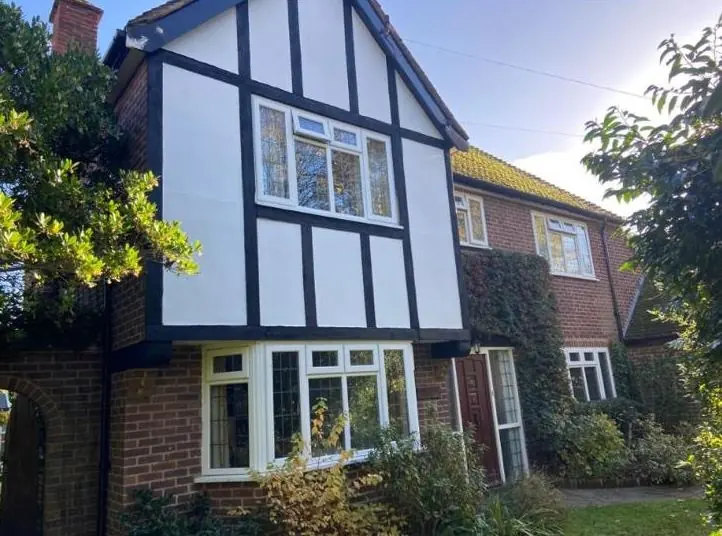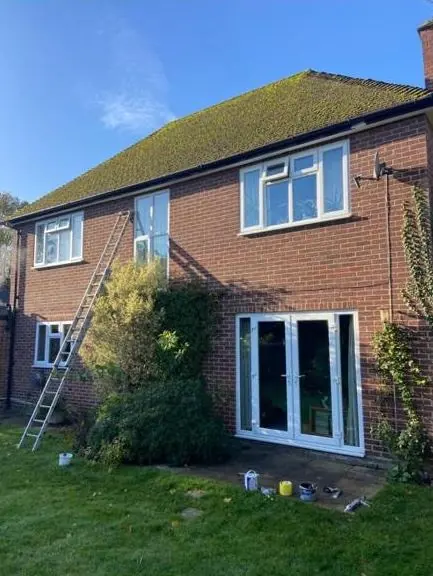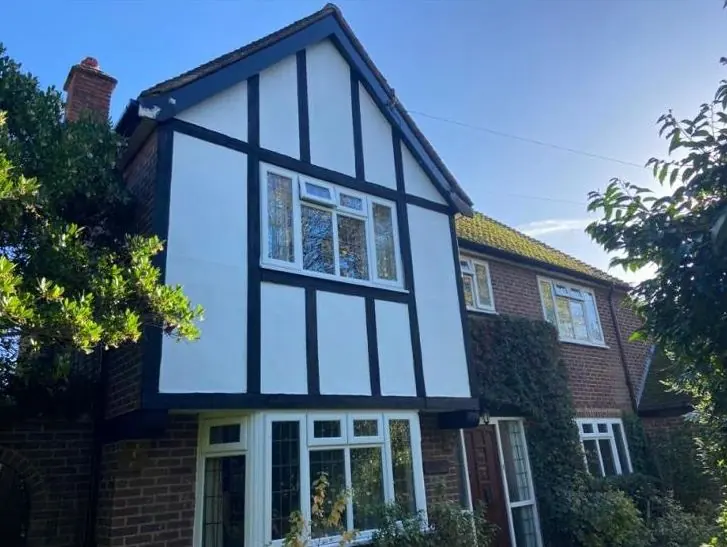
We paint render and masonry in Great Houghton, NN4, about 2.7 miles south-east of Northampton town centre. Most of the village's old stone and brick should stay unpainted, so our work here is mainly old stucco, already-painted brick and the rendered walls on newer houses.
Start by asking whether the wall should be painted at all
Much of Great Houghton’s older building stock is bare stone: coursed rubble, limestone banded with ironstone, and ironstone ashlar on the church. The red brick infill between High Street and Willow Lane is normally left as bare brick too. None of these should be coated with acrylic masonry paint. Old stone and soft brick move moisture in and out through their faces, and a plastic film stops it escaping, which leads to damp patches inside and spalling outside after a frosty winter. Residents describe winters here as frosty with some snow, so trapped water is a real risk. If someone has suggested painting bare stone in the conservation area, the honest answer from us is to leave it alone.
That leaves three kinds of wall where masonry painting does make sense in the village.
| Wall | Where you find it | How we treat it |
|---|---|---|
| Stucco on brick and stone | Older larger houses, as at Great Houghton Hall | Repair with compatible lime-based fillers, then a breathable mineral or lime-compatible paint |
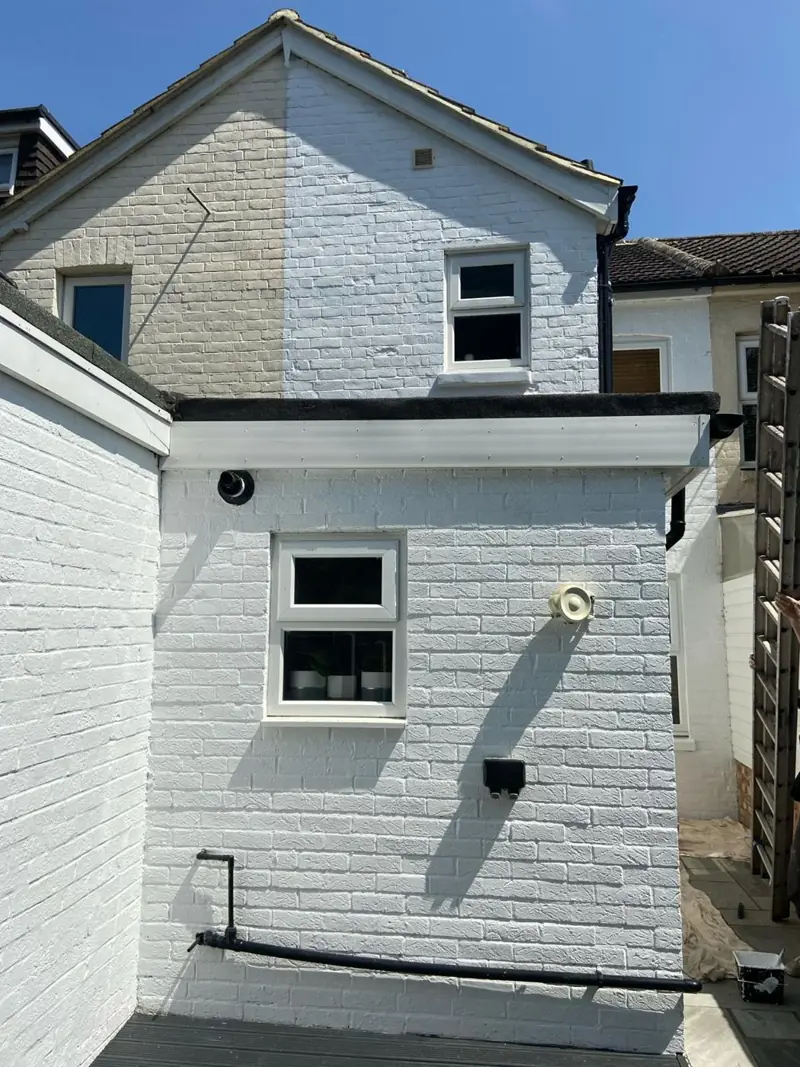
| Brick that is already painted | Where it exists in the core | Remove loose paint, then a breathable masonry coating, never a sealing acrylic |
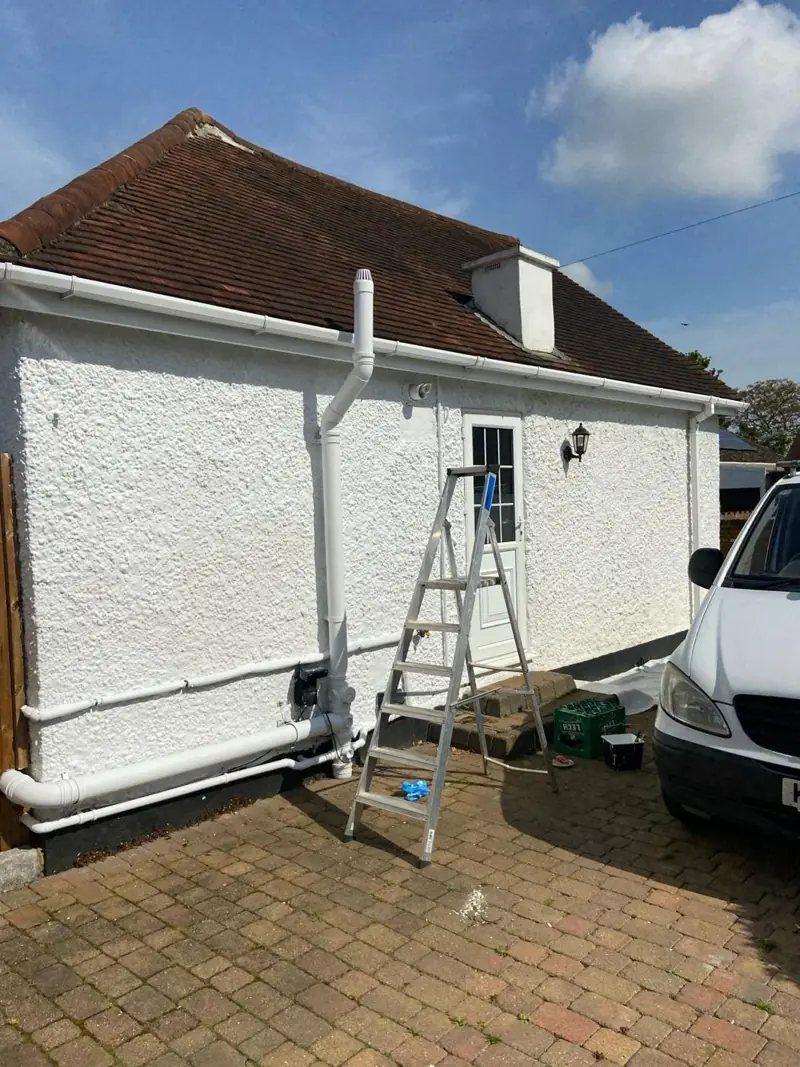
| Modern sand and cement render | Newer homes south of the old railway cutting | Fungicidal wash, crack repair, stabiliser if chalky, two coats of masonry paint |
Old stucco is a repair job before it is a paint job
The Victoria County History describes Great Houghton Hall as a large three-storey square stuccoed building of brick and stone, apparently early 19th century. Stucco of that age is a traditional lime render, softer than modern cement render and bonded differently to the wall behind. Where it has cracked or come away, we tap the surface to find hollow areas and fill with lime-compatible materials, because a hard cement patch sets up a crack line around its edge. The finish coat has to let the wall breathe. For the listed buildings in the village, a change of colour or finish needs listed building consent first.
Shaded walls under the conservation area trees
Mature trees stand in groups across the conservation area, where the Rectory, the former school and several houses have large gardens. Walls in their shade stay damp and grow green and black algae. Any of these surfaces gets a fungicidal wash, time for it to work, and a full brush-down before coating, then waits for a dry spell. Paint applied over live growth or damp masonry lifts within a season. Our guide to painting render and roughcast covers algae treatment in more detail.
Rendered houses on the newer roads
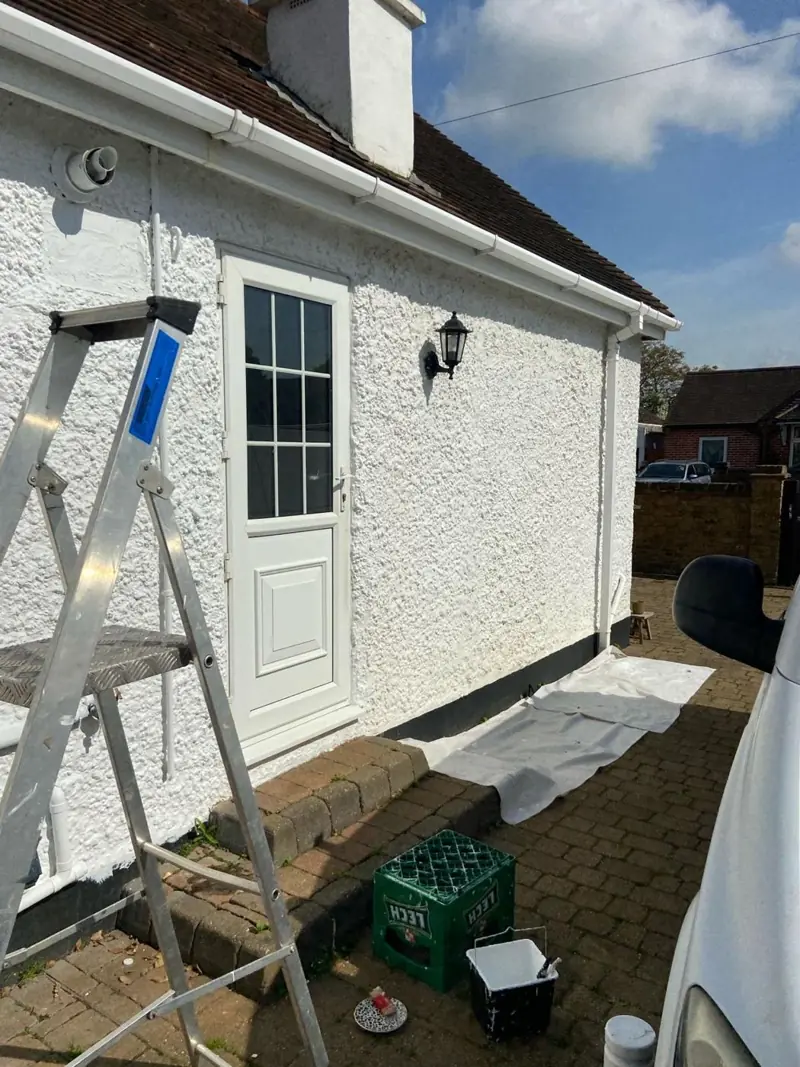
South of the cutting the village is mostly 1960s to 1980s housing and later groups of houses, stopping at Leys Lane and spreading along the east side. Where these have rendered gable ends, panels or full render, they suit a standard masonry system and you have a free choice of colour. On the open hillside the south- and west-facing walls take wind-driven rain and sun, so these usually chalk and fade first and are worth checking for hairline cracks around window corners. Painting those walls in one dry spell, rather than patching the worst areas, avoids a patchwork of faded and fresh colour. The full process is on our render and masonry painting page.
We cover the whole parish from our Northampton base. For other work in the village, see Great Houghton.
Last updated by Dean, DH Painter & Decorator.