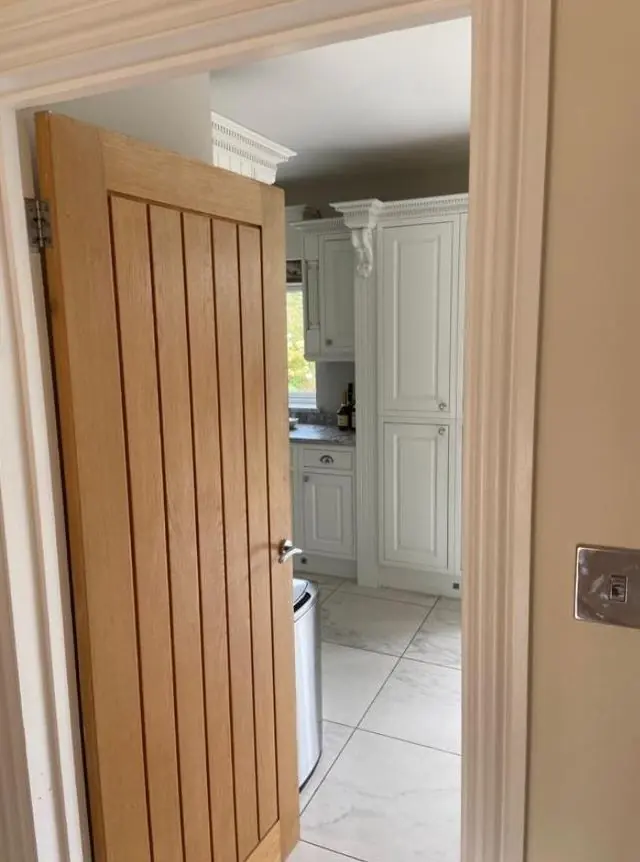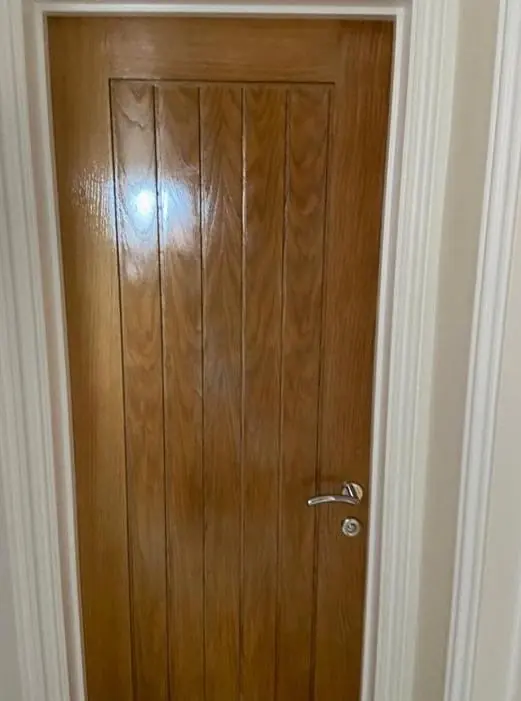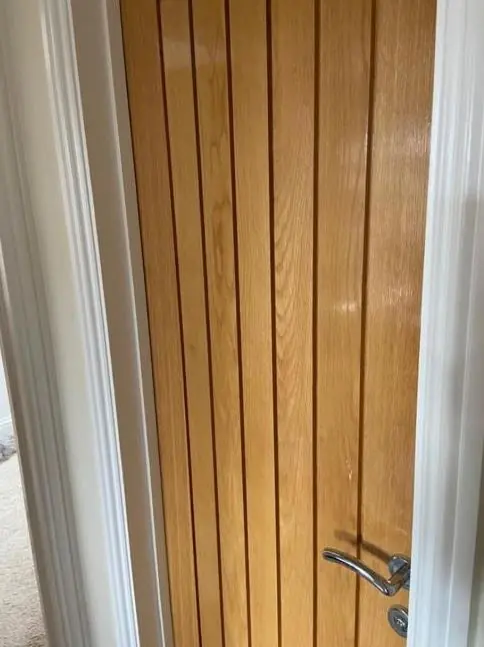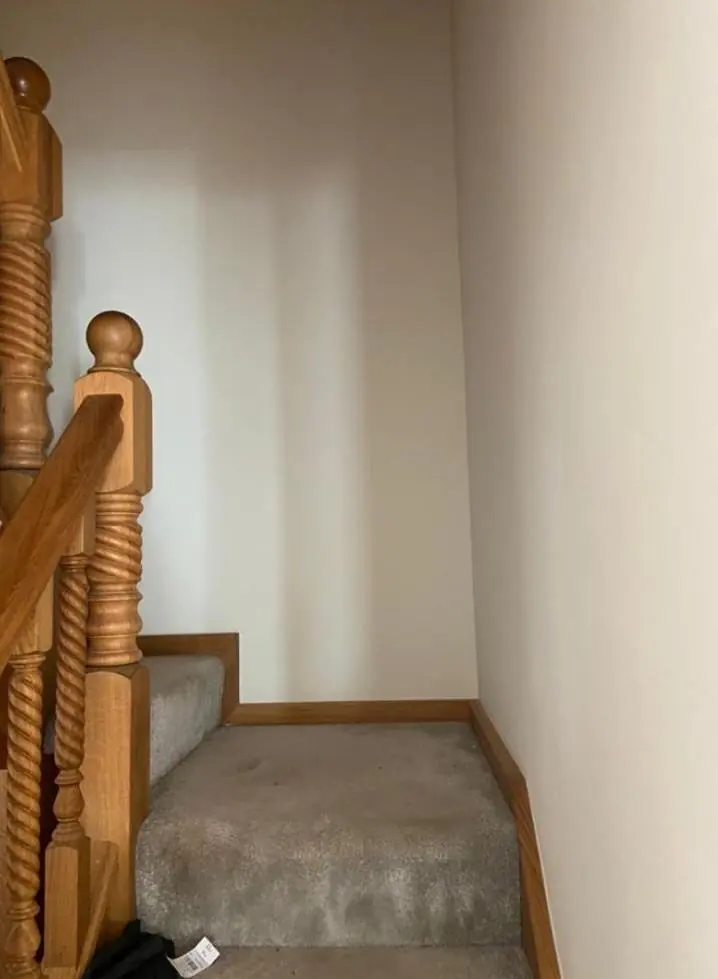
DH Painter & Decorator decorates hallways, staircases and landings in Harpole, a village in NN7 about 3.9 miles west of Northampton. Dean plans access to suit the house, whether that is a tall stairwell in a period property or a compact new-build hall, and keeps the stairs usable during the work.
Why the stairwell varies so much from house to house in Harpole
Harpole’s staircases span three centuries. At one end are Georgian houses such as Harpole Hall, built around 1815, with an open-well staircase and a mahogany handrail rising through a tall hall. In the 17th and 18th-century ironstone cottages of the conservation area, stairs are often steep, narrow and boxed in between thick walls. The Victorian brick houses that followed from the 1850s sit somewhere in between. Then there are the new homes at Harlestone Park, Norwood Quarter and Western Gate, with straight flights, plasterboard walls and a hallway that the whole household walks through every day.
Each of these needs a different access plan and a different idea of what “finished” means, which is why we look at the stairwell before quoting.
Access towers and platforms for tall period stairwells
An open-well staircase leaves a long drop between flights and a high wall above the half-landing. A stepladder will not reach it safely. In houses of this kind we bring in a stair platform or a small access tower set up to sit level across uneven treads, with boards spanning to the landing. The set-up takes time, so we plan to paint the highest areas first and strip the tower down as we come lower.
A polished mahogany handrail is not something to paint. We sheet and tape it off, and work the balusters and strings around it by hand. Moulded cornices in these halls are washed down and painted with a soft brush so the detail stays sharp rather than clogged.
Cottage stairs between ironstone walls
Older ironstone cottages in the conservation area tend to have uneven lime plaster on the stairwell, low ceilings at the turn and tight corners where a ladder barely fits. Lime plaster needs a breathable paint, so a vinyl emulsion is usually the wrong choice. We would rather go with the undulations of an old wall than fill it flat, and we cut in by hand along beams and window reveals. The doors at the top of these stairs are often old plank doors, which get a microporous finish rather than hard gloss.
New-build hallways that take the knocks
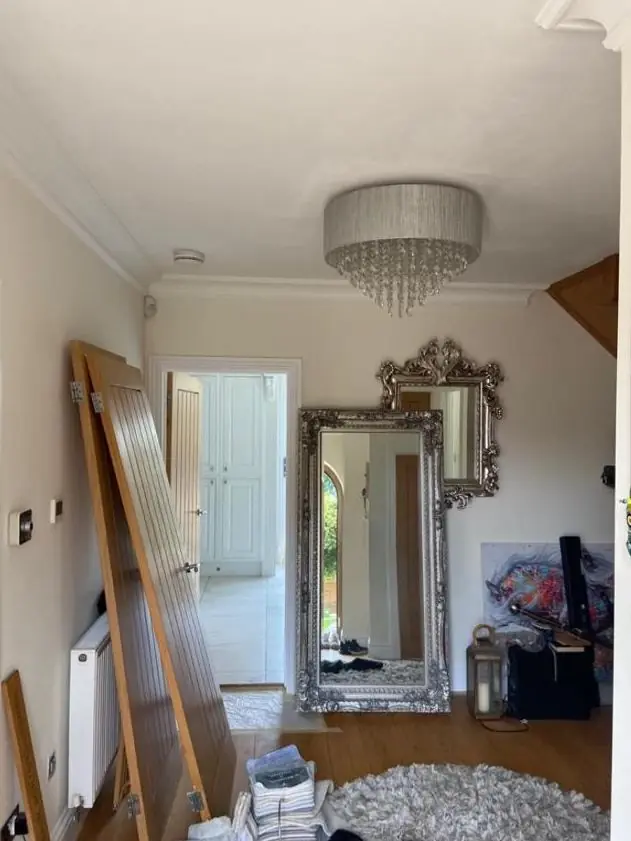
In the newer estates the challenge is wear rather than height. Hallways carry bikes, buggies, shopping and muddy boots, especially with bridleways and farmland on the edge of the village. Builder-grade emulsion marks as soon as you wipe it. When we redecorate, we use a scrubbable matt or eggshell on the walls up to dado height and a hard-wearing satin on spindles, newel posts and the stair stringer. Small settlement cracks at the stair ceiling and along the stringer are common in the first couple of years, and we fill them properly before painting.
Keeping the stairs in use
You still need to get up to bed while we work. We keep a clear route on the treads, paint spindles and handrails in an order that leaves one side usable, and agree the evenings when the stairs need to stay clear while paint dries. For a fuller look at how we handle stairwells in general, see our main hallway, stairs and landing decorating page. Other work we cover in the village is listed on the Harpole page, and the cost guide explains what affects the price of a hall job.
Last updated by Dean, DH Painter & Decorator.