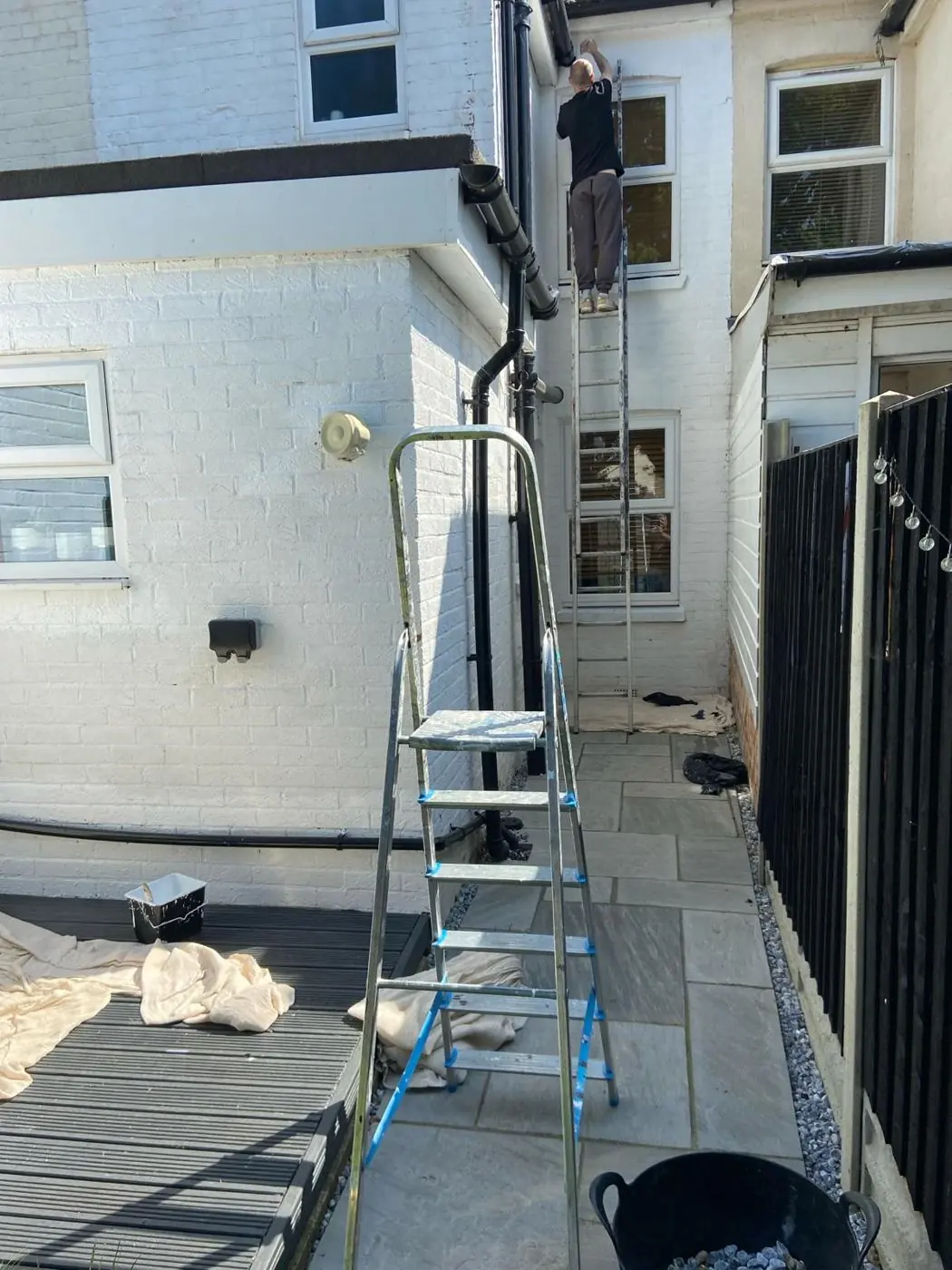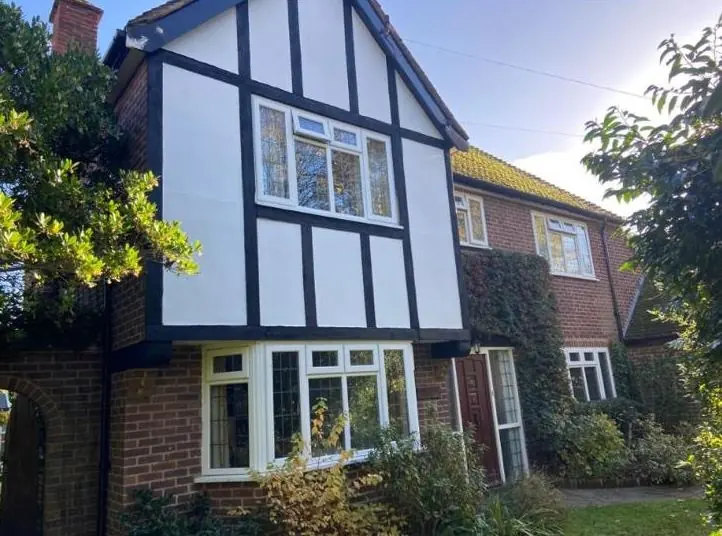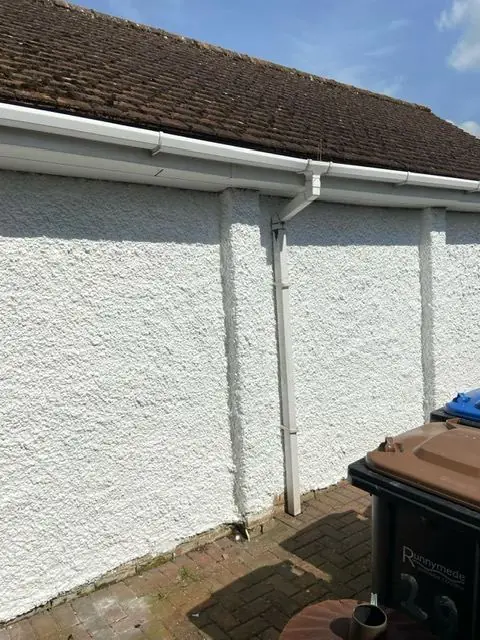
DH Painter & Decorator paints timber fascias, soffits and bargeboards in Harpole, a village about 3.9 miles west of Northampton town centre. Dean checks what the roofline is made of before quoting, because in Harpole a timber board, a stone gable and a uPVC fascia can all sit a few houses apart.
Not every Harpole roof has a fascia to paint
The oldest houses in the village often have no painted roofline at all. Late 17th and 18th-century cottages along High Street were built with stone-coped gables finished with kneelers, so there is no bargeboard on the gable end, and a thatched eave has no fascia board either. Where thatch was later stripped and replaced with slate, the eaves were sometimes built up in brick, and again there may be nothing timber to paint. Others carry concrete tiles today. So on an older house we go round each side before writing a quote, and you only pay for boards that exist.
Brick extensions and later additions to those same cottages are a different story. A Victorian lean-to, a former shoe-closing workshop or a modern extension on the back of an ironstone house will often have a timber fascia or a short bargeboard of its own, sometimes in poor condition because it is out of sight. We include those in the survey, since they are usually the boards most in need of work.
Victorian brick and Welsh slate rooflines
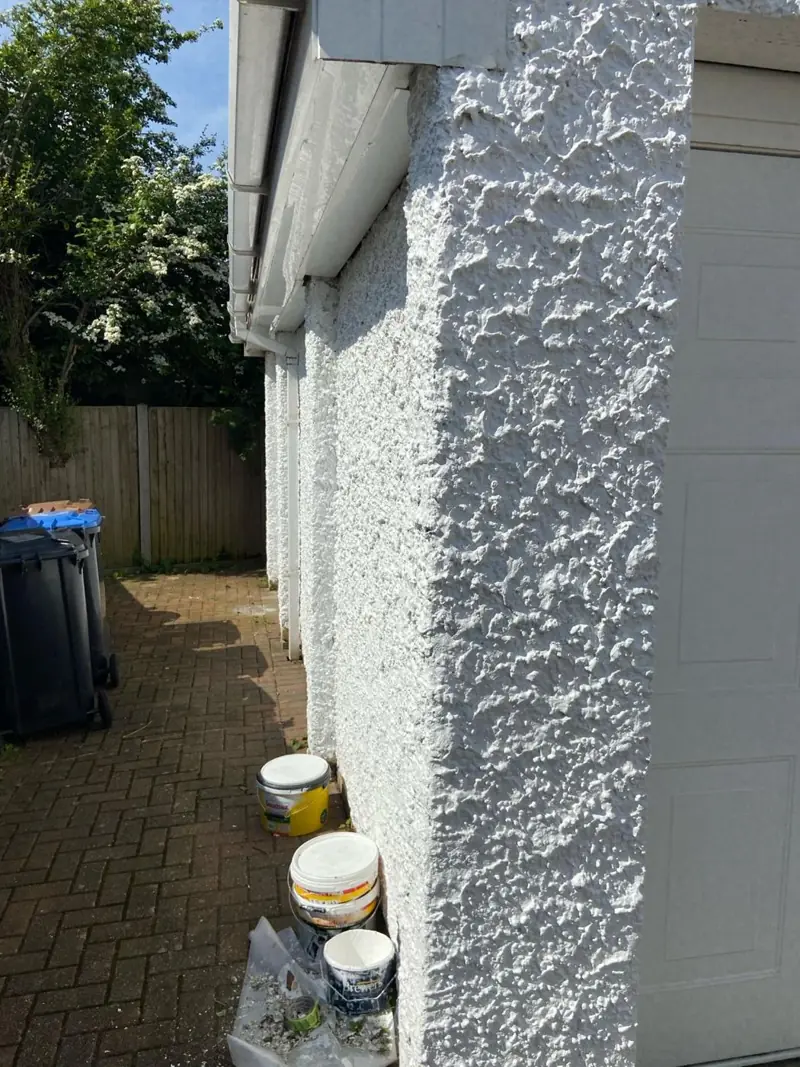
The real fascia work in Harpole starts with houses built from the 1850s onwards, when brick and Welsh slate took over from ironstone and thatch. These usually have timber fascias at the eaves and painted bargeboards on the gables, and they take the weather every year. Typical faults we look for:
- Paint split along the top edge of the fascia, where water sits behind a gutter.
- Soft timber at the bottom of a bargeboard, where it meets the wall.
- Gutter brackets rusting into the face of the board.
- Bare grain on south and west elevations, which get the most sun.
Soft spots are cut out and filled with an exterior resin, or noted for a carpenter if the board has rotted through. Then the boards are scraped back, sanded, spot primed on bare wood and given undercoat and gloss, or a microporous system if the timber is still moving.
Timber or uPVC on the newer estates
At Harlestone Park, Norwood Quarter and Western Gate the parish council notes that some street furniture is still under the builders’ management, which says how recent these homes are. Some will have uPVC fascias and soffits that need a wash rather than paint. Some have painted timber or timber-look trim, and the first repaint on those is about getting a proper key over a thin factory coat. A quick look from the ground, or a tap on the board, tells us which, and we would rather tell you a board is plastic than sell you a job it does not need.
Ladders, stone walls and slate
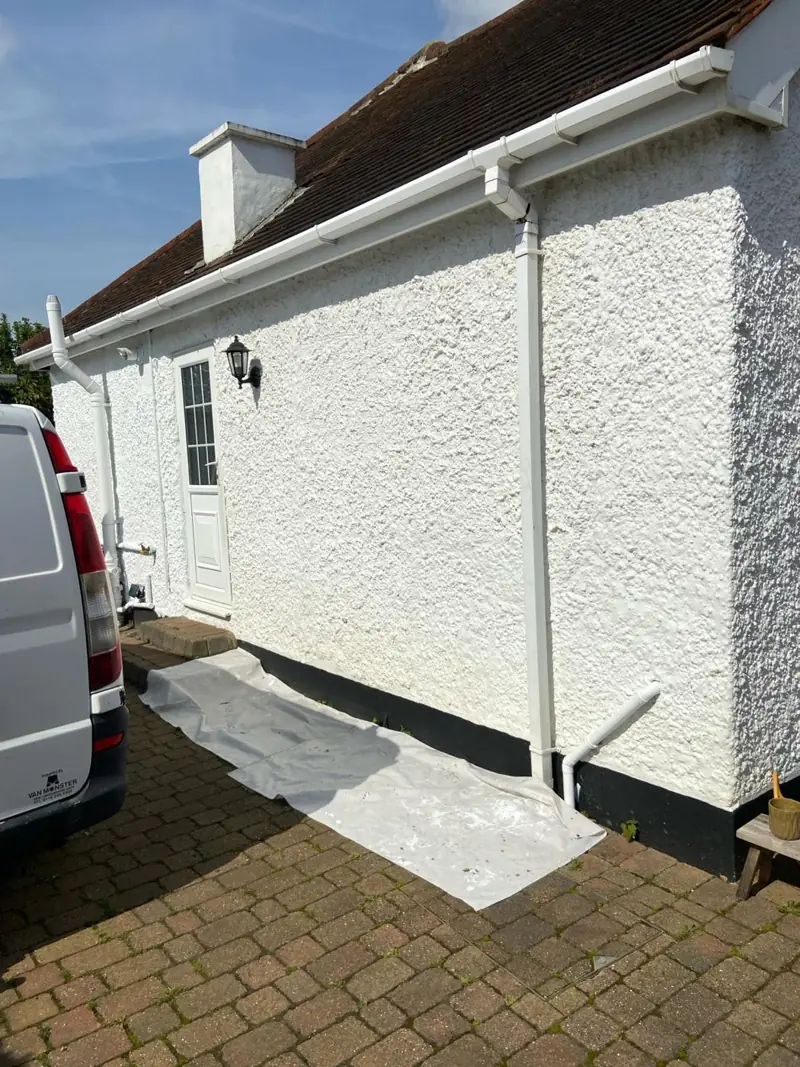
Many older Harpole houses sit behind stone boundary walls along the lane, which can put a ladder foot on soft verge or limit where it can stand. We use stand-offs to keep weight off gutters, never rest kit against Welsh slate, which cracks easily, and bring a tower for anything over a single-storey reach where a ladder cannot be footed safely. On a semi or terrace, we work out with you which neighbour’s garden or drive we may need for a moment, before the day itself.
Our main fascia and soffit painting service page sets out the full method. To get a feel for what affects the price, read the painter and decorator cost guide, and for other work in the village see the Harpole area page.
Last updated by Dean, DH Painter & Decorator.