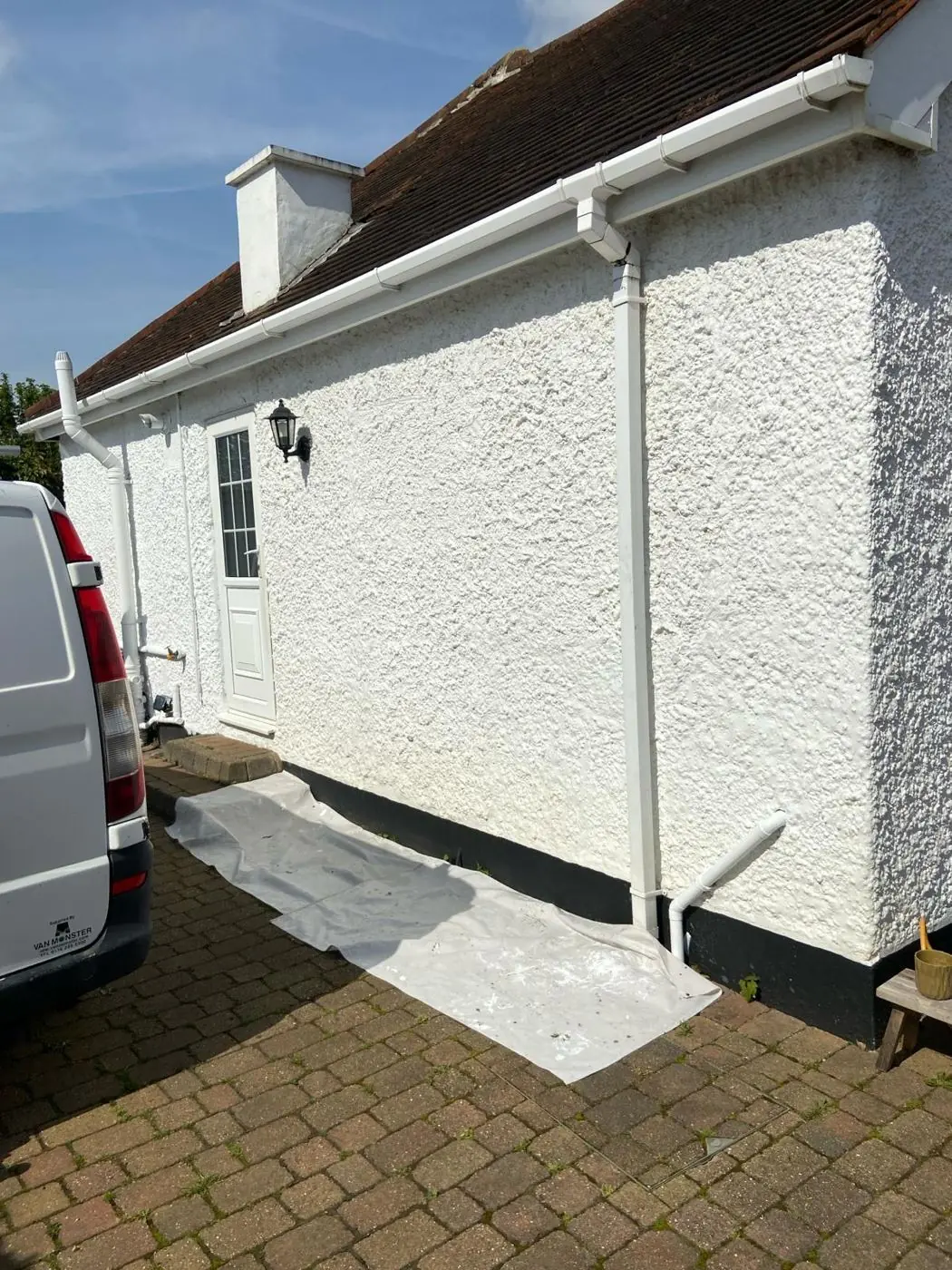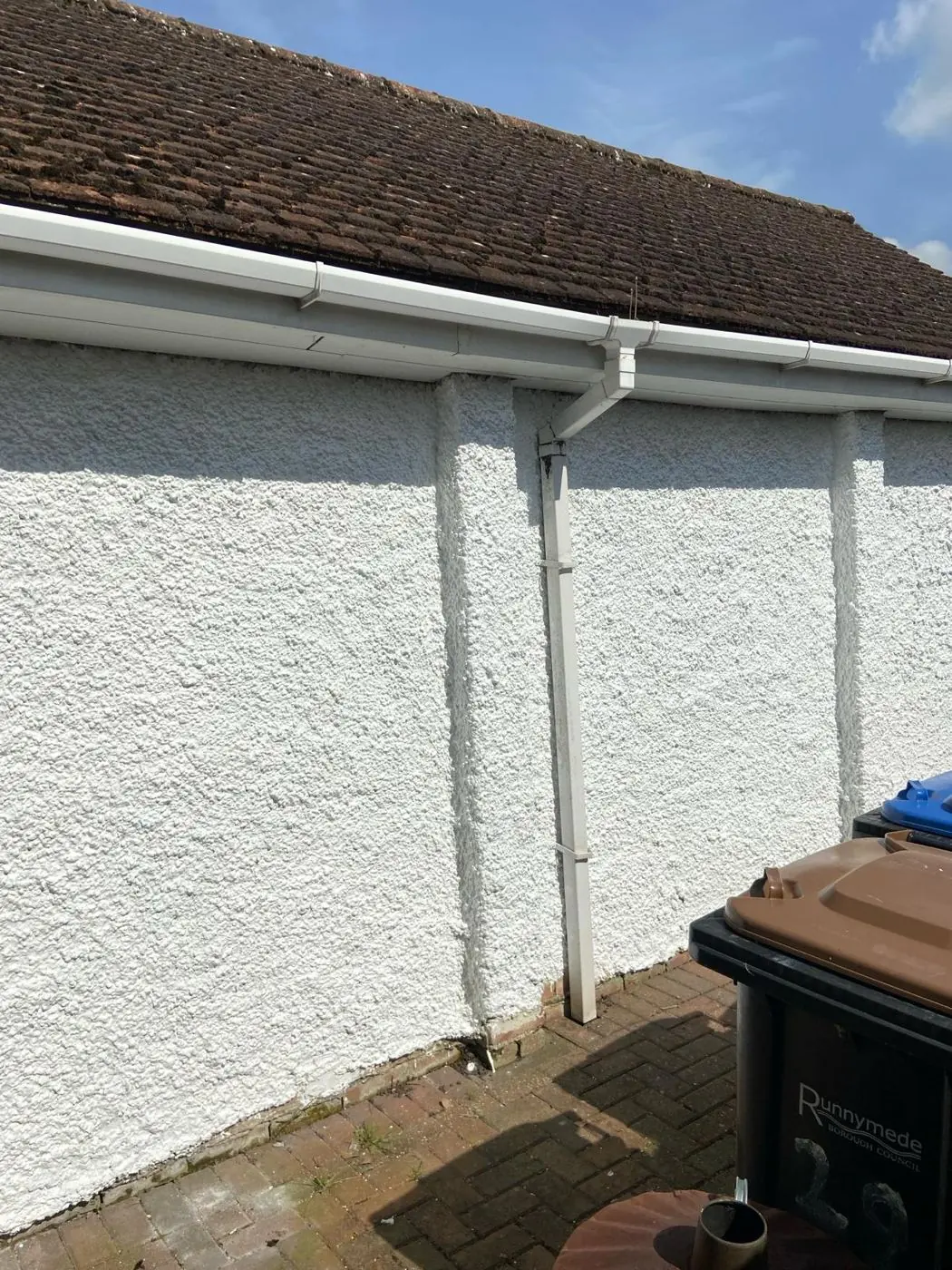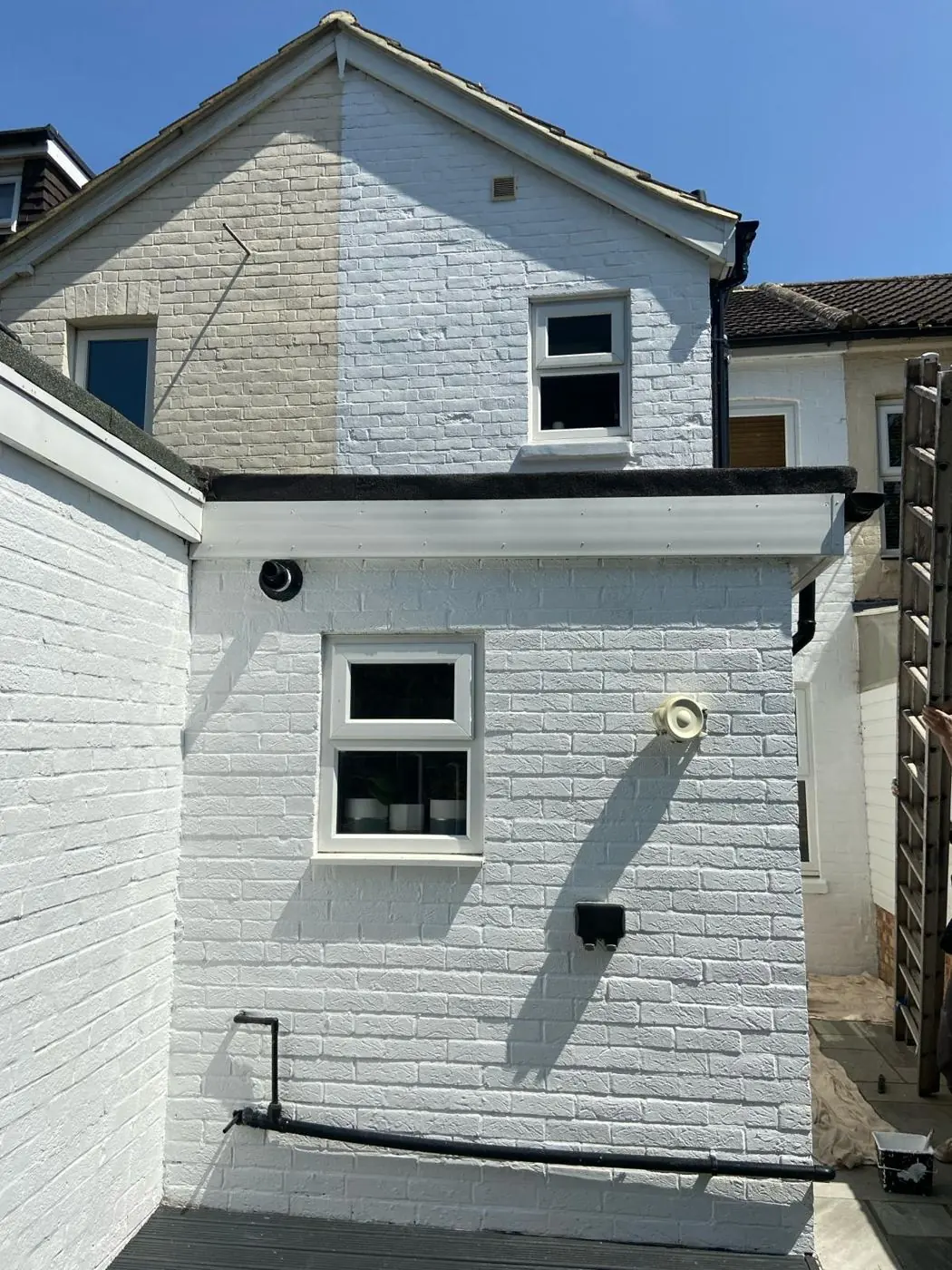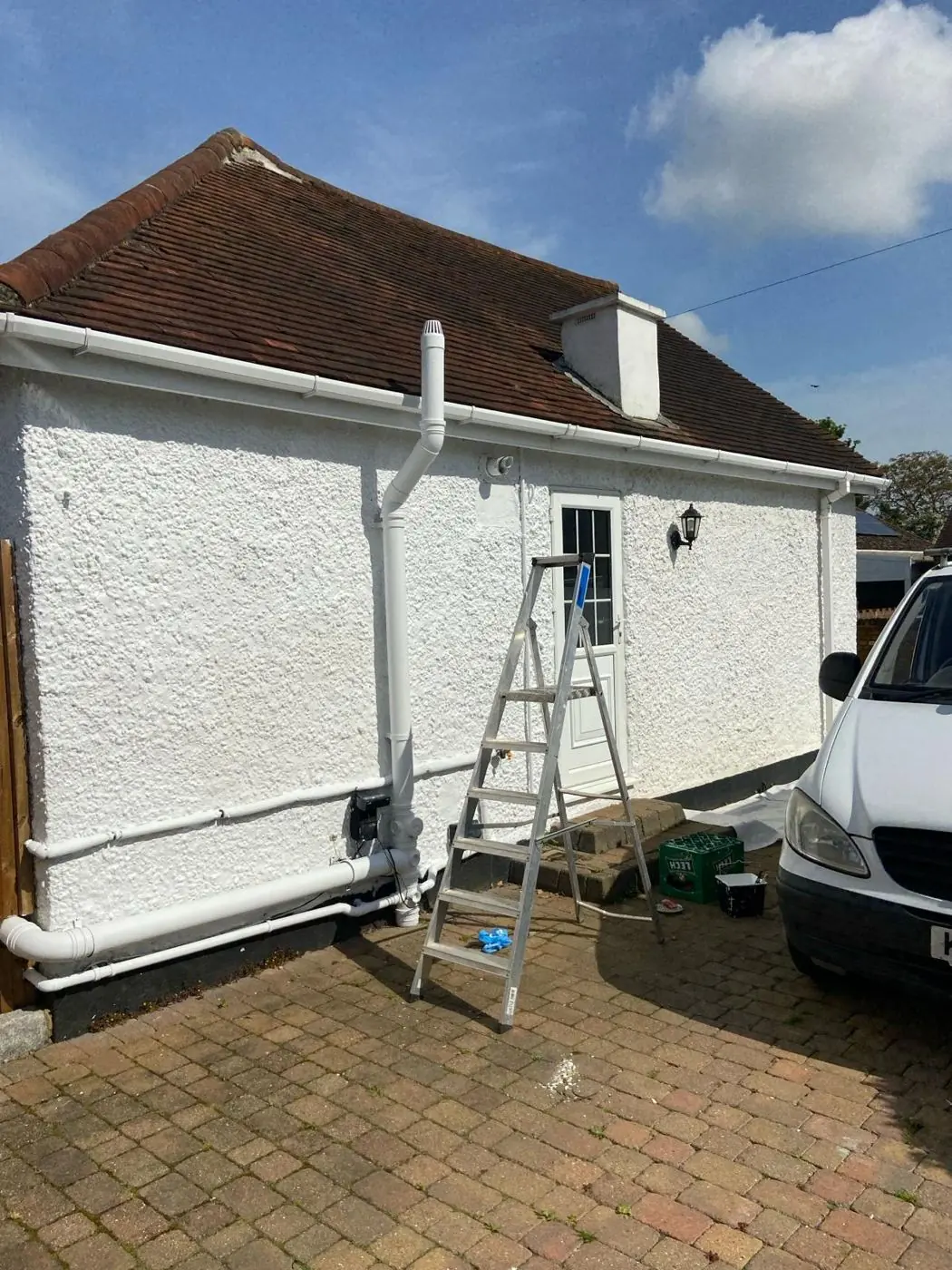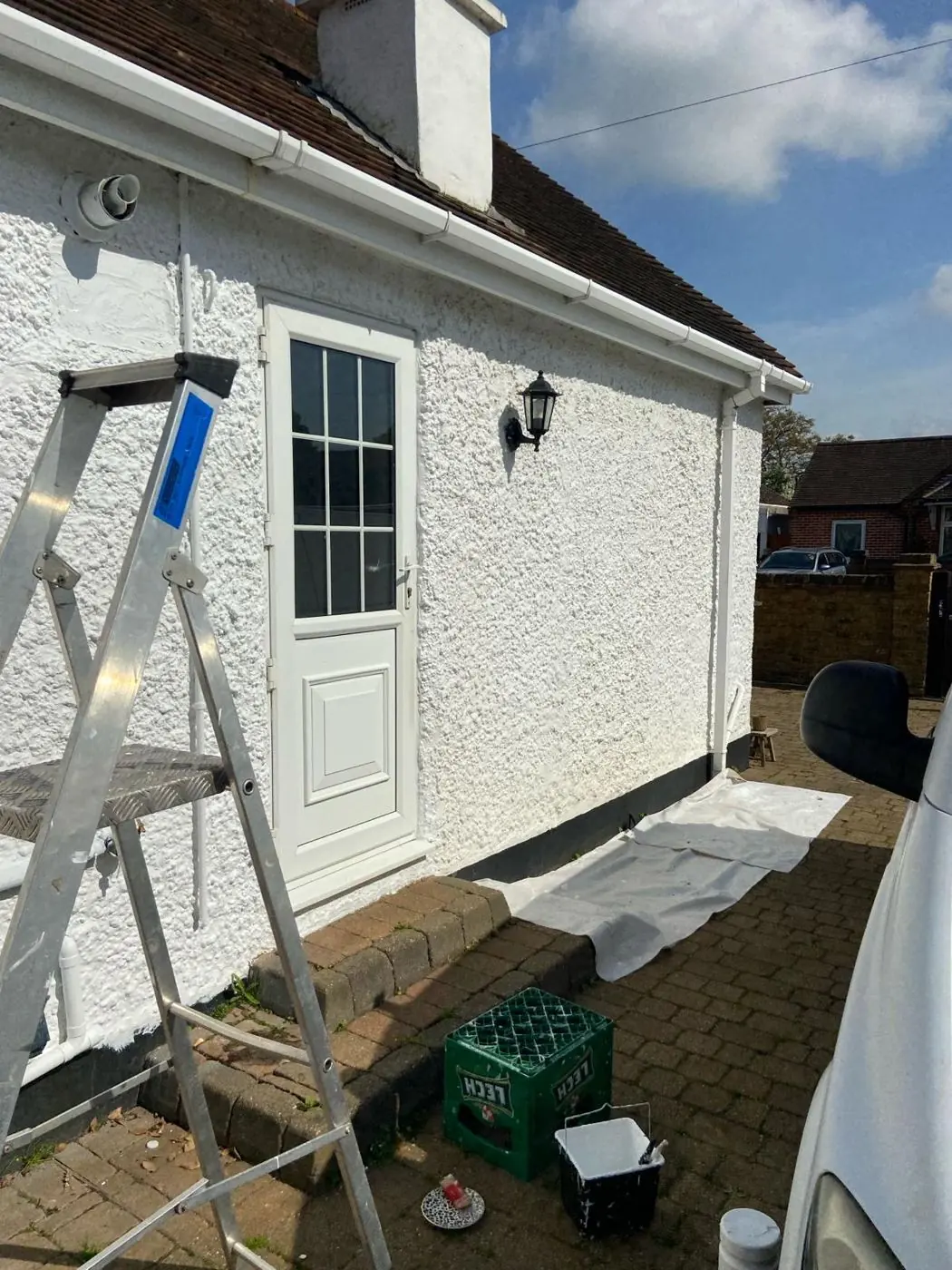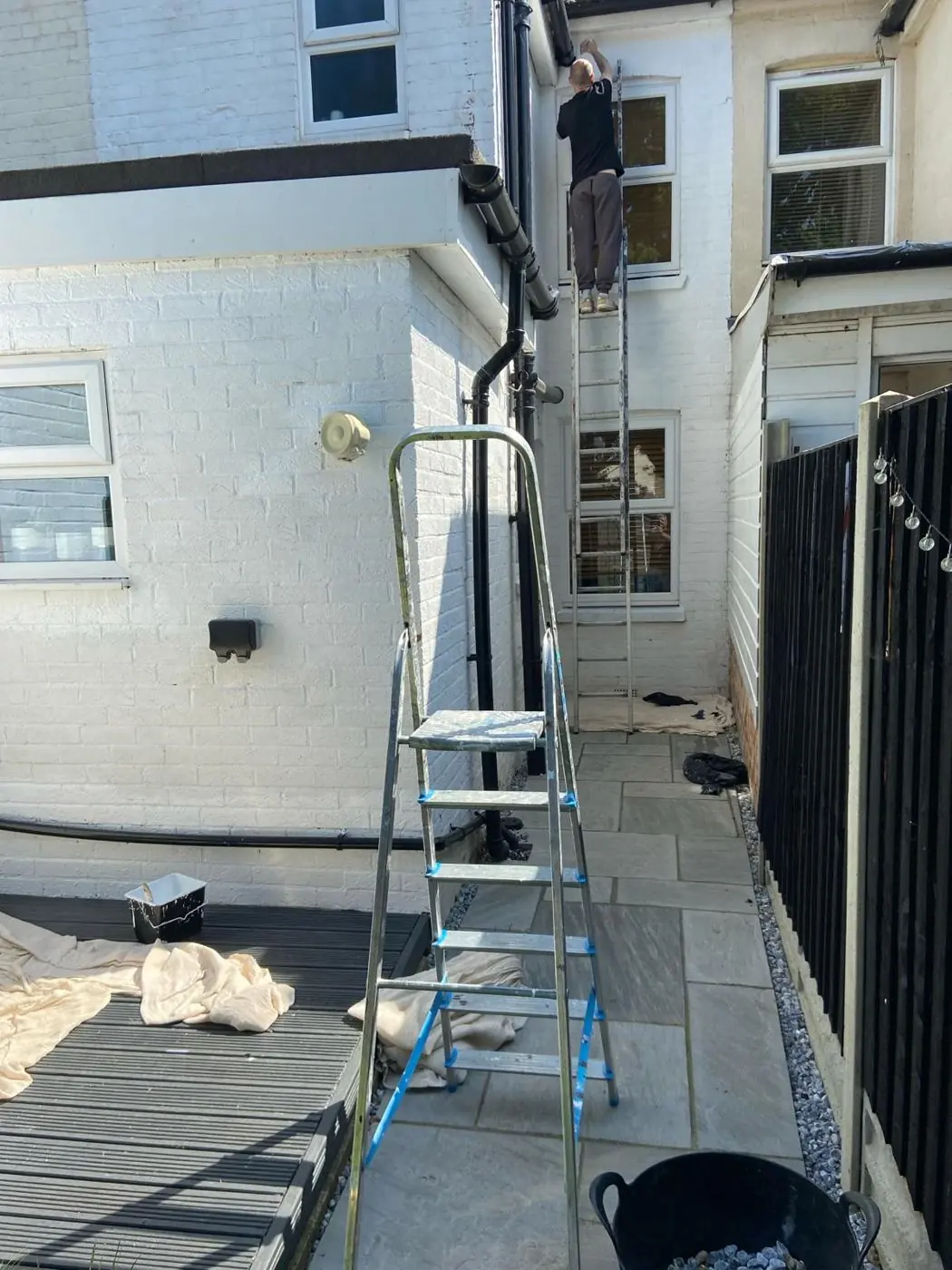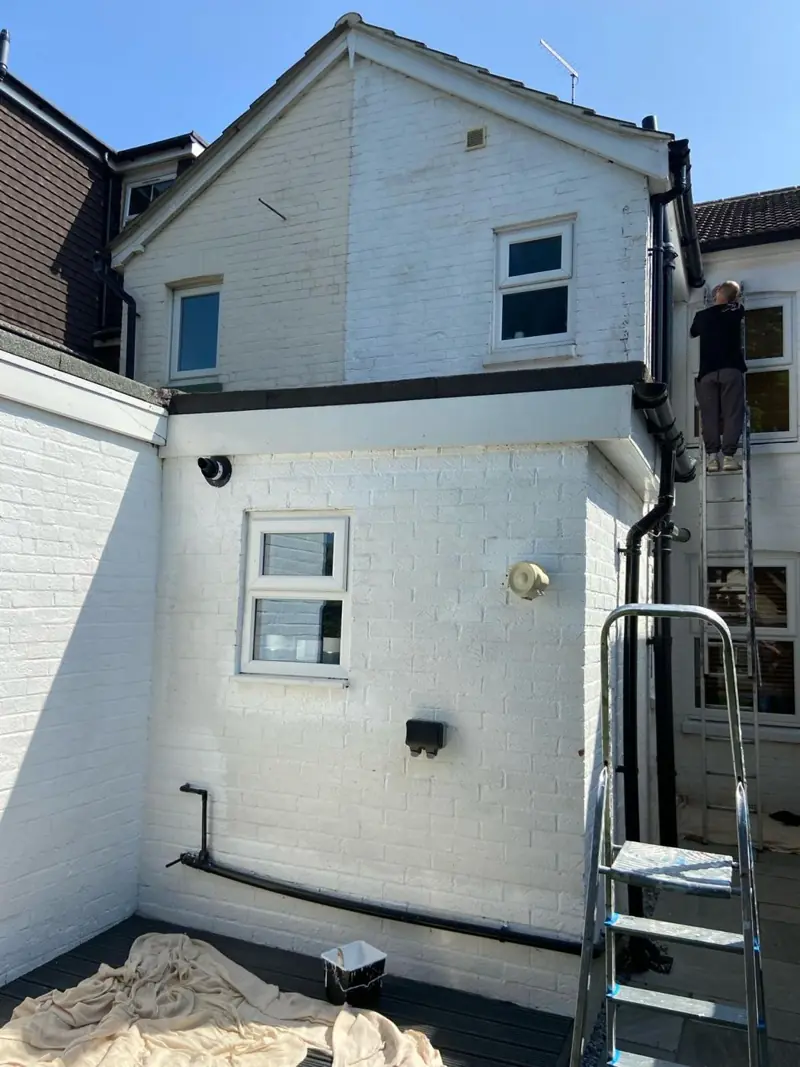
DH Painter & Decorator paints house exteriors in Harpole, the NN7 village about 3.9 miles west of Northampton town centre. Dean covers it from our Northampton base and quotes for windows, doors, rooflines, painted walls and garden timber after looking at the house in person.
Ironstone walls stay bare, so the joinery is the job
Along Larkhall Lane, Park Lane, High Street and Upper High Street, most of the older houses are coursed squared ironstone, many of the High Street ones from the 17th-century “Great Rebuilding”. That stone was never meant to carry paint, and coating it now would trap moisture in the wall. So an exterior job on an older Harpole house is mainly a joinery job: windows, doors, frames, sills, the timber lintels over openings and the odd porch or lean-to. The brief we set ourselves is to leave the stone looking exactly as it did and bring the woodwork back to sound, weathertight condition.
Harpole’s conservation area, first drawn up in 1991 and revised in 2012, holds 24 listed buildings. On a listed house, a change of colour or an alteration to external joinery may need listed building consent, so we ask about status at the first visit and suggest you check with West Northamptonshire Council before anything changes appearance. Like-for-like repainting is a different matter, and it covers most exterior jobs on the village’s listed houses.
Three window types you will meet in the village
- Leaded casements in timber frames. Church Farmhouse and Sundial Cottage keep leaded lights, and the farmhouse still has old wrought-iron catches. We paint the frames by hand, keep the leadwork clean and work around the original ironmongery rather than taking it off.
- Twelve-pane Georgian sashes. Grange Farmhouse, Harpole Hall and the Old Rectory each have them. Each sash has a lot of glazing bar and putty line, and every bead of putty has to be sound before it is painted. Once the coats are dry we free the sashes off so they still open.
- Victorian sashes and casements on brick houses. From the 1850s many houses went up in brick with Welsh slate roofs, usually with painted timber windows that need recoating on a regular cycle.
Plank doors and wooden lintels on the oldest cottages move with the seasons. A flexible, vapour-open coating copes with that movement, where a hard gloss would crack along every joint.
Thatch, stone boundary walls and village lanes
Setting up is where Harpole differs from a street of semis. Some cottages are still thatched, so ladders and towers are placed well clear of the eaves, and no heat gun is used anywhere close to the roof. Where old paint has to come off close to thatch, it is scraped and sanded by hand. Along High Street the stone boundary walls often sit between the road and the front elevation, which limits where a ladder can stand. We pad ladder feet, never lean kit on coping stones, and use stand-offs where the wall gets in the way.
These are old village lanes, and the parish council has posted temporary closures on Glassthorpe Lane and Kislingbury Bridge Road, so we check for roadworks before booking a start date. The bus to Northampton runs about every two hours, which is why everything comes in on the van and we plan deliveries in advance.
Harlestone Park, Norwood Quarter and Western Gate
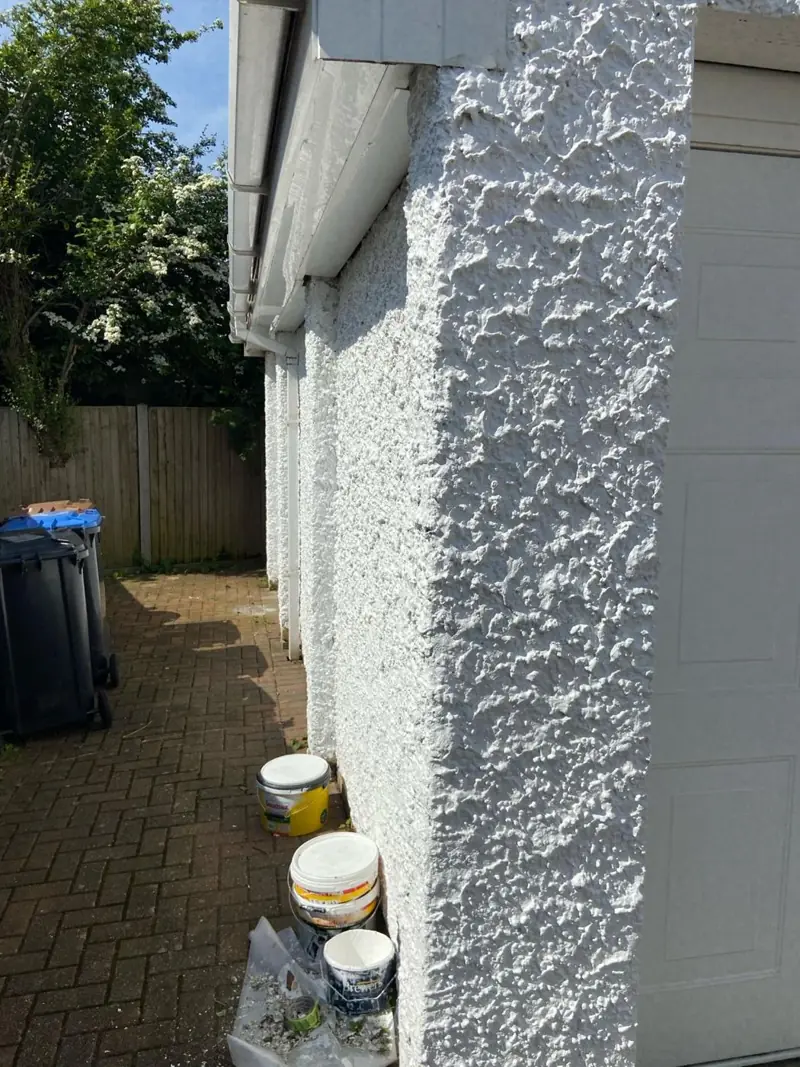
The newer areas the parish council lists have a different set of exterior jobs. Some front doors, garage doors and trim may be factory finished, and some fascias may be uPVC, so the first task is to work out what is actually painted timber. On the timber that is, the first repaint goes over builder-grade coatings that are often thin. A proper key and undercoat give the new finish something to hold on to.
The trade side of exterior work, including products and preparation, is explained on our main exterior painting service page. For when to book, see our guide to timing outdoor painting, and the Harpole area page lists everything else we do in the village.
Last updated by Dean, DH Painter & Decorator.