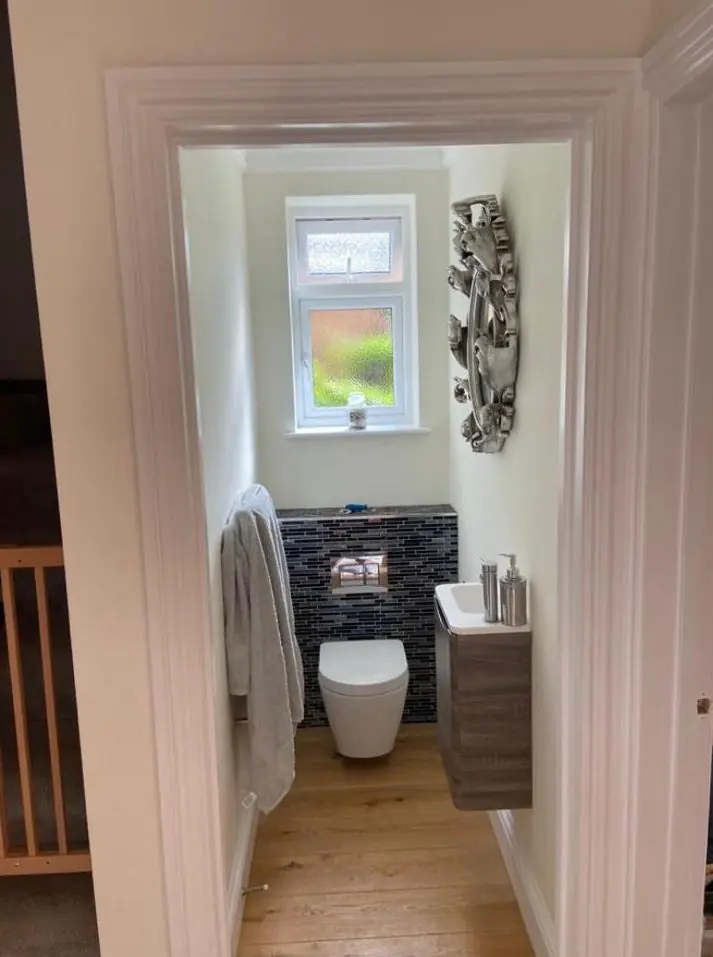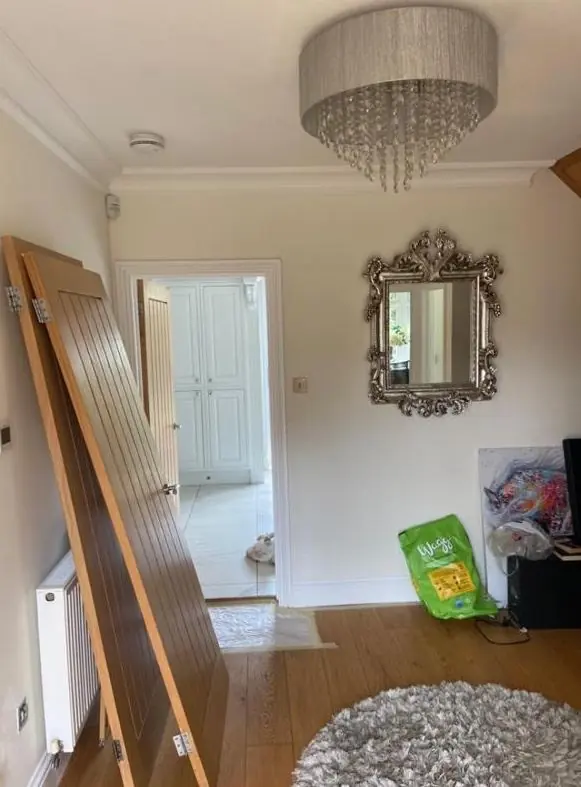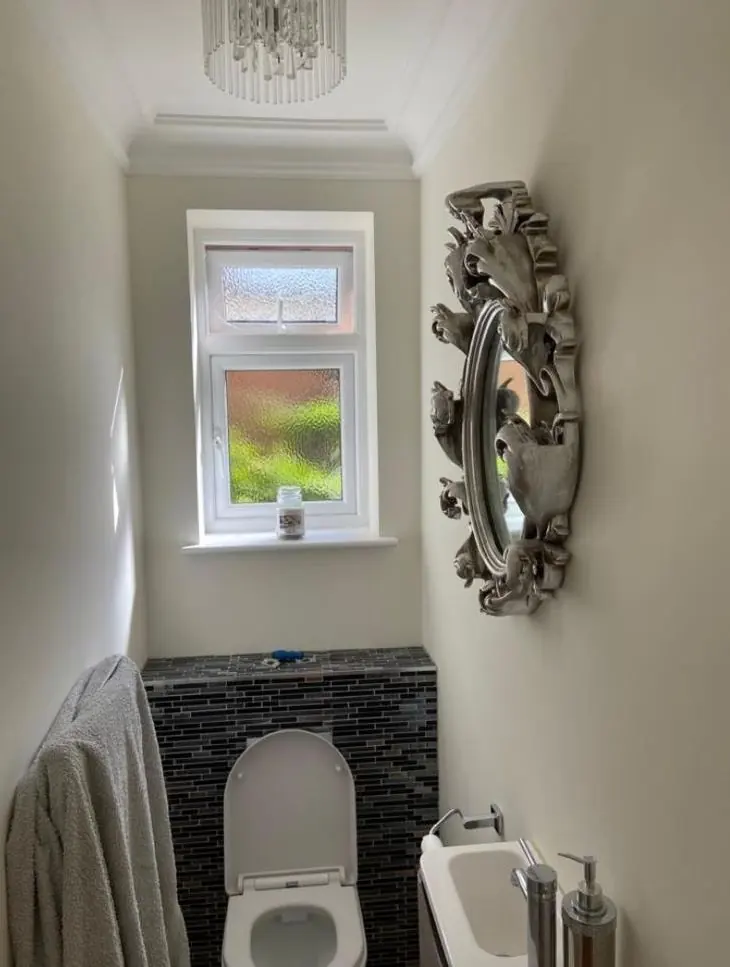
Dean paints interiors in Harpole, the NN7 village about 3.9 miles west of Northampton town centre. The approach depends on the house: breathable paints and hand cutting-in for the old ironstone cottages, and a proper first redecoration over new plaster on the recent estates.
Two very different kinds of interior in one village
Harpole sits north of the River Nene, just off the A4500, and inside its houses you find two quite separate jobs. In the conservation area along High Street, Upper High Street, Park Lane and Larkhall Lane, the late 17th and 18th-century homes are built of coursed squared ironstone, often with beams, low ceilings and plaster that follows every bump in the wall. On the newer estates named by the parish council as Harlestone Park, Norwood Quarter and Western Gate, the rooms are square, the ceilings are flat and the walls still carry the developer’s first coat of emulsion.
We plan and quote these as different kinds of work, because the paint, the preparation and the pace all change.
Cottage rooms with beams and uneven lime plaster
Solid ironstone walls with old lime plaster need to breathe. Sealing them with a vinyl emulsion traps moisture behind the film, and on a cold wall that usually shows as blistering or a grey bloom near the skirting. Before choosing a product, Dean checks what the plaster is. Original lime gets a breathable mineral or clay-based emulsion. Patches redone in gypsum over the years can take a normal trade emulsion, as long as the two finishes sit happily side by side.
Beams take thought too. Some have been painted for decades, some were stained black in the last century, some were left bare. We match whatever is there unless you ask otherwise. Low ceilings mean a lot of cutting in by hand where beam meets plaster, so a cottage room takes longer than its floor area suggests.
If your home is one of the 24 listed buildings in the conservation area, repainting existing paintwork like for like is normally routine. Stripping old finishes or painting timber that has never been painted can need listed building consent from West Northamptonshire Council, so we flag those items at the quote stage.
First redecoration on the new estates
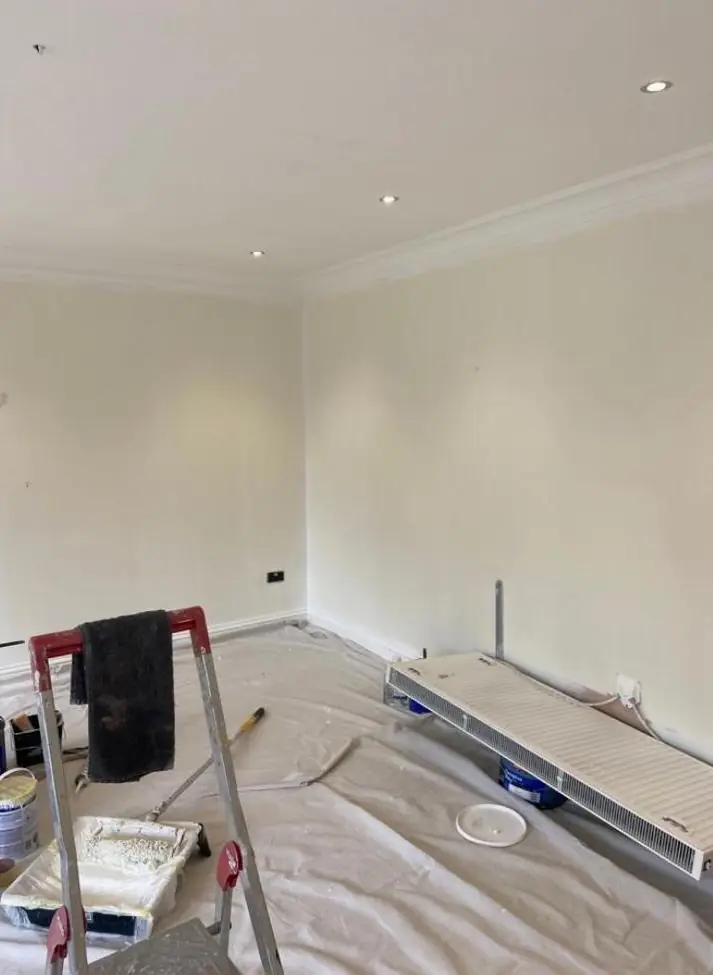
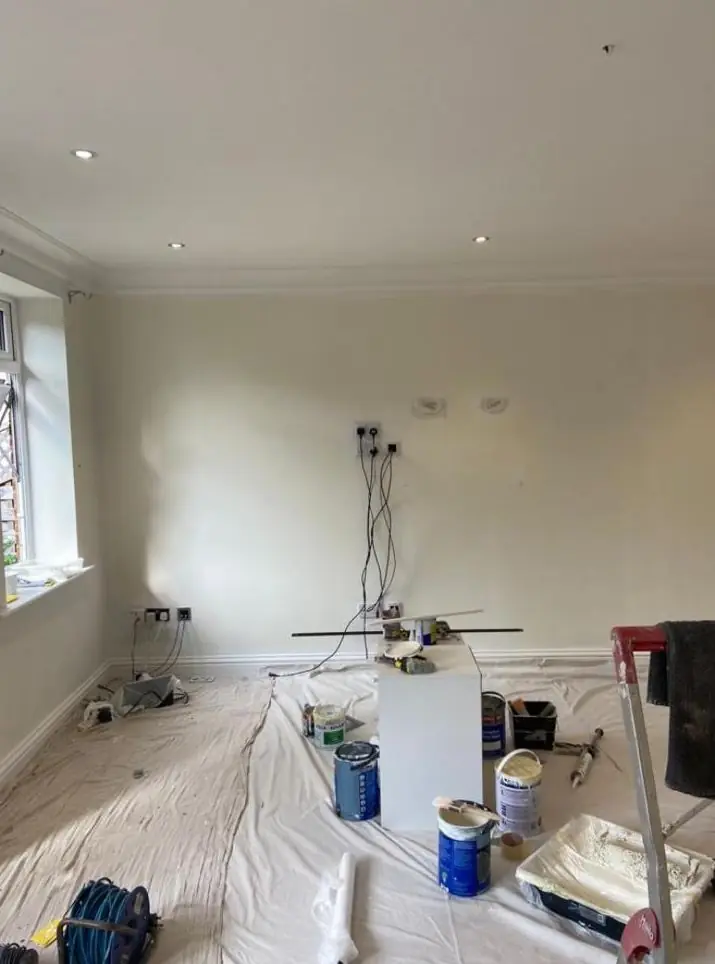
The homes at Harlestone Park, Norwood Quarter, Western Gate and the Vistry Group site went up with fresh gypsum plaster and a thin builder-grade emulsion. That first coat does the job for moving in, but it marks easily and doesn’t wipe clean, so most owners want it replaced fairly soon.
Timing matters. New plaster keeps drying for months, and small shrinkage cracks tend to open along ceiling lines and around door frames during the first heating season. It’s better to fill those once, after they’ve appeared, than to paint over them and see them return. Where walls are still bare, such as after snagging repairs or a garage conversion, they need a mist coat first; our mist coat guide explains why.
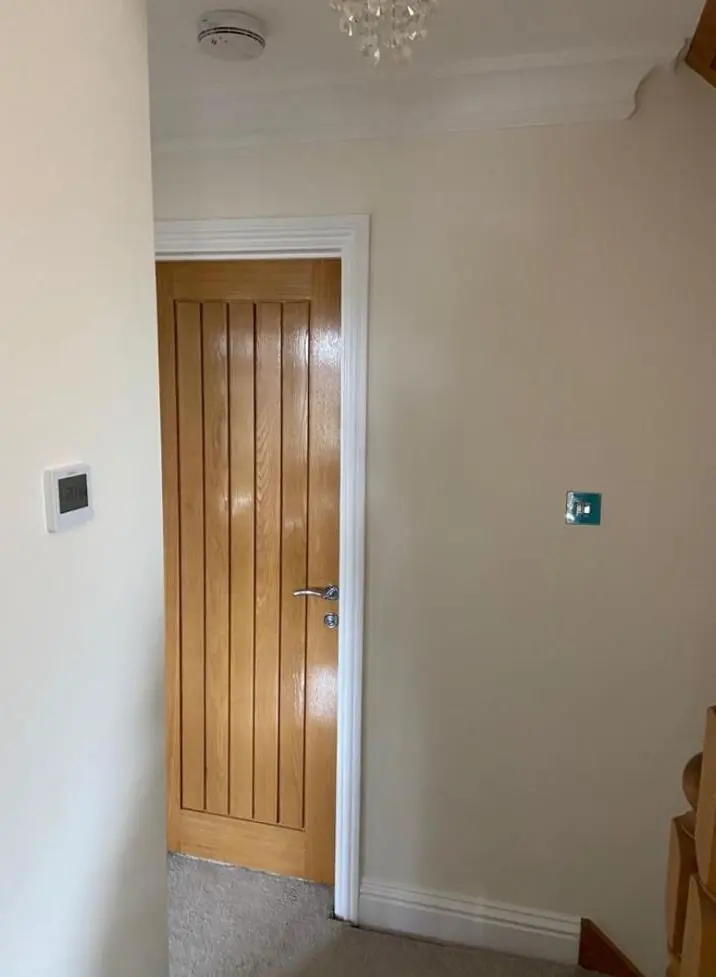
New-build MDF skirtings and doors usually arrive with only a factory primer. They need a proper undercoat before the topcoat, or the satin chips at the first knock from a vacuum cleaner.
Victorian brick houses and old workshop rooms
From the 1850s Harpole built in brick under Welsh slate, and shoemaking left its own mark. Many houses were extended to make a workshop where shoe uppers were hand-stitched before being finished in Northampton. Those rooms now tend to be kitchens, studies or utility rooms, sometimes with a step down, a lower ceiling and walls in a different material from the main house. We treat each surface on its own terms: painted brick may need a breathable finish, later blockwork with gypsum plaster takes standard paint, and a lean-to ceiling may be boarded and need its joints dealt with first.
Rooms affected by the winter 2024 flooding
The parish lies just north of the Nene, and Harpole’s council has published advice on flooding since the winter of 2024. If water came into your house, the walls must dry out fully before any decoration, and solid stone takes longer than most people expect. Painting too soon pulls salts and tide marks back through the new finish. Once moisture readings are acceptable, we seal tide marks with a stain-blocking primer and then decorate as normal.
The process we follow in every room, from sheeting floors to the final coat, is on our main interior painting page. For how quotes are worked out, see the cost guide, or go back to the Harpole area page.
Last updated by Dean, DH Painter & Decorator.