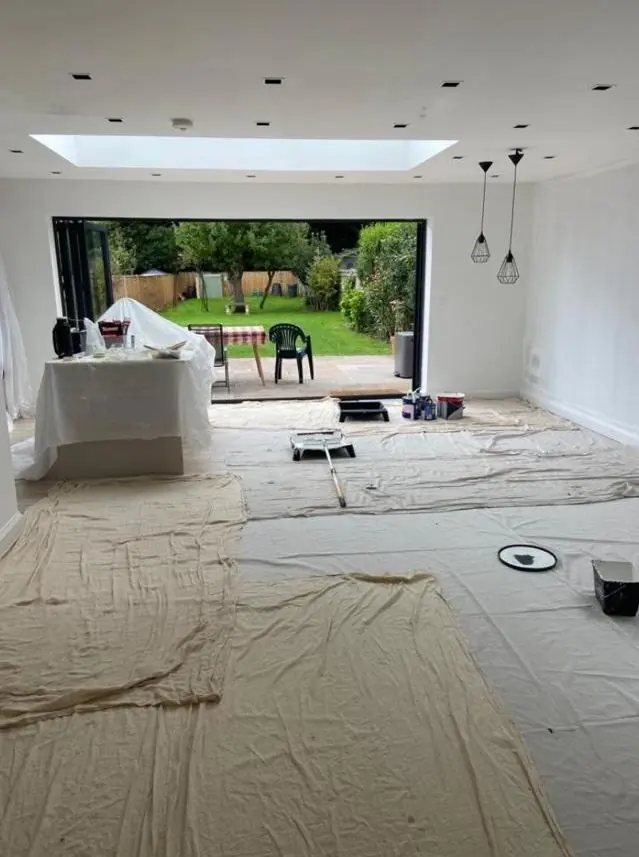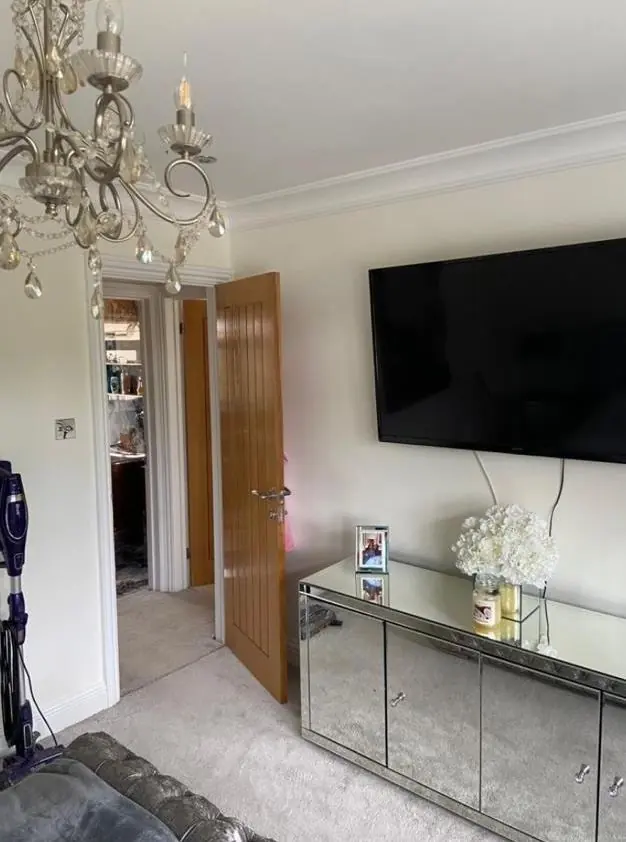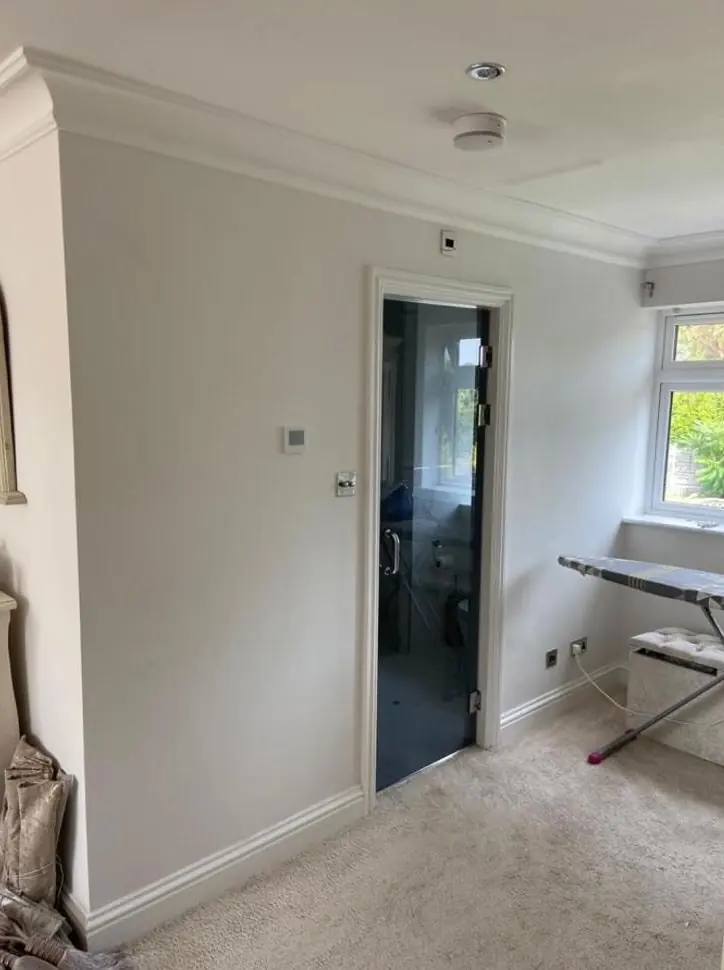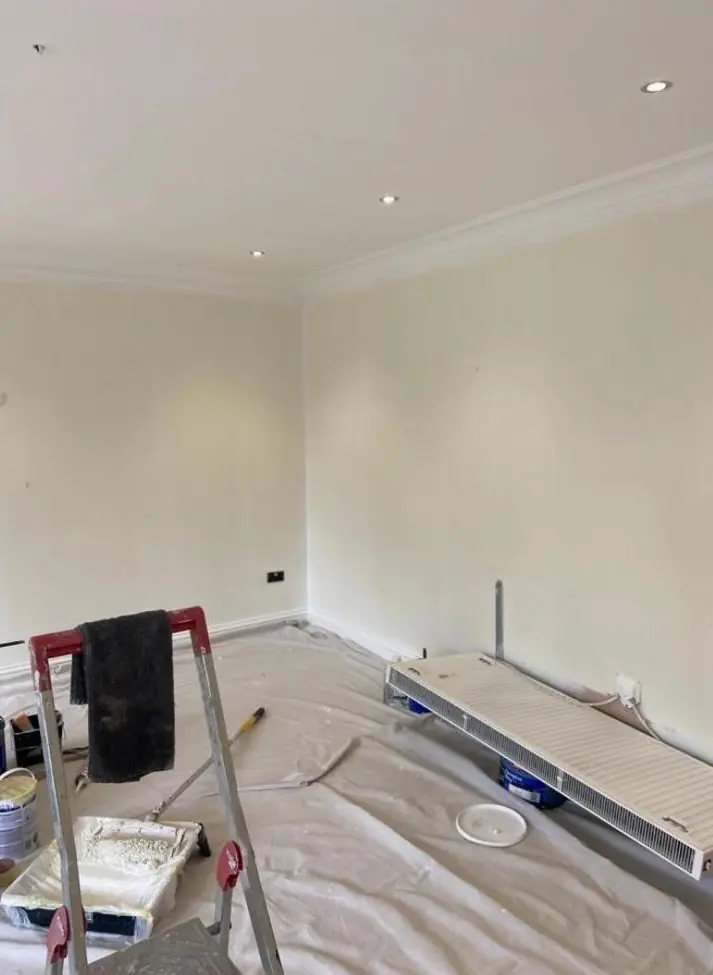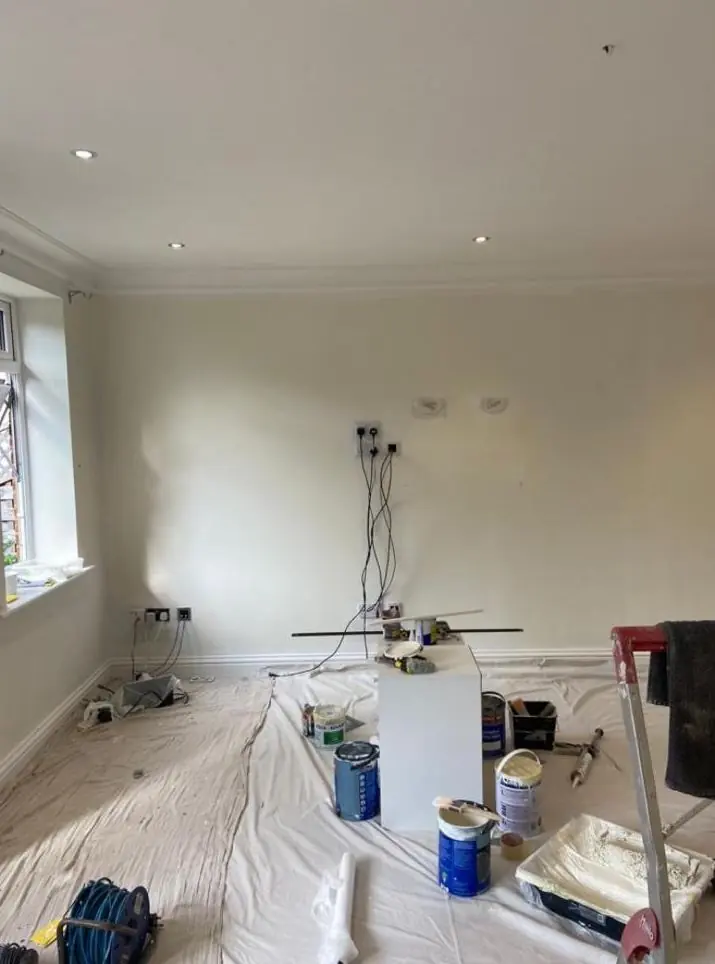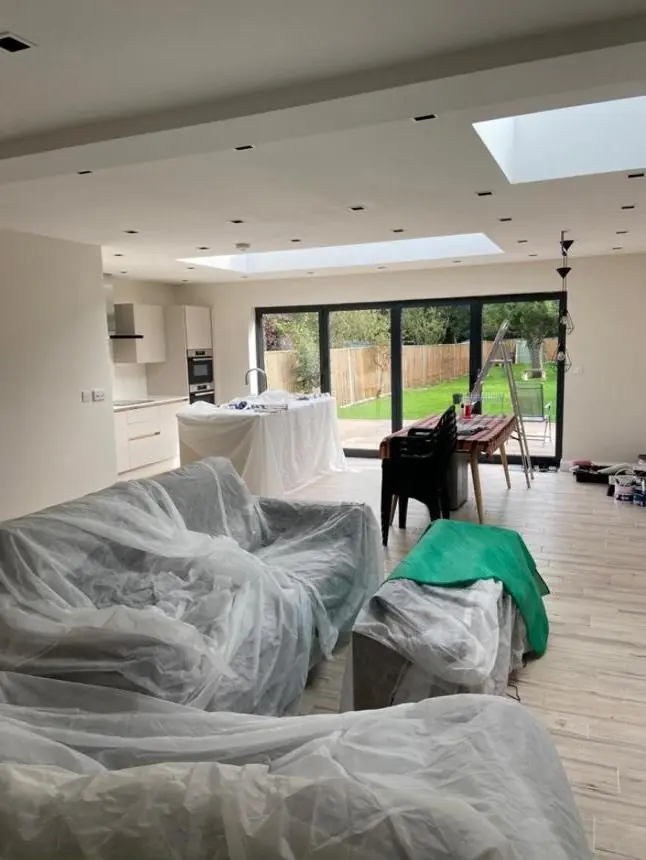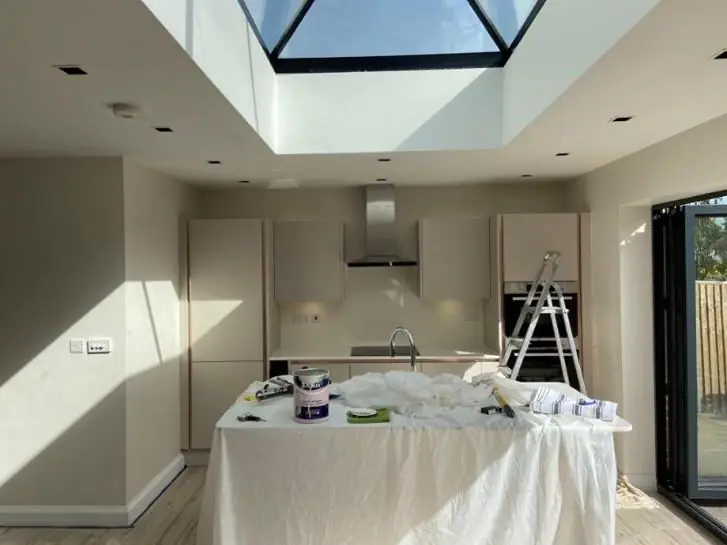
Dean at DH Painter & Decorator decorates new plaster and extensions in Harpole, NN7, about 3.9 miles west of Northampton. That includes first redecoration of new-build homes, extensions to older ironstone and brick houses, and freshly re-plastered rooms.
Where fresh plaster turns up in Harpole
New plaster in Harpole tends to come from three sources. The first and largest is the new housing: the parish council lists Harlestone Park, Norwood Quarter and Western Gate as newer parts of the parish, and there is a Vistry Group housing site in the village too. Those homes are handed over with fresh plaster and a single coat of builder’s emulsion. The second is extensions and re-skims on older houses, from the 17th and 18th-century ironstone cottages in the conservation area to Victorian brick houses. The third is repair work after water damage from the winter 2024 flooding.
Each one dries differently and needs a different first coat.
First redecoration of a new-build home
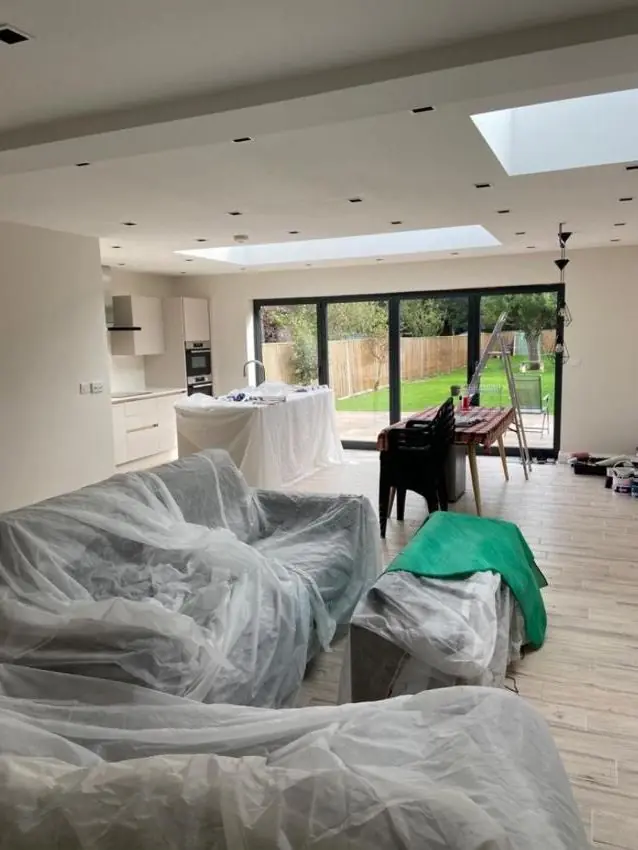
Most new homes on the Harpole estates have had a thin contract emulsion rolled straight onto plaster that was still giving off moisture. It is fine as a temporary finish but tends to chalk, mark easily and show every hairline crack as the building settles. We usually suggest waiting through the first heating season before a full redecoration, so the shrinkage cracks have appeared and stopped growing.
When we do the work, we wash down where needed, rake out and fill the cracks at ceiling lines and corners, sand the patches, spot-prime the filler and then apply two coats of a better-quality emulsion. Where the builder’s paint is powdery, a stabilising coat goes on first so the new finish has something sound to grip.
Extensions on old ironstone and brick houses
Extensions to Harpole’s older houses raise a question that new estates do not: what is the plaster? A modern gypsum skim inside an extension takes a standard mist coat of watered-down contract matt, followed by finish coats. If the builder has used lime plaster, which is often the case to keep an old ironstone wall breathing, it needs a breathable paint such as a clay or mineral emulsion all the way through. Vinyl emulsion traps damp in a lime wall and blisters.
The join between old and new is where most problems show. Old lime walls in the cottages are rarely straight, while new board and skim is dead flat. We feather filler across the junction and cut in the ceiling line by hand, so the new room meets the old without a visible step. On houses in the conservation area, any new external joinery on the extension is usually painted to match the existing house.
Re-plastering after the winter 2024 flooding
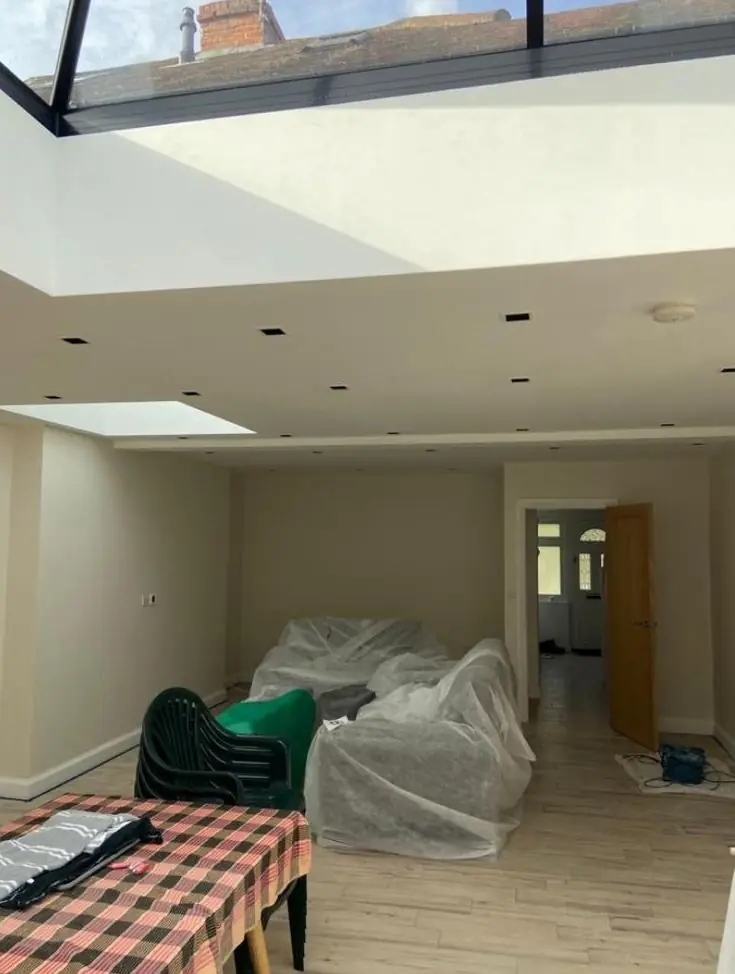
After the winter 2024 flooding, which prompted guidance from the parish council, any ground-floor rooms that took on water may have been stripped and re-plastered. Plaster on a wall that was soaked needs longer to dry than the usual few weeks, as moisture keeps coming out of the masonry behind it. We check readings before painting and, on any older plaster left in place, use a stain-blocking primer over tide marks so they do not bleed back through the emulsion.
How the timing works
| Situation in Harpole | What we usually advise |
|---|---|
| New-build handed over on the estates | Live with the builder’s coat through a heating season, then fill cracks and redecorate |
| Gypsum skim in an extension | Mist coat once the plaster is evenly pale, then two finish coats |
| Lime plaster on an old cottage | Breathable paint only, applied once fully dry |
| Re-plastered after flooding | Moisture check first, longer drying time, stain-blocker on tide marks |
The full method for sealing fresh plaster is in our mist coat guide, and our main new plaster and extension painting page covers the wider job. See the Harpole page for other work we do in the village.
Last updated by Dean, DH Painter & Decorator.