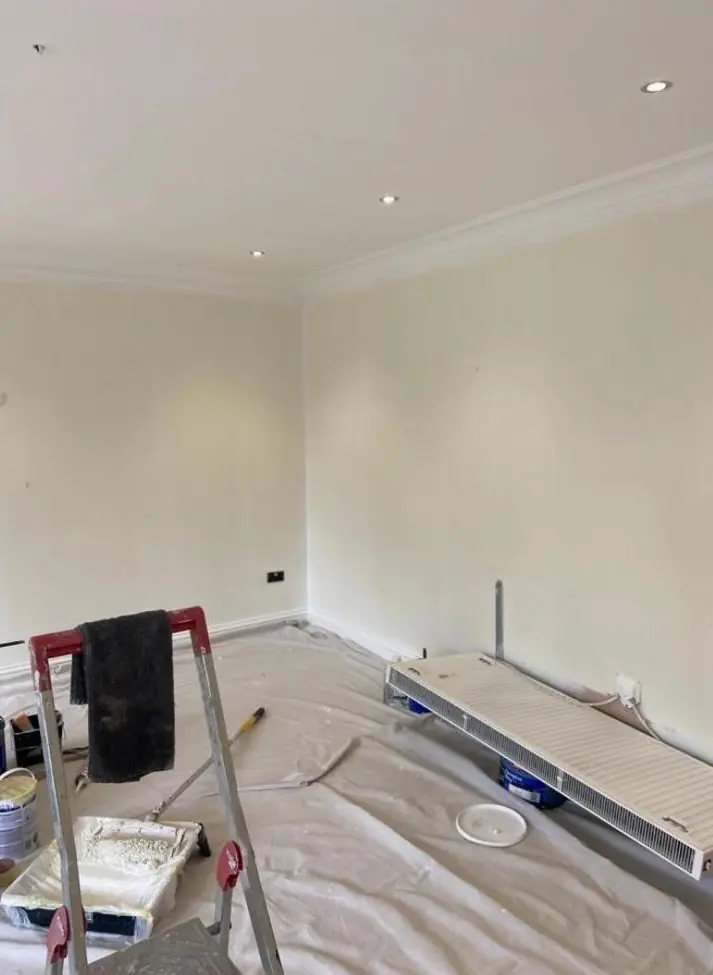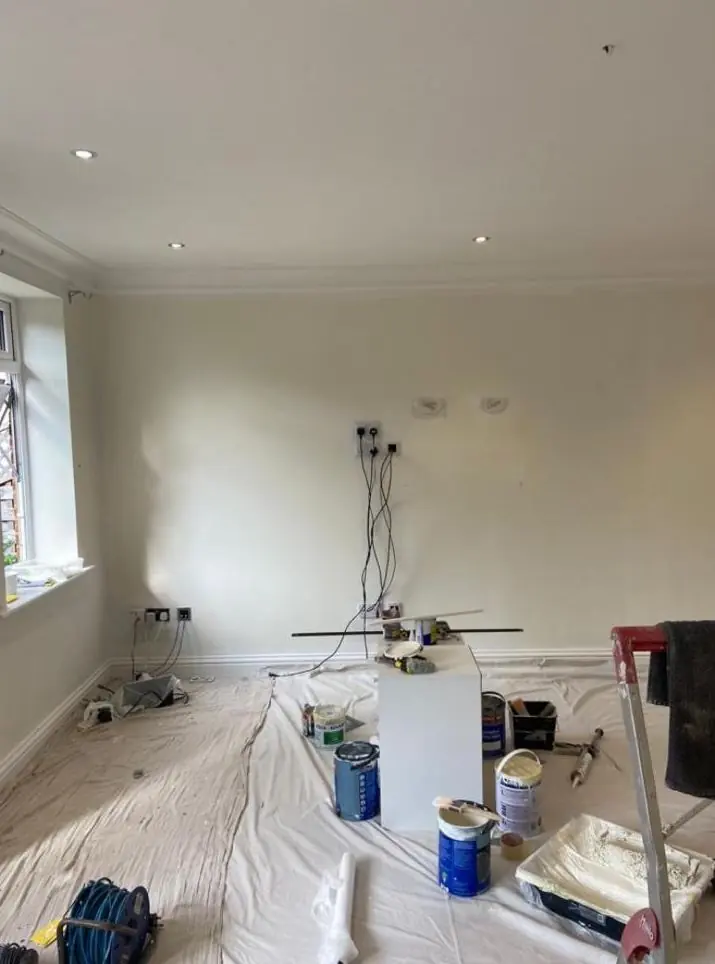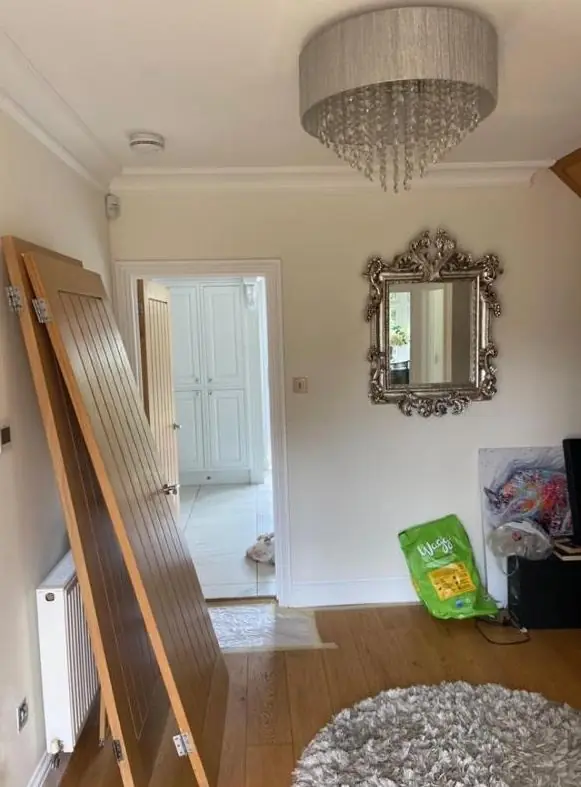
We hang wallpaper in Harpole, the NN7 village roughly 3.9 miles west of Northampton. Most cottage walls in the old village need lining before any decorative paper goes on, while new-build walls on the recent estates need time to cure and a coat of size first.
Old walls in the village core rarely run true
The ironstone cottages and farmhouses along High Street and Upper High Street date mostly from the late 17th and 18th centuries, many from the Great Rebuilding that gave the street its stone boundary walls and steep roofs. Several began as pairs or rows of cottages and were later joined into single houses. Inside, that leaves walls that lean, corners well off square and reveals deeper at one side than the other. Wallpaper shows every one of those faults if it goes straight onto the plaster.
So in these houses lining comes first. A cross-lined base evens out the patchwork of lime and later gypsum repairs, gives the decorative paper a consistent surface and keeps seams from opening where the wall flexes. Where the plaster is lime, we choose a paste and lining that won’t hold moisture against it, and we leave walls that are still damp alone until the cause has been dealt with.
Getting a pattern to look straight when the room isn’t
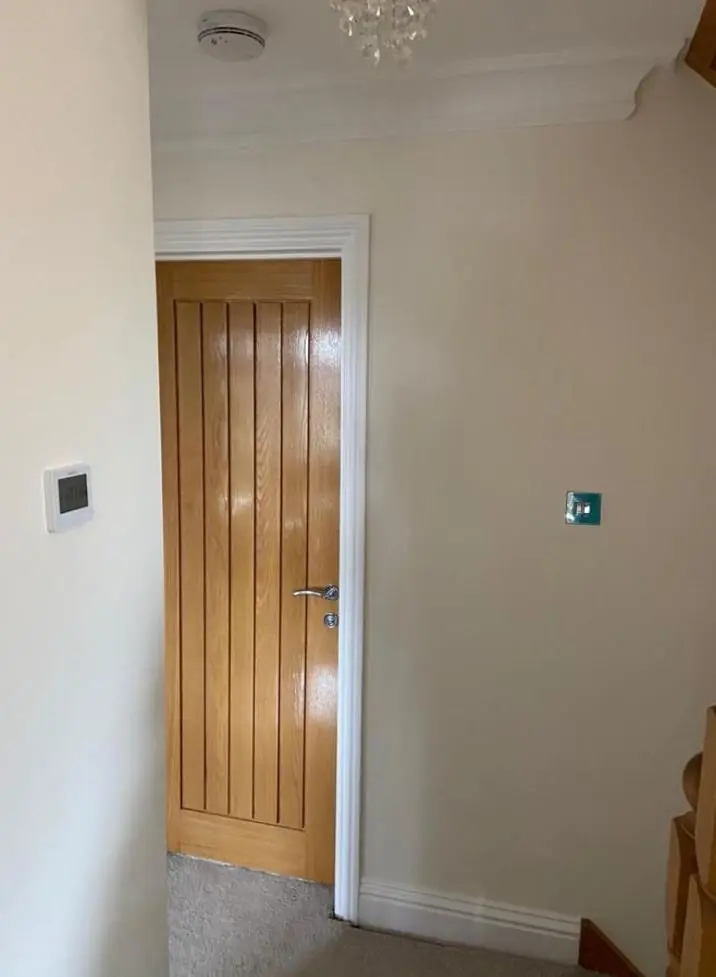
On a wall that is out of plumb, hanging to a true vertical makes the pattern drift against the ceiling line, while following the wall makes it lean against the door frame. Neither looks right on its own. Dean sets the first drop where the eye lands first, usually the chimney breast or the wall facing the door, and takes any loss of match into the least visible corner. Under a low beam or a sloping ceiling, a small or random pattern hides irregular lines far better than a large repeat or a stripe, and we’ll say so before you order the rolls.
Deep stone reveals around leaded casements need careful wrapping and cutting. The leadwork and old wrought-iron catches stay masked throughout.
New-build rooms at Harlestone Park, Norwood Quarter and Western Gate
On the newer estates the walls are flat and the corners close to square, which suits bold prints, large repeats and mural papers. The risk is starting too soon. Gypsum plaster in a new house holds a lot of water at handover and keeps drying for months, and paper hung over it can stain or lift. Once cured, the wall needs sizing or sealing so the paste doesn’t soak straight in, and so the paper can be stripped later without tearing the plaster face.
Builder-grade emulsion on these walls is often thin and powdery. If a damp cloth lifts colour off it, the wall needs sealing before any paper goes over the top.
Harpole wall types at a glance
| House type | Typical wall | What we do first |
|---|---|---|
| 17th to 18th-century ironstone cottage | Lime plaster, uneven, patched over time | Check for damp, cross-line, use breathable materials |
| Victorian brick house with Welsh slate roof | Older plaster, possibly several layers of old paper | Strip back, repair loose patches, line |
| Former shoe-closing workshop extension | Mixed brick, block and later plaster | Check each wall separately, line to unify |
| New-build on the recent estates | Fresh gypsum, builder emulsion | Wait for curing, then size or seal |
Paper after the 2024 flooding
Where water reached a ground floor in the winter 2024 flooding, any paper that got wet should come off. Paste and lining hold moisture and can grow mould behind the surface. The wall then needs to dry fully, and tide marks must be sealed with a stain-blocking primer before new lining goes up.
How we strip, prepare and hang each type of paper is explained on the main wallpaper hanging page. For more about the village, see our Harpole page, and if you’d like help choosing a paint to go with the paper, our colour advice service covers that.
Last updated by Dean, DH Painter & Decorator.