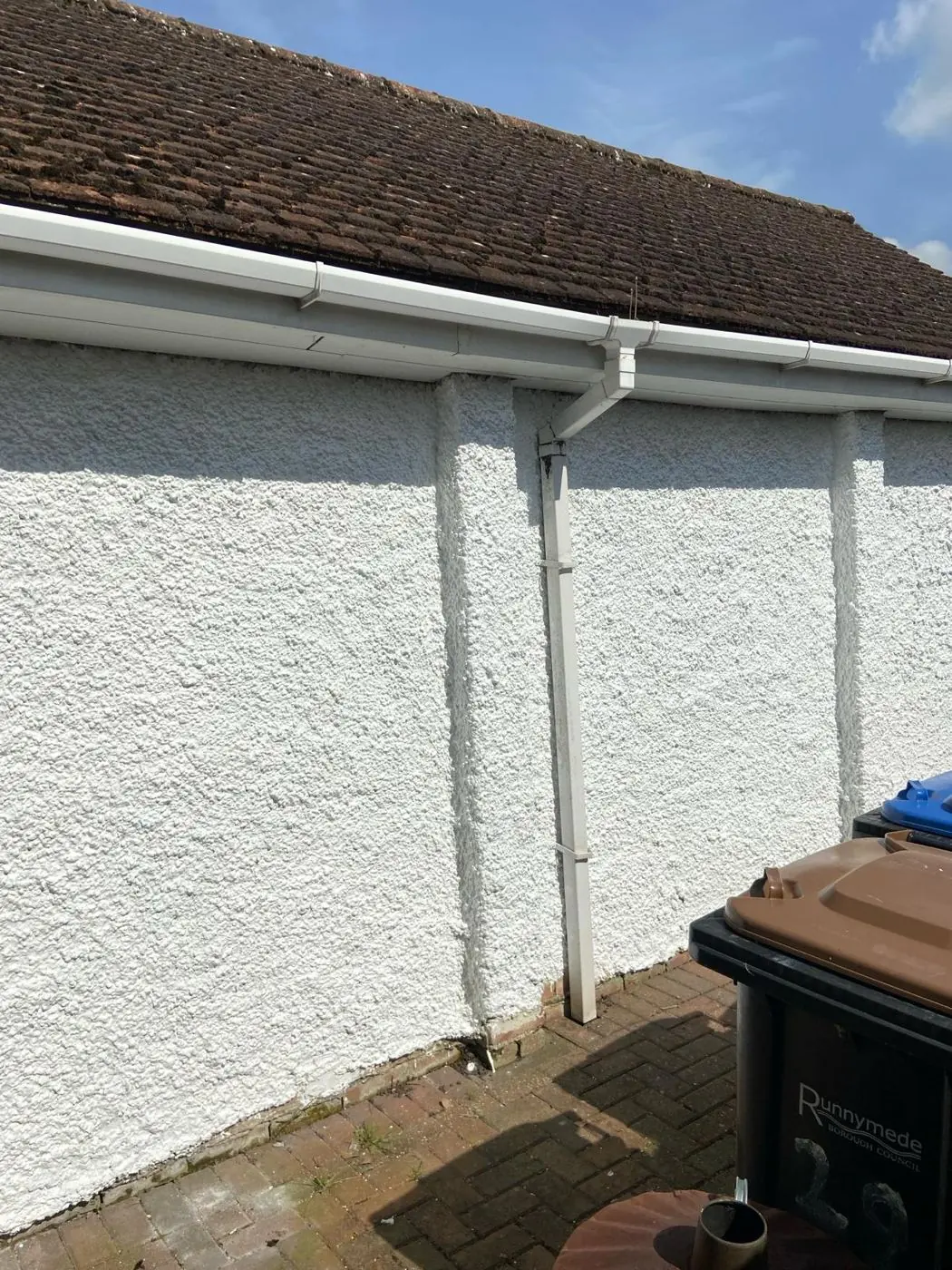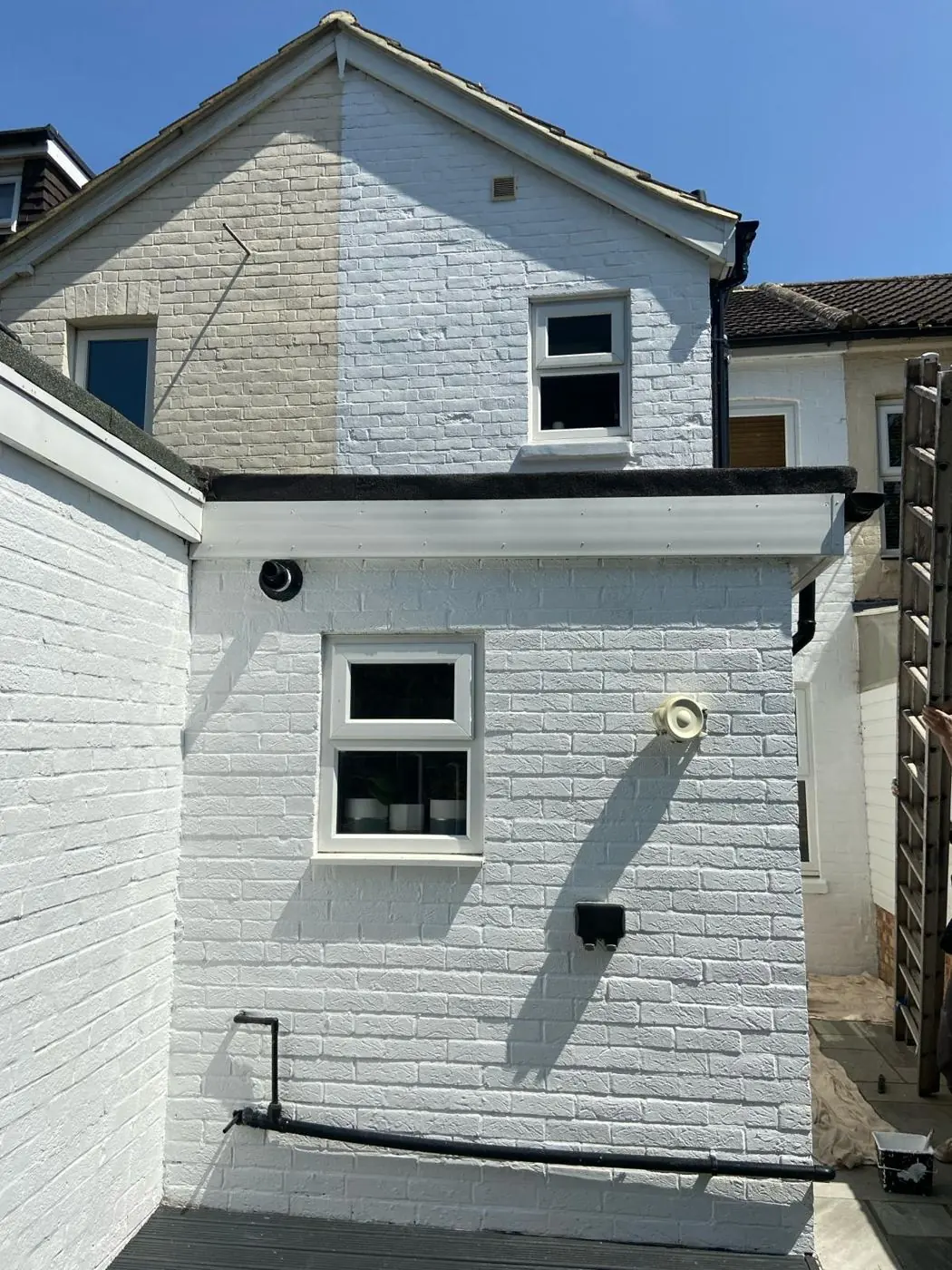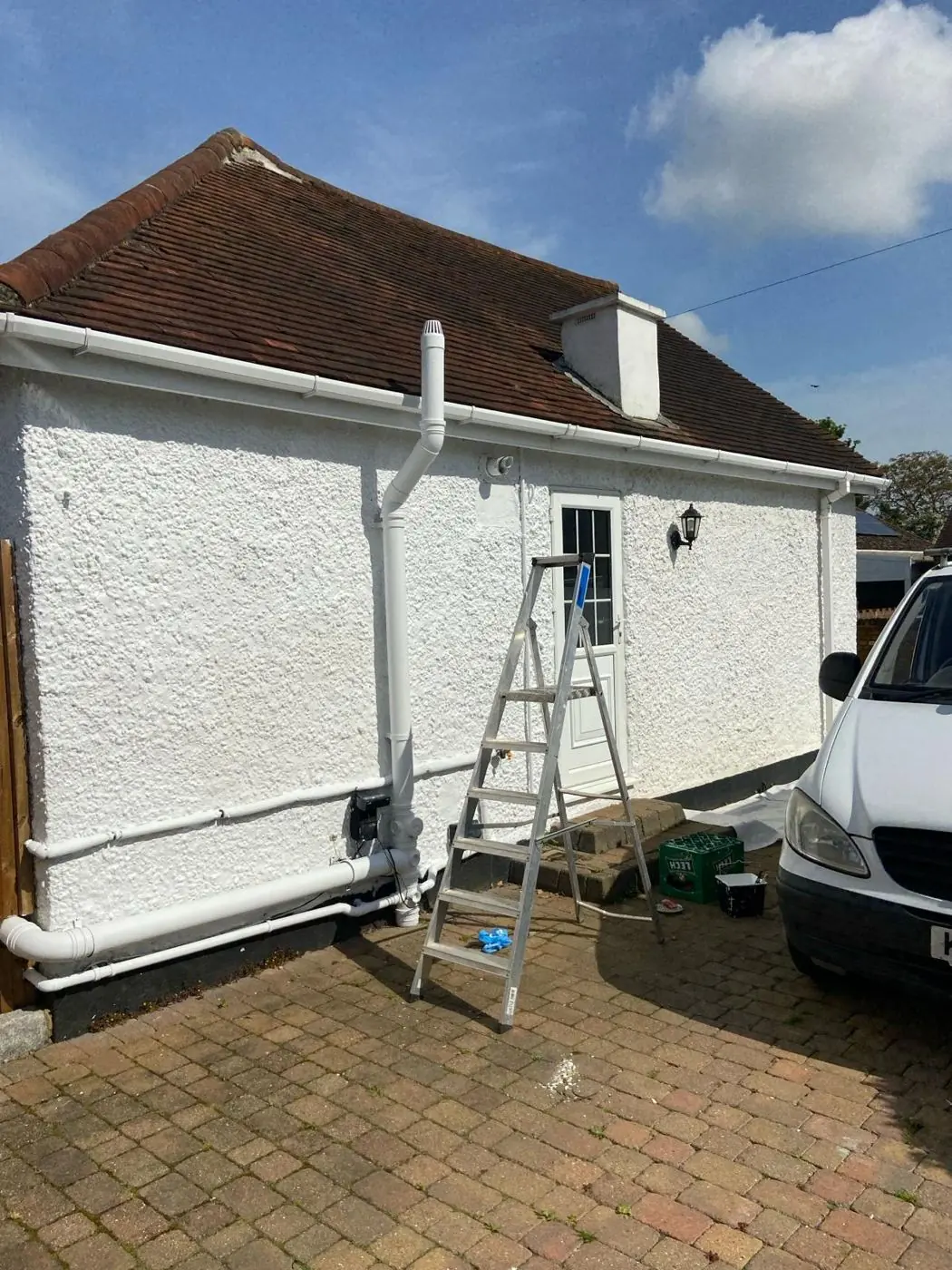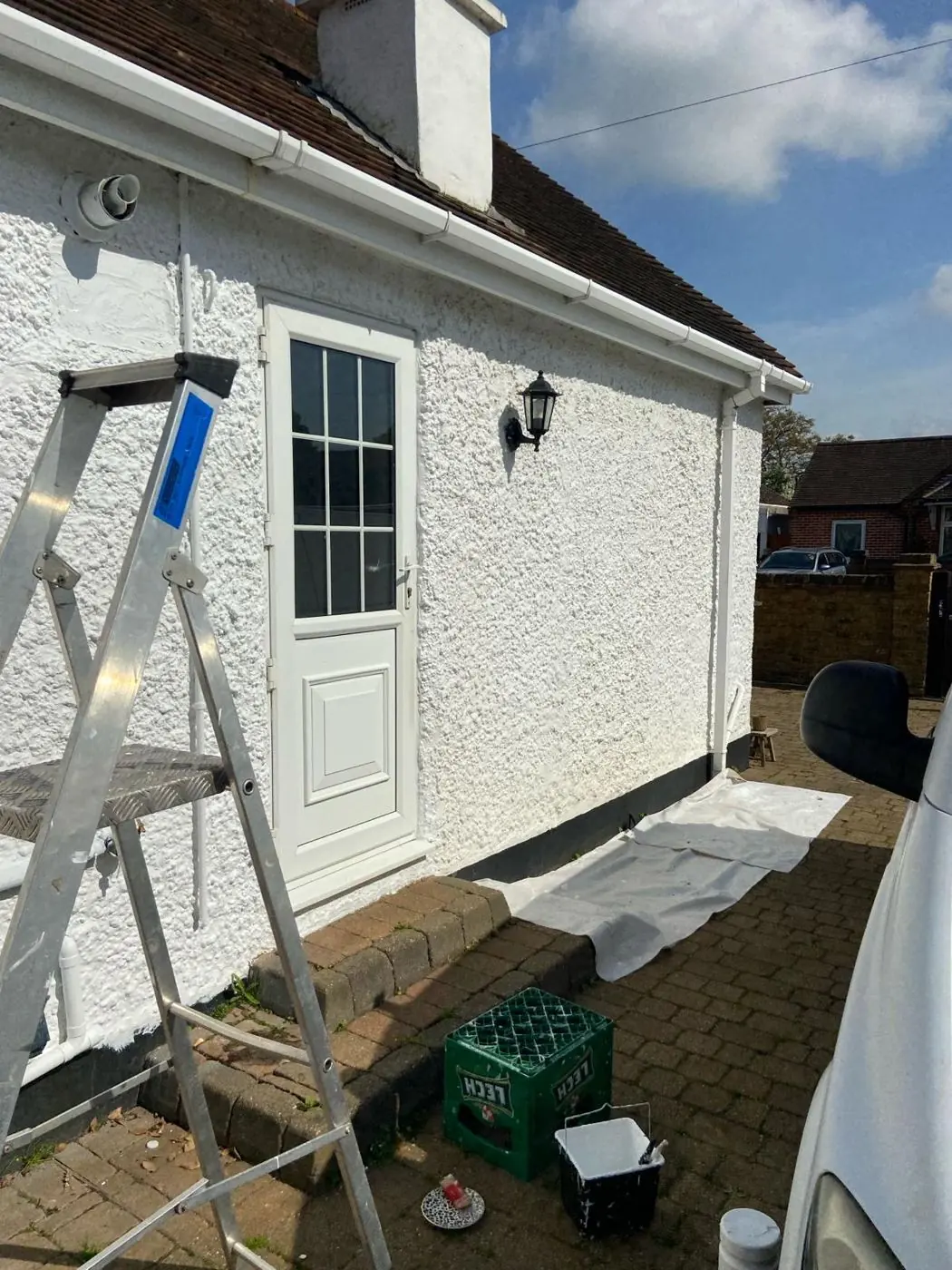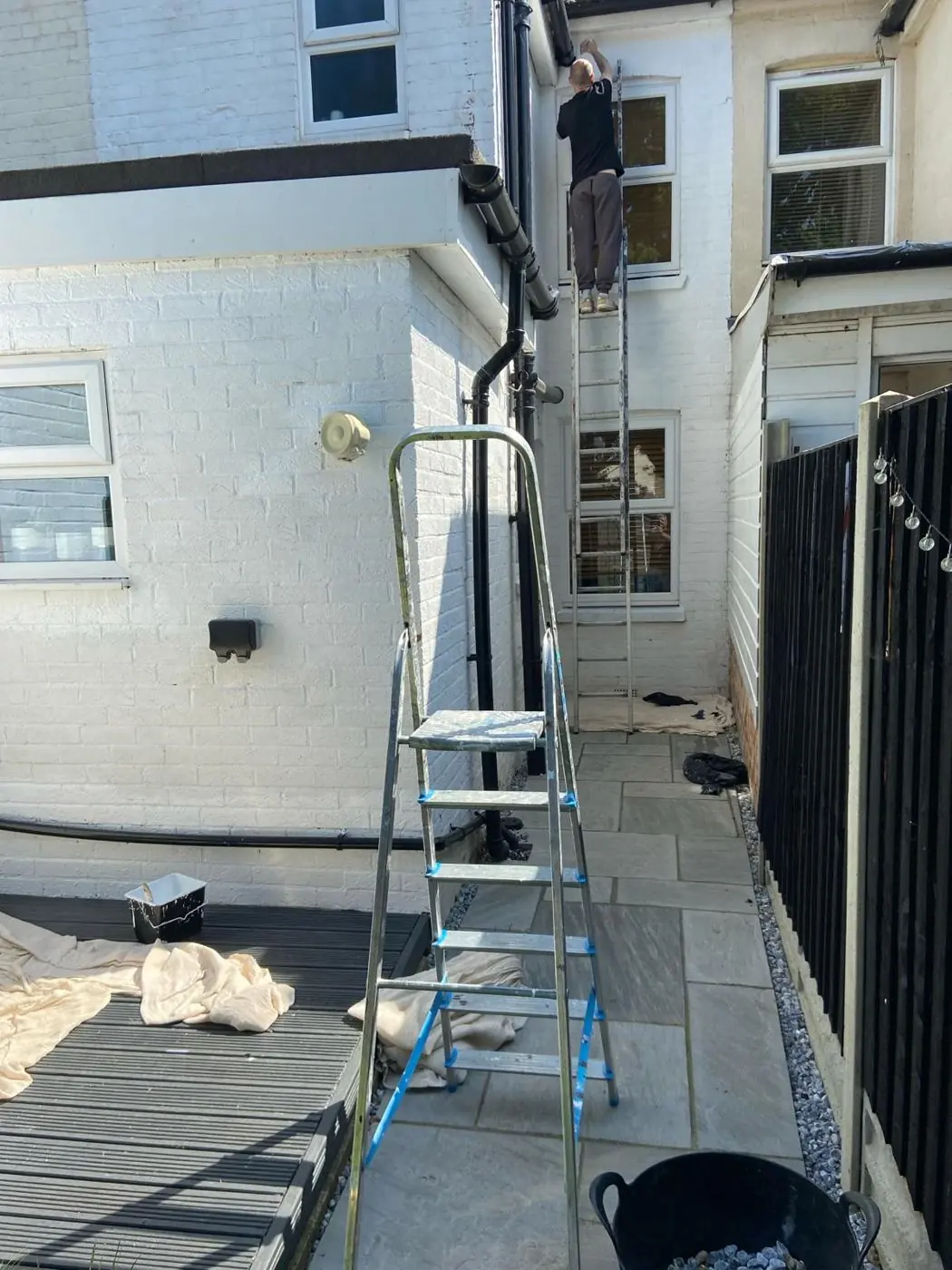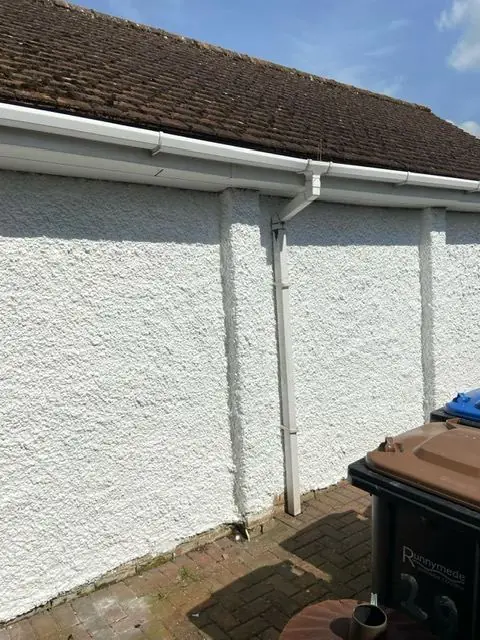
We paint render and masonry in Harpole, about 3.9 miles west of Northampton town centre, from our Northampton base. Dean starts every job by deciding whether a wall should be painted at all, then matches the coating to the substrate, which in Harpole is often stucco, old brick or a mix.
Which Harpole walls were meant to be painted
In most villages the question is which masonry paint to use. In Harpole the first question is whether the wall should be painted at all. Most of the listed houses in the conservation area are coursed squared ironstone, and a few, like the Church of All Saints, mix ironstone with limestone rubble. Those walls were built to stay bare and let moisture out through the face of the stone. A film of paint stops that, and the damage shows up later as spalling and damp inside.
Other buildings in the village were designed to be painted, and they tell us how it should be done. Harpole Hall, built around 1815, is painted brick with rendered window surrounds and a rendered cornice. The Old Rectory, built by William Chadwell Mylne in 1816, is stucco laid over stone. For houses in that tradition, a fresh coat is part of looking after them, as long as the coating still lets the wall breathe and the colour stays close to what is there.
Stucco and painted brick: keeping the wall breathable
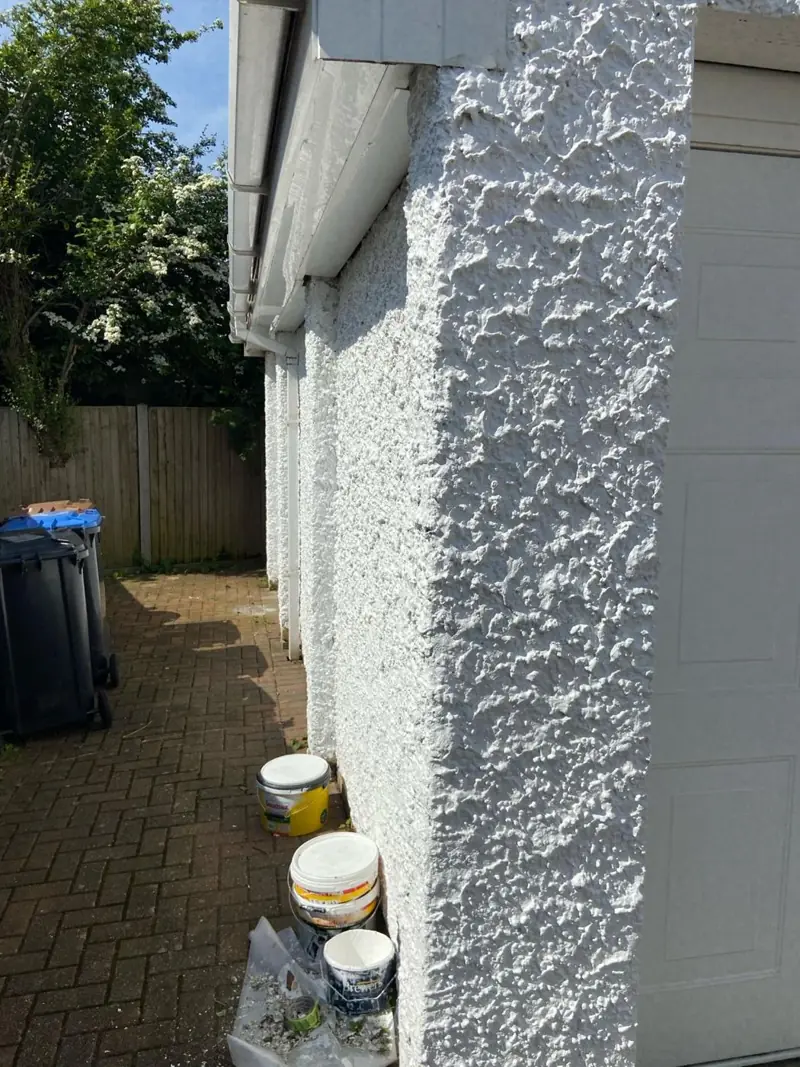
Old stucco and lime-based renders hold and release moisture differently from modern sand and cement. If someone has previously sealed them with a plastic-type acrylic, you may see blistering, bubbling or paint lifting in sheets near the base. Our approach on period painted walls in Harpole is:
- Test how well the existing coating is bonded and scrape back anything loose.
- Treat any green growth with a fungicidal wash and give it time to work.
- Repair cracks with a filler that suits the render, not a hard cement patch.
- Recoat in a breathable mineral or lime-compatible paint, matched to the existing colour.
If the wall belongs to a listed building, a change of colour or finish may need listed building consent from West Northamptonshire Council. Matching what is already there avoids most of those conversations.
Faux timber framing, workshop extensions and other mixed fronts
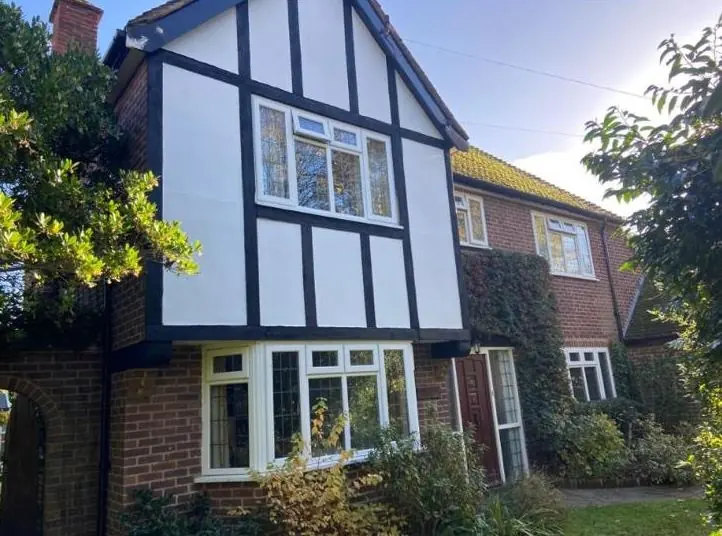
Harpole’s shoemaking history left its mark on the houses. Many houses were extended to make a small shop where shoe uppers were hand-stitched before finishing in Northampton, and those additions can be brick or rendered lean-tos joined onto older stone. The former Bull Inn at 46-48 High Street, now a private house, was rebuilt in brick in the late 19th century with faux timber framing. On fronts like these, one wall can include old brick, render and timber, so each surface gets its own primer and finish. Masking between them is slow, but it is the only way to keep painted brick from creeping onto the black-and-white work.
Walls near the Nene after the 2024 flooding
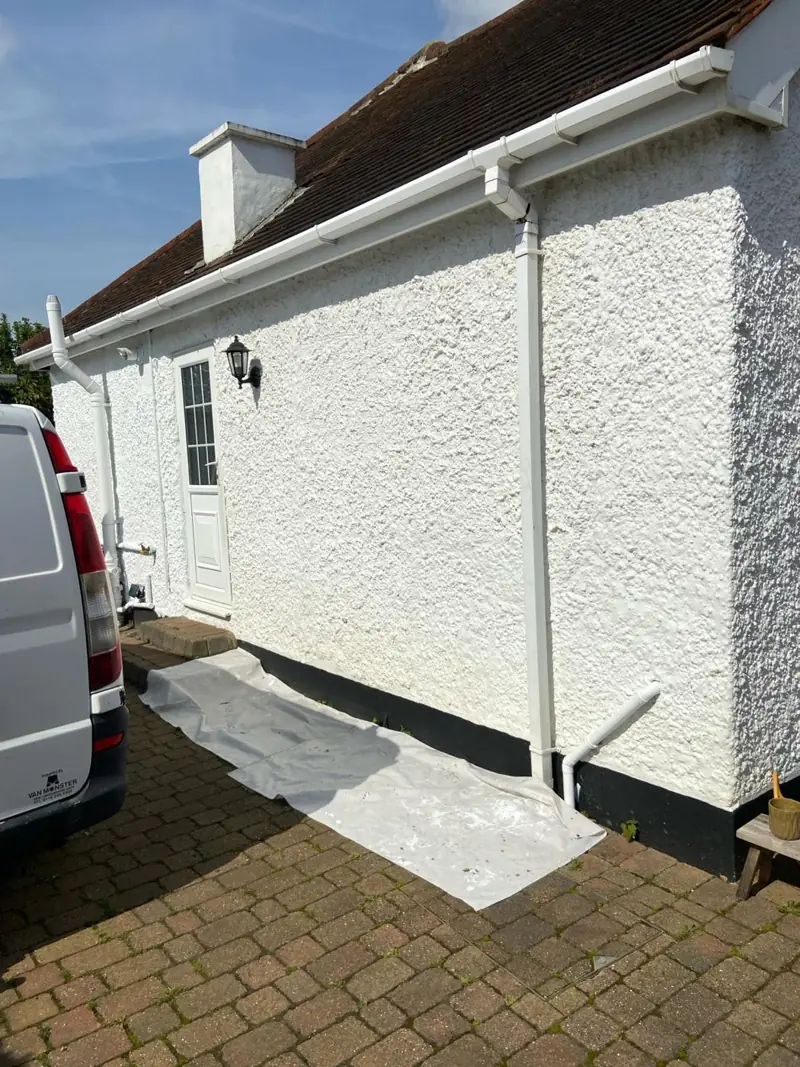
Harpole lies just north of the River Nene, and the winter 2024 floods led the parish council to issue guidance. If water reached your walls, the lower courses of render may still be holding moisture and salts. Painting over a wet base traps it, and the new coat fails first along the bottom. We check the base of the wall with a meter, brush off any salt bloom, and if needed leave a drying period before coating. That can mean booking later in the season, but the finish lasts longer for it.
Our main render and masonry painting service page covers the preparation steps in more detail, and the guide to painting render and roughcast explains textures and coatings. Other services for the village are on the Harpole page.
Last updated by Dean, DH Painter & Decorator.