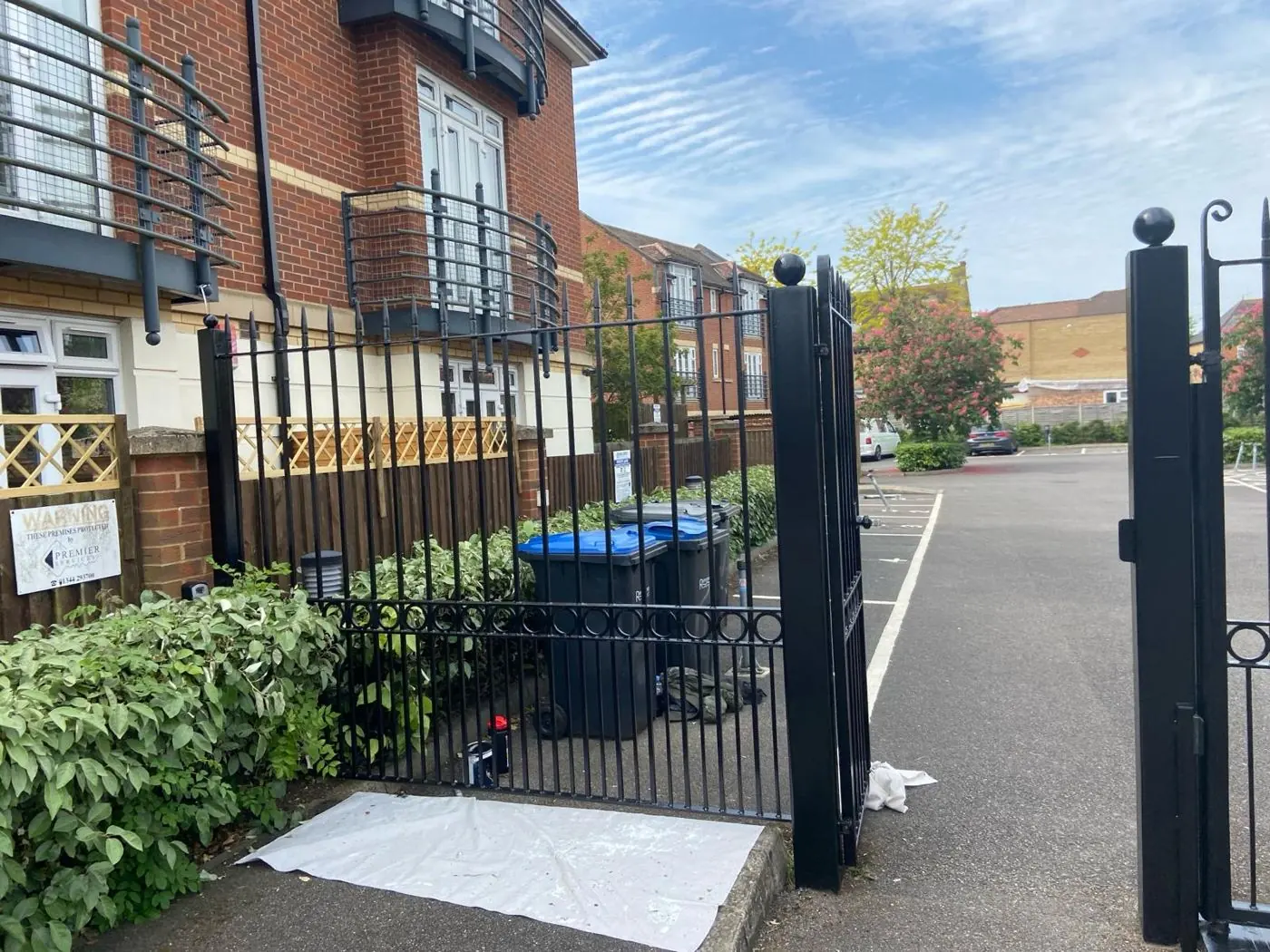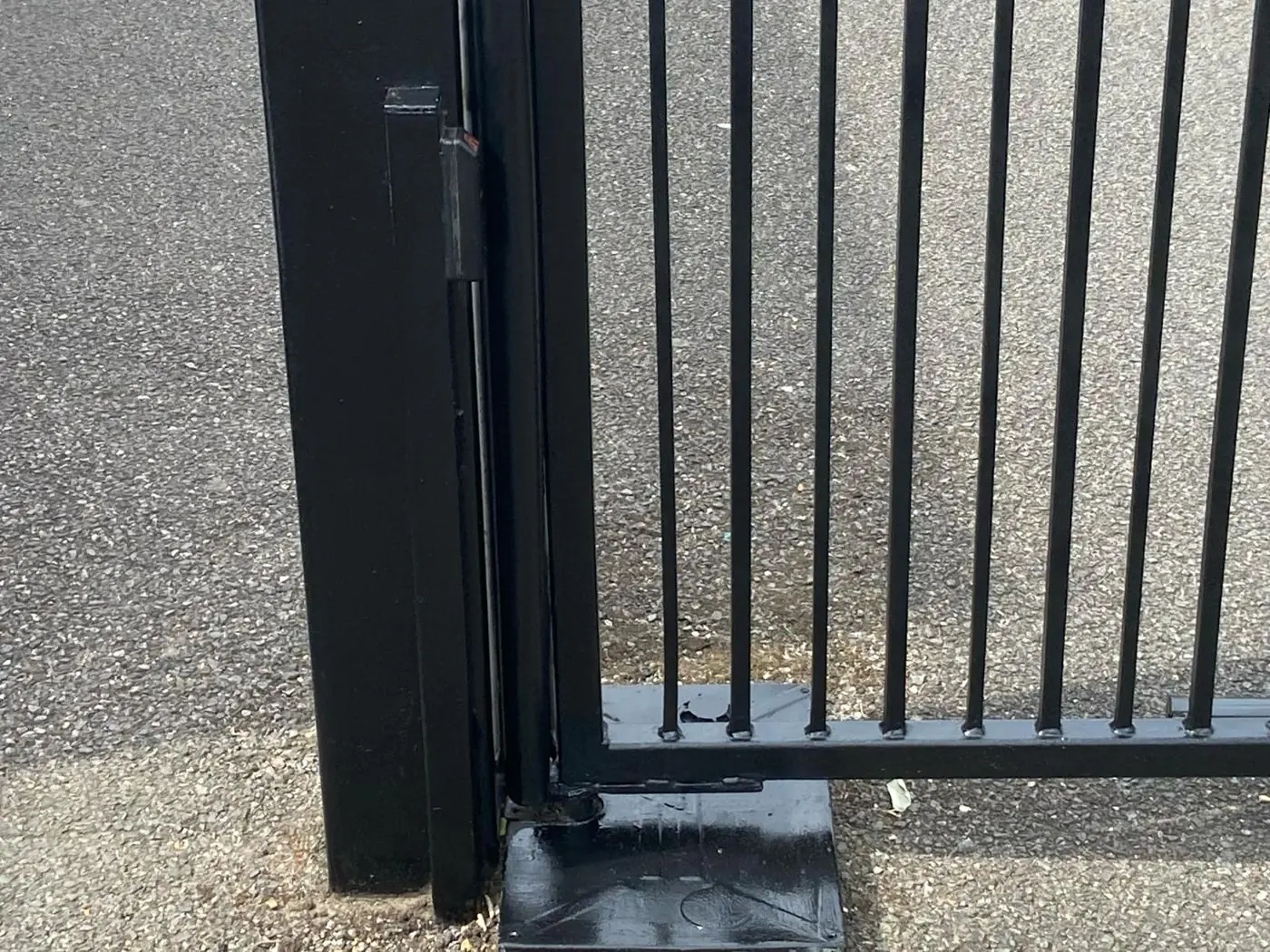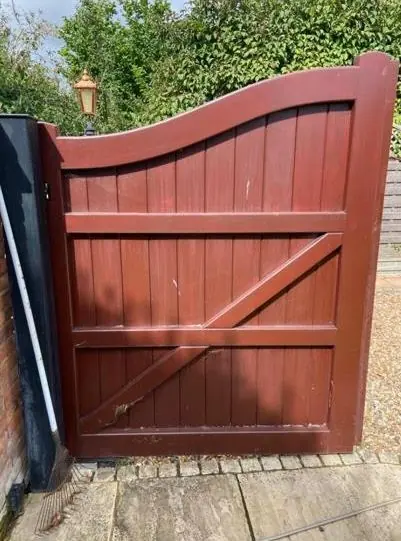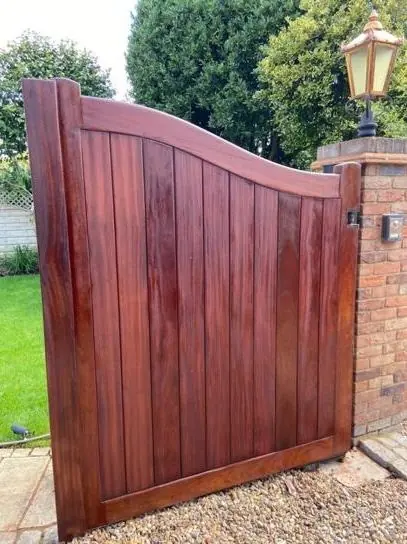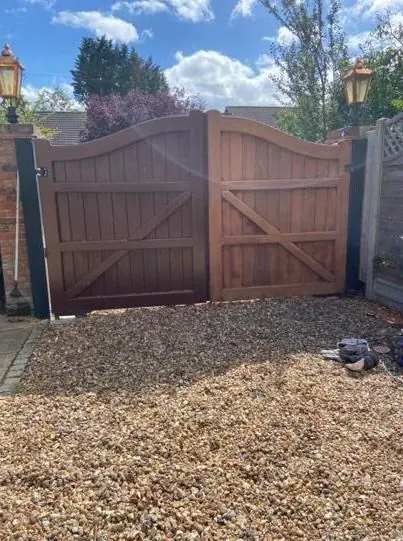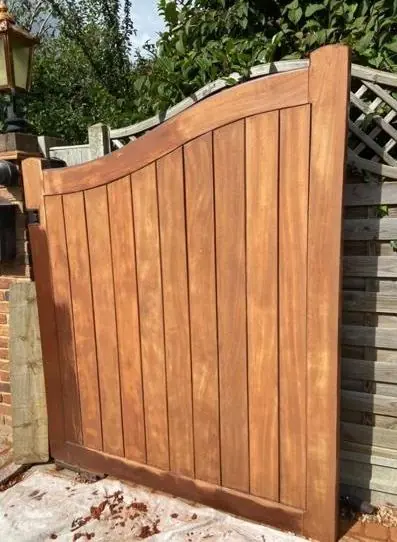
We stain and treat fences, gates and garden timber in Harpole, about 3.9 miles west of Northampton town centre. Dean covers the village from our Northampton base and chooses the product to suit the timber, from new pressure-treated boards between estate plots to old gates hung in ironstone walls.
New closeboard between estate plots
The homes at Harlestone Park, Norwood Quarter and Western Gate came with closeboard fencing between the plots, and those long shared runs are where much of Harpole’s fence staining is likely to be. New pressure-treated boards are often still wet with preservative when the houses are handed over, and a stain put on too early sits on the surface and peels. We check the timber’s moisture first. If it is not ready, we tell you to wait a season rather than stain it straight away.
Shared boundaries also raise a practical question: whose side gets done? We stain your face of the fence and, with your neighbour’s agreement, can quote for theirs at the same time so the colour matches. Overspray is not an issue because we apply by brush, which also pushes the stain into the rough-sawn grain better than a sprayer.
Gravel boards, posts and the arris rails behind the boards get the same attention as the faces you see. The foot of each post, where it meets soil or a concrete spur, is where rot starts, so we work stain well into that joint. If a panel has already split or a post is loose, we point it out before we start, because staining a fence that needs repair is money spent twice. Estate gardens are usually reached by a side path or gate, so we keep tins and sheets on the drive and carry them round rather than through the house.
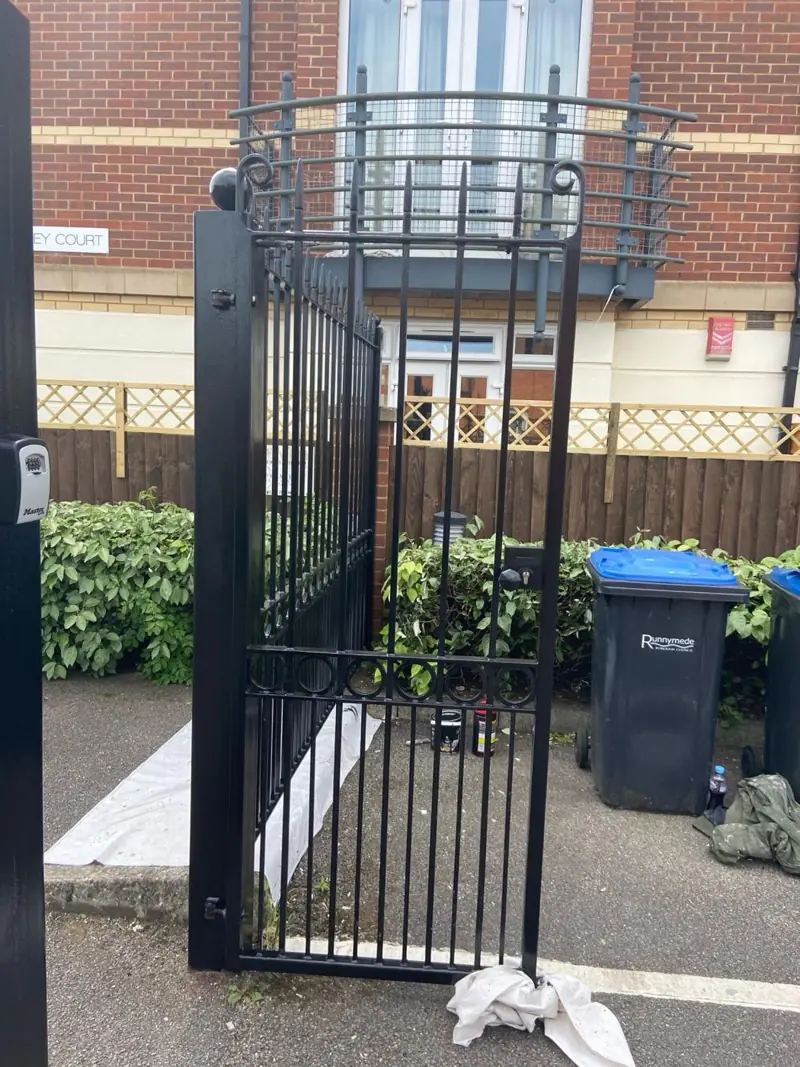
Timber gates in old stone walls
In the conservation area along High Street and Upper High Street, many gardens sit behind stone boundary walls, and the timber is often a single gate or a pair hung on posts set into the stone. These gates have usually been painted, stained and oiled many times over. Our process is to:
- scrape off loose coatings and test what remains for compatibility,
- check the bottom rail and the foot of each post, where water collects first,
- mask or protect the stonework on either side, because stain on ironstone is hard to remove,
- use a microporous stain or paint that lets the timber move.
Gates next to listed houses are part of the village scene. A like-for-like recoat is maintenance, but if you want to move from a muted colour to something much brighter, it is worth checking with West Northamptonshire Council first.
Gardens that back onto open farmland
Harpole sits in farmland, with public bridleways such as KP1 running out from the village and the Northamptonshire Round walking route passing through it. Gardens on the edge of the village back onto open fields rather than the next house, so fences there take more wind-driven rain and sun than a sheltered town garden. On those runs we suggest a pigmented stain over a clear finish, because the pigment protects the wood from UV. We also allow for a shorter recoat cycle on the most exposed side.
Picking a dry window
Stain needs dry timber and a dry day either side. The parish council issued flooding guidance after the winter 2024 floods, and posts and boards that stood in water need a long dry spell before treatment. We book this work for late spring to early autumn and will move a day rather than stain damp wood.
The main fence and gate staining service page explains stains, oils and paints in more detail, and our seasonal timing guide covers weather. Our Harpole area page lists other services in the village.
Last updated by Dean, DH Painter & Decorator.