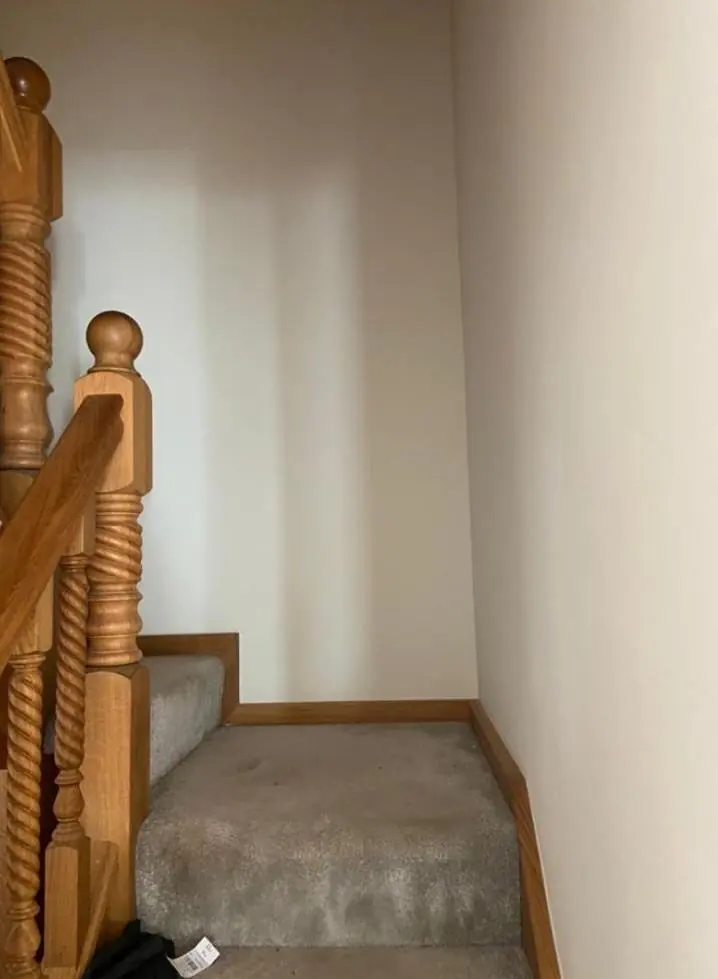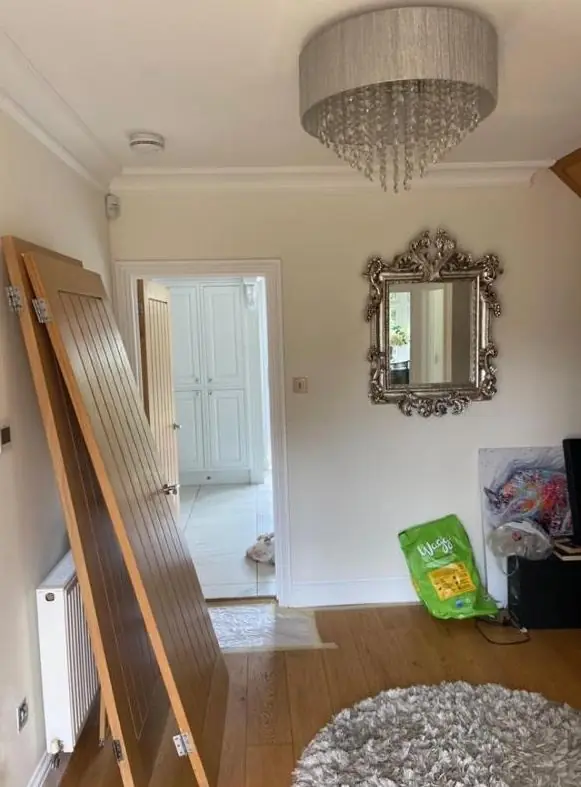
We decorate hallways, stairwells and landings in Lings, about 3.3 miles north-east of Northampton town centre in NN3. Most homes here are late-20th-century estate houses with a narrow hall and one straight flight, so the work centres on hard-wearing wall finishes, tidy stair woodwork and safe access over the stairwell.
The Lings hallway: small, busy and the first thing visitors see
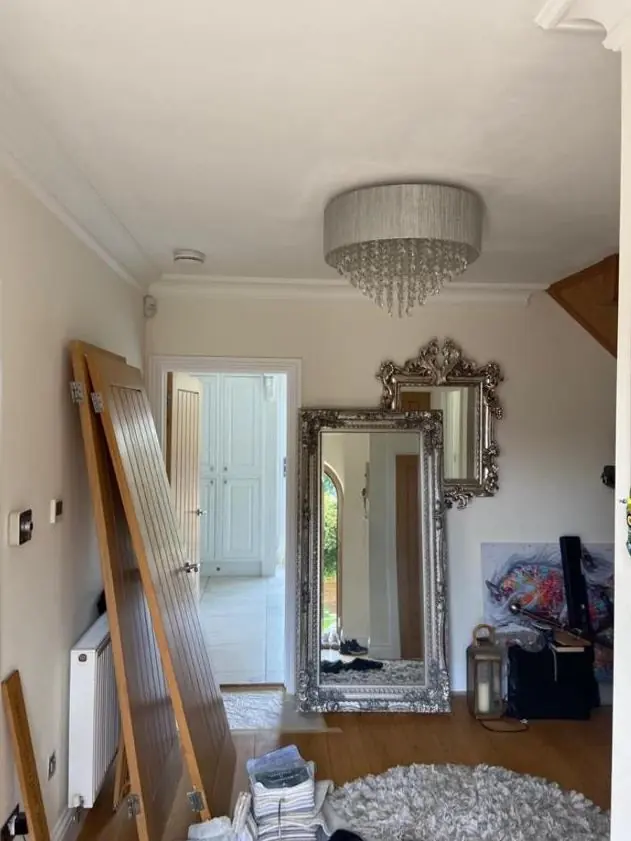
The three-bed terraces in the courts off Lings Way have narrow hallways with a single straight flight of stairs rising from them. Everything passes through it: shopping, coats, bikes, the vacuum cleaner, and on moving day an entire household of furniture. Because the walls are close together, the scuffs land at the same heights on both sides, at bag height and just above the skirting where shoes and wheels strike.
That predictable pattern is useful. It shows where a tougher finish earns its place and where an ordinary emulsion is fine.
Paint you can actually wash
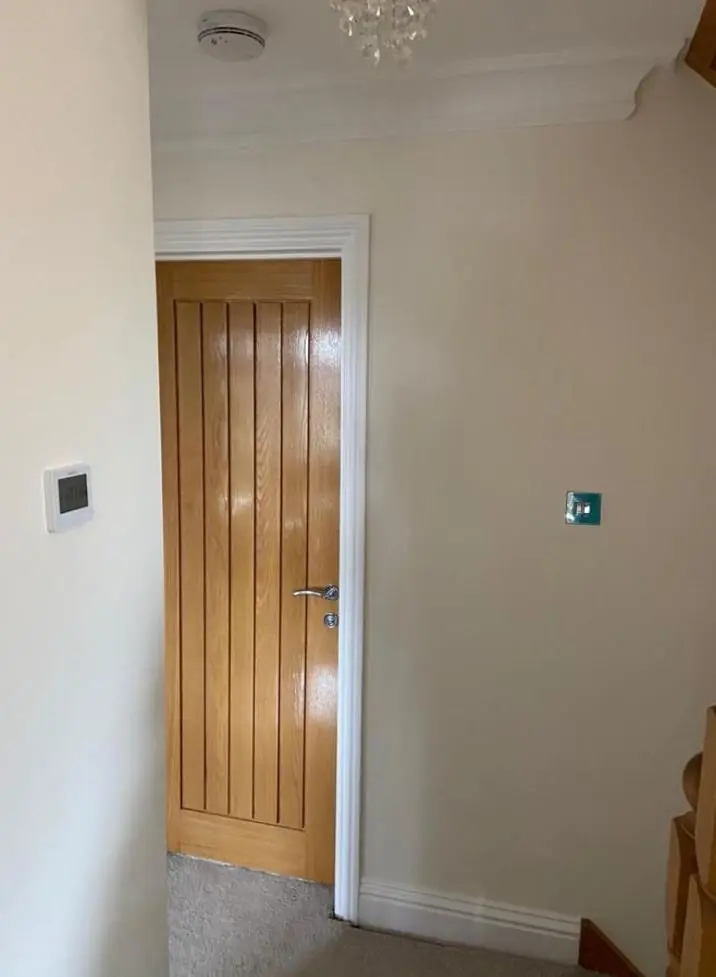
Contract matt, the paint most housebuilders use, marks easily and cannot be scrubbed; washing it just polishes a shiny patch into the wall. In a Lings hall we normally use a durable matt or washable emulsion on the lower walls and stair side, so a muddy handprint comes off with a damp cloth. Ceilings and the high stairwell wall can stay in standard matt, because nobody touches them.
- Lower walls and the wall alongside the stairs: scrubbable durable matt, often a mid-tone that hides marks.
- Upper stairwell wall and ceiling: standard matt, frequently a shade lighter to bounce light down into the hall.
- Spindles, handrail, stringer and skirtings: hard-wearing satin.
Houses that back onto Lings Wood often have halls that get little daylight. A warm off-white or soft stone on the upper wall helps there, while a cool grey can look dingy once the sweet chestnut and conifers have filtered what light there is.
Reaching the stairwell safely
Even in a modest estate house, the wall above the stairs is taller than a stepladder can reach. We use a stair ladder or a combination ladder with a board set level across the treads, so the full height can be cut in cleanly at the ceiling line. In compact Lings layouts the platform takes up most of the stair width, so we plan the stairwell in stages and clear the stairs at the end of each day so the household can get up and down.
Estate staircases usually have plain square or simply turned softwood spindles. Each one has four faces that get gripped, kicked and knocked, so they are washed, sanded, filled where chipped and given two coats of satin. A varnished handrail can be de-glossed and painted to match, or cleaned and re-varnished if you prefer the timber showing.
Outside, some courts have little space for loading, but many Lings houses have a driveway, so boards and ladders can be brought straight to the front door rather than carried in from a street.
Rented halls and the moving-day test
Lings has an active lettings market in three-bed terraces, and the hall is where moves in and out leave the most damage. For landlords we treat stair woodwork and lower walls as the priority and record the colours, so small marks can be touched in at the next check-out. Owner-occupiers getting ready to sell can take the same approach: a clean hall sets the tone the moment a viewer steps through the door.
Our general approach to stairwells is on the hallway, stairs and landing decorating page. The Lings area page covers the neighbourhood’s other housing, including the larger detached homes on Lingswood Park.
Last updated by Dean, DH Painter & Decorator.