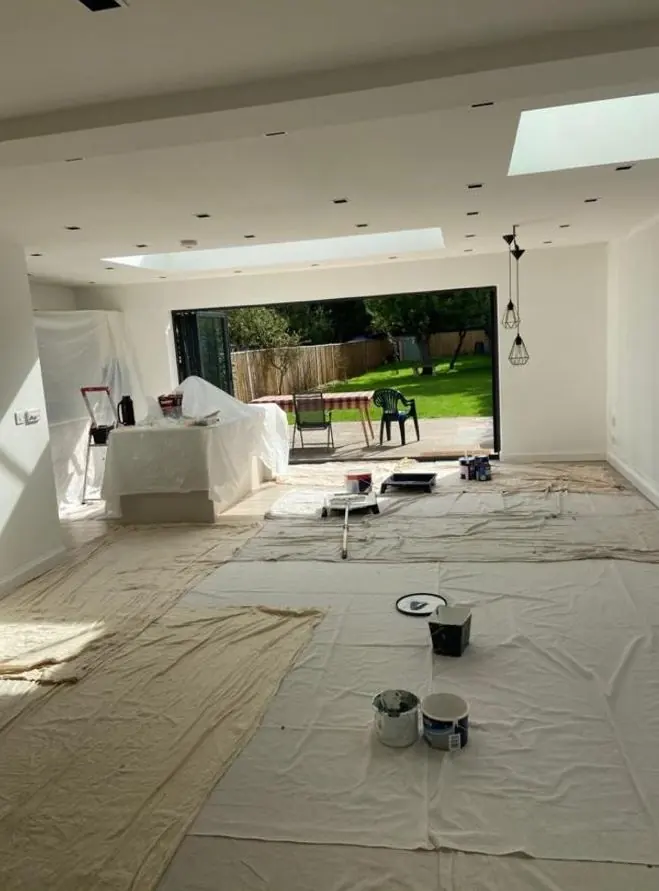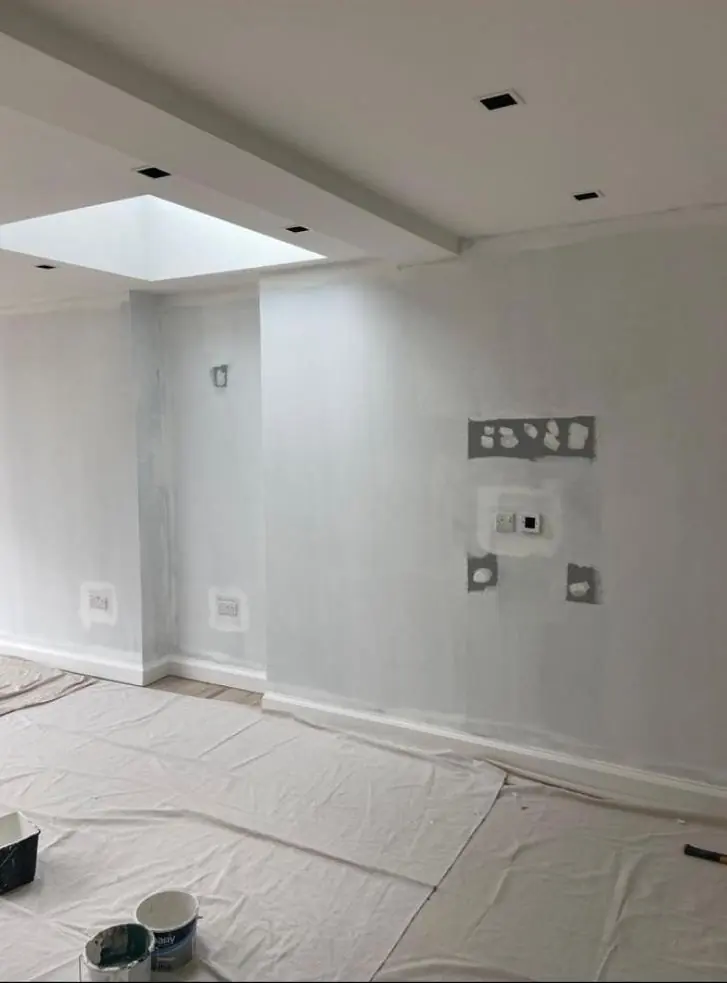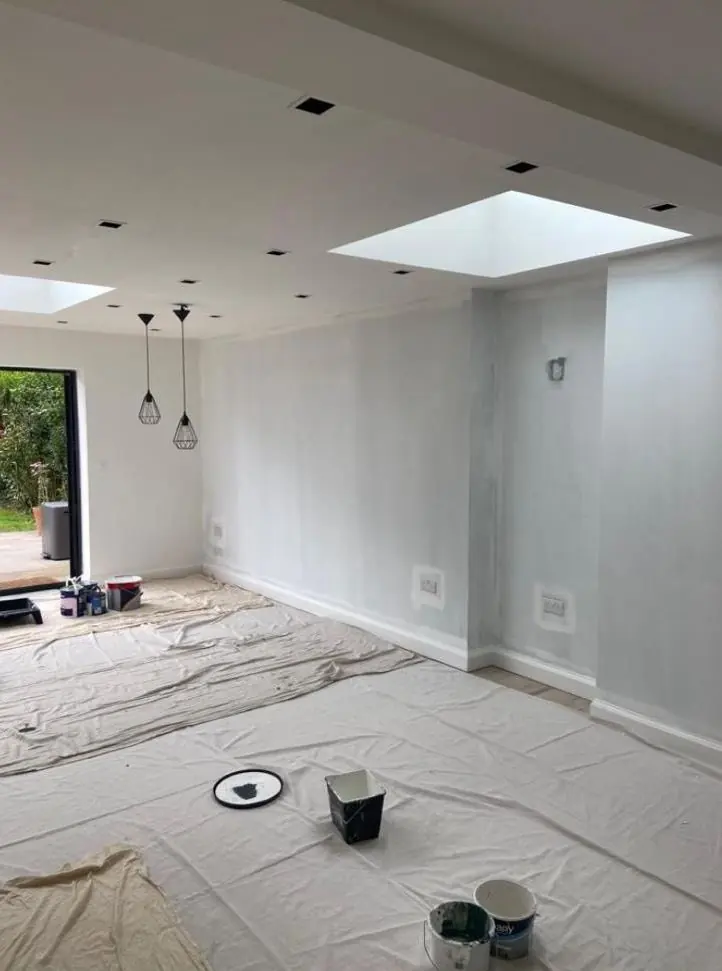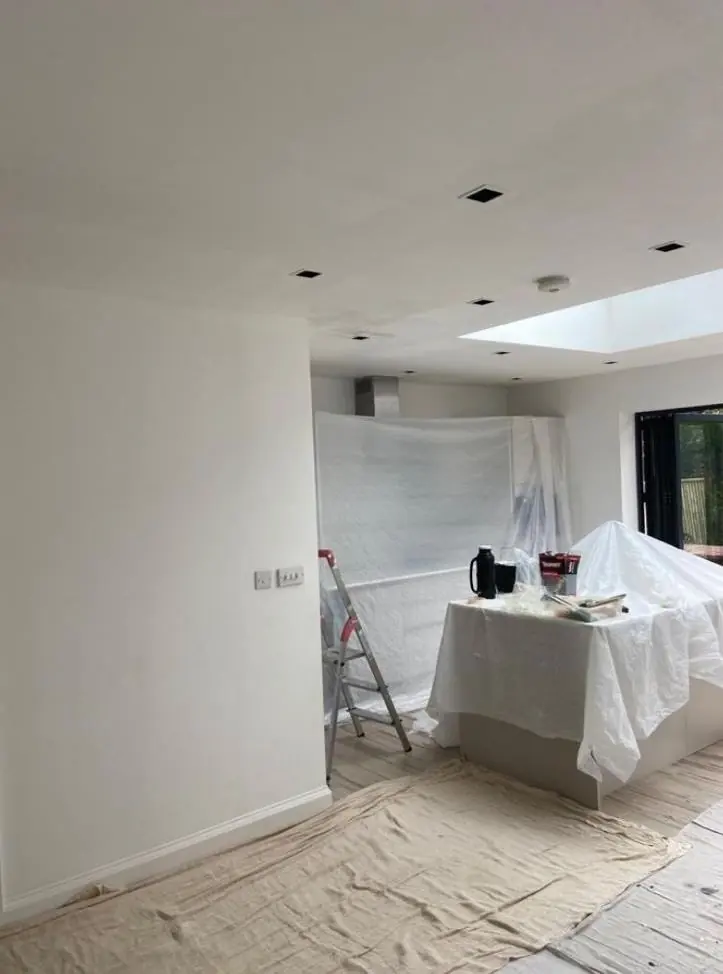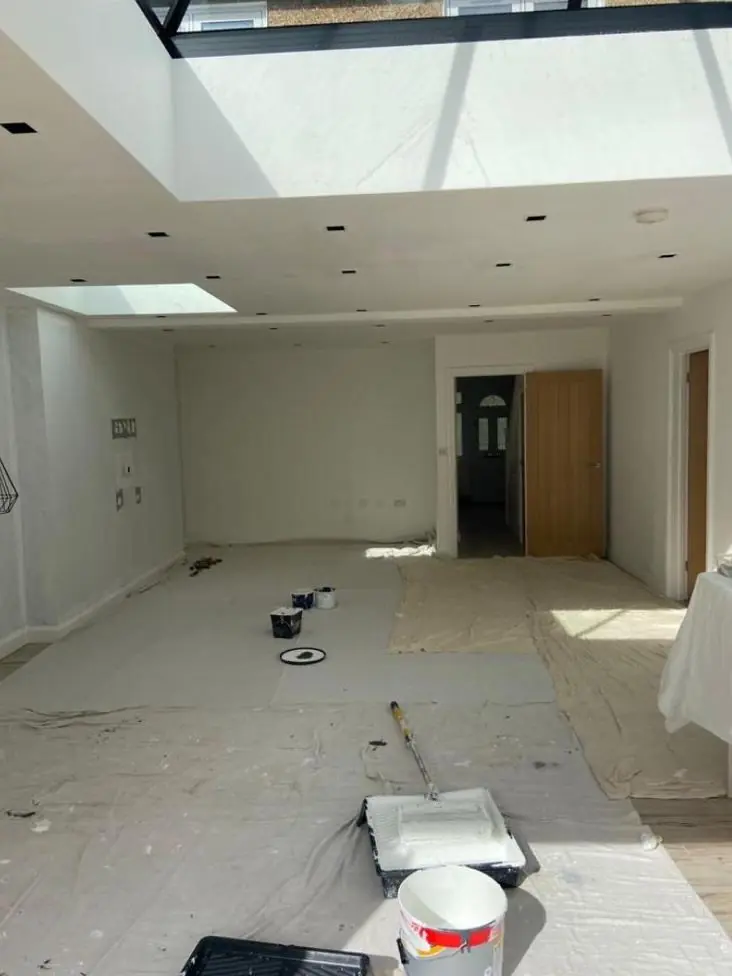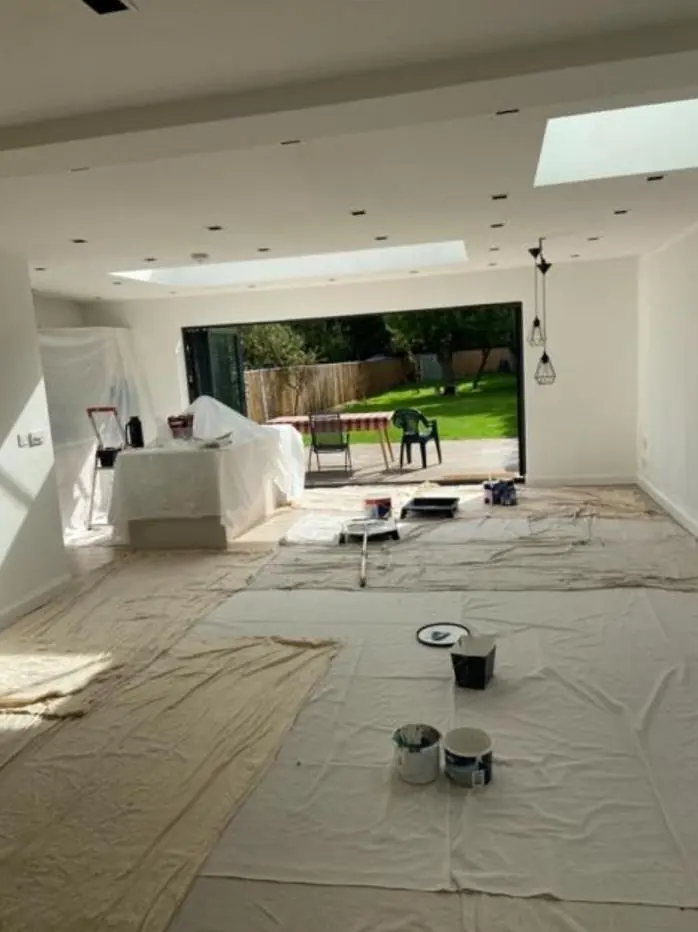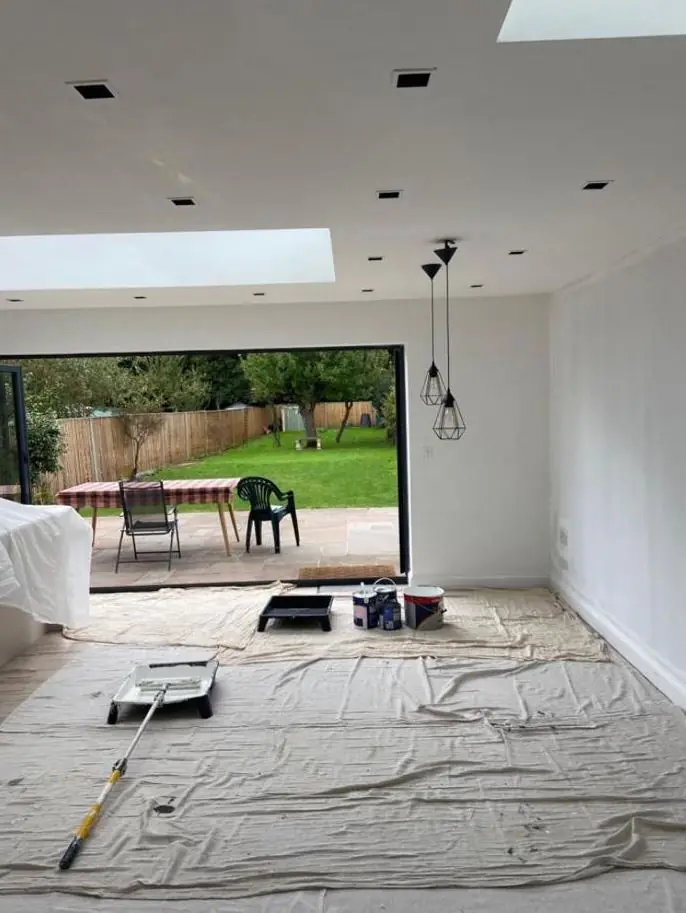
Dean decorates new plaster in Lings, the NN3 neighbourhood 3.3 miles north-east of Northampton town centre, once your builder or plasterer has finished. That covers extensions on the larger detached houses, converted garages, conservatory walls and re-skimmed rooms in estate terraces, starting with a mist coat on dry plaster.
Where new plaster turns up in Lings
Most of Lings was built in the late twentieth century, so new plaster here usually comes from people improving the house they already own rather than from large new developments. A sale listing on Lingswood Park describes an extended four-bed detached house on a good-sized plot, and bigger plots like that are where single-storey rear extensions and kitchen-diner knock-throughs tend to happen. Elsewhere, several Lings homes are listed with single or tandem garages, and converting part of one into a utility room, study or extra bedroom brings new plasterboard and skim into the house. Conservatory walls and re-skimmed rooms in the estate terraces add to the list.
Each of those jobs leaves the decorator with the same raw material: bare, thirsty plaster that has to be sealed before any colour goes on.
Drying first, then the mist coat
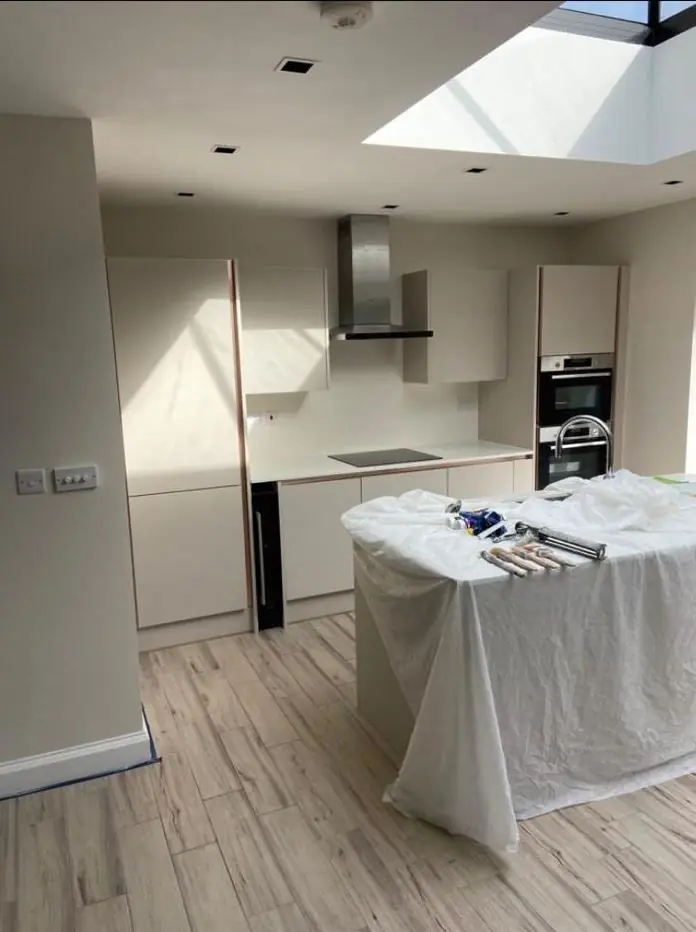
Fresh skim has to dry right through before it is painted. It changes from a dark pinkish brown to an even pale colour, and darker patches mean moisture is still coming out. A garage conversion with a new external wall, or an extension finished in the colder months, will normally take longer than a single re-skimmed bedroom. Painting too early traps that moisture and leads to blistering and flaking later on.
Once it is dry, the first coat is a mist coat: watered-down contract matt or a dedicated new-plaster sealer that soaks in and gives later coats something to grip. Vinyl emulsion rolled straight onto bare plaster sits on the surface and can peel. Our guide to painting new plaster explains the mixing ratios and why they matter.
Making an extension sit with the rest of the house
The tricky part of an extension on an established Lings house is the join. The original walls carry years of paint and the new ones are bare, so the same colour can look different either side unless both are brought to a matching base. We usually take the finish coats across the whole open-plan space, old walls and new together, instead of stopping at the line of the old back wall. New softwood skirtings and door linings are knotted, primed and undercoated before the satin or eggshell goes on, so they match the existing joinery.
Rear extensions on houses backing onto Lings Wood deserve a little extra thought. The shaded side of the house can keep a new room cooler and slower to dry, and light filtered through the sweet chestnut, fir and larch can make cool whites look grey, so a slightly warmer finish often looks more natural there.
Builder’s finish on the newer homes
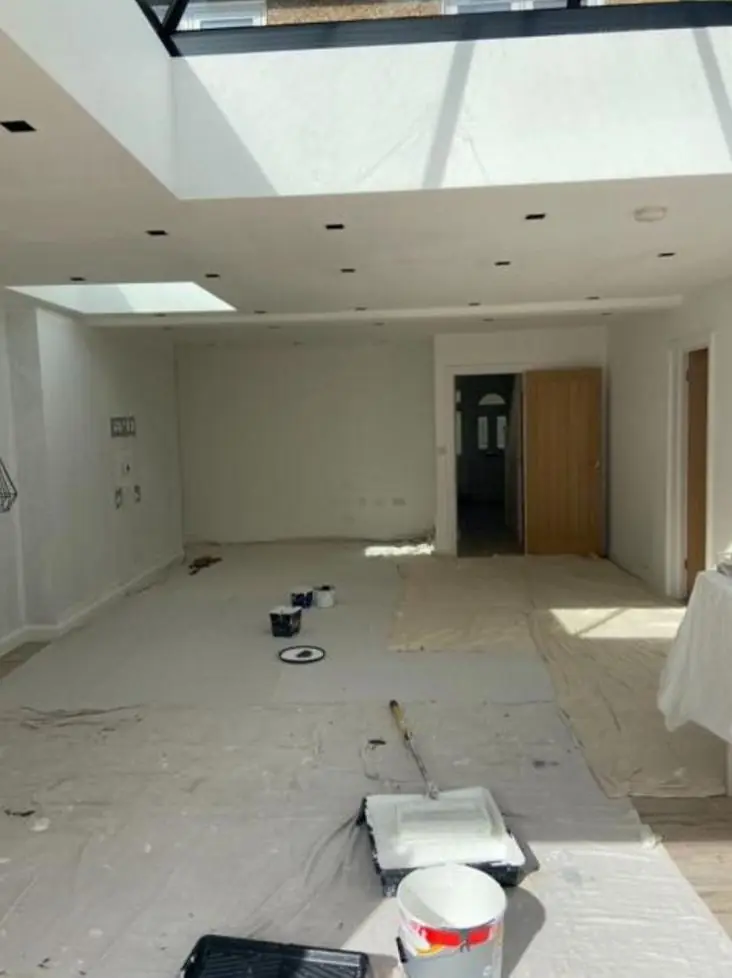
Not all the fresh plaster in Lings sits in extensions. Newer houses, such as the 2016 detached build on Crestwood Close in Rightmove’s Lings search area, are typically handed over with every wall in one coat of builder’s contract matt. That paint is breathable, which suits drying plaster, but it scuffs easily and will not wipe clean. For a first redecoration the walls usually need settlement cracks filled and sealed, then a full repaint in a durable emulsion, ideally once the house has been through a full heating season and any shrinkage has shown itself.
We cover Lings from our Northampton base, and many homes here have off-road parking, which keeps materials close to a rear extension. Our full process is on the new plaster and extension painting page, and the Lings area page lists other services in the neighbourhood.
Last updated by Dean, DH Painter & Decorator.