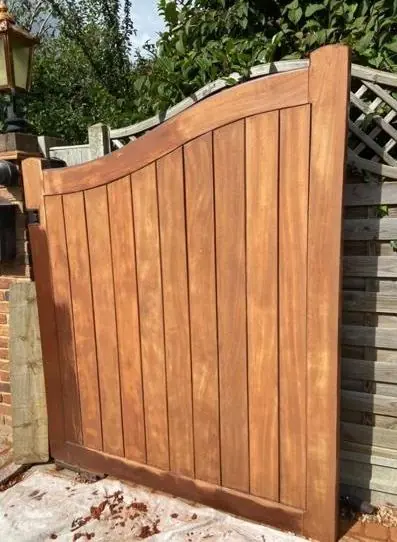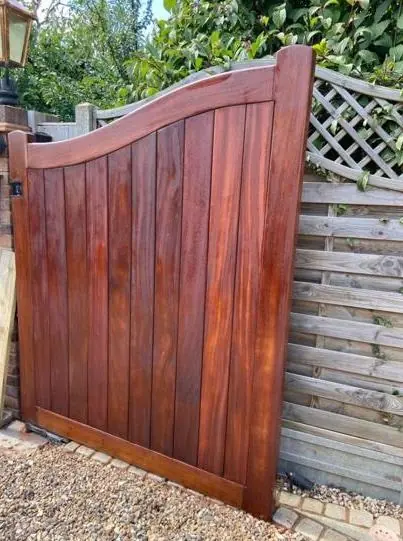
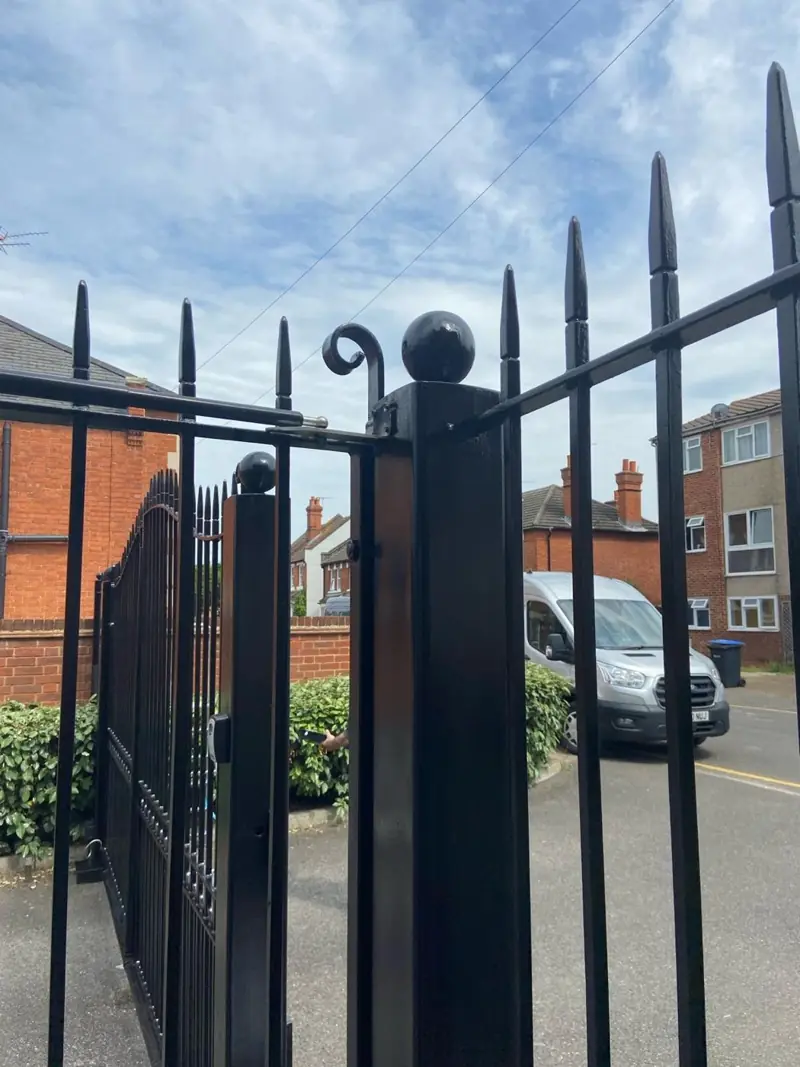
We stain and paint garden fences and timber gates in Lings, the NN3 neighbourhood about 3.3 miles north-east of Northampton town centre. Most jobs here involve shared boundaries between closely packed court gardens, and many fences near Lings Wood need a biocide clean first.
Shared boundaries in a court layout
Lings was built as courts and closes, with gardens packed closely together. That produces a lot of close-boarded fencing, and almost every run of it is a boundary with someone else. The side facing you is yours to treat, and the other face belongs to the neighbour’s view, so staining a fence in Lings usually starts with a conversation over it.
Before we book, we ask you to agree two things with the neighbour: whether we can treat their side too (which needs their access and their consent), and a colour that will work from both gardens. A dark stain on your side can bleed through gaps and over the top rail, so on a shared fence a mid-tone that suits both sides avoids an awkward look from next door.
Posts and gravel boards deserve as much attention as the panels. In a court where gardens meet at corners, one post can carry three fence runs, and a rotten post base will tip all of them. We check for movement at the posts while cleaning and tell you about any that need a fencer before we stain, since there is little point finishing a fence that is about to be replaced.
Why fences by the wood go green
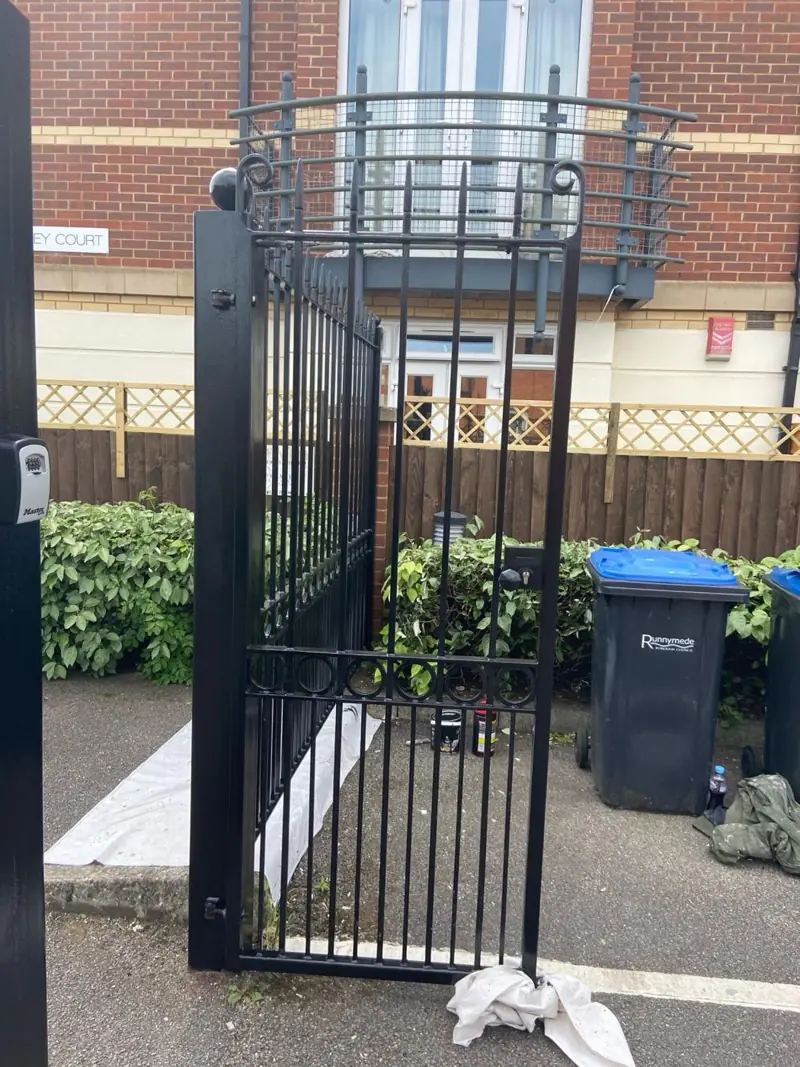
The gardens nearest Lings Wood live with shade from the reserve’s tall conifers and chestnuts, and with the damp that lingers around its ponds and shaded edges. Fence boards there rarely dry out fully between showers, and the bottom third of a fence, closest to the soil and plants, stays wettest of all. Green algae and moss establish quickly, and stain brushed over live growth will not soak in.
So a fence in that position gets a biocide treatment, left to work for the time the product needs, then a scrub and rinse. After that it has to dry, which in the shade of the wood can take several dry days. We check the timber before staining rather than relying on the calendar.
Choosing a finish for each fence
| Situation in Lings | What usually suits it |
|---|---|
| Shaded fence backing onto Lings Wood | A breathable stain or fence treatment, applied only after cleaning and full drying, so moisture in the boards can escape. |
| Sunny front or side boundary | A pigmented stain that resists fading, or an opaque fence paint if you want a solid colour. |
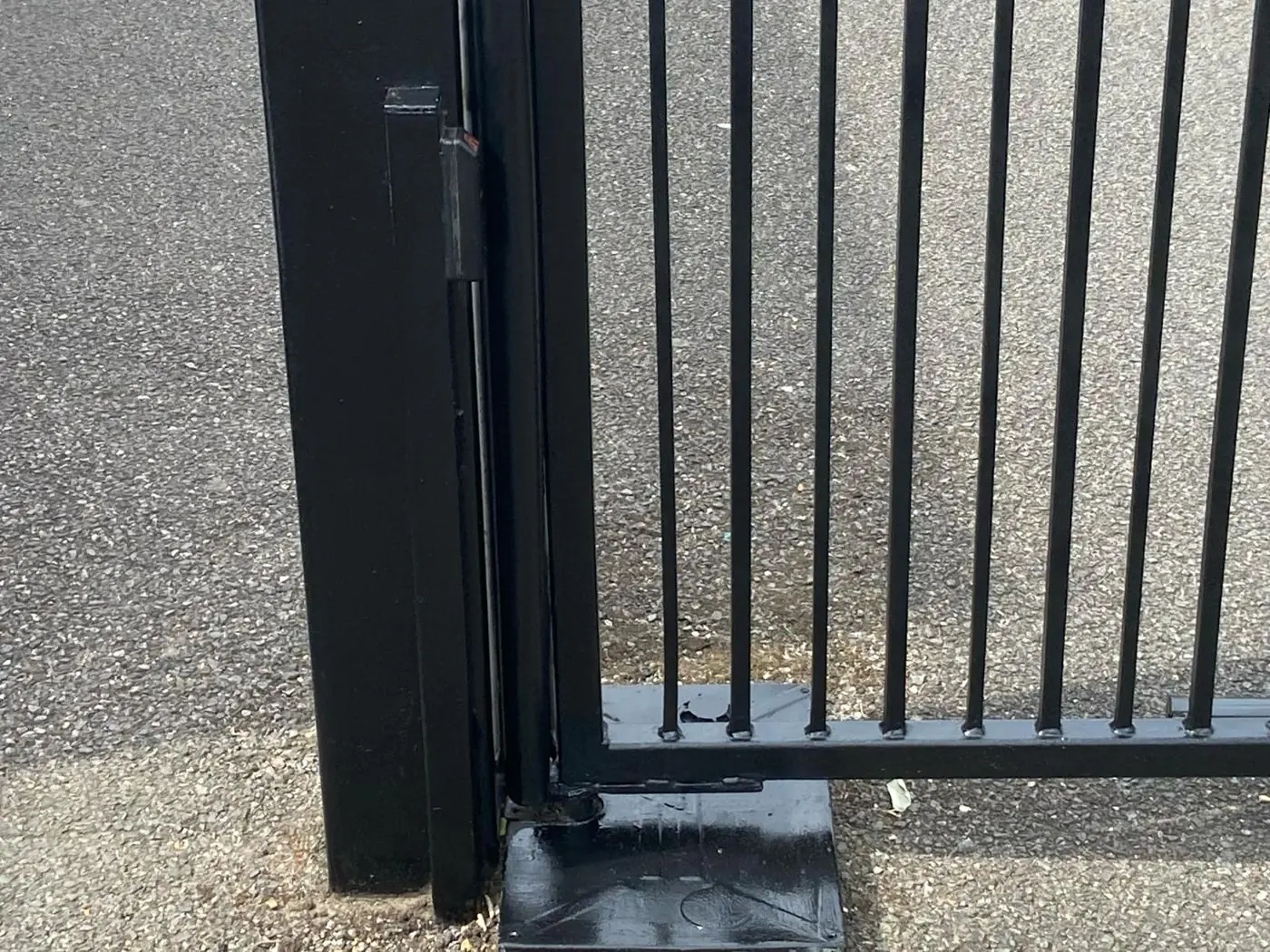
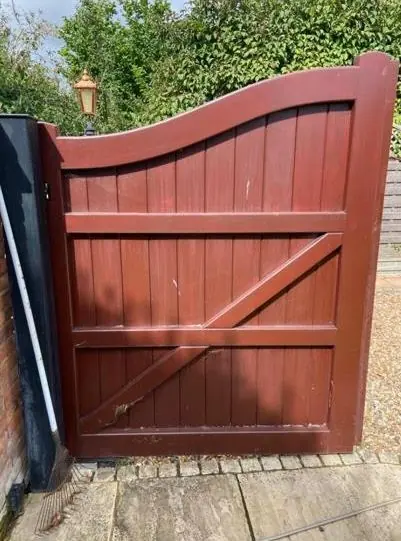
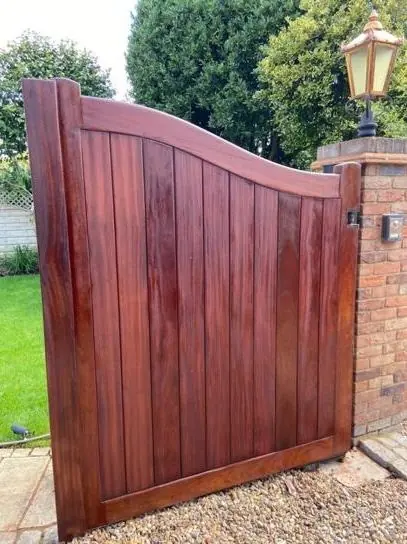
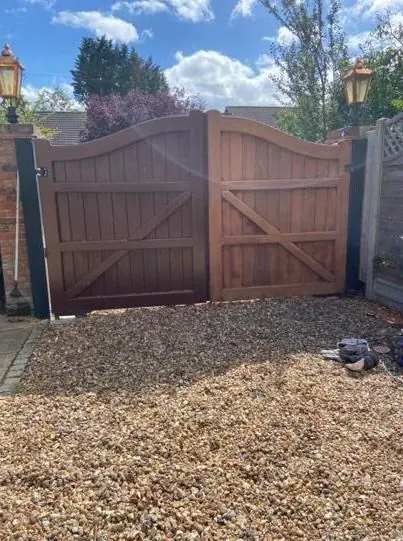
| Timber side or garden gate | A harder-wearing finish on the gate itself, since it is handled daily, with hinges and latches masked or removed. |
| Newer fencing on recent homes, such as the 2016 house on Crestwood Close | Fresh pressure-treated timber is usually left to weather before a first coat, following the product guidance. |
Reaching the back garden
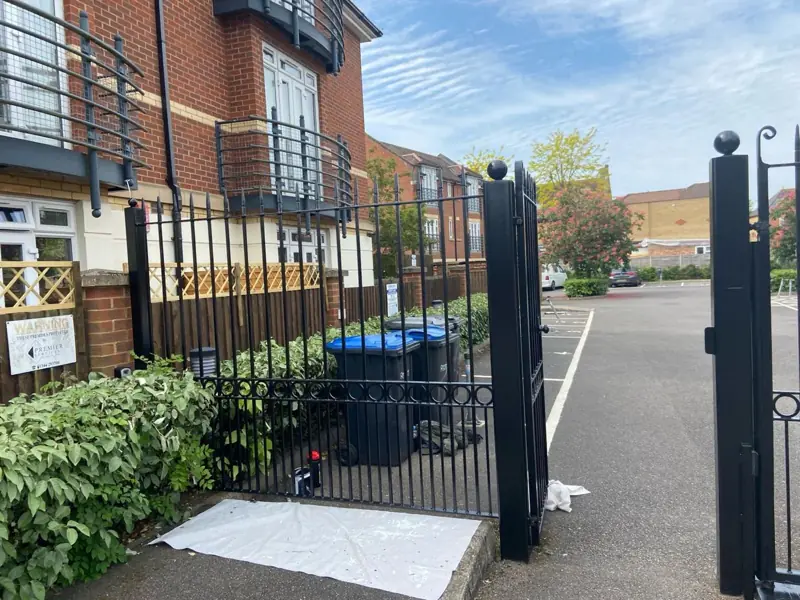
End-of-terrace and semi-detached homes often have a side gate, which makes access straightforward. A mid-terrace house in one of the courts may not, in which case brushes, sheets and the biocide sprayer come through the house. The same applies to tight gardens where the fence is hard to reach behind sheds or raised beds, so it helps if anything movable is cleared back from the fence line before the day. We sheet the route first, and since a fence job uses very little equipment, it is usually a manageable carry. Plants along the fence line are tied back or covered before any cleaning starts.
The main fence and gate staining page covers products and preparation in general. Other services we offer in the neighbourhood are on the Lings area page.
Last updated by Dean, DH Painter & Decorator.