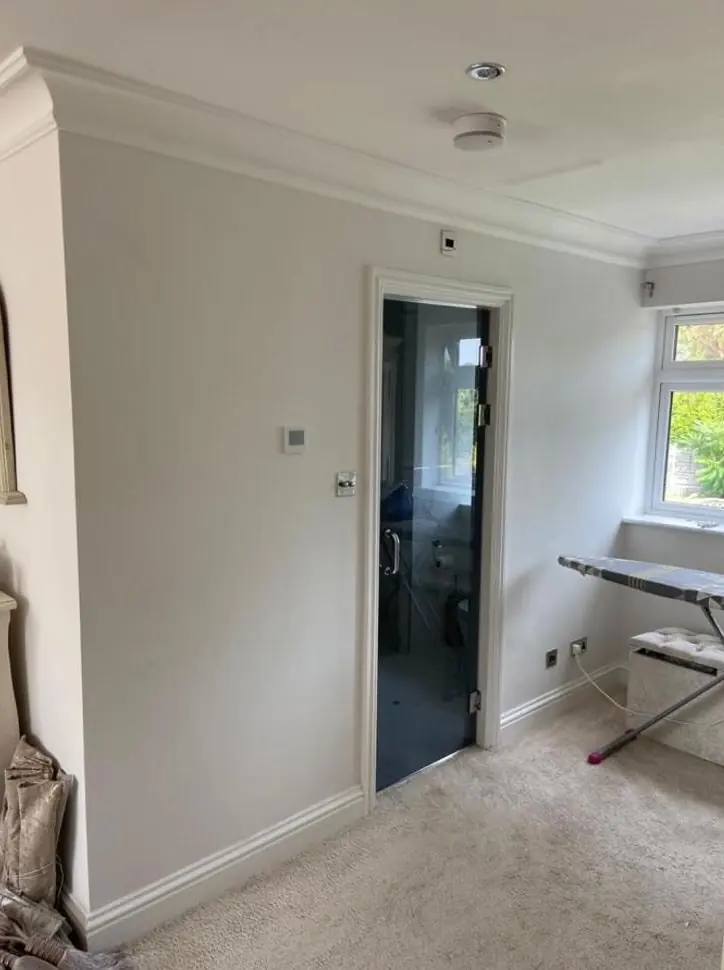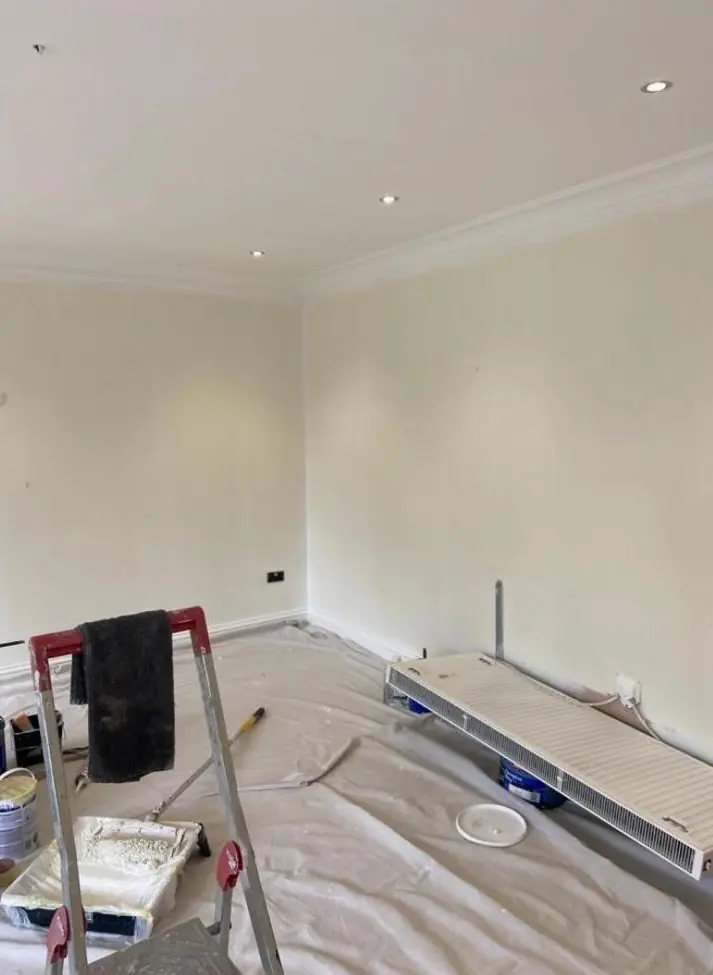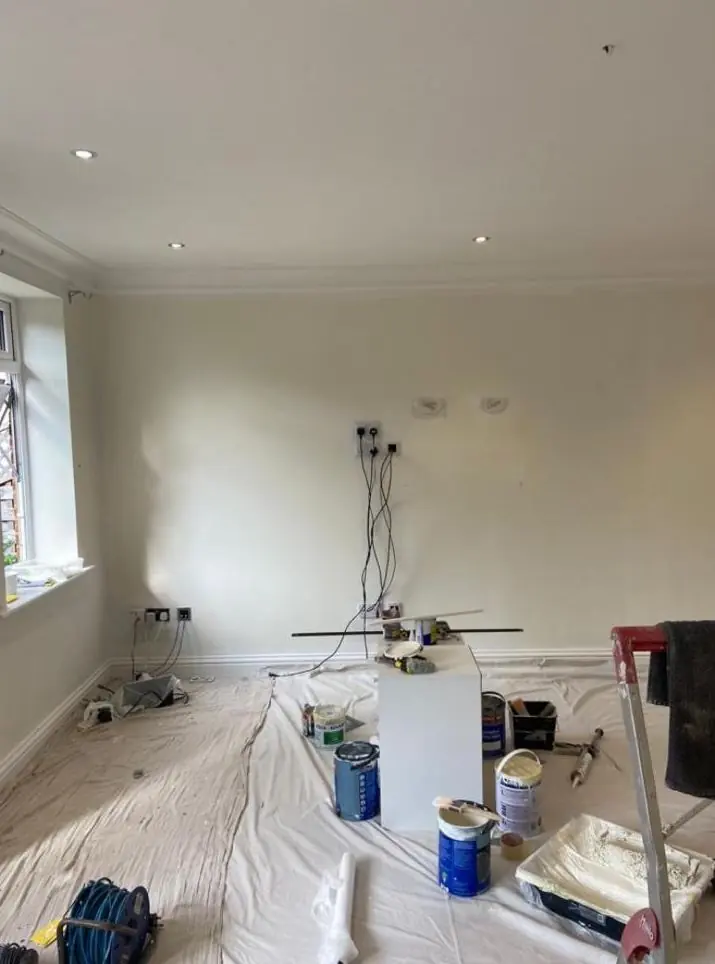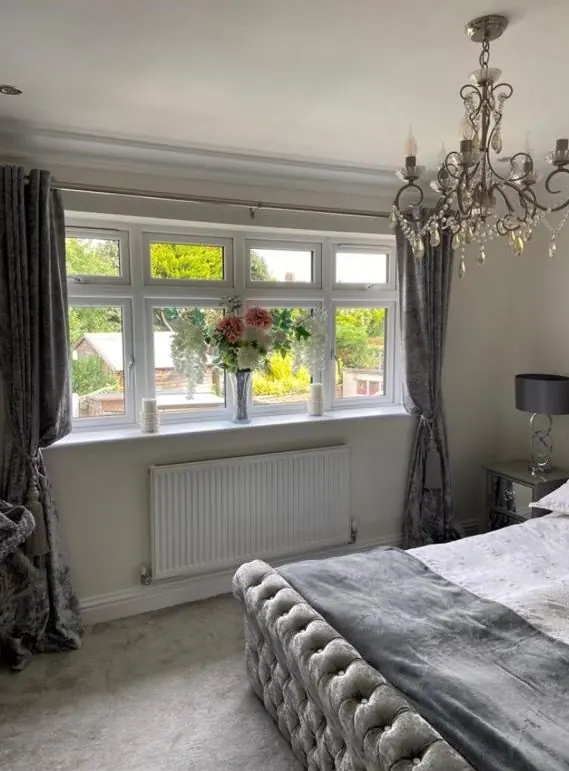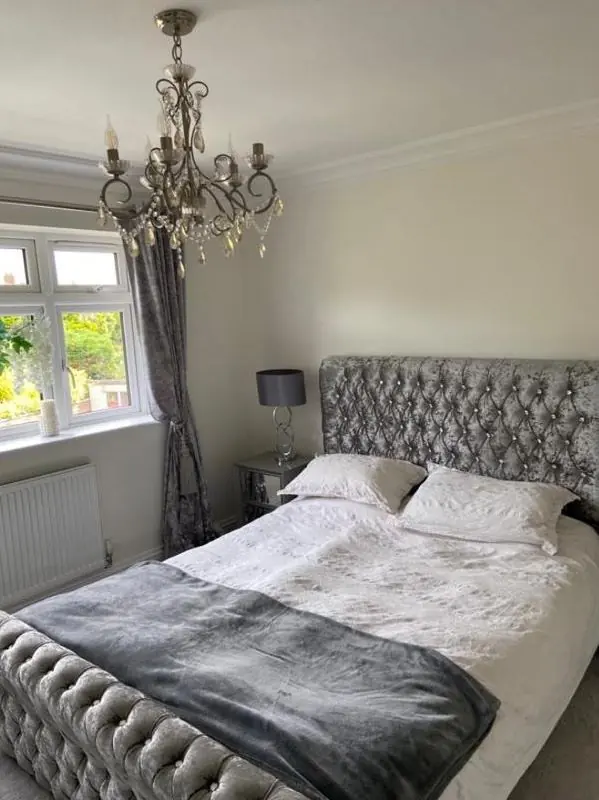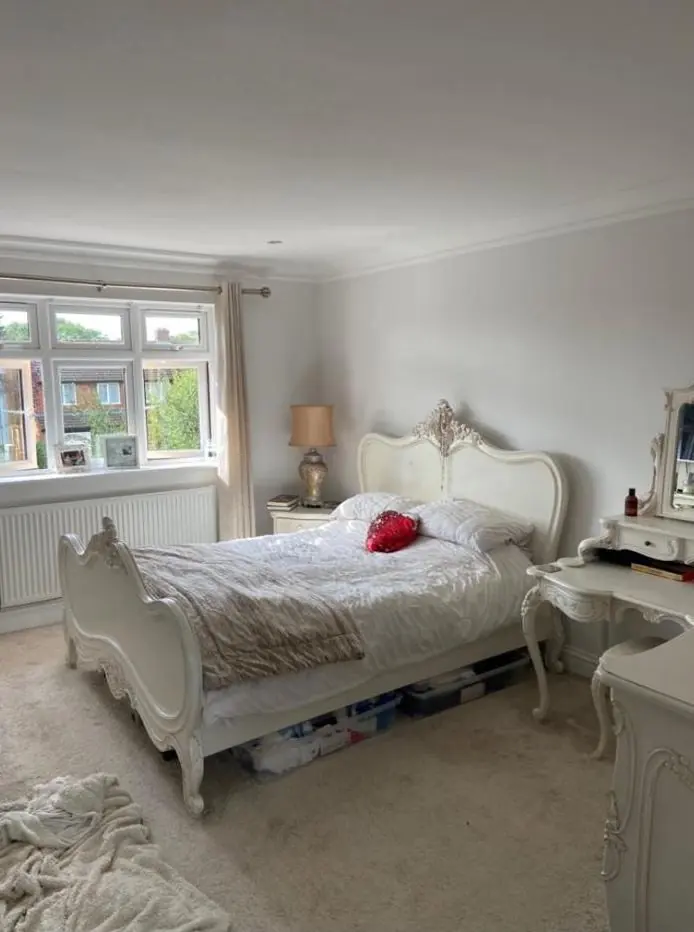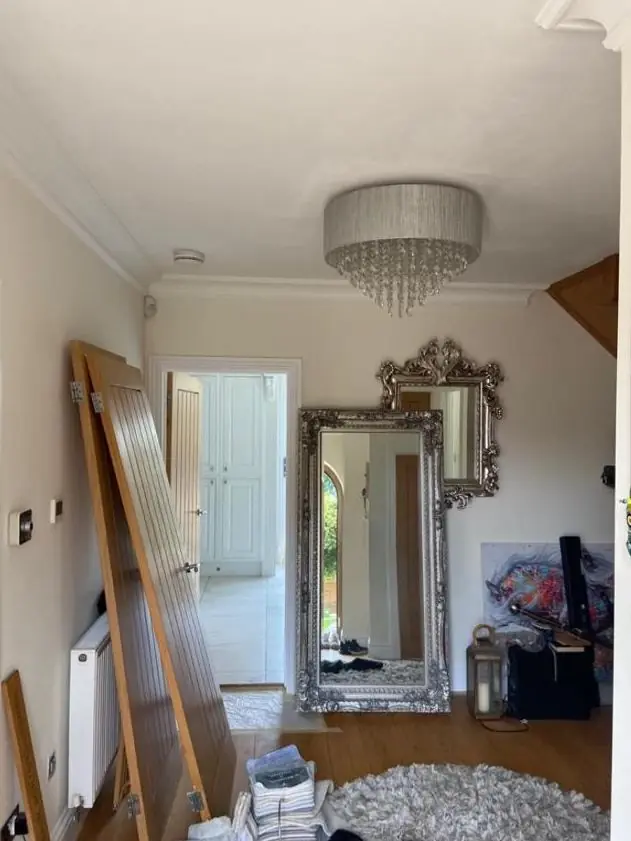
DH Painter & Decorator hangs wallpaper in New Duston, NN5, the stretch of Duston parish between Main Road and Harlestone Road. Dean lines uneven walls in the older cottages, primes plasterboard properly in the estate houses and gives free written quotes.
What kind of wall are you papering?
Whether a wallpaper job in New Duston goes smoothly depends mostly on what sits under the paper. The neighbourhood has two very different wall types. Near Port Road and Quarry Road are the original natural stone terraced cottages and the red brick cottages built after them. West of there, the Wrenbury Road and Rochelle Way estates are two-storey brick houses from roughly the 1980s to the 2000s, lined inside with plasterboard. In between are 20th-century houses and a good number of purpose-built flats.
The paper you choose also depends on which of those you live in. A large geometric print that looks sharp on a flat plasterboard wall can show every bow and lean in a cottage room. Our main wallpaper hanging page covers the hanging process step by step; this page deals with the New Duston side of it.
Cottage walls: line first, then choose the pattern carefully
Older walls in the stone and brick cottages are often uneven, with patched plaster and corners that are not square. Lining paper is usually the answer. Hung horizontally, so its joints never line up with the joints of the finish paper, it evens out minor dips and hairline cracks and gives the paste an even surface to grip.
Lining won’t make an old wall plumb, though. On walls that lean, Dean will steer you towards papers that forgive it:
- random-match or free-match designs instead of a strict straight match
- small, busy repeats instead of large regular geometrics
- textured or embossed papers that hide minor undulations
He also sets out from a plumb line at the visual centre of the wall, such as the middle of a chimney breast if there is one, not from the nearest corner. That way any drift ends up in the corners, where the eye doesn’t notice it.
Open living spaces on the western estates
Many of the detached houses off Rochelle Way, including those on Loire Close and Avignon Close, have generous living and dining areas, and that is where a single papered feature wall works well. Good candidates are the wall a sofa faces away from, the end wall of a dining area, or the wall behind a bed. Avoid a wall broken up by doors and radiators.
Plasterboard brings its own rule: never paper straight onto bare or freshly decorated board. Unsealed board bonds to wallpaper paste so strongly that, years later, stripping the paper can tear the board’s own paper face off. We seal the wall first with a suitable primer or size, so a future change of paper comes off cleanly.
Stripping old paper in NN5 homes
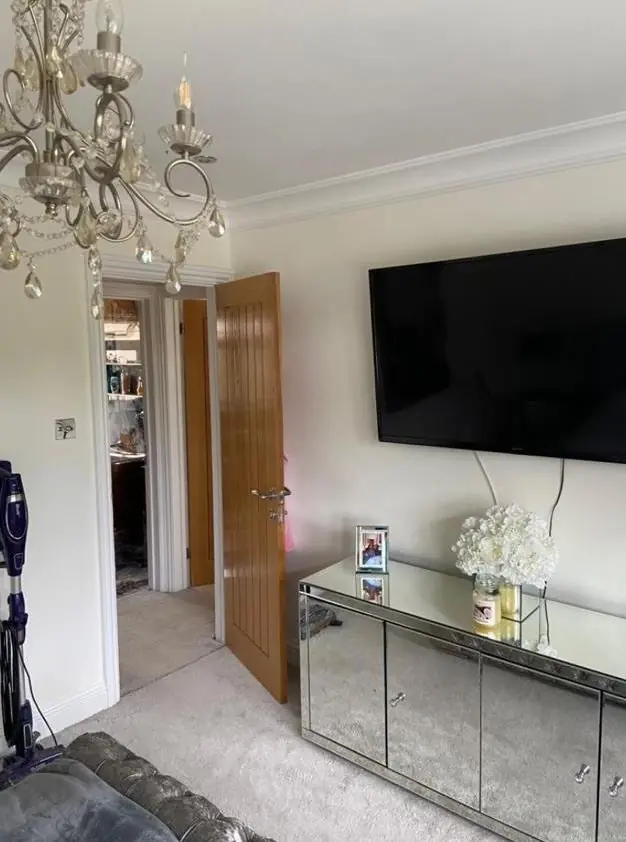
Most houses here have been redecorated more than once, so painted-over woodchip or two layers of paper are common finds in homes of this age. On plaster we use a steamer and scraper with care. On plasterboard we keep the steam to a minimum, because soaking the board softens its face. In small flats, steam and paste raise humidity quickly, so we ventilate as we go. If old paper hides blown or cracked plaster, we stop and show you before going further, because some walls need a plasterer before they need a decorator. That matters most in the cottages, where repairs from different decades often sit side by side under the paper. Pairing a papered wall with painted walls? Our colour advice helps pick a shade from the paper rather than fighting it. See the New Duston area page for the other work we cover locally.
Last updated by Dean, DH Painter & Decorator.