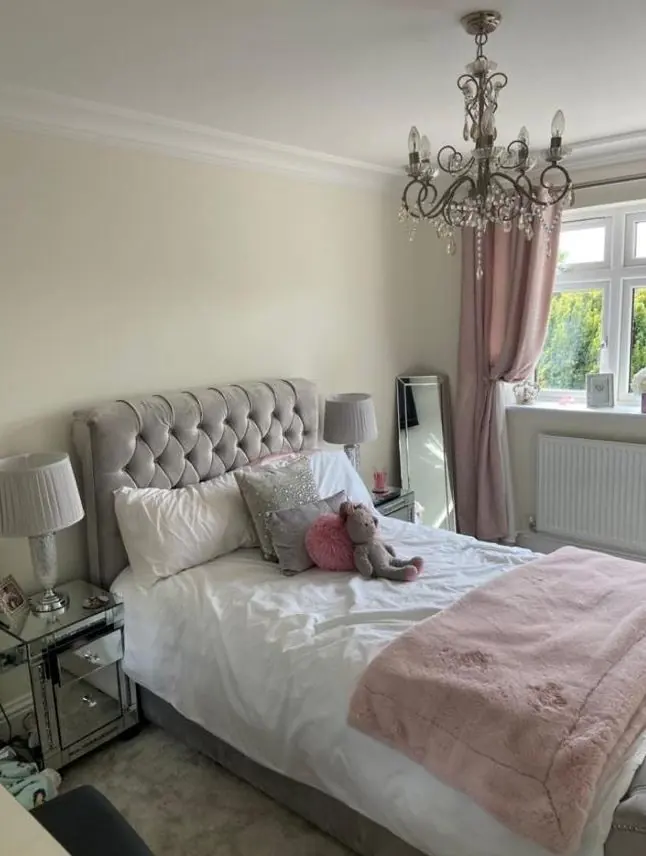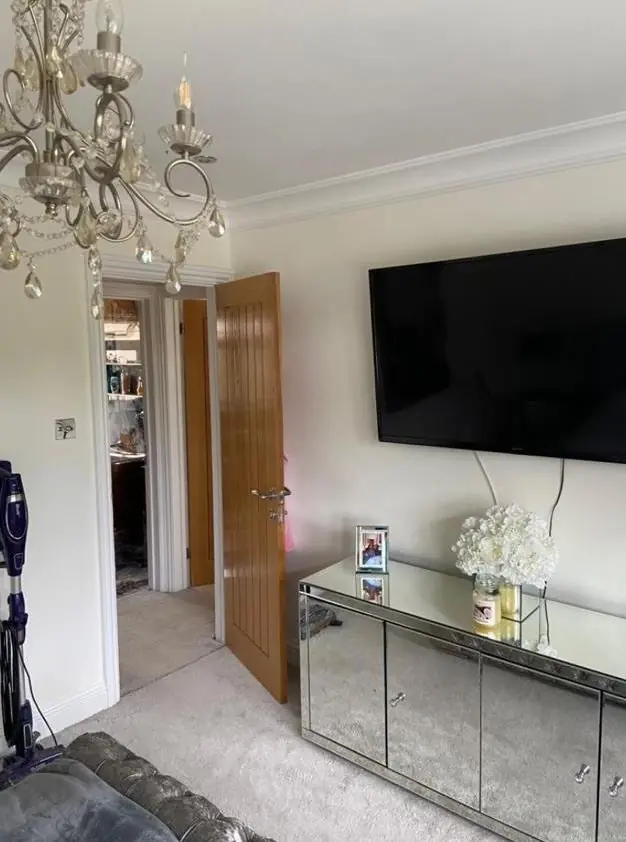
DH Painter & Decorator hangs wallpaper and lining paper in Kings Heath, the Womersley-designed NN5 estate a little under two miles north-west of central Northampton. Dean strips old layers, lines uneven post-war walls where it helps, and hangs the chosen paper with matched joins, quoting free.
Papering over decades of redecoration
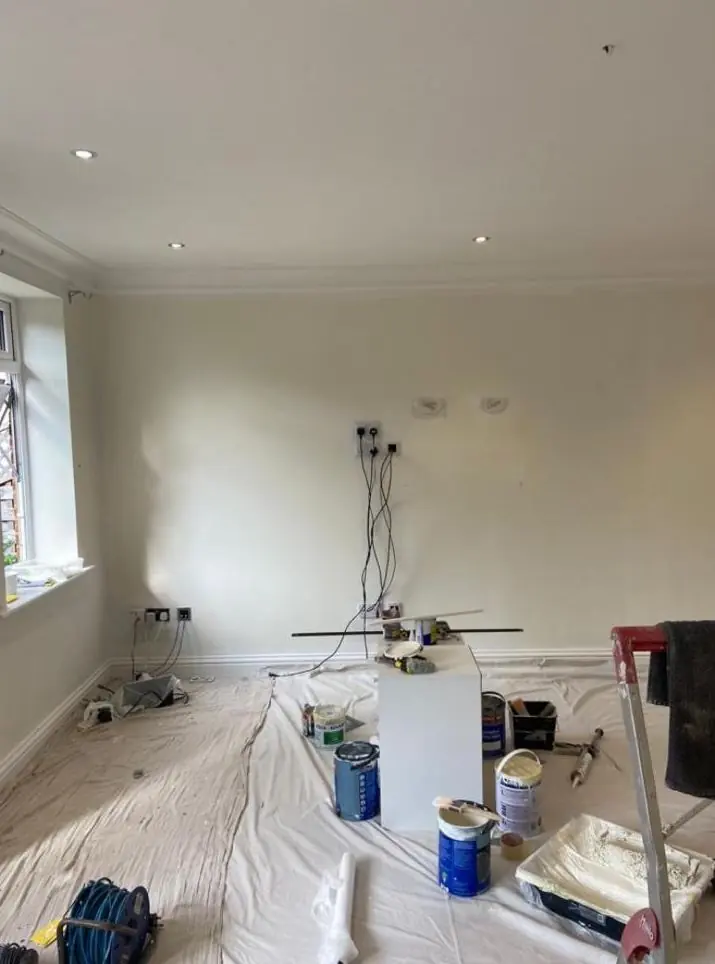
The houses around the central green in Kings Heath date from the early 1950s, and most have been redecorated over and over since. Walls in these homes rarely come back flat. There may be several layers of old paper, sometimes painted over; there are patched areas where fittings were moved; and the plaster under the paper can be uneven after years of stripping and refilling. Good wallpaper shows all of that, especially smooth or metallic papers that catch the light.
That is why, on the older houses here, a lining paper is often worth the extra stage before a feature paper goes up. It evens out small dips and filler marks, gives the decorative paper a consistent surface to grip, and stops old staining or patched plaster showing through a pale pattern. Lining is hung horizontally where possible so its joins never line up with the wallpaper joins above it.
- Strip every old layer back to plaster, not just the top one
- Fill and sand cracks, then size the wall so paste does not soak in unevenly
- Cross-line with lining paper where the wall is uneven
- Hang the feature paper with the pattern matched from a plumb line
Where a feature paper works in a compact room
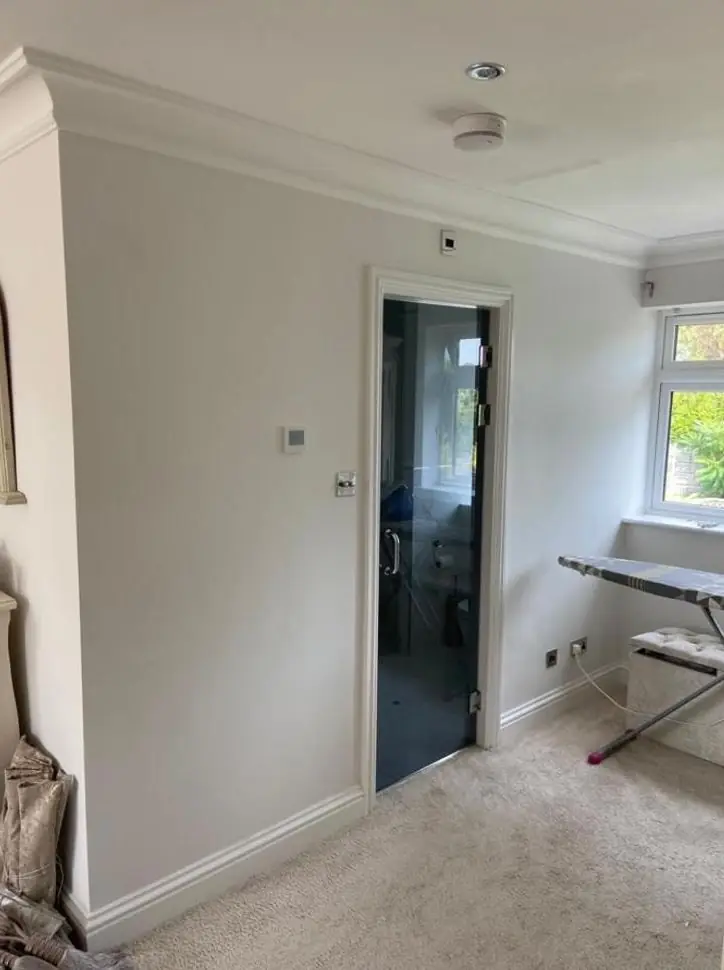
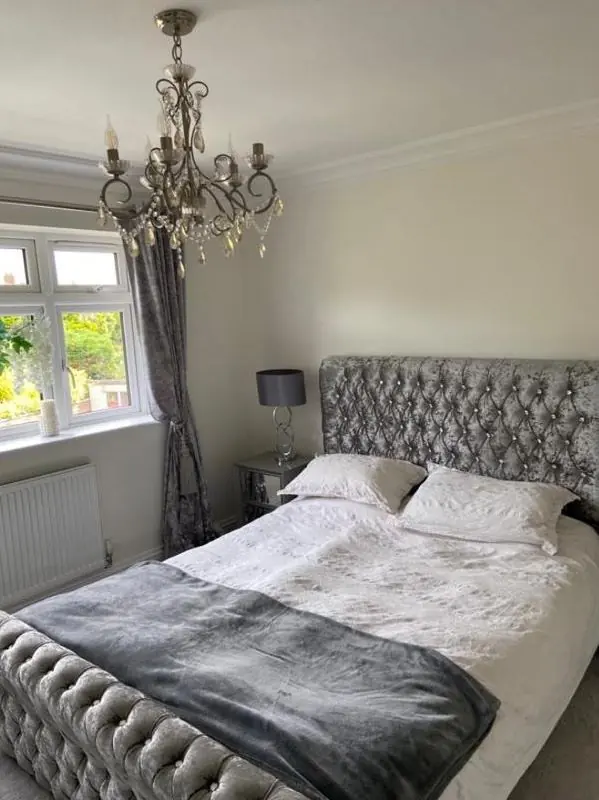
With one main living room and bedrooms on the small side, the original estate houses rarely suit paper on every wall. In rooms that size, papering all four walls in a strong design can close the space in. One papered wall usually does more: behind the bed in a small bedroom, or the longest unbroken wall of the living room, with the other walls painted in a colour drawn from the paper. Dean can help with that pairing through our colour advice, and the hanging itself is covered in more detail on our wallpaper hanging service page.
Large pattern repeats are worth checking before you order. On a short wall a big repeat can waste a lot of paper, so it helps to measure together at the quote visit and buy enough rolls from the same batch. Rolls from different batches can vary slightly in shade, and on a single feature wall even a small difference between two lengths is easy to spot once the light falls across it.
The straight 1950s stairwell
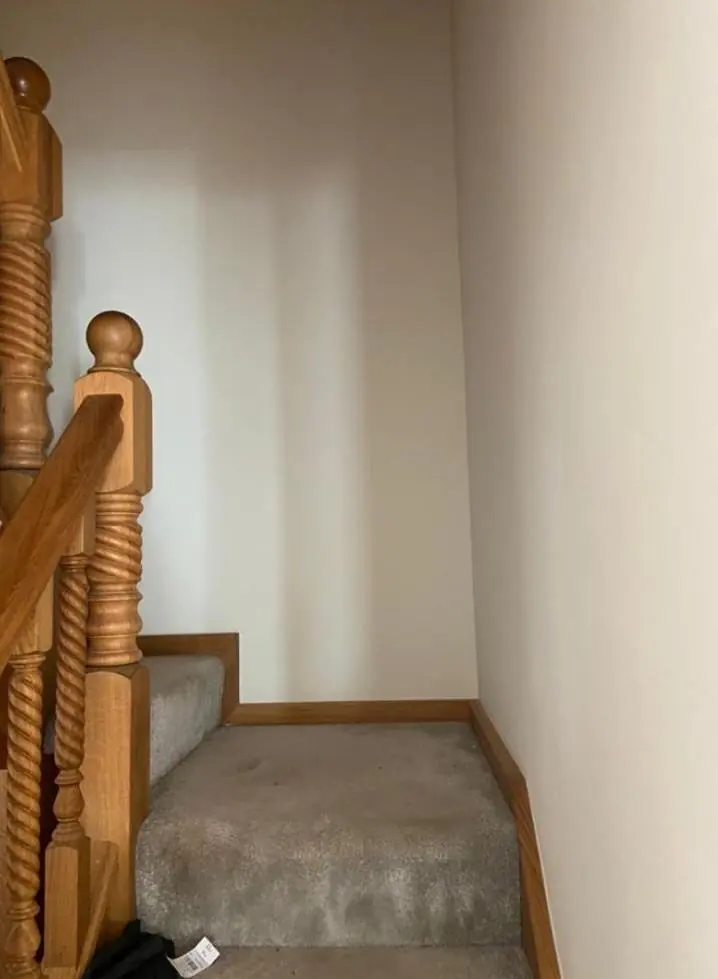
The biggest single papering job in many of these houses is the hall and stairs. Post-war halls here are typically narrow and the stairs run in one straight flight, which gives a tall wall at the top of the drop. Hanging those long lengths needs a safe working platform over the stairs, a steady plumb line from top to bottom, and care at the point where the wall meets the sloping string. In a busy family hall, a tougher vinyl or washable paper also stands up to bags, bikes and hands far better than a delicate design.
New walls on Park Walk need time first
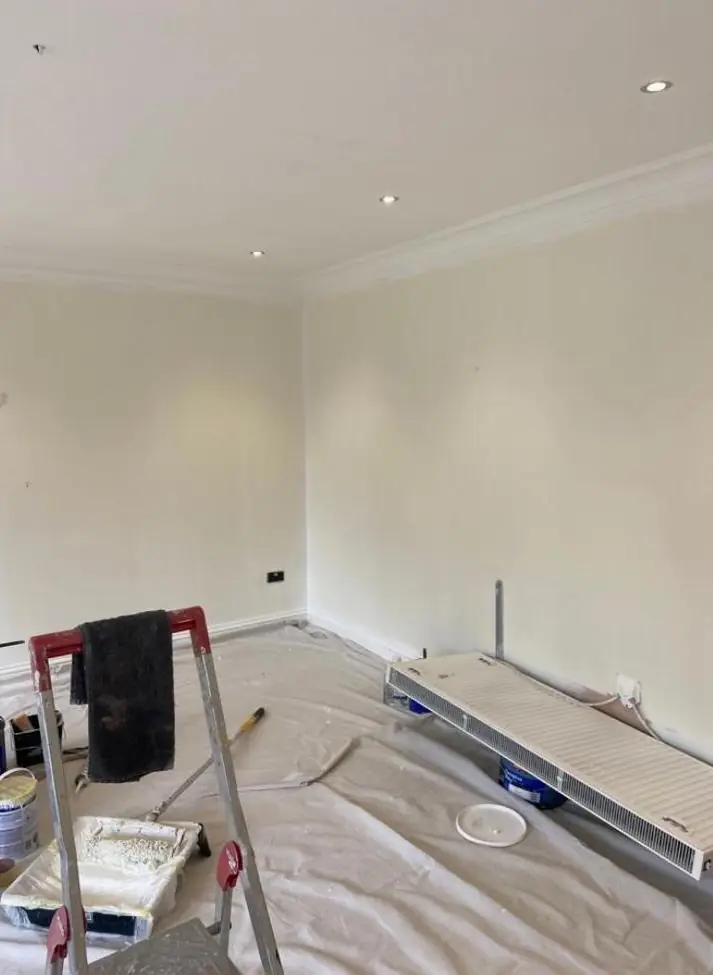
Park Walk’s three-storey houses, completed in 2025, have fresh plaster, which carries moisture for some time after it looks dry. Paper hung too early can bubble or lift as the wall finishes drying, and new houses often develop small settlement cracks in their first year. For those homes the usual advice is to let the plaster cure, seal it properly, and paper once the house has settled. Our guide to new plaster covers the drying side. You will find more on the estate’s housing on the Kings Heath page.
Last updated by Dean, DH Painter & Decorator.