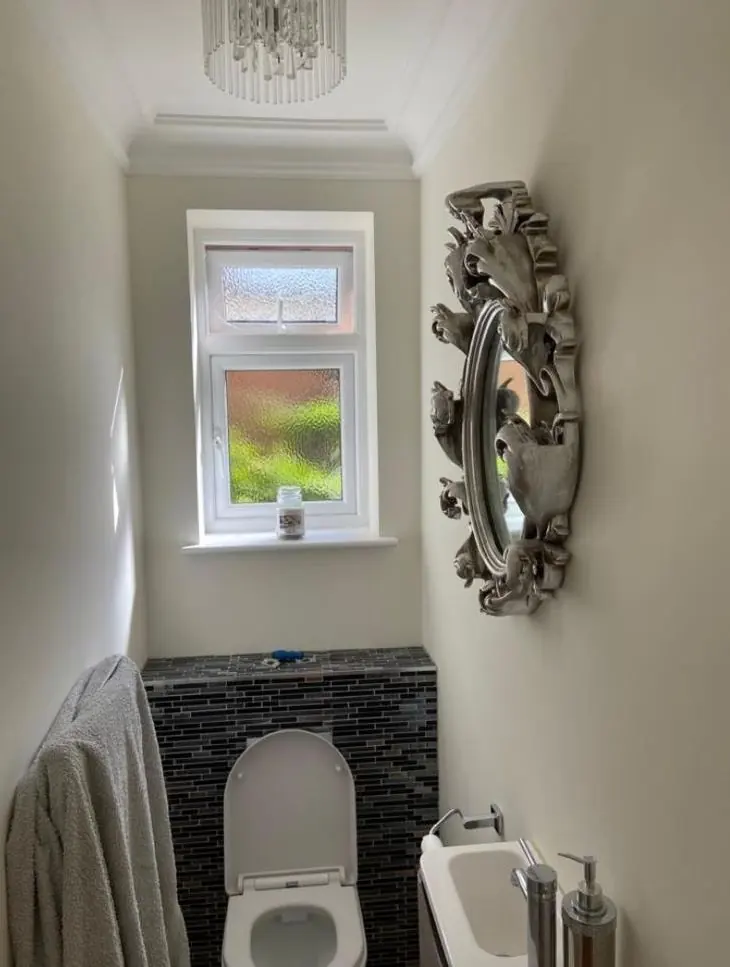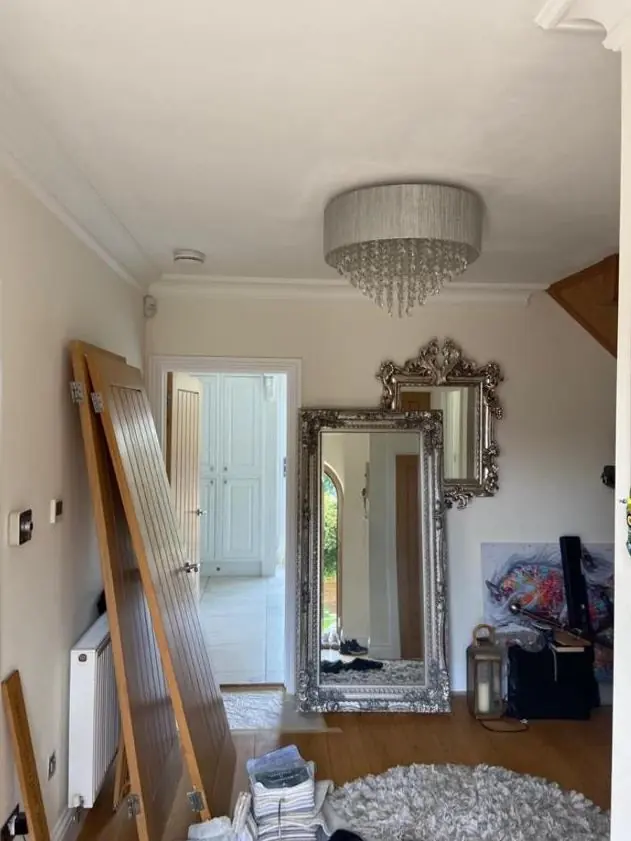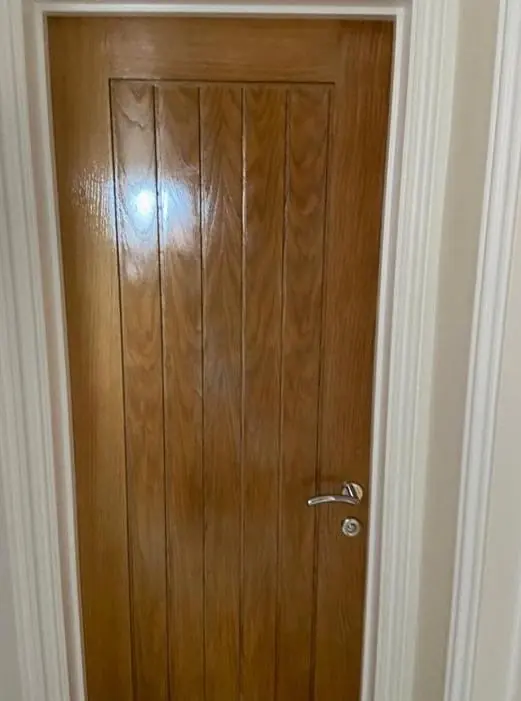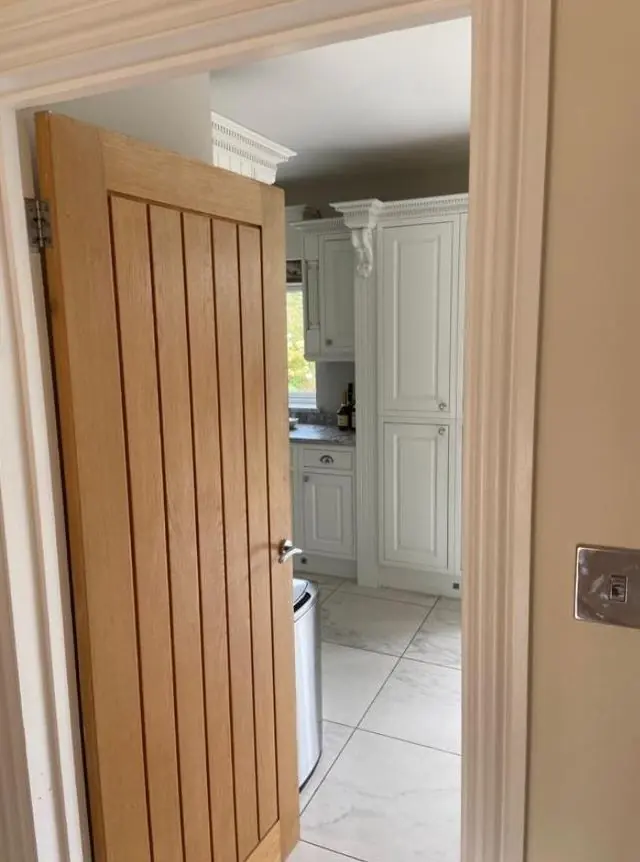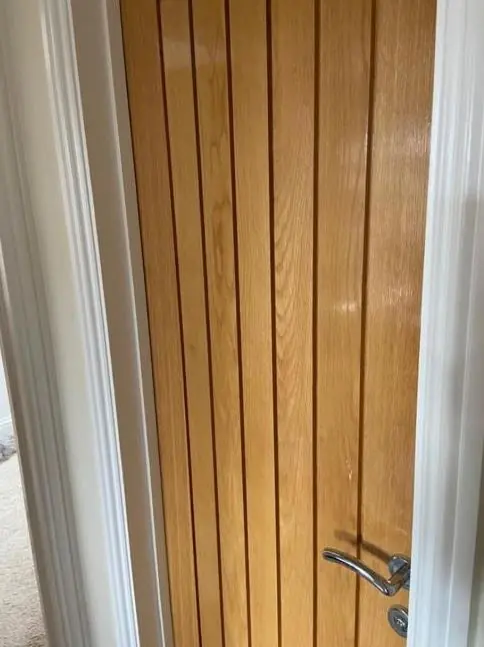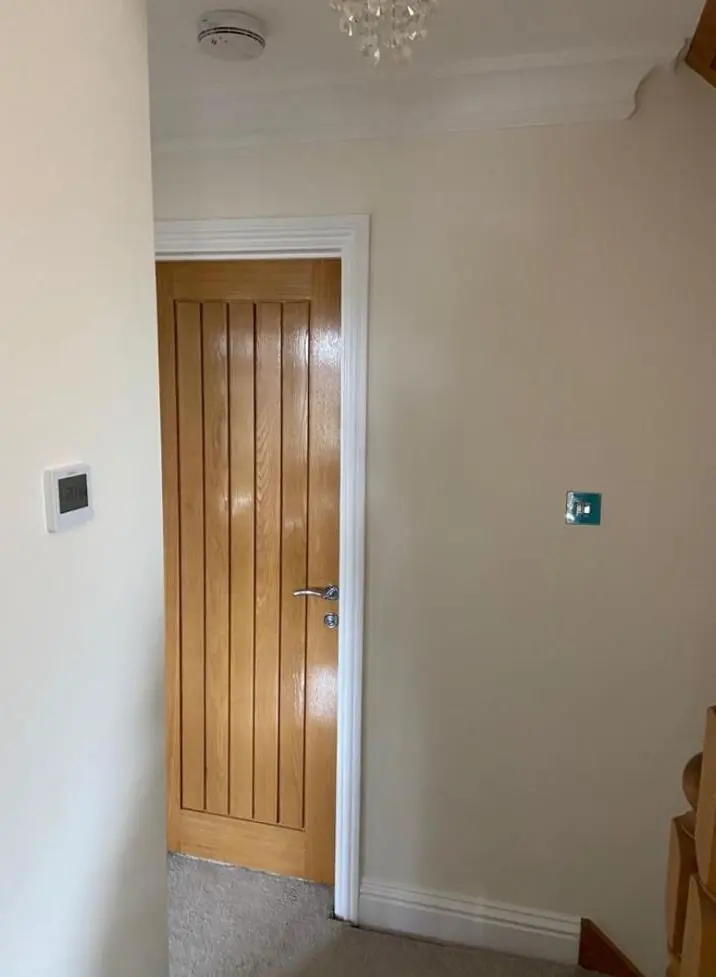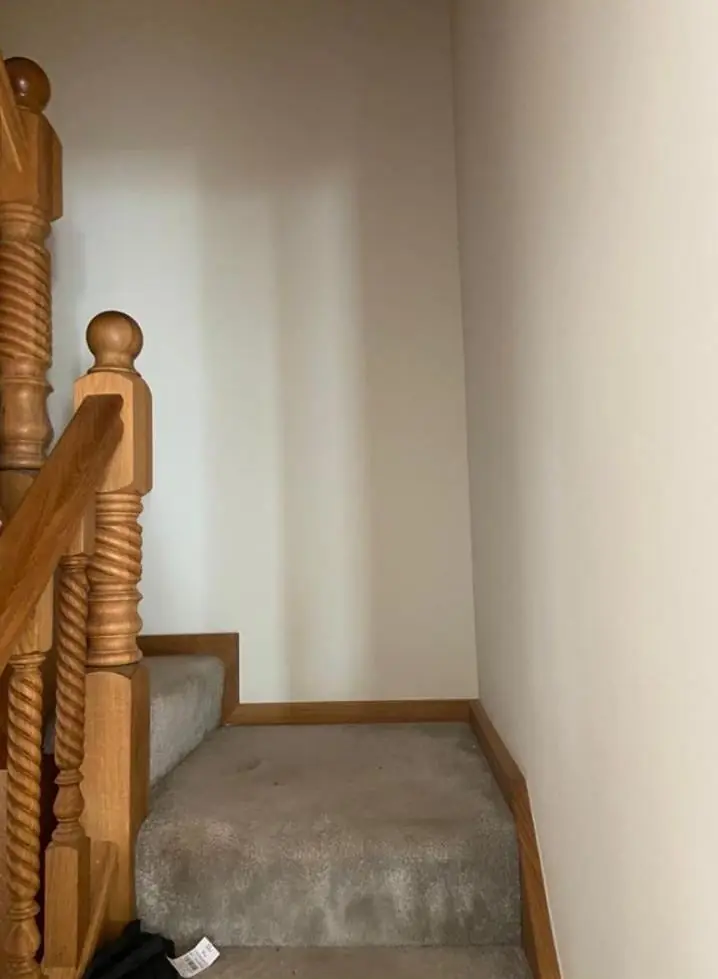
DH Painter & Decorator paints internal doors, frames, skirtings and architraves in New Duston, NN5, a 2.8-mile trip north-west from Northampton town centre. Most of the work here falls into three kinds of property: the 1980s-2000s estate houses to the west, purpose-built flats with fire doors, and the older cottages around Port Road.
When a whole estate’s woodwork ages at once
The Duston Neighbourhood Plan records that the Wrenbury Road side of the parish saw almost 3,000 houses built within 10 to 15 years. That matters for woodwork. Every house in a close such as Loire Close or Bergerac Close got its doors, linings and skirtings at much the same time, often in a white gloss, and that paint has now had decades of hoovers, shoes and door handles against it.
Typical signs in houses of that age:
- Oil-based gloss on skirtings that has turned cream or yellow, especially in rooms with little daylight.
- Hairline cracks along the top edge of skirtings and at the mitres of architraves, where timber and plaster have moved at different rates.
- Chipped front edges on internal doors and wear around handles and finger plates.
- Gaps where flooring has been changed and the skirting no longer meets it neatly.
Because the age and the paint are usually consistent through the house, it often makes sense to do all the woodwork in one visit rather than room by room. One prep method and one product suit every surface, and the colour stays even from hall to landing. Many owners now move from yellowed gloss to a water-based satin, which needs proper keying and an adhesion primer over the old oil-based coat. The full preparation sequence is set out on our main door and skirting painting page.
Fire doors and flat entrances
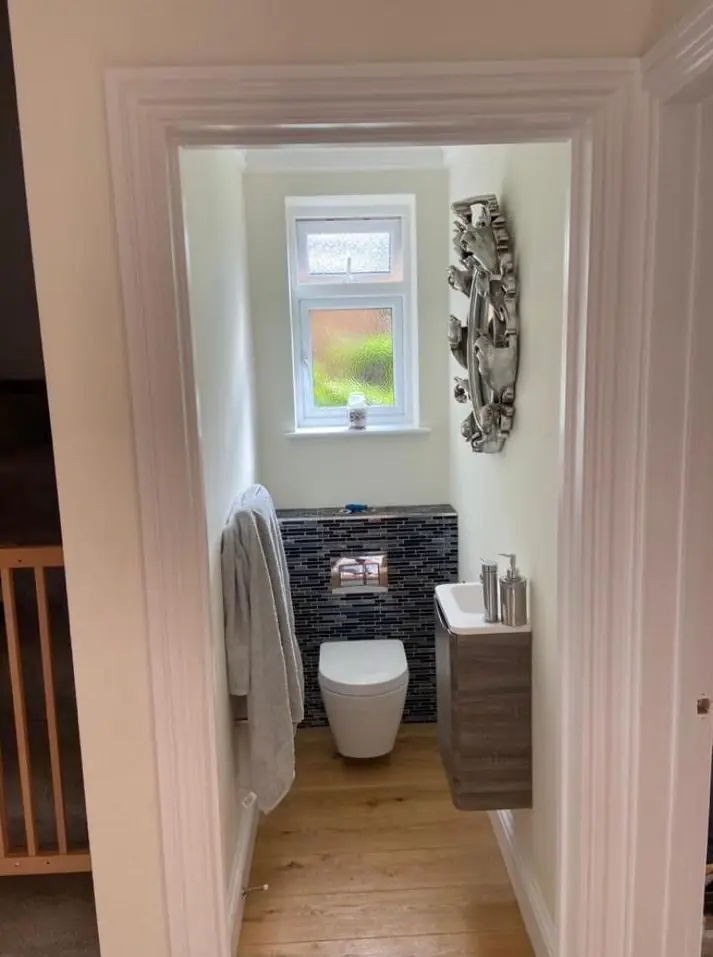
Purpose-built flats make up a far bigger slice of New Duston than of Old Duston. In those blocks the front door of each flat, and the doors on communal landings, are often fire doors, and repainting them needs some care. Paint must stay off intumescent strips and smoke seals, hinge and closer hardware should be masked or removed rather than painted over, and the gap around the leaf must not be filled up with layers of paint so the door no longer closes on its own. Any signage or certification label on the door edge is left visible. Where the block is managed by a landlord, housing provider or the council, we follow whatever specification they set for colour and product.
Cottage joinery near the old centre
The original part of New Duston grew around the junction of Main Road, Port Road and Quarry Road as terraces of natural stone cottages, with red brick cottages added later. Inside these older houses the woodwork is a different job from the estates. Skirtings may be taller and built up from more than one piece, door frames are rarely square after years of settlement, and painted surfaces can carry many layers going back a long way. We plan for that:
- Thick, cracked paint build-up on mouldings is taken back where it has lost adhesion, so the profile shows again.
- Old paint layers in houses of this age are treated as possibly lead-based: no dry sanding, with wet abrading and dust control instead.
- Gaps between uneven walls and skirtings are caulked in stages rather than in one heavy bead that will shrink and crack.
Fitting the work around a busy household
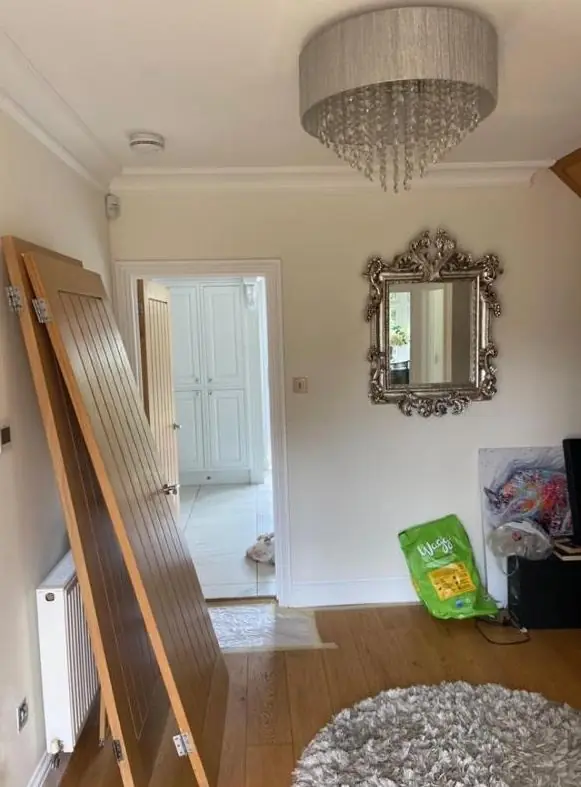
Doors are the awkward part of any woodwork job because a room is out of use while one dries. In New Duston’s larger detached houses we usually work through bedrooms first and leave the main living-room and kitchen doors to last, so the house stays usable. In a one-bedroom flat with fewer doors, the whole job can often be done in a short visit with doors wedged open and dry before evening. Kerb space in the western closes is limited, with car ownership high, so we agree where the van goes before the first day.
For the other decorating work we cover in this part of NN5, see our New Duston area page. If you are still comparing quotes, our guide to choosing a painter and decorator sets out what to ask.
Last updated by Dean, DH Painter & Decorator.